Posts Tagged ‘living and life’

I’ve been waiting since about ten this morning to post about this, and I’ve been higher than a kite just thinking about it. As many of you know, back in October 2016, I wrote a short story called “Car Chasers,” which I would summarize as “A Fast & Furious story with ghosts mixed in.” I’ve been trying to find it a good home ever since the second draft and today, nearly two years after writing the story, I am pleased to announce that home is found.

I found out about The Binge-Watching Cure II, being published by Claren Books, through a website that advertises anthologies. It was seeking horror submissions that fell within fifteen percent of certain word lengths (1,000 words, 2500 words, 5000 words, etc). It sounded interesting, and since “Car Chasers” fell within the 8,000 words category, I figured I might as well try it and see what happened. And then, back in late May, I heard from Sarah Doebereiner, one of the editors for The Binge-Watching Cure, that my story was shortlisted for the 8,000 words category, and if I was still interested in having my story in the anthology (needless to say, I was). And today, I got an email from Ms. Doebereiner saying that my story had been chosen, and they would be sending me a contract when things got a bit closer to publication.

Needless to say, I’ve been in a great mood since getting this piece of news. How good a mood? Well, something like this:

Okay, I have no idea what this GIFis supposed to be from, but it does illustrate just how happy I am. And it works with my aesthetic and eccentric personality, so I’m going with it.

But it’s not just that another story of mine is getting published in a year. Nor is it that both stories are being published by actual companies (though both of those are part of it). You see, before I sent “Car Chasers” to The Binge-Watching Cure II, I tried it at a few other publications, and got form rejection letters from each one. And as you know, I’m not as good at writing short stories as I am at writing novels (and I still feel like I have a lot to learn about writing those). So I was worried because, either because of the length of the story, the story’s concept, or the writing itself, no publication would want to take a chance on “Car Chasers.”

But then I got that email that the story was being considered, and that gave me hope. And then I kept seeing this yellow Mustang (a vehicle that shows up in the story) around work, and I thought that might be some sort of omen. And then today’s news came. And I had to restrain myself from running and dancing and singing through the office. Because that story was good enough to be published. And that means the world to me.

So for the Binge-Watching Cure II to want to publish “Car Chasers” within its pages is not just a reason to celebrate, it’s a confidence booster times three! And I couldn’t be more grateful to Ms. Doebereiner and the folks over at Claren Books for accepting my short story for their next publication. Thanks for making my day today and for giving my short story a chance. It means a lot to me.

So what’s next? Well, of course a lot goes into publishing anything, and that takes up time. With any luck, The Binge-Watching Cure II will be published in late 2018 or early 2019. With how fast time tends to go, that’ll be here before we can look around (seriously, when did it get to mid-July?). And I can’t wait to share “Car Chasers” with you when that time comes. And in the meantime, consider checking The Binge Watching Cure’s website and Claren Books’ Twitter? You might find something you’ll want to make your next read.

That’s all for now, my Followers of Fear. I’m off to deal with an entity worse than Death, one that has ravaged entire nations and sent the Generals of Hell fleeing in terror. This entity…is my laundry.

Until next time, pleasant nightmares!

Hill House is a great example of Gothic fiction and a Gothic location.

You’ve probably heard someone describe a work of fiction as being “a very Gothic work,” or describing a place they visited as “having a Gothic feel” (which now that I think about it, could be said of The Lizzie Borden Bed & Breakfast). But what actually is “Gothic horror” or “Gothic fiction?” And why does it still appeal to us after more than two-hundred and fifty years?

Surprisingly, Gothic fiction has very little to do with Gothic architecture or with Goth fashion and music (for more on that relationship, check out this brief YouTube video). And while most of the genre do take place in haunted houses, not all haunted house stories are Gothic, or vice versa. As this very helpful Tor.com article points out, “Some genres build the house. Others come along and decorate it. Gothic horror is a very decorative genre.”

So what is Gothic fiction? Well, to be honest, it’s a genre that arose out of another genre that was a response to a popular movement. In the 18th century, the Enlightenment movement emphasized discarding superstition in favor of science and reason. Some artists didn’t care for this philosophy and turned to Romanticism, which emphasized emotion and the self, as well as a veneration of the past, nature, and in some cases the supernatural. Gothic arose out of Romanticism, with artists and authors combining elements of the latter with horror, death and the supernatural, starting with The Castle of Otranto in 1764 by Horace Walpole, and followed by the works of Poe, Mary Shelley, Byron, and many others.

To put it simply, Gothic fiction could be considered the love-child of 18th and 19th century Romance stories and horror stories.

But that’s how Gothic fiction came to be. How do we identify it? Well, the horror novel Kill Creek by Scott Thomas (which I highly recommend), itself a Gothic novel, gives a great run-down of some of the common elements of the genre (I hope Mr. Thomas doesn’t mind me using them):

  • Emanation from a single location. The source of the evil is often a single location, usually a house. A great example of this is The Overlook Hotel from The Shining. It is the book’s main location, and it is the source of the evil in the story.
  • A sense of forbidden history. There’s a dark history associated with the location or something related to it. Again, a great example is The Overlook, which has been the setting for murders, suicides, and all sorts of horrid deaths and events, all of which have been swept under the rug for the sake of the hotel’s reputation, and later gets drudged up by Jack (and the hotel).
  • An atmosphere of decay or ruin. Things are rotting or falling apart, or seems to be anyway. It’s in the very air, almost. And it doesn’t have to be physical; it can be mental too. Just look at Jack’s mental state as The Shining progresses, if you need an example.
  • Corruption of the innocent. This one speaks for itself. The evil wants to destroy good and innocence and replace it with evil. Dracula, a great example of Gothic fiction, has the titular character turning good and innocent people into bloodsucking vampires. This is corruption of the innocent in its best example, and why vampire fiction is often grouped with Gothic fiction (did you expect another Shining reference?).

Dracula is another great example of Gothic literature, even if it’s not confined to a single location.

But those features aren’t universal among Gothic stories. They’re common features, but not there in every one (Dracula doesn’t just kill in one single place, after all). So what else makes a Gothic story? Well, there’s something I’ve noticed about Gothic stories: along with the atmosphere of decay, there’s also a veneration towards the darkness and to beauty. Remember, Gothic fiction rose from Romanticism, which venerates nature, emotion and beauty. So while we’re feeling an atmosphere of terror, there’s also this sense that the author has a respect and love of the darker elements along with the Romantic ones.

Of course, this is just scratching the surface of what constitutes Gothic, and I could go on for days on the subject if you let me. The best summary I can do for this post is to say that Gothic fiction are horror stories with a particular group of tropes, a veneration of darkness and horror, and Romantic appreciation for aesthetic and the fantastic world. And even that feels incomplete.

So what appeals to us about Gothic fiction, and has allowed it to survive and evolve whereas other niche genres like Westerns went out of style in less than sixty years? Well, there’s no easy answer there either. The Tor article says that the rules and expectations of the genre can be learned and make it appealing to readers. I’ve heard some people say good Gothic horror has an atmosphere unlike other genres, and that keeps them coming back. My opinion is that, in addition to those theories, Gothic can evolve because its main tropes are relevant no matter what age we’re in, especially the houses. But on a deeper level than that, most Gothic literature takes the childhood idea of home, a big place we feel safe in, and turns it inside out into a giant house of fear that is still somewhat beautiful and appealing. That is a strange inversion that can be attractive to readers, and may explain why we keep writing and reading Gothic stories over two-hundred and fifty years after Walpole started the genre.

However you define Gothic fiction or whatever its appeal is, there’s no doubt that it is a popular and influential genre that we’ve all experienced at lest once in our lives and remember. And perhaps by understanding it better, we can keep Gothic horror going for many more years to come. And I certainly wouldn’t mind that.

What elements of Gothic fiction did I miss here? What about it appeals to you?

What Gothic stories would you recommend for anyone interested in the genre?

You know, I’ve never reviewed a proper Stephen King story on this blog before. I’ve reviewed plenty of adaptations of his work, but never any of his actual stories. Probably because I’ve either gotten to them too late and so much time has passed that doing a review seems silly (which is true with the vast majority of his bibliography) or I didn’t feel there was enough to talk about to actually write a decent review (such as Gwendy’s Button Box, co-written with author Richard Chizmar). So I’m glad I’m finally able to review one of his books here. And this one is something else: it’s his latest novel, The Outsider.

The Outsider follows Ralph Anderson, a detective in the small city of Flint City, Oklahoma. The novel opens with Ralph and his fellow officers arresting Terry Maitland, a local teacher and boys’ baseball coach who is beloved by Flint City, for the horrific murder of a young boy. The state’s case seems ironclad: there’s not only eyewitnesses, but a ton of physical evidence linked back to Maitland. But soon after the arrest, evidence arises to cast doubt on Maitland’s guilt, and it’s just as ironclad. The contradiction in this case leads to a domino effect as Anderson and his allies try to figure out if the beloved Coach Maitland is hiding a darker personality, or if someone else, someone darker and worse, is at large in the town.

Now before I go into my review, let me just say that this book shares a few characters in common with King’s Mr. Mercedes trilogy, and contains a few spoilers. So if you haven’t read those books yet and would like to be surprised, probably hold off on this book until you’ve read those.

So I have to say, I came away very satisfied with this story. I like how King starts out with this novel seeming like a regular thriller-mystery: he shows the arrest, switching between the action and then showing interviews and documents from the investigation. The Outsider continues in this vein for a little while, but then goes in a different direction that defies your expectations so far. From there it develops into a compelling and strange read with some great characters. I especially liked Holly Gibney, who comes from the Mr. Mercedes trilogy. She’s neuro-atypical, like myself, but is shown to be an integral part of the investigation and makes certain leaps that, without her, the other characters might never be able to. It’s a very real portrayal of someone with disabilities, and I related to Holly on a number of levels. I love those sorts of portrayals of neuro-diverse people in fiction, and I hope to see more in the future.

But probably the novel’s greatest strength is just how hard it is to put down. King takes mystery, the strange, great characters, and much more to make a read that’s hard to put down. Normally I’m able to restrain myself to reading during my lunch break or on weekends, but this novel was so good, I found myself reading it late into the evening at times (which helped me to get to this review today).

That being said, The Outsider does have its issues. One of the biggest ones is that we’ve seen a lot of the concepts used and explored in the book in other King novels, and frankly done better there. I won’t say what, but they’re pretty obvious, and every time they came up, I kept thinking to myself, “This feels like a lighter/duller version of insert-story-name-here.” That, and I felt that the climax could’ve been a bit more epic. It was decent, but I felt it was hampered by too much exposition on the parts of the characters and the story’s villain, who is humanized a little too much (that makes more sense if you’ve read the book). Which, unfortunately, lowers the terror factor with a creative villain that could be as scary as some of King’s other famous villains. I was disappointed about that.

Overall, The Outsider is an entrancing and powerful read, subverting your expectations and leaving you wanting more. On a scale of 1 to 5, I’m giving it a 4.6. Check it out, and get sent down a mine shaft full of the strange and the unsettling.

That’s all for now, my Followers of Fear. I’ve got my own novel to work on, so I’m going to get on that this evening. Until then, pleasant nightmares!
I was hoping I’d be under better health when I talked about this, but unfortunately I’m dealing with a summer cold right now. Forgive me if this post isn’t as eloquent as I wanted it to be, but it had to be written today. Otherwise, I’m not sure I’d write it at all.

So since about December last year, I’ve been dealing with a generalized anxiety disorder (GAD). What this means is that I get anxious about a lot of things in my life, or sometimes I get anxious about nothing at all. I just feel this awful feeling of dread, like something under my skin is itching my nerves and making me afraid of everything. I have my ideas about what stressors, the event or events in my life that set it off, but these days I’m less concerned about stressors and more about triggers, what makes me anxious now that I have this condition. These days, that’s mainly the writing career: how will Rose be received; can I make it successful; will it be laughed and hated to the point that I can’t write ever again, etc. Those may seem like issues every author worries about, but in this case, it’s less of a small worry and more like an overriding wave, taking up all my thoughts and making it difficult to think or breathe because you’re just considering the many things that could go wrong.

That’s my GAD.*

The good news is, I started treating this almost as soon as I realized what I was dealing with. I moved up my appointment with my psychiatrist, and she prescribed me medication. I’ve come up with strategies to take the bite out of my triggers, and I’ve been talking with a counselor to further help me with that.

And I’m not alone. I recently came out to a bunch of people that I have GAD. Not only did I get an amazing amount of support and love, but I heard from all sorts of people who have the same sort of issues or know someone who does. We commiserated on the struggles, and were glad that we weren’t so alone. This is such a common disease,** much more common than even I thought, and it affects people in a variety of different ways. Knowing that there are so many other people out there dealing with the same thing made me feel better. It seems like that the opposite would be true, but it’s not. We may have anxiety, but we find peace in our shared struggle.

With that in mind, I thought I’d share some strategies I’ve been using to fight my anxiety. If you have this issue, you might find these strategies just as helpful as I do. Maybe even more:

  • Recognize your anxiety for what it is. For whatever reason, people often deny that they have an anxiety issue. I think this might be because of the stigma that still surrounds mental illness. However, the sooner you acknowledge you’re having anxiety, the sooner you can start fighting back. I recognized this for what it was early on, and I’m so much better for recognizing it in the first place.
  • Don’t be afraid of medication. I know a lot of us don’t like putting anything more than Tylenol into our systems, but taking medication can help. My first day taking medication for my anxiety, I felt freer and lighter than I had in weeks. My anxiety could not touch me that day! And if one medication doesn’t work for you, there are many others available. You just have to be open and honest with your doctor, and they’ll help you find the prescription that’s right for you.
  • Talk to a counselor. Sometimes it’s just good to have someone to talk to about what you’re worried about. I saw a counselor, and they’ve been helping me find more ways to deal with my anxiety. And honestly, just spending forty minutes in that office and talking to someone really helped me out with my fears and made them harmless again. I’m really glad I decided to talk to someone.
  • Logic your anxieties to death. This is something I started doing the moment I realized I had anxiety. Every time I had a fear come up, I would use logic to render it harmless. I would look at all the ways this anxiety made no sense, and argue these points to myself until I felt better. It really works, and I’ve managed to kill most of my anxieties with this.
  • Keep an anxiety notebook. This is something my counselor recommended to me. He said that by keeping a journal and writing down your anxieties, your brain is somehow able to process them and render them mute. I’ve done something similar when it comes to writer’s block, so I know this variation on the theme can work. I even recently bought a notebook to write in the next time I’m feeling anxious. And although I hate being anxious, I’m looking forward to seeing the results.
  • “Follow your happiness.” This is something I came up with. I have no idea why it works, but telling myself over and over, “Find your happiness,” and playing upbeat music either in my head or on my iPod really blocks out the negative thoughts. I’m really partial to “All Night Long” by Lionel Richie (my theory is that we’re all fans of his, whether we know it or not).
  • Hypnosis, meditation, and ASMR. I know what you’re thinking, but these really do help. I’ve done hypnosis, meditation, and ASMR (see this video for a fuller explanation of what that is) for years, and they’ve always helped to relax me. If you open yourself to them, they may just help you deal with these issues.

While I may never be totally rid of my GAD (for some people, these things come and go), the important thing is that I recognize what it is, and that I’m dealing with it in a healthy manner. And if this post helps others recognize their anxiety and deal with it, I feel like I’ve accomplished something good. Because while this disorder is common and can be debilitating, it can also be treated. And if it can be treated, we can make our days a little brighter.

What strategies do you have for dealing with anxiety or GAD?

*So for those of you keeping score at home, I have autism spectrum disorder, ADHD, acid reflux, partial albinism, allergies, and anxiety. One more with an “A” prominent in the name, and I should receive a set of steak knives or a gift card or something!

I’m also farsighted and have back issues. And I have a cold right now. I’m a hot mess!

**And this is a disease, no different than diabetes or a number of other disorders. It’s just a disease affecting our mental state. Anyone who says we just need to learn to chill out or says we’re just imagining it doesn’t know what they’re talking about. Might as well tell someone with crippling arthritis to just move more and ignore the inflammation.

It’s a question every creator wrestles with from time to time. Writers are no exception. We wonder if anything we write is worth reading by anyone other than our family and close friends (who, most likely, will tell you they loved it because that’s what family and close friends do). We wonder if we’re just wasting our time sitting at the computer or in front of our typewriters or in our notebooks, trying to tell stories that range from the mundane to the fantastical and mundane.

In short, we ask ourselves, “Do my ideas suck?”

This may surprise you (I am Mr. Smiles and Jokes and Weird References to Demons and Monsters, after all), but I ask myself this question a lot. I often wonder if I’ll write anything that more than a few people will read in my lifetime, let alone afterwards. It’s a question I’ve been asking myself a lot more lately as I’m in the midst of rewriting a lot of Rose. Although I tell myself that I came up with these changes myself, and that both I and my publisher think they’ll do a lot to help the story and make it a better read, in the back of my head I’ve got this little voice whispering dissent and telling me that what I’m writing won’t amount to much.

And you know what? Sometimes I’m tempted to believe that voice. I mean, thousands upon thousands of novels are published every year, but very few of them gain the attention we wish them to have. Quite a few even get critically panned. It often seems like the field is too big and too difficult to really make a difference in. So why should we try?

But then there are a couple of things I keep in my mind that can, if not shut up that voice, then at least turn the volume down on it. Both of them, not surprisingly, involve Stephen King. The first has to do with his debut novel, Carrie. Did you know when King first started writing Carrie, he actually threw the first few pages into the trash because he was convinced it was trash and would come to nothing. He only kept at it because his wife fished the pages out of the trash, read over them, and said they were good and that he should keep at it. The novel was later published and as we all know, became a huge hit, inspiring two excellent movies (though I prefer the 2013 version), a meh TV movie, and a musical that I wish would get a proper revival and a North American tour. All from a story that King was ready to throw in the trash.

The second story is another King work, Thinner, which he wrote under his Richard Bachman pen name. If you were to give the story an elevator pitch (see my article on elevator pitches for more on that subject) it would probably be something along the lines of “A man is cursed to become thinner and thinner.” And just from hearing that, you might laugh. That sounds like a comedy involving some prissy housewife who thinks if she doesn’t stay a certain weight, her husband will cheat on her and then she starts magically losing weight. It doesn’t sound like a scary novel.

Thinner by Richard Bachman (aka Stephen King); silly sounding concept, great payoff.

But from what I hear (I haven’t read any of the Richard Bachman books yet, though I know I should), it’s a pretty creepy story, one that inspired a movie (quality of the movie is debatable). All from a very simple idea of what happens when weight loss goes really, really bad. It sounds stupid, but it turns into an effective horror story.

And I could come up with tons of examples of this (did you know HP Lovecraft thought The Call of Cthulhu was only so-so? And now it’s one of his most famous works). But they all boil down to one thing: our ideas don’t always suck. In fact, they may only suck in our minds. To others, they may be great, mind-blowing, or even influential. And sure, not all of our stories will turn out to be great, but the vast majority of them, with enough work and a little bit of luck, can become awesome.

And I’m reminded of that every time someone expresses interest in reading Rose. People hear what it’s about, and they want to know more, or for me to tell them as soon as the book is out. If these people really do end up reading Rose, liking it and even letting people know they like it, then who knows? I might be able to shut up that little voice once in my head, at least for a little while.

So if you’re worried that you’re only writing crap, don’t pay your little voice any attention. Just keep writing and polishing and seeing where your story goes. Who knows? You may end up putting out something really amazing, and you’ll be glad you stuck with it for so long.

It’s hard to believe that a number of things are happening today (believe me, I’m still pinching myself). But among those things, one of them is something I’d like to bring up here, and that’s today is the fourth anniversary of the publication of my second novel, Snake, the cover of which is over there.

Now if you’re unfamiliar with Snake, let me tell you about it. I was between books in the Reborn City series, and I wanted to write something a bit closer to my native horror instead of some more sci-fi. I’d had an idea a while back, partially inspired by the movie Taken and slasher films of the 1980’s, and spent about six months writing it in 2013. The result was Snake, which was published June 10th, 2014.

Here is the blurb on the back cover of the novel:

How far will you go for love and revenge? When a young man’s girlfriend is kidnapped by the powerful Camerlengo Family, he becomes the Snake, a serial killer who takes his methods from the worst of the Russian mafia. Tracking down members of the Camerlengo Family one by one for clues, the Snake will go to any lengths to see the love of his life again…even if it means becoming a worse monster than any of the monsters he is hunting.

I was pretty nervous about this novel when it came out. While it was one of the easiest for me to write, it was also one of the most violent stories I’d ever written, and I had no idea what people would think when they read it. Also,– I was still a college student, fresh off my first trip to Europe, and had only just become legally able to drink in the United States, so I was wondering if people would notice how inexperienced a person I was with the story.

To my delight though, people who read the book tended to enjoy it. At the moment, it has seven reviews on Amazon, with the average rating a very nice 4.4 out of 5. Here’s what some of them had to say:

I really enjoyed this book. When I selected “dark” for the mood, it was almost a toss up with suspenseful. You knew early on who the mafia killer was, but the question of how he was going to find his girlfriend and rescue her was suspenseful. I ended up choosing “dark” because of the level of violence our main character used in getting to the girlfriend. But he was a complex character. Even though he definitely had the dark side to him, there was a surprisingly good side to him, too. You don’t really see this until later on in the book. So early on, you might think this is an unredeemable character. But one of the most intriguing characters are those who aren’t what they initially seem, and for this reason, I enjoyed this character. The pacing was just right. It wasn’t rushed, and in no way did I ever feel it dragged, which is awesome for a book that was over 500 pages in paperback.

This book is violent, and it contains sexual situations. Some of it can be cringeworthy. So I wouldn’t suggest this for young readers. I’d recommend this only to adults. If it was a movie, it would be a strong R. There’s also swearing. These things don’t bother me as a reader, but I know it bothers some, which is why I mention it. But if you don’t mind these elements, I think you will enjoy this book. It’s a great thriller.

–Ruth Ann Nordin, author of Marriage by Contract

A very good read. The mixture of horror and suspense were on point. I now want to read more of Ramis great books.

–Sherri

Rami Ungar makes a promise to (the reader) in all his writings: he WILL scare you, and if he does “his job is done.” Snake will scare you. I am a huge Stephen King fan, so this should give you some idea of my tolerance level for gore, death and mayhem – I was scared. Rami takes you into places you would never have believed possible, and manages to pull his hero (and eventually his heroine) out of them against all odds. If you like to be scared. If you LOVE to be scared. You should read this book.

–Angela Misri, author of Jewel of the Thames

Being compared to Stephen King always makes me giddy.

Anyway, this novel still has a special place in my heart. It was a real form of experimentation for me in terms of writing with violence, writing thriller fiction, and writing a sex scene (that didn’t get cut out of the final draft), among other things. And I’m still open to returning to that story and writing a sequel someday. Maybe two, depending on a number of factors.

And if you’d lie to check out Snake and maybe see if it’s up your alley, I’ll include the links to check it out below. And if you do decide to get a copy and read it, please let me know what you think. Positive or negative, I love receiving feedback from readers, and if you leave a review on Amazon or another site, it helps me in the long run by letting other people know what you think and helping them decide whether or not to check out the book.

That’s all for now, my Followers of Fear. I have a big day ahead of me, so I’ll talk to you all later. Until next time, pleasant nightmares.

Available from AmazonCreatespace, Barnes & Noble, iBooksSmashwords, and Kobo

I’ve got another article from Self-Published Authors Helping Other Authors for your perusal. This one is “The Elevator Pitch: Telling People About Your Book in One Sentence.” And that’s really what it’s all about: how to get people interested in reading your books with a single sentence. I learned how to use elevator pitches when I was searching for a job, and it’s actually pretty handy in a number of other situations, including book promotion. You’d be surprised how many people have shown an interest in Rose after hearing my elevator pitch for the book.

If you have a chance to check out the article, please do and let me know what you think. And if you like what you read, make sure to read the other articles on the site. Self-Published Authors Helping Other Authors is a great resource for authors looking to write, edit, publish, and market their stories efficiently and economically. I should know, I’m not just a contributor, I’m also a reader.

That’s all for now, my Followers of Fear. And I hope it’s the last post for a while. I’ve got a lot of editing to do, so I’m going to get on that. And as much as I love you guys, I really need to focus on that. Don’t worry though; I’m planning on having a new review out on Saturday at the latest.

Until next time, pleasant nightmares.

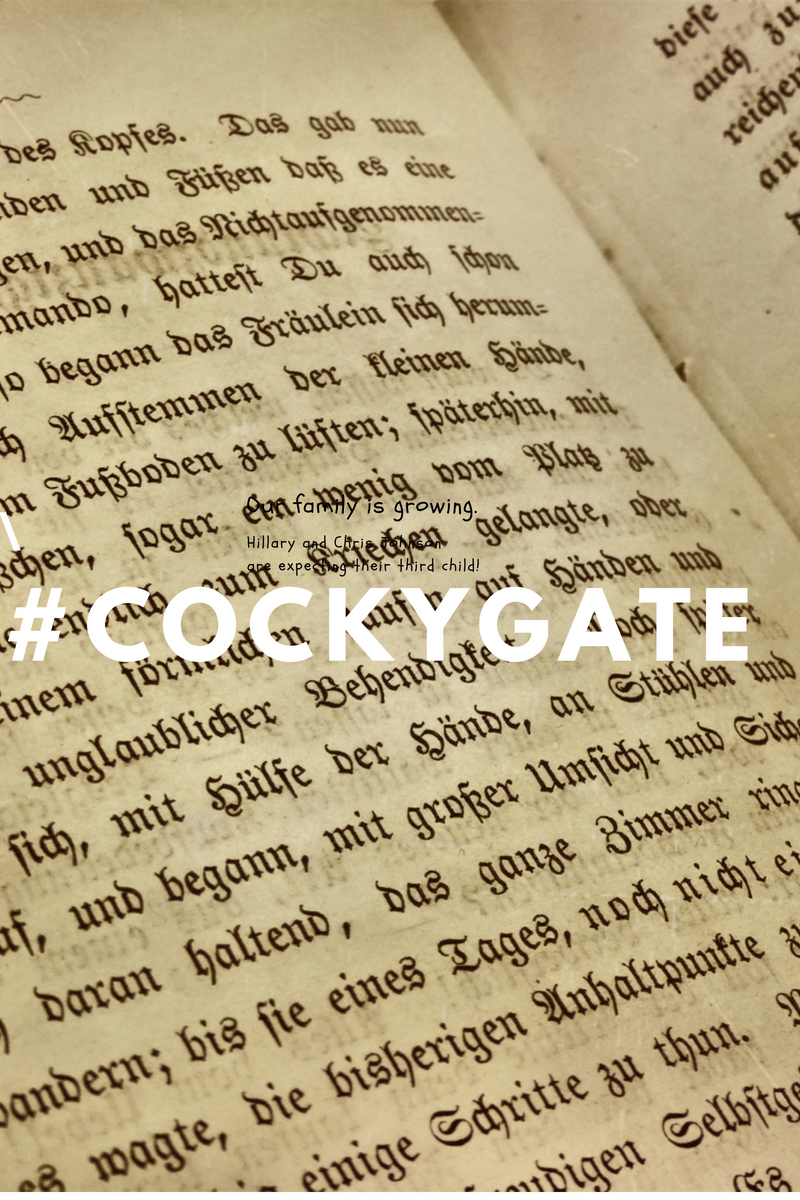
For my earlier posts on Cockygate from May 5th and May 28, click here and here, respectively.

I’m just going to skip over all the preliminary stuff and just get to the good news: the Romance Writers Association and the Authors Guild won a court ruling on Friday against Faleena Hopkins, the notorious romance author who put a trademark on the word “cocky” and then sent letters to authors who had books with “cocky” in their titles, threatening legal action if they didn’t take their books off Amazon or change their books’ titles.

Now, if you read my post from last week, you may remember that Hopkins’s lawyer had sent Kevin Kneupper, the novelist and retired lawyer who’s leading the fight against Hopkins, along with author Tara Crescent and publicist Jennifer Watson, a letter with intention to sue them, as well as filing a Temporary Restraining Order (TRO) against the Petition of Cancellation for the trademark. Since then, it’s also come out that Hopkins was asking for another TRO against the publication of a collection of stories called Cocktales: The Cocky Collective, which was named as an obvious protest against her trademark (Jennifer Watson was incorrectly named by Hopkins as the publisher of the book in the papers filed for the TRO).

On Friday June 1st, several things happened:

  1. Kneupper was dismissed as a party to the lawsuit Hopkins’ lawyer filed, meaning he’s free to continue fighting against the trademark.
  2. Hopkins did not get her restraining order, so the petition and all the other legal battles against her can continue.
  3. Finally and most importantly, for the moment books with the word “cocky” in the title can be published, including the Cocktales anthology.

In other words, Hopkins lost, and she lost big. And while there’s another court date in September, and presumably this is when the decision on her trademark will be decided once and for all, it’s still not looking very good for Hopkins. As stated in the article the Authors Guild put on their website:

In ruling against the author Faleena Hopkins, who claimed exclusive rights to “cocky” for romance titles, Judge Alvin Hellerstein of the Southern District of New York, stated that he did not believe that Hopkins was likely to succeed on the merits.

In other words, the judge says that Hopkins’s trademark is on pretty weak legs.

Now, there’s still a lot of work to do. For one thing, while people can still publish their books with the word “cocky” in the title, the final decision won’t be made till September at the earliest. That gives Hopkins, her lawyers, and her supporters (yeah, there are some out there) to come up with legal strategies for the trial and for any potential appeals, both from her side and the other side. And unfortunately, there are a number of copycats out there trying to get trademarks on common words used in titles. It’s a hot mess.

But this is a bright spot in the ongoing saga of #Cockygate. I’ve heard from many authors who have expressed fear over the outcome of this controversy, and what it could mean for them if they couldn’t write because they could incur legal repercussions for using an everyday word in their story’s title. Hopkins’s defeat on Friday gives us all a little bit of hope that we can continue to not only write our stories, but give them almost any title imaginable and not have to worry about getting sued for it.

So with the trial not till September, what can we do now as authors? Well, we can continue to show our support for Kneupper and the legal team fighting Hopkins, as well as the RWA and all of the authors who’ve been affected by Cockygate (remember, if you’ve received a letter from Hopkins, contact carol.ritter@rwa.org for assistance and guidance). This can be something as casual as sympathetic messages online, or buying, reading, and reviewing the books of those involved/affected (a single sale and review can do an author a ton of good, believe me), or even donating your time and skills to the legal battle.*

You can also spread the word on Cockygate and any developments in the scandal. The more people who know what Hopkins is doing, the more we can rally against her or anyone else trying to copy her. The louder our voices, the stronger we are, and the better positioned we are to affect positive change.

And finally, if you’re a writer, continue writing. Don’t let fear get in the way of telling the stories you were born to tell. Like the people behind Cocktales, when we decide to put something out in defiance of bullies, we make a statement that we’re not going to take this sitting down.

That’s all for now, everyone. If there are any other significant developments, I’ll post about them. Until next time, pleasant nightmares.

UPDATE 6/3/18 @ 7:18 PM EST: Erica Unsophisticated Blood Thirsty Wolf Fisher (@monet5280) informed me over Twitter that both Ms. Crescent and Ms. Watson’s lawyers are working on a motion to dismiss, which will be due in on June 22nd. In addition, Ms. Hopkins has to respond to the Petition of Cancellation from Mr. Kneupper no later than June 23rd. So it looks like things will be heating up longer before it starts to get cold again. Here’s hoping the end of June brings more good news like what we saw on Friday.

*Just be careful before you donate to any legal fund for those affected or claiming to be for any legal teams against Hopkins. There are a ton of people out there who have no qualms against taking advantage of those suffering in order to make an easy buck.

Video Rage, Book 2 of the Reborn City series

So as I promised in my last post, I have another post out today. And this one is a special one. Two years ago today, I published Video Rage, the second book in my Reborn City series.

If you’re not familiar with the Reborn City series, it’s a science fiction trilogy that I started writing back in high school. The story follows street gangs living in a dystopian future, in particular a gang called the Hydras whose leaders have very unique abilities. The novels explore themes such as prejudice and self-fulfilling prophecies, gang violence and drug addiction, and overcoming the expectations of others and of yourself. I published the first book, Reborn City, back in November 2013, and the second book, Video Rage, came out on June 1st, 2016, right before I started working in my current position.

While the books only have a very small following, those who’ve read them have had very enthusiastic things to say. Here’s are some of the reviews for Reborn City:

It’s a neat exercise in trying to see through the eyes of someone different from oneself. It incorporated a lot of fly comic-book-esque tropes. A good beginning effort of an up an coming new author who has some cool ideas to explore.

–Amazon Customer

This is not a genre I typically delve into, but I took this book on vacation and couldn’t put it down. The plot had me turning pages at quite the clip. The characters were unique and interesting and the imagery had me creating my own visual of what Rami’s interpretation of the future looked like. For first time novelist, Rami Ungar, this was an outstanding showing of talent and commitment to his passion of writing. Looking forward to seeing what he comes up with next!
–MU
This was really a page-turner; I was hooked from the start and read it in a day. While not perfect, this is an auspicious debut novel from a good author. I look forward to reading the rest of the books in this series when they come out!
–Josh M
And while it doesn’t have as many reviews, Video Rage has also received a warm reception:

From what I understand, this is book 2 in a series. That being said, I had expected a cliffhanger of an ending. I’m not a fan of cliffhangers, but in this particular book, I think the author did an excellent job of finding the balance between making the story stand complete within itself while ending the story on a note that let you know another book was coming. Personally, the ending was one of the most intriguing ones I’d read in a long time. It didn’t leave you to figure it out for yourself (which is something I hate). The author let you know what was happening and why while leaving enough to be answered in a future book.

That all being said, the overall book was an enjoyable read. I especially liked that a former bad guy turned things around and redeemed himself. Those types of characters are one of my favorites. I had hoped in Reborn City (Reborn City series Book 1) that he would, and it was very satisfying to see that fulfilled. I also liked the underlying theme in the novel that what the media tells people through the major outlets is slanted by government agendas. In this book, it was up to the main characters to find an alternative way of getting the truth out.

I think this book is best read after reading Reborn City (Book 1) because it really helped to have the background on the characters, and I think this book is far more effective if you have the foundation Book 1 gives you. The science fiction geek in me really loves the genetic aspect. And so that I don’t spoil anything, I will say the real bad guy in this series does a nice twist in this book along that line.

–Ruth
I was really looking forward to the continued journey of the Hydras and Rami was able to produce. Zahara is my favorite character and her development from an insecure girl into a strong woman came out clearly in this book. Some other character development was really unexpected but the book moves at such a fast pace that it didn’t hold me up at all. The story line is quite imaginative and, as usual, there isn’t much predictability there. I think that is what draws the reader in – you just need to keep going to find out what weird twists and turns happen next! Looking forward to continuing this journey with Rami and the Hydras.
–Michele

Reborn City, Book 1 of the Reborn City series.

If any of this has piqued your curiosity, I’ll post the links for the books below. Please check them out if you’re interested. And if you do end up reading them, please let me know what you think. Email, blog comment, review online, I’d love to hear your feedback, positive or negative.
That’s all for now, my Followers of Fear. I’ll probably have another post out tomorrow. Until next time, happy reading and pleasant nightmares.
Reborn City: 

Available on Amazon, Createspace, Barnes & NobleiBooksSmashwords, and Kobo

Video Rage:

Available from Amazon, Kindle, CreatespaceBarnes & Noble, iBooks, Smashwords, and Kobo

Before I give you the news I hope you’re all eager to hear–the latest on my novel Rose, which is to be published by Castrum Press–I want to first share something I was told recently. Now, I’m not sure if this is true and I haven’t been able to find any corroborating evidence, but according to someone I talked to online, in the first draft of Carrie by Stephen King, Carrie actually grew horns and sent bolts of electricity from her eyes at some point in the story. This was later dropped during the revision process of the novel.

Okay first off, I kind of want to see that version of Carrie, not just in book form but in movie form as well (I still maintain that the 2013 film is the superior adaptation, and you know the horns and lightning bolts would’ve looked awesome in that film). Second, it shows that even King’s works, including one of his greatest, require extensive revisions. And that made me feel a whole lot better about the revisions I have to do for my own story.

Now, if you’re unfamiliar with Rose, it’s a novel I’ve been working on since my senior year of college, when I wrote it as my thesis project. It follows a young woman who finds herself turning into a plant creature (and that’s just the start of her problems).

I’ve mentioned before that my publisher asked me to do nix the many flashback sequences in Rose, essentially throwing out one-third of the book, and another third that was dependent on that first third. Although I was understandably more than a little disappointed about that, and it even brought my mood down quite a bit at times, I decided to try and find a new direction for the story that didn’t rely so heavily on flashbacks. Somehow, after a lot of head-scratching and extensive use of a method of brainstorming I’ve been wanting to try for a while (I’ll write an article about it for Self-Published Authors Helping Other Authors soon enough), I managed to find a new direction and plot for Rose that I thought made for a good supernatural thriller.

I sent a new outline for the story to my publisher, and just today they got back to me. I was really worried that they might not like the new direction, but the tone of the email was really enthusiastic. They just asked me to keep in mind some things about chapter length and a few other things, and wished me luck.

I can’t tell you what reading that feedback did for my confidence. The closest I can get to is by saying that it felt like a weight had been lifted off of my shoulders.

And since I’m on vacation for the first third of June (not going anywhere, I’m just having a relaxing stay-cation at home), now is the perfect time for me to get back to work on Rose. I plan on getting through at least the first seven chapters of the novel, and then start on the new material for the novel. All that, along with more than a few blog posts I’ve been wanting/meaning to write for a while, and of course the normal stuff one does while on vacation (sleep, watch TV & movies, read, hang out with family and friends, run errands, have tea and scones with a succubus you’ve been seeing on another plane of reality, etc.), should keep me pleasantly occupied during my vacation.

So as you can see, Rose is still coming along. It may take some time, but I still think we can get the book out before it starts to turn chilly again (though in my state, that can happen even in summer). And I think when I get it done and on the shelves, it’ll surprise more than a few people. Especially those who’ve read earlier versions of the story.

That’s all until morning, my Followers of Fear (got another post I need to work on after I’ve gotten my much-needed sleep). Until then, pleasant nightmares. I’ll see you soon.