Posts Tagged ‘novel’

Oh frabjous day! Calloo callay!

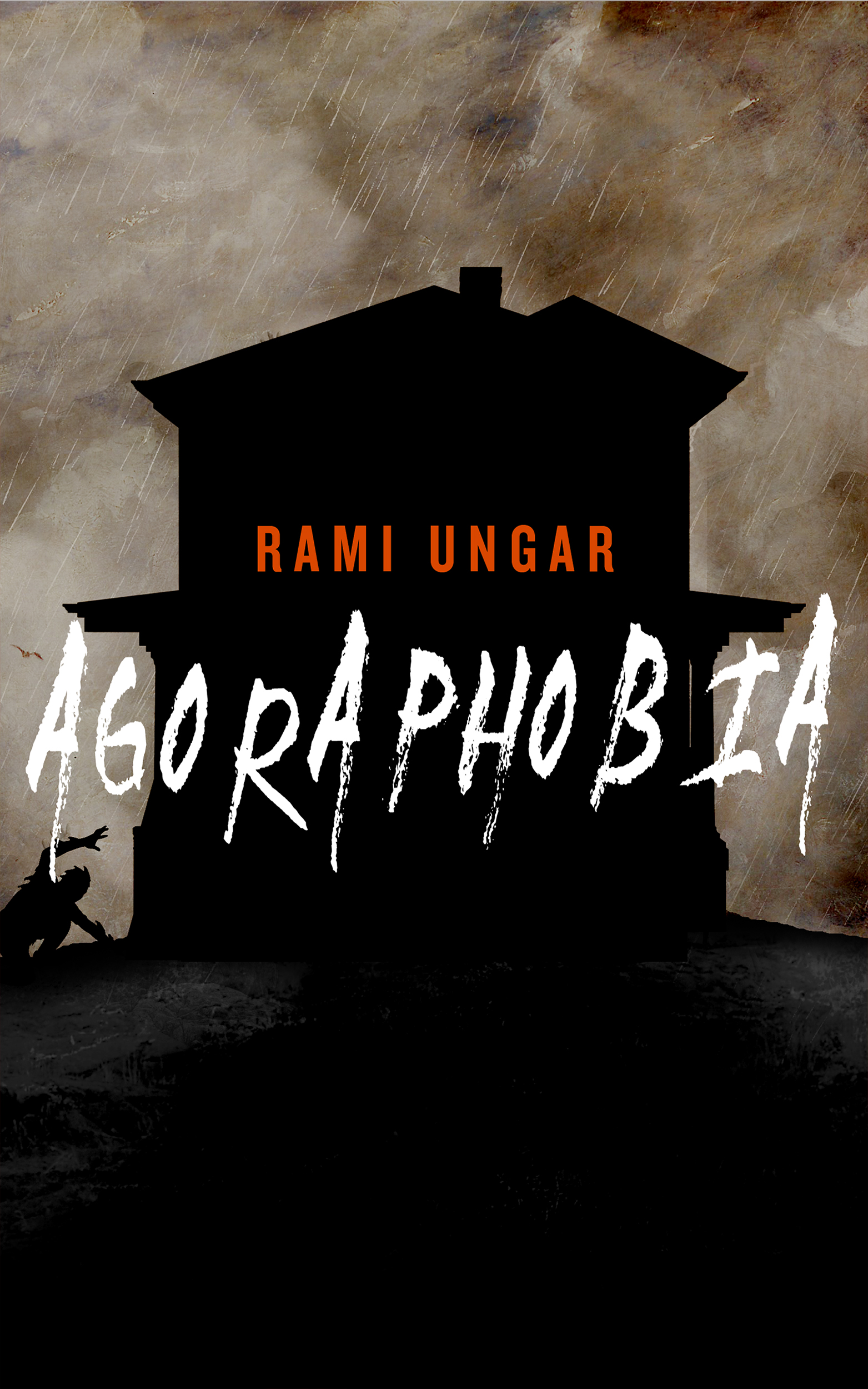
Okay, enough with quoting Lewis Carroll. As you are already aware, today is the release day of my short horror story, “Agoraphobia,” is released. The story follows a man with severe anxiety and agoraphobia is forced to leave his home due to a hurricane bearing down on his area.

And I’m so excited for all of you to read it! I’ve been hyping this story for weeks and I’ve heard from a number of you that are looking forward to reading it. So I’m glad the release day is finally here and you get to read it.

If you haven’t already preordered the story and would be interested in reading “Agoraphobia,” I’ll leave links below. The short story is only 99 cents (or the equivalent in UK and Canadian money), so it’s totally affordable. And if you do end up reading the story, please let me know what you think. I’ve already heard from a few early readers, but I would still love your opinions. Positive or negative, I love reader feedback, and it helps me out in the long run.

Not to mention, if you leave reviews and tell people your thoughts, it helps them decide whether or not the story is worth their time.

Also, if you’re wondering about physical copies, I only sell those as chapbooks at events. I’ll be posting an update on events soon, so in the meantime, hang tight and check out this post if you have no idea what a chapbook is.

That’s all for now, my Followers of Fear. A publisher I’ve been keeping an eye on is going to open for submissions soon, so I have a novel to polish. Until next time, stay safe, happy reading and pleasant nightmares!

Agoraphobia: Goodreads, Amazon US, Amazon UK, Amazon Canada

This morning, I checked my memories on Facebook, and what popped up in 2018? No, not an embarrassing photo from that year’s Purim celebration. I killed the person who took the photo and destroyed their phone’s SIM card before they could post it. No, it was the announcement that my novel Rose had been accepted by Castrum Press, a publishing company based out of Belfast, North Ireland.

And over the course of today, it just kept hitting me. Three years. Three whole years. It felt like so much longer (and not just because of the mess that was 2020). And given all that happened with the book over those three years, it only feels right to blog about it.

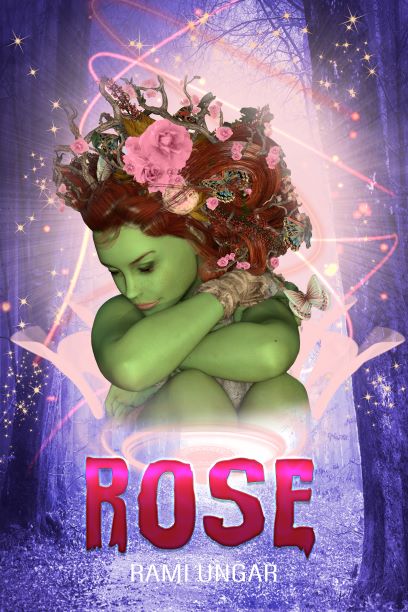
So if you’re unfamiliar, Rose is a novel I first wrote as my college thesis and which later became my first novel published with a publisher. The story is a Kafkaesque fantasy-horror tale about a young woman who wakes up with no memory of the past two years. She then finds herself transfigured into a plant/human hybrid by ancient magic, setting her on a path of no return.

As I said, a lot happened with Rose in the three years since Castrum Press accepted the novel. The novel itself went through a heavy editing and rewriting process that lasted about fifteen months, from March 2018 to June 2019 when the book was released. Characters were changed or written out, plot points were added and pulled out, and at one point two-thirds of the book needed to be thrown out and rewritten. Yeah, that happened. Word of advice, don’t add flashback scenes that have nothing to do with the main plot of the story, let alone make one-third of the book flashbacks and the other third somewhat dependent on the flashbacks.

But it was worth it. The book came out soon after my twenty-sixth birthday, and people started reading it. Soon, I had some great reviews on Amazon and Goodreads, and they kept growing. In August, I had a reading at Brothers Drake, a local bar and meadery, or distiller of honeywine. In December, the audio book released, narrated by the incomparable Sarah Parlier, who made chills go up my back with her narration. 2020 came in, and the book continued to do somewhat well. I wasn’t making Stephen King money, but I was doing okay for an author of my skill and reach.

Honestly, though, the fact that anyone’s reading Rose at all, especially with so much good horror out there, is incredible. Yeah, people enjoy it, but I had to do a lot of plugging over the course of these three years to get people interested, let alone willing to read it. That’s part of the author lot, truth be told: you gotta do a ton of work to let people know your book is available. No one’s going to do it for you, at least not without compensation.

Well, I’m not complaining. All the work has paid off. More and more people are reading Rose, and are leaving reviews. I just got a new four star review today from an author I know through Twitter, which made my day. It makes me happy. And I’m hoping, with continued work, some devoted fans, and a few conventions/author events, Rose will continue to do well.

If you would be interested in reading Rose, I’ll leave links below for you to check out. And if you end up reading it, I hope you’ll take the time to let me know what you think. Positive or negative, I love reader feedback, and it not only helps me, but your fellow readers in the long run.

That’s all for now. I’m off to enjoy the weekend. Until next time, my Followers of Fear, good night, Shabbat Shalom, have a great weekend, and pleasant nightmares!

Rose: Amazon US, Amazon UK, Amazon Canada, Audible

I think I’ve been hearing buzz about this novel since it was released last year. However, I only just got around to reading it recently (or more accurately, listening to it on audio book). I had somehow managed to stay spoiler-free despite the buzz, and knew nothing beyond the fact it was a Gothic novel set in 1950s Mexico. And knowing nothing, I was going in expecting something amazing.

Mexican Gothic follows Noemi Taboada, a young high-society woman living in Mexico City in 1950. That is, until a mysterious letter from her cousin Catalina arrives at the family home. Concerned, Noemi is sent out to check on her cousin, who has been living in the countryside since her marriage to a mysterious Englishman named Virgil Doyle at his family’s estate, High Place. When she arrives, she’s not surprised to find things are not what they appear. However, the biggest surprises are yet to come. And if Noemi’s not careful, she’ll find these surprises may keep her from leaving High Place. Forever.

I can see why this novel was nominated for a Bram Stoker award, it’s excellent!

For one thing, the language this book is written in is just beautiful, like a Victorian novel without being too stuffy or overly wordy and dramatic. From the opening chapters, I felt like I was listening to the sort of writing I aspire to write (maybe someday I will). And Moreno-Garcia uses this brilliant language to not only bring the novel to life in your mind, but to bring out this strong sense of atmosphere and dread. I could almost see High Place and feel the horror that Noemi felt.

Speaking of which, I loved Noemi. She’s a very spunky young woman who refuses to compromise or let anyone tell her what to do just because she’s a woman. I loved watching her go up against the stodgy, stuffy Doyles with their rigid ways and gloomy lives, as well as how she refused to submit.

In addition, Mexican Gothic‘s story has a unique twist on the concept of a haunted house. I won’t go into details, because it’s more fun for you to read it yourself. Let me just say, it’s different than anything I’ve read and you’ll probably find it pretty clever on a number of levels.

I can’t think of any real downsides to this story. If I did, it would be nitpicking on my part. I will warn some readers that there are some things in the novel that might be triggering to them. One of the characters turns out to be…skeevy, to put it mildly. Just warning you.

In any case, Mexican Gothic by Silvia Moreno-Garcia is a wonderful addition to the Gothic horror genre. On a scale of 1 to 5, I’m giving it a 4.7. Wonderfully written, ingenious and spooky. Pick up a copy and find out for yourself why people are raving about this book. Preferably before they decide the Bram Stoker winners in May.

That’s all for now, my Followers of Fear. Until next time, happy reading and pleasant nightmares!

Wow, I’m writing this post way later than expected. I blame the busy day I had. After work, I had to run errands, and then I had administrative work to do (answering emails, sending emails, setting things in motion, etc.), and I had to eat dinner…I’m sorry. I’m not sure why I’m bothering you guys with this stuff either.

Anyway, as you can tell from the title of this post, “Agoraphobia” is three weeks away from being released. This short story is about a man with severe agoraphobia and anxiety who is forced to leave his home due to a hurricane bearing down on his house. It’s a creepy, delicious little tale of dealing with your darkness under the most dire circumstances.

If that sounds like your kind of thing, then guess what? The story is available for preorder right now. I’ll leave the links below. I hope you’ll check the story out. And if you do, I hope you’ll let me know what you think somehow. Positive or negative, I love feedback from readers. And if you leave reviews on Amazon or Goodreads, it helps me out in the long run, as well as give readers a better idea of whether or not a story is worth their time.

(Hopefully you consider mine worth your time.)

Anyway, the story will release March 16th, so I’ll be posting reminders right up until release day. Hopefully you won’t be sick of me by then.

Also, if you’re wondering if there’s a physical version for the story, there will be. However, it, like “Mother of the King,” will only be available as chapbooks at events I attend as a vendor. Sorry, but that’s just the business strategy I’m trying out. (Click here to find out what events I’m going to attend this year. Click here to find out what the hell a chapbook is.)

Speaking of “Mother of the King,” I’ll leave links for that below as well. It just received its tenth review on Amazon (and five stars, no less!), so you should go and check it out. Or you can check out my short story collection, The Quiet Game; my serial killer horror-thriller novel Snake; or my fantasy-horror Rose. Any one of them will be worth your time. I’ll include links below.

Alright, that’s enough self-promotion. I’ve got a busy week ahead of me, so I’ll be mostly focused on that. However, you should see me again by the end of the week, if a certain film is released to streaming as promised. Until next time, good night, my Followers of Fear, stay safe and pleasant nightmares!

Agoraphobia:Amazon US, Amazon UK, Amazon Canada

Mother of the King: Amazon US, Amazon UK, Amazon Canada

Rose: Amazon US, Amazon UK, Amazon Canada, Audible

Snake: AmazonCreatespace, Barnes & Noble, iBooksSmashwords, and Kobo

The Quite Game: Amazon, Createspace, Barnes & Noble, iBooksSmashwords, and Kobo.

So this past week, I watched an anime series that turned out to be pretty bad (I swear, this is related to writing and isn’t another anime-themed post). There were several reasons why it was terrible, but a major reason was that the main character was the reincarnation of a guy who died in our world and was reborn into a fantasy world with most of his knowledge and memories intact.

As we’ve discussed on this blog before, anime where characters from our world end up in fantasy worlds are called isekai anime. Because the main character(s) are from our world, that usually plays a large part in their character. The audience can’t watch the show without remembering that this character is from another world and the original world influences their personality and decisions in a hundred different ways.

And this anime…didn’t really do that. Like, the protagonist used some of his scientific knowledge from his previous life to make his magic stronger and invent new devices. But other than that, I often forgot he was from another world. At one point, I found myself thinking, “You know, they’ve already established this guy as a quirky magic genius. They could have written out the isekai element, attributed his knowledge of oxygen and the theory of folding space to his unusual brain, and the show would have one less problem. It wouldn’t be great, but it would have one less problem.”

And that long-winded intro leads into the subject of today’s post. How do you find a story element that’s actually hampering the story rather than improving it? What prevents a writer from creating the sort of pitfalls, be it an unnecessary character or adding an isekai aspect to the story when it serves no purpose? Or if they do, how do they find it and get it out before the story is published?

I had to make a lot of these decisions during the editing of “Rose.”

Well, part of it is experience. Namely, as we become more experienced writers, we get used to figuring out what elements work and what don’t. It’s like a voice in the back of our heads is asking, “Does this work? What does it bring to the story? Would the story suffer if I removed it?” This happened a lot when I was doing major rewrites of Rose. Rose’s fiancé Mark had a slightly larger role in earlier drafts, but during the rewrites, when I was taking the plot in a different direction, I realized that Mark couldn’t fulfill that role anymore. He still had a part to play, but the part he’d played previously made no sense in the new direction. If I kept it, it would have not served the story. Thus, Mark’s role was reduced to what it is in Rose now.

Something similar happened while writing The Pure World Comes, but that will have to wait till it’s published.

But if you do miss something, that’s where beta readers and editors come in (and why it’s important to use them before you try submitting/publishing a story). Back to Rose, while I was rewriting the book, my publisher recommended I cut out the flashbacks, which were about a third of the book. I was confused and a little upset, as I was very proud of those scenes. However, I realized that flashbacks need to connect to the main events of the story. And while the flashbacks did explain plenty about Rose‘s character in earlier drafts, it didn’t connect much to the current events, so I nixed them and started rewriting.

See? Editors and beta readers do help.

But what if you really like an element in a story and there’s a strong indication you need to nix it? Well, then you have a choice to make as the creator. In the case of the anime I mentioned, the creator, if confronted with this choice, could have either made the fact that the protagonist was from another world more essential to his character or the plot. Or, like I suggested, he could have nixed it.

You may not like it, but sometimes you have to throw out problematic elements if you can’t find a way to make them work. Photo by Steve Johnson on Pexels.com

And that’s what it often boils down to. Authors can either cultivate those elements so that they actually matter and don’t bring down the story, or they can “kill their darlings” and nix the elements. This can be hard to do, as we may love those elements as much as we love the very stories we write.* However, it’s a decision we eventually have to make with our stories if we want to not only continue with these stories, but share them with as many people as possible.

No author likes to hear that they need to nix something from their story because it adds nothing or brings the story down. However, it’s important to hear and learn to deal with them, as in the end, it helps to improve the story and maybe even get it into the hands of many readers. And besides, it’s better than having a lot of people complaining about the problem elements after release, right?

That’s all for now, my Followers of Fear. I have a busy week ahead of me, but I’ll be back before too long. Until next time, stay safe, pleasant nightmares, and if you’re looking for a good isekai anime, let me know. I have recommendations.

*Though I think the creator of the source material for the anime, he did it because isekai stories are hot right now, to the point that they’re inundating the market. It’s a problem we anime fans both joke and groan about.

Me and my roommate Jonesy in my old apartment.

Funny story: earlier this week, I found out I lost some weight, even though I hadn’t expected it (if anything, I thought I gained). I’m talking to my dad about it and say, “I’ve no idea what happened. I’ll have to watch my weight carefully for a while. Make sure I’m not going through something like out of Stephen King’s Thinner.”

My dad has never read a Stephen King novel in his life. His response was, “…okay.”

Me: “Trust me, it did not end well for the guy suddenly losing weight in that book.”

And if you count that as a spoiler, remember that book is nine years older than me. What were you doing these past thirty-seven years?

Okay, onto the meat of this post. The audience on this blog has been growing by leaps and bound lately. So first off, hi everyone. Thank you for joining the Followers of Fear. We don’t (normally) sacrifice members and there are hidden benefits to joining. Namely you’ll likely survive when I start the Apocalypse. Maybe.

Second, since there are so many of you, I thought you should know something about me and my works. First off, me: I’m a novelist from Ohio specializing in horror and dark fantasy. I like reading and writing, anime and horror movies, and being an unabashed eccentric. I also have three books and a short story on e-book available right now, so if you don’t mind (and if it doesn’t make you want to unfollow me), I’d like to tell you about those books. You know, in case you’re interested.

I won’t mention the e-book, though. I did that last post.

The Quiet Game: Five Tales to Chill Your Bones

In his publishing debut, Rami Ungar brings us five terrifying stories of darkness in magic. You can experience the strange visions of a man battling sex addiction in “Addict”. Or feel the wrath of an enraged dybbuk in “Samson Weiss’s Curse”. Face your fears in Gene Adkin’s Murder House in “I’m Going To Be The Next James Bond” and then journey with a young autistic “In The Lady Ogre’s Den”. But most of all, prepare to play the most insidious game of all: The Quiet Game.

My second foray into self-publishing. While a lot of these stories aren’t as scary or as well-polished as some of my later work, I think they’re still enjoyable to a degree. Plus, I had a lot of fun writing these stories. Give it a shot if you’re interested.

Available on Amazon, Createspace, Barnes & Noble, iBooksSmashwords, and Kobo.

Snake

How far will you go for love and revenge? When a young man’s girlfriend is kidnapped by the powerful Camerlengo Family, he becomes the Snake, a serial killer who takes his methods from the worst of the Russian mafia. Tracking down members of the Camerlengo Family one by one for clues, the Snake will go to any lengths to see the love of his life again…even if it means becoming a worse monster than any of the monsters he is hunting.

A homage to my burgeoning love to slashers, too many James Patterson novels, and Law & Order: Special Victims Unit, this was another one I had fun with. It’s also, too date, my longest book, over 100,00 words! And yet, people still find it a quick read. Must be the fast pace. Anyway, check it out if you like unusual tales about serial killers in your diet.

Available on AmazonCreatespace, Barnes & Noble, iBooksSmashwords, and Kobo

Rose

Rose Taggert awakens in a greenhouse with no clear memory of the past two years and, to her horror, finds her body transformed into an unrecognizable form.
Paris Kuyper has convinced Rose that they are lovers, and as Paris could not bear for her to die, he has used an ancient and dark magic to save her from certain death.
But the dark magic Paris has used comes at a price. A price which a terrible demon is determined to extract from Rose.
As Rose struggles to understand what is happening to her, she must navigate Paris’s lies and secrets; secrets that Paris will do anything to protect.

I wrote this novel back in my last year of college as my thesis. It took five years, and more rewrites than I care to remember, but the novel was accepted by Castrum Press, my first novel with a publisher (and hopefully not the last). And you know what? Nearly two years later, it only just got its first one-star review! Yeah, that’s a record (and something I hold as a badge of pride). I think that makes it worth a try, don’t you?

Rose: Amazon US, Amazon UK, Amazon Canada, Audible


So, those are my published works. And I hope to follow them up with plenty more. And while I work on those, I hope you’ll consider not only checking out these stories, but letting me know what you think once you’ve read them. I love getting reader feedback, no matter what that feedback is, and it helps me out in the long run.

Well, that’s all for now. I’m off to get a lot of sleep. Followers of Fear, stay safe, have a great weekend, and pleasant nightmares!

Fun fact: apparently Scott Carson is actually Michael Koryta, an award-winning author who does both crime and supernatural fiction. If what I’ve heard is true, his fanbase is pretty divided between his crime and supernatural books, so he created a pen name for the latter going forward. Everyone got that? Good. Onto the review!

The Chill takes place in the fictional Torrance County, upstate New York, home of the fictional Chillawuakee Reservoir, or “The Chill.” This reservoir was built at the loss of a small town called Galesburg, which was submerged after the dam went up. Prior to that, some of the Galesburg residents didn’t take kindly to being evicted so New York City could have another freshwater supply, and reacted violently. Even after the dam went up and many of the protesters died, some still swear revenge. Now, nearly eighty years later, the dam is old and in need of repairs, and the dead are aware of this. They’re active, they’re working behind the scenes, they do not forgive and they do not forget. And they want their revenge.

So, the concept of the story is pretty cool. It kind of reminds me of The Shining, though instead of ghosts at an old hotel, it’s ghosts by a dam and the afterlife is kind of busy and cult-like as well. You can tell the book was meticulously researched by how it goes about explaining the inner workings of dams and reservoirs, as well as (what I assume to be) the problems with maintaining them. And the prophecy in the story makes a clever twist on the trope that I like.

However, there were a lot of problems with the novel. For one thing, it seemed to take forever before it got interesting. Several times before the halfway point, I wanted to put the book down and not read anything else because of how slow it was going. We also don’t meet one of the focal characters, Gillian Mathers, until about a quarter in, and it takes even longer for us to identify with her and see her as more than just a trope in a story. I feel like Carson wanted to focus less on her until she was needed because she is a type of trope, and instead focus on another character, Aaron Ellsworth, because he’s got a much more interesting character arc.

Another issue was that, while the dams were well-researched, I had trouble visualizing certain things in my head. I’m not familiar with dams, and I don’t know many people who are beyond the fact that they hold water back. It would have been nice if a couple more paragraphs were shown to help readers like me visualize the structure, the discharge tunnel, etc.

However, past all that, it does get interesting. There are some spooky scenes, an epic disaster scene, and some excellent writing. I just wish we’d seen more of that in the first half.

On a scale of 1 to 5, I award The Chill by Scott Carson a 3 out of 5. It’s okay, but there were definite areas to improve in.

That’s all for now, my Followers of Fear. I’m still relaxing so that when I return to writing, I can be as refreshed as possible. Until next time, stay safe and pleasant nightmares!

.

I think I’ve mentioned how busy I am lately. But things have kind of calmed down a bit, so unless I hear back from a beta reader, figure out how best to edit this story I’m working on, or am lucky enough to get a story accepted somewhere, I know what I’m working on next.

You may recall back in the spring, I started writing what I thought would be a novella, but ended up being a full blown novel. This novel, The Pure World Comes, follows a maid in the Victorian era who goes to work at the manor of a mysterious nobleman, only to find mysterious and terrifying events occurring there. I haven’t touched it since then, but I haven’t stopped thinking about it and how to improve it. And now feels like a good time to get to work on a second draft.

As such, I’ve been prepping to journey back to Queen Victoria’s reign. I’ve been listening to audio books and watching movies and TV shows in that era to get that flowery, polite way of speaking down. I’ve been learning new bits of information, such as etiquette and dating advice (yes, the Victorians had dating advice). And I’ve been reviewing what I already know. After all, this isn’t just Gothic horror (or is it Gothic horror/gaslamp fantasy?) I’m working on. This is historical fiction! And historical fiction requires a lot of work to make the reader feel they’re in that bygone era.

All that being said, I have a few goals with this draft. Obviously, I’ll be looking to clean it up, fix any plot holes I notice, and cut out anything extraneous. However, I have a few other goals. This includes:

Victorian fashion. It was a special kind of extravagant.
  • Improve the dialogue. I feel like when I wrote the first draft, I made my characters speak like modern-day Americans. This draft, I’m going to go through the whole book and make sure they sound like Victorians! Eloquence and flowery language, fewer contractions, a focus on politeness and how to address different classes. Not sure I’m going to mad on the expressiveness like characters in Dracula did (oh my God, even when people were dying, they had to be so wordy and full of praise for people they admire!), though. That might be too silly and melodramatic.
  • Explain the era better. One of the problems I have as a writer is that I forget that not every reader knows the same things as me. So, while I know a lot about Victorian England and can put an odd detail peculiar to the era in, knowing exactly what that means, the average reader won’t. It’s my job as the author to explain the minutiae to the reader, be it the ritual of mourning (click here for more on that), how much a pain in the ass cleaning was, or how ice cream was made back in the day (they used to use cucumbers!).
  • The little details need to be inserted. By this, I want to include more things special to the Victorian era. You write about the 1980s, you include Walkmans and big hair and the latest pop songs. You write about the 1950s, you include Cold War concerns, soda shops in pharmacies, televisions and record players, and early rockers. You write about the Victorian era, you mention steam engines, Mudie’s Lending Library, penny dreadfuls, and so much more. I want to include more of those details in the story, so that others familiar with the era can say, “Aha! That makes it feel authentic.” And trust me, there are a lot of details like that to include.

So, that’s what I’m up to lately. Or what I’m about to get up to, most likely starting this week. With any luck, I can make a damn good draft and get this story one step closer to publication. And believe me, I aim to get this story published, one way or the other. After all, this story includes both my love of the Victorian era and my theory of who Jack the Ripper is! You know I gotta get that out there!

That’s all for now, my Followers of Fear. I’m off to dream dark dreams. Possibly taking place at balls with huge dresses and polite conversation. Still dark dreams, though. Until next time, pleasant nightmares!

Audible’s audio edition of Dracula by Bram Stoker. Turns out, it was just what the Count ordered.

Everyone has heard of Dracula. Most likely, you’ve seen some version of him in a movie or a TV series .* But how many of you have ever read the original novel? Not many, surprisingly. Besides the fact that Dracula’s melted so thoroughly into pop culture, the source material is a Victorian novel written in the form of diary entries and letters. Even veteran bookworms have to steel themselves for those!

I tired once or twice in my younger years to read Dracula, but found it harder to get through than some Lovecraft stories and had to stop reading. Last month, however, Audible offered its own audio version for free as part of my subscription. I was like, “Maybe I’ll enjoy it more in audio form” and downloaded it.

Turns out, while Audible may have a dumbass exchange policy (and yes, fixing Audible and Amazon’s issues are still works in progress), the audio book was just what I needed. Great cast that brought the story to life and allowed me to get into it while driving or working out or cooking.

And let me tell you, Dracula the novel is good! It’s a slow burn Gothic story that takes its time building up an atmosphere as well as a conflict. By the time the action really gets rolling, the suspense and dread is so well-constructed that you actually feel a bit of worry with every encounter or setback the characters endure.

I also liked how a lot of my expectations were subverted while listening to the novel. Yes, his name’s on the cover, but Dracula himself doesn’t show up that much in the story past the first act. He’s mostly on the edge, only showing himself every now and then. While this may upset some readers who expect the Count to be front and center, it’s actually pretty effective. Whenever Dracula shows up, you know shit is likely to get real, and you’re waiting for that shit to happen.

Contrary to what the movies portray, Dracula is more on the edges and backgrounds than front and center.

Another surprise: while I expected Dr. Van Helsing to be an important character, Mina Harker (nee Murray) really stole the show. She’s easily smarter than most of the other characters, including the doctor, and could almost be seen as a proto-Buffy. The only reason she doesn’t do any slaying is because Victorian mores made it impossible for anyone, including Mina herself, to see her taking on a more active role against Dracula (much to their regret later). Kind of makes you wonder if Stoker was making some sort of feminist statement there. I’d love to see an adaptation where Mina’s the one kicking ass. You know, instead of falling for the Count and/or being totally helpless.

And there were some details in the story that I found fascinating, simply because they never make it into any adaptation. For example, Van Helsing hints that Dracula, for all his power and evil, has a very childlike brain when it comes to planning or deep thinking, and that hinders him when he comes to England. It’s amazing what never gets translated to the adaptations.

All that said, the novel isn’t without flaws. The character of Renfield, Dracula’s faithful madman, is pretty extraneous to the plot. He’s really just a vampire radar, and other than that, he doesn’t do much beyond be crazy and help develop Dr. Seward’s character. Then there’s Quincy Morris, a character from Texas who feels more like a parody of Texans from Western novels than a real Texan. And yeah, I would have liked to see a bit more of Dracula, as well as him being a big bad. That might just be my pop-culture image not lining up with the novel, but can you blame me?

All in all, though, I think Dracula is deserving of a 4.8 out of 5. It’s moody, well-written and worth the read if you find a format that works for you. Hell, I think I might go on a binge of Dracula-related media: some essays on the story’s deeper meaning, some adaptations, that novel co-written by Stoker’s descendant (yes, that’s a real thing). I might also write a story involving Dracula and characters in the novel. Who knows?

That’s all for now, my Followers of Fear. If you need me, I’m celebrating the first night of Hanukkah with vampires and jelly donuts (weird combination, I know). Until next time, happy holidays and pleasant nightmares!

*Speaking of which, I’m still sad that the 2014 NBC TV show was cancelled after one season. All because they didn’t give it the advertising it deserved. The fact that this might be the first you’ve ever heard of it unfortunately proves my point.

So, you just finished a short story. It might be a short story or a novel. Either way, it’s finished and you love it! You think it’s great, that it has potential, that it could even get published somewhere. Hell, you even dream of it getting awards and adaptation offers and so much more! With all that in mind, what do you do with this awesome story of yours?

If you said, “Rush to get it published,” I’m only going to say that that’s not the answer I was going for. If, however, you said “I’m going to get a beta reader or two to look at the story,” then congratulations! You got the answer I was going for.

As you likely already know, beta readers are readers who look at a story somewhere along the editing process and give critiques and feedback. They may also give help with the spelling/grammar/punctuation issues of the story, depending on what they can offer. And over the past year or two, I’ve made sure to use beta readers for every one of my short stories.

Let’s face it, authors can be our own worst critics, and our own worst editors. We can see a lot, but occasionally things slip by our notice. In fact, a lot of things can slip by our notice. Typos, plot holes, inconsistencies in character development or backstory, implausible situations or things that don’t jive with reality. Beta readers point out things authors miss, or don’t want to think of as problems because they love their stories too much (it happens).

Take my recently-completed short story Afternoon Tea, the one about the cursed silent film. I found two beta readers who were willing to read the story and give me feedback. Both of them got back to me really quickly, and they said the story had a lot of potential and that they liked it. They did, however, both notice something that made no sense to them. One actually wrote quite a bit in their notes about why that plot point made no sense or was confusing.

Seeing that they both mentioned it made me realize that they had a point. That single plot point did have its issues. I had to take it out, which made me realize I needed to rewrite that section of the story. Which I was able to do with a bit of brainstorming. And I think it makes for a much better story. One of those same beta readers has already gotten back to me about the second draft and said there’s a lot of improvement, so listening to them was a good decision.

Not only that, but sometimes beta readers bring their own life experiences to help improve a story. Earlier this year I wrote a short story called Primordial Nuclear Soup, which involved a number of military characters. My beta reader happened to be a veteran, so in addition to pointing out numerous flaws with the early draft, they gave me their military experience to help with those characters and scenes.

Without the strong eye of a beta reader, you can miss much. Photo by Wallace Chuck on Pexels.com

None of this stuff I would have known or spotted without the help of my beta readers.

Of course, you do meet the occasional beta reader who turns out to not be so helpful. They send back a lot of praise for the story, but they don’t point out that much that you don’t realize needs fixing. Which can be an issue further down the line when you’re trying to get the story published. What can I say? The majority of them are human (I’m an exception).

But after a while, you do figure out how to spot a helpful beta reader from an unhelpful one. It usually shows in the notes they send back. If that happens, keep looking for more beta readers. You eventually will find someone who can give you the feedback you’re looking for. And sometimes, you even create a circle of beta readers who will gladly look at your work when you need them to and provide the feedback you need. When you do that, you know you’re in good hands.

Suffice to say, beta readers are a great help in making sure your stories are the best they can be. It may not be easy seeing all the problems in a story you’ve poured sweat and tears into, but in the end, listening to them and fixing the story based on what they said helps out immensely.

“Mother of the King.” Available Dec. 1st

Getting the stories published afterwards, however….that’s another fight altogether.

What are your experiences with beta readers like? How have they been helpful with your storytelling endeavors? Let’s discuss.

And before I forget, my Arthurian fantasy story “Mother of the King” releases day-after-tomorrow! If you haven’t preordered a copy of the ebook yet, you can check it out with the links below! Believe me, both beta readers and eARC readers have been raving about this story, so why not check it out? And if you do, let me know what you think. I’d love to hear your thoughts on the story.

Mother of the King: Amazon US, Amazon CAN, Amazon UK