Posts Tagged ‘novel’

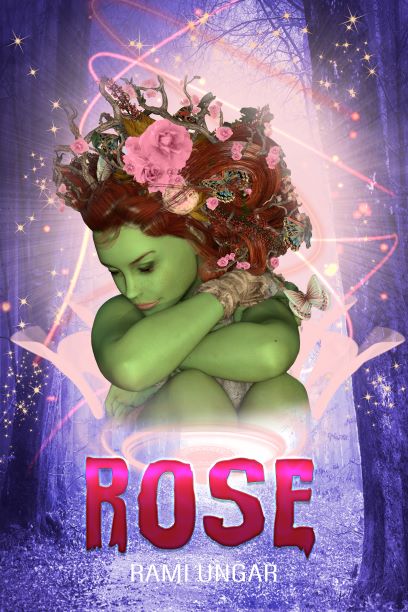
Those of you who don’t follow me on my other social media platforms may not know this, but at least once a week, usually Saturday, I post links to my novel Rose. The hope is, with enough regular mentions, people will notice the book and be tempted to read the book. If they see it often, it will worm under their skin and the possibility of entertainment they’re missing out on will nag at them. Perhaps they’ll even check it out just to see if they really are missing out.

It’s a simple strategy, but it does work. Not to the point where I’m getting dozens of new readers or reviews every week, but it does get results. For example, just this past week or so, Rose received two new ratings on Goodreads. And not too long ago, Rose received a bunch of new ratings on Amazon Canada and Amazon UK. And I think these consistent ads may have played a role in all of these new ratings.

And as I write this, I wonder if these new ratings are just a fraction of the new people reading Rose. They just haven’t let me know what they think as of yet.

This is why I keep posting about Rose. I want people to find the book. Someone like Stephen King may only need to post a couple of times about their upcoming book, and they’ll have thousands of pre-orders within hours. Less well-known but very established horror authors will post regular ads just to remind people that their book is coming out or that it’s already out or that it’s been out for a while. My philosophy is that I have to do ten times the work in order to get half of what I want. What I want is to have as many people as possible read my stories. So obviously, I’ll do what I can to get people to notice Rose.

I just can’t post everyday, because it would cost way too much money or because people would get sick of seeing Rose mentioned on my timeline. Or both.

In any case, I have a feeling that all my efforts are going to pay off even more than usual. Because COVID-19 has a lot of people isolating in their homes, they’re looking for new sources of entertainment, including books. Perhaps they’ll see Rose mentioned somewhere and think, “Hmm, that might pass the time for me. I’ll give it a read.”

Not the ideal way for someone to notice my work, but there you go.

And no matter the situation, I’ll keep writing and posting about my stories, with the hope that more people will notice and maybe want to read it. With any luck, they’ll find their new favorite horror story, and I’ll have another reader interested in my next book or publication, whenever that comes out.

And if this post has got you at all interested in Rose, I’ll post the links below. Yeah, of course I would insert an ad into this post, what did you expect? Anyway, if you’re not familiar, Rose is the story of a young woman who wakes up with no memories of the past two years. Pretty quickly, her body undergoes a startling transformation, becoming a human/plant hybrid. As those around her react to her transformation, she soon realizes they’re not all they seem, leading to a desperate fight for survival.

It’s some dark, creepy shit and you can check it out by clicking on the links below. And if you do end up reading Rose, let me know what you think. Positive or negative, I love feedback from readers, and they help me out in the long run.

That’s all for now, my Followers of Fear. If, like me, you’re celebrating Passover, then Happy Passover (and next year in person). If you’re celebrating Easter this weekend, Happy Easter. And no matter what you believe or don’t believe, stay safe, be healthy, and pleasant nightmares to you all.

Rose: Available from the links below.

Rose: Amazon US, Amazon UK, Amazon Canada, Audible

I heard about this book sometime last year and immediately requested my library buy copies (they did, and I was #1 on the list). I mean, a horror story set on the Titanic and having to do with some sort of creature living in the sea? Where do I sign up? And it came in for me at the library right before my library ceased operations due to the virus, so I was happy to get it when I did.

The Deep follows Annie Hebbley, a maid who works on the Titanic, and gets involved with the Fletcher family, a troubled married couple with a baby girl. Strange things occur on the ship leading up to that fateful (or fatal?) meeting. Years later, Annie meets Mark Fletcher, the very same man she waited on during that voyage, though now she’s a nurse on the Titanic’s sister ship the Britannic and he’s a wounded soldier returning from the battlefield of WWI. Coincidence? Or is something else at play? Something that has unfinished business with these ships and their passengers?

Let me tell you, this book has a lot going for it. For one thing, it’s set partially on the Titanic, which is always a fascinating topic and setting for any story. And turning it into a ghost story? Even cooler.* That, and the Titanic sailed during the Edwardian era, which is close enough to my beloved Victorian era that I felt right at home.

But beyond that, this is one damn good horror novel. Author Alma Katsu takes a psychological approach to this story, using hints to keep us guessing as to what’s going on. Are people going crazy onboard? Is there something supernatural afoot? Whether it be a seance or someone acting strange, you’re kept very up in the air about it up until the last fifth or so of the book, and even then, you may still have questions.

At the same time, you get to know a lot of these characters intimately. It’s a big cast, told from the points of views of Annie, Mark Fletcher and his wife Caroline, you have the POVs of several historical figures, including boxers Dai Bowen and Leslie Williams, whom I absolutely fell in love with; Madeleine Astor, worried about an alleged curse on her unborn child; and William Stead, an aged journalist with an interest in the occult.** But Katsu does a great job of developing each and every character and giving them a unique voice and issues to explore.

A lot of attention is paid to detail as well, the same sort of attention that went visually into James Cameron’s movie. It really brings alive the setting for both ships, and makes you feel like you’re there. And there are plenty of moments filled with tension, such as the aforementioned seance, a scene at the saltwater pool, or close to the very end, when things are finally revealed.

The ship may have sunk, but the stories about it, like my heart, will go on. And in some cases, get very creepy.

All these factors kind of make it feel like you’re watching a really dark and spooky stageplay about the Titanic, only you’re reading it out of a book. In fact, I can imagine The Deep being made into a stageplay someday, or perhaps even a Broadway musical, one that’s scarier and has less humor than Sweeney Todd. I’d even help adapt it if someone deemed me experienced enough and wanted me to.

I can’t find anything to put as a downside to this novel. Some might find it a bit too slow, or maybe too much time is spent on the characters’ problems and backstories. I didn’t, but I can see other people feeling that way.

Overall, I’m giving The Deep by Alma Katsu a 4.5 out of 5. It’s an unnerving, intimate historical horror novel that’ll have you enthralled. Pick up a copy, put on that one Celine Dion song you’re probably thinking of, and get ready to dive in to what may be a contender for next year’s Bram Stoker awards.

*Of course, when I try to turn a luxury cruise liner into a ghost story, Disney’s lawyers come after me. How was I supposed to know ritualistic murder wasn’t allowed in international waters? It’s always okay in wartime!

**I recognized him from my own research into Victorian England. When I came across him and the reference to the occult, I literally shouted “Wait, I know this guy!” to my empty apartment.

I had a revelation recently. No, not the kind that inspires texts that are the basis for entire religions. I had that already, and you do not want to know what information was imparted to me. No, it’s about Lovecraftian fiction.

Now, the common image among people, readers and writers, of Lovecraftian fiction is Cthulhu or any other Great Old One/Elder God/giant terrifying monster from the deep sea/outer space/alternate dimension. And that’s not wrong. From stories like The Dunwich Horror to the recent science-horror film Underwater, big monsters are a major part of the story and, along with the mind-bending insanity and dark truths they represent, are the main source of horror.

But it’s recently come to my attention that Lovecraftian horror stories are about more than just the monsters. Sometimes, it’s about psychological horror. Sometimes, you can have an effective scary story by not showing the monster, but by instead relegating the monsters to mere glimpses or suggestions and focusing on the characters’ reactions. And if done right, it can lead to some compelling horror.

There are actually plenty of stories like this. And if you’re reading this blog, you’ve probably run into plenty of them. The Call of Cthulhu, for example. Being by Howard Phillips himself, it’s obviously Lovecraftian, but have you ever noticed that we never really see Cthulhu? Think about it. The closest we ever get to seeing the High Priest of the Great Old Ones himself is through the eyes of a Scandinavian sailor’s diary. The narrator only sees drawings and statues of him.

And yet we’re scared, because the very idea of what we glean from these diary recordings is of a worldwide cult, one devoted to a very real god. One that will use humans as its pawns so that, when it finally arises, it’s in prime condition to take over our world. And the cult will do away with anyone who gets in their master’s way.

And while that’s a great example, there’s plenty more where that came from. Last year’s film The Lighthouse (see my review here) was Lovecraftian with a capital L, but we barely saw any of the marine monstrosities supposedly behind the horrors occurring on the island. And what we did see, we weren’t sure if they were real (within the film, anyway). Are they monsters, or are they just the manifestations of two men on an isolated island having a breakdown? Or maybe it’s a bit of both. It’s hard to tell.

A great example of this Lovecraftian psychological horror, 2019’s The Lighthouse.

And not just The Lighthouse. Stephen King’s novella N is told from the POV of people who all claim to be guardians of a circle of stones. If they don’t perform certain rituals, the stones will become a portal for terrible monsters. We never see these monsters though, and it’s possible that all the characters are suffering from a shared delusion. Or is it something more?

And in the novel I’m reading now (I hope to finish it and have the review up tomorrow or Thursday), there’s a Lovecraftian undertone, but the focus is on the characters and how they’re dealing with all the lies and hidden secrets swirling around them.

Or maybe that’s not a Lovecraftian undertone, but some other supernatural undertone. I’ll let you know when I finish the novel.

Anyway, it’s a good thing I’ve noticed that. The story I’m trying to write next is going to be heading into that psychological/Lovecraftian territory, so hopefully I can do a good job of it. And even if I don’t, it’ll at least be good practice.

That’s all for now, my Followers of Fear. I’m off to bed. I hope you’re not going stir-crazy while social distancing yourselves. If you want, we can talk in the comments for a bit.

Anyway, until next time, pleasant nightmares!

It’s been a while since I’ve done any sort of tag, so I saw this on my friend Kat Impossible’s blog and I was like, “Sounds like fun.” And while I’m not sure I believe in “perfection,” I tried to come up with stories that come close to that in my personal opinion. Most of these titles are from the horror genre, but I do add some from other genres and even a few other mediums (I can be a rule breaker when I want to be). With that in mind, let us begin the Perfect Book Tag.

THE PERFECT GENRE

(pick a book that perfectly represents the genre)

I had a hard time choosing on this, between what could be considered a quintessential horror novel, and what could be the most terrifying novel (AKA the “perfect” horror novel). In the end, I wanted to include the quintessential novel elsewhere, and I hate repeating myself, so I decided on the most terrifying novel I’ve ever read, The Girl Next Door by Jack Ketchum. Honestly, this novel’s show of brutality, the ease in which regular people can be persuaded to commit acts of evil and the graphic descriptions of torture and cruelty were enough to make me put the book down at times just so I could process what I was reading and get control of my dread. If you want perfect horror, this might be close enough.

Just don’t blame me if this gives you an upset stomach or nightmares. Trust me, it’s a tough one to get through.

THE PERFECT SETTING

(pick a book that takes place in a perfect place)

Again, I’m not sure if there’s anything considered “perfect” in entertainment, let alone a perfect setting. However, as far as I’m concerned, this might come damn close. The Doctor Who universe has every sort of setting imaginable. From futuristic cityscapes, to the distant past, and even our own modern times, you can find aliens, historical personages, gods and demons, magic (sort of) and science, friends and enemies, and even new universes or pocket universes! It’s an endlessly adaptable setting, and that’s why it’s my choice for perfect setting.

Also, I know it’s a TV show and the books are expanded universe and semi-canonical at best, but like I said, I like to break the rules.


THE PERFECT MAIN CHARACTER

(pick the perfect main character)

For this one, I didn’t pick perfect as in “they’re the best at everything and never have to improve. The story is just a way for the reader to fawn over how amazing the characters are.” Those are known as Mary Sues and Gary Sues, and most writers learn to stop creating them when trying to write compelling stories. Instead, I picked examples of characters I like to work with the most: women/girls who don’t start out as protagonist material, but as time goes on they grow into their heroine roles. Sailor Moon and Buffy are two great examples of those characters, as well as the reason I love that character type.

Neither Buffy Summers nor Sailor Moon started out as heroes who were thrilled with their roles. They just wanted to be normal girls, not burdened down with these destinies to save humanity from evil. But over time, as they get stronger and build their support networks, they become stronger, able to defy evil and inspire everyone around them and everyone watching them, regardless of age or gender. It’s part of the reason why these characters have endured over thirty years after their debuts, and part of the reason why I am who I am today.


THE PERFECT BEST FRIEND

(loyal and supportive, pick a character that you think is the best friend ever)


This one was easy. She’s smart, kind, brave, and is willing to point out when you’re wrong or doing something stupid. And she’s willing to stand up for the oppressed when no one else will, including many of the oppressed. She can be a bit stubborn, and at times she loses sight of reality when it comes to studies or other things she deems important. But honestly, Hermione Granger would make a great best bud.


THE PERFECT LOVE INTEREST

(pick a character you think would be an amazing romantic partner)

Let me level with you all. I may be bisexual, but I’m aromantic, so I don’t really feel romantic attraction to anyone. Sexual, definitely, but I have trouble imagining myself wanting to be tied to someone like a partner or lover. And since I don’t feel like telling the world about a character I may find sexy, I’ll just leave this one blank. Sorry if you really wanted to know what my type was or wanted to set me up with someone you know. You can’t change someone’s nature that easily.


THE PERFECT VILLAIN

(pick a character with the most sinister mind)

Remember that quintessential horror novel I mentioned as a contender for Perfect Genre? Yeah, IT was the runner-up. But in terms of villains, Pennywise is the ultimate, hence why he’s here. Honestly, he’s a perfect mix of both the human villain and the supernatural. He understands human fears and motivations, is a master manipulator and knows just how to get under our skin and either terrify us into a stupor or make us his pawn. At the same time, he’s this giant cosmic entity from beyond the universe, a thing we can only grasp as orange lights known as The Deadlights. His motivations aren’t born from hatred or greed or any human desire, but from the need to feed and eventually the need to procreate. It’s just another show of his Otherworldly nature.

And let’s face it, he’s devious! It takes a special sort of evil to enjoy being an evil clown 24/7, and Pennywise does it better than the Joker. Yeah, you read that right. What are you going to do about it?


THE PERFECT FAMILY

(pick the perfect bookish family)

Well, they’re not from any books, at least not originally, but the Addams Family would be my perfect fictional family. You can guess why.


THE PERFECT ANIMAL OR PET

(pick a pet or fantastic animal you need to see on a book)

Although I’m against the breeding of white tigers (they’re a genetic abnormality and breeding them leaves the tigers with all sorts of genetic problems), White Blaze from the anime Ronin Warriors is a creature I always wanted. He’s a tiger and deadly towards his enemies, but he’s smart, kind and good with people. You could honestly have him babysit your kids, he’s that good. And in a fight against evil, you couldn’t ask for a better animal partner.

In fact, White Blaze might be part of the reason why tigers are my favorite animal. And it’s not hard to see why.


THE PERFECT PLOT TWIST

(pick a book with the best plot twist)

I won’t say what it was. But it left me reeling. Took me half the next chapter to realize the author was serious and wasn’t pulling my leg. Still the hardest a twist in a novel has ever hit me.


THE PERFECT TROPE

(pick that trope you would add to your own book without thinking)

Let’s face it, I love a cosmic horror twist. The idea of an entity that defies human conception, to the point it can drive us mad, excites me as a horror writer to no end.


THE PERFECT COVER

(pick a cover you would want on your own book)

I want a cover similar to this on one of my books someday. Either that, or something that disturbs just to look at it.


THE PERFECT ENDING

(pick a book that has the perfect ending)

My favorite endings in horror have the horror continuing on long after the heroes appear to have won. So if I have to pick one that’s a good example, I think I’ll go with Needful Things by Stephen King. Great book with an enigmatic and terrifying antagonist. If you haven’t read it yet and you have a stomach for horror, you might want to change that sooner rather than later.


I TAG THEE:

  • Priscilla Bettis
  • Iseult Murphy
  • Joleene Naylor
  • Ruth Ann Nordin
  • Matt Williams
  • YOU!!! (If you want to)

That’s all for now, my Followers of Fear. Tomorrow, I finally start that essay, and then I start on a new short story. But in the meantime, what did you think of my choices? Any of them resonate with you? Let’s talk in the comments.

Until next time, pleasant nightmares!
On Sunday, I posted about finishing my first short story of 2020, a science-horror story called “Primordial Nuclear Soup” (what a title, right?). I mentioned in that post I wanted to find a beta reader to take a look at the story before I edited it and tried to send it anywhere. Thankfully, I found someone very quickly who turned out to be the right sort of reader for this story. They gave me some excellent feedback on ways the story could be improved, but there’s one point that I wanted to focus on.

With “Primordial Nuclear Soup,” I was going for an ambiguous ending to the story. You know, the kind where things are left kind of open, leading to readers wondering what happened after “The End”? Yeah, apparently I confused my beta reader with that. They actually asked me if I’d cut it off early.

Now, this may have been because I simply forgot to put the words “The End” at the end of the story. But it got me thinking: when is an ambiguous ending good for a story, and when does it actually get in the way of telling the story?

As usual, when faced with a writing quandary that I can’t reason out on my own, I go to Facebook groups for writers. I got a variety of opinions on the subject, some of which felt more on the mark than others, but one response in particular resonated with me. The writer in question said that ambiguous endings work best with ambiguous stories.

What do I mean by ambiguous stories? Well, these are stories where so much is up in the air, that an ending where things are up in the air makes sense. A story with an unreliable narrator fits this description, or a story like The Haunting of Hill House, where we’re not sure if the house is really haunted and we feel the psychological strain on the characters. By the end of the latter, we’re still not sure whether the house is haunted, so an ending that still leaves us questioning what the hell just happened fits nicely.

Of course, some more “definitive” stories may benefit from an ambiguous ending, especially if it ramps up the tension. “All That You Love Will Be Carried Away,” a Stephen King short story about a traveling salesman contemplating suicide, has an ambiguous ending dependent on whether the protagonist sees a light from a farmhouse through a snowstorm.* It’s a great way to top off a story revolving around a troubled man wondering whether or not he should kill himself or live to write a book about his encounters on his travels.

As for my own story…well, it’s science horror. And science/science fiction tends to deal with exactness. Even though the Xenomorph from the pinnacle of science horror, Alien, has an unclear origin,** everything else in that film is clear as crystal. So perhaps I need to give my own story a clearer ending.

Well, we’ll see. I’ll give the story an edit before I start that essay (yes, I’m going to write it) and see what I can do with it. Hopefully, I’ll make something a magazine won’t want to throw in the trash after the first page.

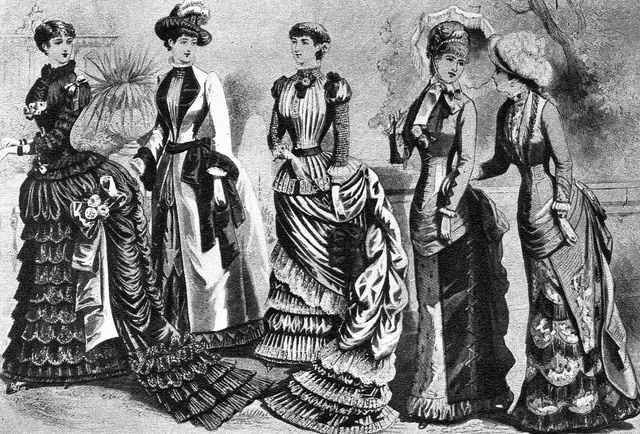
A dramatic shot of “Rose” I couldn’t help but take.

Oh, and while I have your attention still, did you know today is the two-year anniversary of when I announced Rose was accepted for publication? Yeah, it happened on this day in 2017, and a lot’s happened since then. A year of edits and rewrites, the release and all the marketing, the audio book, and so much more. More and more, people have been telling me they’ve enjoyed the story, and hearing that is the most gratifying feeling ever. Makes me want to keep writing.

If you haven’t read the Kafkaesque story of a young woman turning into a plant creature (and that’s just the start of her problems), and you’d like to check it out, I’ll include the links below. And if you do read it, please let me know what you think. I love feedback, and reviews help me out in the long run.

That’s all for now, Followers of Fear. Until next time, pleasant nightmares!
Rose: Amazon US, Amazon UK, Amazon Canada, Audible

*It’s been 19 years since it first came out, so I’m not sorry I didn’t include a spoiler warning.

**I like to pretend Prometheus and Alien: Covenant never happened. They take all the mystery out of the franchise.

I know the moment I press “Publish” on this post, WordPress is going to notify me that I’ve published three posts in three days, and to “keep it up!” I won’t. I can’t blog that much! What would I blog about? My chiropractor’s appointment? The weather?

Okay, onto the subject of this post. If you didn’t know, I have a small YouTube channel. And I mean small: in the eight years I’ve been uploading videos, I’ve only uploaded twenty-seven videos, most of those in the past couple of years. Obviously, I don’t have a lot of traffic on my channel.

But I try to at least update the channel when I have something to update it with. And last night, I filmed a short video letting my YouTube channel followers know that I’d finished Toyland. I also let them know what I was planning to do with the novel in the near future and my immediate writing plans.

And I waxed eloquent about my love of Brothers Drake mead. Again, not sponsored, I just love their stuff and like to celebrate big milestones with mead.

Anyway, I thought I’d post the video here on my blog to further spread the word. If you have fifteen minutes to do so, please watch it below. And if you like it, maybe leave a like and a comment. Hell, subscribe if you’re feeling crazy. Like I said, I don’t upload that much, but when I do, I think it might be entertaining and informative for people. I’ll include the link for that below, as well as links for Rose and The Binge-Watching Cure II (if you watched the video, you know why).

That’s all for now, my Followers of Fear. Until next time, pleasant nightmares!
My YouTube Channel

Rose: Amazon US, Amazon UK, Amazon Canada, Audible

The Binge-Watching Cure II: Paperback, Ebook

Call the press! Pour the honey wine! Sacrifice your neighbor to the eldritch deity of your choosing! The first draft of Toyland is done! To be specific, I finished it early this morning at around four in the morning. I started working on the last two-and-a-half chapters around ten o’clock last night, after I wrote my review of The Lodge, and just didn’t stop.

And now that I’ve gotten some sleep, I’m blogging about it, because that’s what you do!

Now, for those of you who are unfamiliar, Toyland is a Gothic horror novel I started writing back in November for National Novel Writing Month. The story takes place at a boarding school in southern Ohio, and follows students being menaced by a ghost obsessed with a children’s book. Yes, that’s the plot. I can assure you, it’s just as bonkers as that pitch sounds. I hoped to have it done by the end of January, but I’m glad I was able to finish it by the end of February, which is still a whole new record for me in terms of writing a novel (I think Rose had the last one at around six or seven months).

And how is the first draft?

Well, it’s a first draft, which means it’s crap.

Okay, that might be harsh. It not crap, it just needs a lot of work. First drafts are nicknamed “rough drafts” for a reason, after all. I’m going to have to do a whole lot of editing to get this book out to people. And I may need to have someone take a look at it just to make sure it can survive out in the world as a full novel. I did that with Rose, after all, and Rose is doing very well now, with an audio book and some awesome new reviews.

So how long is Toyland, anyway? I knew it would be longer than fifty-thousand words (the minimum word count for “succeeding” at NaNoWriMo), but I haven’t done a count recently. Give me a moment to do some math…holy crap! In terms of pages (with twelve-point, Times New Roman font, double-spaced on regular MS Word paper), Toyland is three hundred and sixty pages long and 97,186 words! For context, the first Harry Potter novel is around seventy-seven thousand words.

This isn’t the longest story I’ve ever written (that honor goes to my thriller Snake), but still pretty freaking long.

So what’s next? Well, obviously I’m going to party a bit (pizza and locally made mead tonight!). But in terms of Toyland, I’m going to let it be for a while. I always believe a story needs to lie and sleep for a while before editing, so I can look at it with fresh eyes. After a second draft, I may start looking for a publisher. Hopefully, it won’t take five years like it did with Rose to get it published.

I wanted to post this graphic one last time.

In the meantime, I’ll try to take a little vacation from writing anything except blog posts (though if the writing bug gets me, that’s that). After that, I’ll try my hand at those ten short(er) stories I mentioned in a previous post. Two of those stories, by the way, take place in Victorian England and one of which I hope to put into that short story collection I’m putting together. I’m looking forward to them. I may also work on an essay which has been cooking in the back of my mind. We’ll see what happens.

For now though, I’m off to relax. Thanks for supporting me during this writing process, my Followers of Fear. I hope you’ll check out Toyland when it comes out and maybe let me know what you think of it. For now though, how about checking out my novel Rose? It’s a Kafkaesque horror story about a young woman turning into a plant creature (and that’s just the start of her problems). If Toyland sounds up your alley, you’ll probably enjoy Rose. I’ll post the links below.

Until next time, pleasant nightmares!
Rose: Amazon US, Amazon UK, Amazon Canada, Audible

You know, I feel like I should’ve written a post like this a while ago. Like, at least a month ago. Oh well, better late than never. I’ve been thinking for a while of what I want to do in terms of writing for 2020. Which is unusual, because while I’m a huge plotter for my stories, I don’t usually plan out goals for an entire year. But I feel like, with a book published and a short story included in an anthology last year, I feel like I should try some new strategies to keep the momentum going. So without further ado, let’s talk my writing goals of 2020.

Finish Toyland

Of course, this was on here. Luckily, I’m already on my way there: as of a few days ago, I’m only six chapters away from finishing Toyland, the Gothic horror novel I’ve been working on since November. Depending on how things play out this year, I’ll probably edit it at some point. After that, perhaps I’ll find a publisher for it. Fingers crossed it goes well (and that a novel approaching ninety thousand words doesn’t intimidate anyone).

Complete the short story collection

Before November and NaNoWriMo, I was putting together a collection of short stories. As of now, there are twelve stories in the as-yet unnamed collection. Being a horror writer though, I want thirteen stories. Good thing I’m already making strides on that goal: I’ve been doing a lot of research for a story I want to write after Toyland‘s done. I think it’ll be somewhere between the length of a novelette and a novella, or ten thousand to sixty thousand words. Hopefully writing it goes well, once I hammer out the plot details.

After that, I’ll hopefully be able to find a publisher who can help me get the stories in tip-top shape. Or maybe I’ll self-publish again. We’ll see how things develop.

Write at least ten short(er) stories

Including the last story for the collection, I want to write at minimum ten stories shorter than a novel. Preferably, they’ll all be short stories, but I know that a few of them will be novelette or novella length (depends on the story, obviously). I would also like to edit most of them within a year, and get at least three or four published in some form or another. Getting a short story in The Binge-Watching Cure II last year was an amazing experience, so I want to see if I can do it again.

And of course, it’s always a good idea to polish your short fiction-writing skills.

Maybe start a new novel

I’ve known for a while what novel I’d like to write after Toyland. However, I think I’ll wait a good while until I write it. Novels are a huge commitment of time and energy, so I want to make sure I’m ready before I try my hand at a new one (and maybe get one or two others edited and/or published).

Grow my audience

I’ve been lucky to grow an audience over 8.5 years of blogging, Facebooking, tweeting, Instagramming, and occasional YouTube videos. But I’m always hoping to grow my audience just a bit more. And while I don’t have any particular numbers I want to reach, I want to draw more people in and maybe get them hooked on my particular brand of weirdness. Especially my fiction.


Well, those are my writing goals. Here’s to them going well in the 11.5 months we have left of 2020. I hope you’ll continue to support me during that time, and maybe even read/review my published work if you can.

Until next time, Followers of Fear, pleasant nightmares and WHO LET THE MONSTER KNOWN AS THE DEAD MAN’S STRUGGLE INTO MY BUILDING?! Now I have to either kill it or seal it away. Either way, the cleanup’s going to be exhausting.

What are your writing goals for 2020? Have you made any progress with them so far?

February is Women in Horror Month. Since women writers are a big influence on my writing–JK Rowling got me into storytelling in the first place, and Anne Rice helped pave the way for me to write darker fiction–I thought I’d recommend some stories for those who want to help support the month. You’ll see some familiar names here, but also some you may not be familiar with. Either way, I hope you’ll consider giving them a read.

Tiny Teeth by Sarah Hans. This is actually a short story by a friend and colleague of mine, but it is a scary one. Imagine a world where a virus turns children into dangerous, gnawing animals, and one woman’s experience in that world. You can find it on Pseudopod.org, a website where scary short stories are read by narrators and released as a podcast. Give it a listen. Guarantee you, it’ll be 45 minutes not wasted. Here’s the link.

Garden of Eldritch Delights by Lucy A. Snyder. This is also by a friend and colleague of mine, but it’s also a great collection of scary stories. The majority of them feature cosmic horror themes and entities, which I love, as well as intriguing characters and plots. A couple of the stories also incorporate sci-fi and fantasy themes, and feature a diverse cast, which is something I love to see. If you pick up Garden of Eldritch Delights, you will find it worth your time. Here’s the Amazon link.

The Amaranthine Books by Joleene Naylor. You’ve probably seen Joleene’s name around this blog before, but did you know she’s written an entire book series? She has, a vampire series called the Amaranthine books, and they all come highly rated. Even better, some of the books are free or under a dollar under the Kindle edition, so why not take the opportunity to read them? You can find all the Amaranthine books, and then some, on Joleene’s Amazon page.

In a Dark, Dark Wood and The Death of Mrs. Westaway by Ruth Ware. Technically, these are mysteries, but they have horror themes about them, so I’ll count them here. In a Dark, Dark Wood follows a mystery writer invited out to a bachelorette party by a friend she hasn’t seen in years, unaware of the forces conspiring against her. The Death of Mrs. Westaway stars a Tarot reader on hard times who finds out she’s received an inheritance from a grandmother she didn’t know she had, and what that inheritance entails for her. Both are terrifying and keep you on the edge of your seat with suspense. You can check out both further on the author’s Amazon page (and I need to check out more of her work).

Kept me on the edge of my seat the whole audio book.

Within These Walls and The Shuddering by Ania Ahlborn. No joke, Ania Ahlborn is one of the scariest writers I’ve ever had the pleasure to read, and I really need to read more of her work, as should you. Within These Walls follows a true crime writer as he and his daughter stay in the home of a Manson-like cult leader, and what happens while they’re there (I actually reviewed it a few years ago). The Shuddering follows a group of young adults as they go skiing at a mountain resort, only to discover the area has come under siege from a rather hungry enemy. Either one will leave you shaking in your boots! Here’s the Amazon page if you want it.

The Haunting of Hill House by Shirley Jackson. Come on, you know I had to include this. Even if I’m not a fan of this book, it’s undeniable that Jackson’s most well-known novel, and one of the most influential horror stories of the 20th century. Following a group of paranormal researchers as they explore the titular house and the effect the house has on them, this book is still a well-known classic in the genre, and some consider it required reading for fans and authors. It’s so well known, I won’t include any links for it (surprise!).

Interview with the Vampire by Anne Rice. Again, can you blame me? Whatever you think of the many sequels, it’s undeniable that Anne Rice’s debut novel has remained a classic for a reason. A journalist interviews a 200-year-old vampire named Louis, who recounts his creation in French New Orleans and his travels around the world looking for meaning and for more of his kind. It’s a haunting tale, the horror coming more from Louis’s psychological journey and despair rather than from the supernatural. As I said earlier, this novel also paved the way for my eventual turn to horror, so I can’t recommend it enough (and I’ll have to reread it someday). Again, no need for links. It’s that well-known.


What recommendations do you have for Women in Horror Month? Are you reading anything for it? Are you familiar with any of these books? What was your opinion of them?

That’s all for now, my Followers of Fear. I hope you find something good to read based on this list. I’ll be listening to The Accursed by Joyce Carol Oates this month on audio book, so maybe I’ll add it to a future list someday. I better get started soon!

Until next time, pleasant nightmares!
Over the past couple of months, people in the horror-themed Facebook groups I belong to have been raving about this particular book. I looked it up and it sounded up my alley, so when I had an Audible credit, I downloaded the audio book. But before I started it, I found out the book was written by the same guy who wrote the novel The Perks of Being a Wallflower, as well as wrote/directed its movie adaptation. Really? Isn’t that a sweet, YA rom-com? How do you jump from that to horror? (looks up what that book is really about.) Oh. That’s pretty dark. Yeah, I can see how the dude transitioned to horror.

Imaginary Friend follows Kate Reese and her son Christopher as they leave Kate’s abusive boyfriend and move to a small town in Pennsylvania. However, soon after they move there, Christopher disappears in the woods near his school. He reappears a week later, unable to remember what happened to him, except being led out of the woods and back to civilization by someone called “The Nice Man.” While Kate is happy to have her son back, and things start to improve after he returns, Christopher has changed. He’s smarter now, unable to sleep, and suffers from headaches a lot. And he’s in contact with the Nice Man, an invisible being who instructs him to build a treehouse in the woods he disappeared in, and to do it before Christmas. If he doesn’t, something bad will happen. To the town, to his mother, and to him.

This one was hard to put down. I normally only listen to audio books while at work, but the story was so intriguing and out there that I listened to it while checking email and cooking dinner. Imaginary Friend feels a lot like Stephen King novels like It or Needful Things, these huge stories based around weird concepts that are both scary and hard to put down. I mean, you got a kid who goes missing in the woods, and then when he comes back, has to build a treehouse to save the world from the Apocalypse. And that’s just what I feel I can tell you without spoiling too much.

I also have to give Chbosky credit: I had a hard time predicting what was going to happen as we got further into the story. Every little piece of the puzzle had the potential to surprise me, and quite a few did. During the “darkest hour” of the book, when things are at their most pessimistic, you felt the misery and the tension as the situation deteriorated. And that climax! Woo-boy, that was epic. Like, the final battle of an Avengers movie epic.

Not only that, but the characters are very well-developed. Also like some of King’s books, especially earlier ones, just about every character is well-developed. I felt like I’d known some of these characters my whole life, from Kate and Christopher Reese to the two or three old ladies suddenly regaining their faculties after years of dementia.

I do have one major gripe about the book: as the story goes further on, the novel takes on an…evangelistic air. It’s not like the Left Behind books, where it’s trying to get people to become born-again, but the story leans more in that direction than in the direction of The Stand or Supernatural. I don’t think the goal is to convert me: rather, I think Chbosky is using his Catholic upbringing to give the story a particular authenticity and philosophy other non-evangelistic Ultimate-Good-versus-Ultimate-Evil stories don’t have. There are some interesting ideas on the nature of guilt, our relationship to God, and how to find different kinds of salvation presented in the story.

Still, there were times when I was like, “Dude, scale it back a bit. I’m starting to get how people feel when I start ranking villains in horror, and they’re not horror fans.” That’s happened before, and it’s gotten awkward.

On the whole though, Imaginary Friend by Stephen Chbosky is an engrossing horror novel that’s weird in the best of ways and full of terror and twists. On a scale of 1 to 5, I’ll give it a 4.4. Pick it up and see for yourself. You’ll never look at treehouses and deer the same way again, but you’ll have a hell of a ride thanks to it.