Posts Tagged ‘novel’

Fiction writers tell two types of lies. There are the more obvious ones, our stories, those big stories of a thousand words or more that readers (hopefully) come just because we wrote them to entertain them. And then there are the smaller lies that usually go unnoticed. The ones where we gloss over or totally ignore reality so our stories can continue in peace. Not big things, like the existence of shapeshifting clowns or the ability to turn a human woman into a plant creature with a magic book. I’m talking about the small stuff. Things so small, people usually don’t question them or their viability.

A common example: you ever see an action film and someone with a machine gun lets off hundreds of bullets at their enemies without pause? Maybe they’ll switch guns at some point, but each of those guns still seem to have millions of bullets inside their cartridges and can go shooting for several minutes at a time.

The reality is a lot more boring: a machine gun may shoot off bullets for stretches of four seconds at a time, after which you probably will have to reload the gun. Not to mention that if your machine gun actually did go for shooting sprees for the entire length of a fight scene, the barrel would probably explode into flames.

Another famous example are silencers. Don’t want your gun to be heard by nosy civilians? A silencer will turn that gunshot into a mouse fart! Not really. In reality, a gunshot is not easy to quiet. Even the best silencer will only turn a gun into a loud crack, which you can still hear from quite a distance.

And you know those scenes in cop and comedy movies where a cop gets tasered in the chest and then their body and limbs shake like mad? Okay, stun guns only work about sixty percent of the time at best, and you never want to aim for someone’s chest, because while they’re considered “less lethal” than guns, they can still cause some heart trouble if aimed at the chest. Most cops aim for someone’s back, and then if they’re lucky, the electric shock will paralyze the target. By lucky, I mean the lines hit home and most of the electricity penetrates further than the skin.

Action movies are huge offenders at this stuff. Still love most of the Terminator and Die Hard films, though.

And these are just a small list. Cop movies involving shoot outs and explosions rarely feature the staggering amount of paperwork those shoot outs and explosions require officers to fill out. Medical dramas going for crazy or risky procedures? Not without talking to the insurance company or finding a safer method first. Bulletproof vests? They don’t stop bullets, just catch them, and it’s still going to hurt like hell. Not to mention getting shot by a machine gun, even if you wear a vest, is probably going to leave you dead (sorry, Back to the Future fans).

I actually used one of these last night in the latest chapter of my novel-in-progress Toyland (for obvious reasons, I won’t spoil which one).* I had to do some quick research to make sure one of the above was being written right. And then when I realized there was no way to do that authentically, I was like, “Screw it. Who’s going to know? Even if they do, they’ll either forget or suspend their disbelief.” And then I wrote it how people would imagine the scene.

Why do writers do this? Simply because they can get away with it. The details are small, and even those in the know will usually just let it slide for the sake of enjoyment of the story. Rarely does it actually bug someone to the point they put the book down/stop the movie. Usually when they’re glossing over giant details do people in the know stop enjoying the story (happened to me with Criminal Minds after I found out what FBI profilers actually do on a daily basis).

So forget the little lies, and ignore the minor deviations from reality. You’ll enjoy the story more. Or you’ll stop watching Criminal Minds and move onto other shows. Either way, other people will still enjoy the story you’re telling.

Authors, what little lies in your stories have you told lately? Any you laugh about now?

*Speaking of which, Toyland‘s coming along well. I split some upcoming chapters in two for pacing, which means more chapters to write, but I’m still making progress. I may have to push the deadline back again, this time to the end of February, but it’s still going well. Also, the novel is over eighty-thousand words right now (for context, Harry Potter and the Sorcerer’s Stone is around seventy-seven thousand words). I have the feeling by the time I finish this book, it’s going to be close to one hundred thousand words. Not a whopper, but quite the literary feat.

Today’s guest is an author who’s book, A Cosmology of Monsters, has been blowing up the horror scene since its release in September. I finished it last month, and found it to be an amazing read (see my review here). And I’m not the only one who liked it, because Cosmology ended up becoming a nominee for the Goodreads Choice Awards Best Horror (and yes, I am jealous). So, I’m very excited to have the author today. Hailing all the way from across the Internet, I bring you Shaun Hamill!

Rami Ungar: Welcome to the blog, Shaun. Tell everyone here a bit about yourself and about your novel, A Cosmology of Monsters.

Shaun Hamill: I grew up in the Dallas-Fort Worth Area, and got my bachelor’s in English from the University of Texas at Arlington. In my early 30s I attended the Iowa Writers’ Workshop and got my MFA. I wrote most of A Cosmology of Monsters there.

A Cosmology of Monsters is a literary horror novel about a family running a haunted house attraction in the suburbs of Fort Worth, Texas. Narrated by the youngest child, Noah, the novel tracks the family’s fortunes across 50 years, and explores the monsters—both metaphorical and literal—that haunt them. It’s a generational saga, an homage to Stephen King and H.P. Lovecraft, and most importantly, a story about the ways love can either save or damn us.

RU: How did the idea for Cosmology come into being?

SH: This novel was born out of the wreckage of a couple of projects. The first was a sprawling tragi-comic saga in the style of John Irving or Meg Wolitzer, about a family operating a youth hostel in Taos, New Mexico. The second was a short story about a married couple breaking up as they tour a haunted house attraction. Neither piece quite worked, but one day while I was walking my dog, the two ideas put themselves together and I realized that my epic family business novel should be about a haunted house, not a youth hostel. It would give me a chance to merge my taste for character-driven literary fiction with my love for the darker, more eerie tones of the horror genre. Noah’s voice came to me right away, as did Eunice’s suicide notes and the romance that opens the book. The rest of it came organically, as I followed the story where it led, exploring my characters and their ever-darkening world. I was perpetually surprised by what I found. I would never have been able to plan a book like this, and I hope some of that dark joy of discovery carries over for the reader.

RU: What was the research and writing process like for Cosmology? And what challenges did you face in writing the book?

SH: Research was a big part of the process of writing Cosmology. When I started the book I had only read a few Lovecraft stories, and I hadn’t ever worked behind the scenes of a haunted house. I read all of Lovecraft’s fiction, and also spent time reading scholarship about his life and writing. For the haunted house parts of the book I relied on my own knowledge as a patron of the attractions, and a tour of an out-of-season haunted house that I took in my late twenties. I also watched documentaries about haunted attractions, listened to podcasts, lurked on message boards, and so on.

The biggest challenge of writing this book was the revision process. My first draft weighed in at 220,000 words, and the published version is just over 100,000 (my agent insisted that the book would be tough to sell at its initial length). Figuring out which threads of story could be condensed or severed altogether took a long time, as did rewriting the entire ending to make it smaller and more meaningful to the characters. It forced me to carefully consider my characters and themes, and brought them into sharp focus by the end of the editorial process. I’m very pleased with the result, and humbled by how much better my agent and editors made my book.

RU: Haunted houses, both literal attractions and metaphorical haunted homes, are a big part of the book. Are you a fan of haunted houses yourself?

SH: I’m a big coward when it comes to haunted houses. I used to have a group of friends that I went with when I still lived in Texas, in my mid-to-late 20s, but I would never go to one by myself, and haven’t been to one since 2012 or 2013. I’ve always been fascinated by them from a distance, though. I’ve wondered about the people who work there, what it’s like to have the scenes of your life play out against such a fantastical backdrop.

RU: If you could design a haunted house attraction, what would it be like?

SH: The attraction in the book, The Wandering Dark, is exactly my idea of the sort of haunted house I would like to run. If money and practicality were no object, I would love to do a haunted hotel—something more immersive and stranger than the typical spook-a-blast attractions in the genre.

RU: Do you see yourself revisiting the world and characters of Cosmology someday in a future story?

SH: I go back and forth on this question. Some days I think it would be fun to continue the story of the Turner family, and I have done some brainstorming for a sequel. Other days I think that a sequel would lessen the impact of the book’s final pages and cheapen it. I guess I’ll wait and see if there’s a market for a sequel and then decide. Even if I never write a direct sequel, I will probably find ways to weave elements of that world into future stories.

RU: What is it about horror in general that attracts you to it?

SH: I have a melancholy outlook on life, so horror fits my disposition. I’m not attracted to the gore or violence, but rather the atmosphere of dread and dark wonder that I find in my favorite horror stories. I don’t like being terrorized. I like being creeped out. I love the idea that there is something beyond the known world, dark secrets to discover. It’s the sort of thing that Lovecraft does in his best work, as does Thomas Ligotti. I also love character-based horror, like Stephen King writes. I love stories about good people struggling against supernatural threats. It’s an effective way to illuminate the strength of the human spirit, what’s most noble and wonderful about people.

RU: Are you working on anything now? Do you have any future writing plans?

SH: I recently finished a rough (and I mean very rough) first draft of a new novel. I have an outline for another, different novel with my agent. We’re trying to decide which project to pursue first. My hope long-term is to keep doing what I’m doing now—writing books and publishing them and (hopefully) getting paid to do so. Fingers crossed COSMOLOGY won’t be the only thing I get to publish!

RU: What advice would you give to other writers, regardless of background or experience?

SH: Write a lot and read a lot. Read deeply in your own genre, but also outside of it. Join a writing group or take a writing class if you can afford it. If you’re able, get on the reading committee for a journal or prize—I learned more from reading the slush pile for Carve magazine and the Katherine Anne Porter Prize than I ever learned in a classroom or working alone at my own desk.

RU: And finally, if you were stuck on a desert island for a while and could only bring three books with you, what would you bring?

SH: Songs of a Dead Dreamer and Grimscribe by Thomas Ligotti, The Collected Stories by Lorrie Moore, and Three Novels by Stephen King (an omnibus of Carrie, ‘Salem’s Lot, and The Shining).

RU: Good choices. Thank you for joining us, Shaun. I hope we can do it again someday.

If you’d like to find out more about Shaun Hamill, you can find him on his website and on Twitter. You can also find A Cosmology of Monsters on Amazon if you’d like to read the book (which I highly recommend). And if you are an author with a book coming out soon and are possibly interested in having an interview, hit me up on ramiungar@ramiungarthewriter.com, and we’ll see what magic we can conjure.

That’s all for now, my Followers of Fear. Until next time, pleasant nightmares!

How are you, Followers of Fear? I’m…I’ve been better.

Okay, it’s not as if things have been horrible lately. I’ve still got a roof over my head, a great job, a car I love (we’re monsters meant to be), and plenty going for me. It’s just that for the past couple years, the first full week after January, as well as the next couple of weeks afterwards, can get pretty hectic. And that’s been no exception this year. Last week, I often came home from work feeling exhausted, to the point where writing was a bit more difficult than it usually is.

It doesn’t help that this past weekend, I came down with a very nasty stomach virus that had me laid up all weekend. Yeah, that sucked. I’m over it for the most part, and I woke up this morning feeling pretty good. But today really drained me, and I spent a few hours this afternoon feeling a little less than ideal. To the point that eating did not seem like the best of ideas.

All this and then some has affected the progress of my novel Toyland. I’d hoped to have it done by the end of January, but we’re about two weeks into the new year and I only just started Chapter Twenty last night. And this novel is thirty chapters long. And this is turning out to be a long-ass book.

So I have to delay my deadline for finishing up Toyland. I had hoped I could get it done in three months, which would have been a record. But sometimes life throws you curve balls (or gastroenteritis), and you gotta adjust. The new date will be August 15th.

Just kidding! Man, you should have seen your faces. Yes, I can see your faces, and your disbelief mixed with your horror is rather amusing.

No, the real new date will be February 15th. So it’ll still be somewhat of a record, just not the one I’d hoped for originally. And hopefully by the time February 15th has rolled around, life will have eased up a bit and I’ll have already finished the book. After that…well, I’ll save that for another post.

For now though, you’re not going to get anything more out of me other than this blog post tonight. I’m going to try to eat something and then hit the hay, my Followers of Fear. Until next time, be careful, because apparently there are some nasty viruses floating around out there right now, and pleasant nightmares.

You can thank this book for this latest post.

Back in August, fresh off the heels of Rose‘s release, I wrote a post about marketing a freshly released book in this crowded market. And now that my short story “Car Chasers” has been released in The Binge-Watching Cure II, as well as the audio book for Rose coming out recently, it’s high-time I got around to doing Part 2. As I said in the last post, it’s important to have a marketing plan in place and not expect your book will snowball into popularity. Books rarely just snowball into bestsellers, so a detailed marketing plan, one you actually act on, is essential.

And this time, I will be getting into practical tips, rather than just some food for thought to get you in the marketing mindset.

Of course, I will be plugging Rose and The Binge-Watching Cure II in this post, and including links at the end. Gotta get those stories in people’s hands, am I right?

First off, put together an ARC list. ARC stands for “advanced reader copies,” and ARC lists are lists of readers, usually volunteers, who are interested in reading an advanced copy of your book (usually digital, though sometimes physical or audio). Why would you want to give people an ARC? Because ARC readers will read your book, sometimes well ahead of the release, and drum up interest via word of mouth. Sometimes they’ll leave reviews on review sites or on their blogs, other times they’ll say something on social media. Either way, they tell people about your book, and that means more potential readers.

That being said, when you have ARC readers, there are a couple things you’ll want to do when compiling your list, besides getting their contact info, of course (gotta get them that ARC somehow, right?):

  • This is an act of volunteering and you want honest opinions. Don’t ask people to give you good reviews, don’t pay for good reviews, and don’t pay for reviews (this does not apply to blog tours though, which we will talk about later). ARC readers are doing you a favor, so don’t expect them to say nice things just for you. And if someone wants to be paid for a review, run the hell away!
  • Don’t ask family or close friends to be ARC readers. Sites like Amazon, from which most authors get their sales, can get suspicious if someone who might be a relative or a close friend leaves a review. This is because some authors have used their friend groups to boost their books, even if the friends haven’t read the book. Amazon is aware of this, and has developed countermeasures to combat this practice, which sometimes go overboard.
    So even if your mother is going to leave an honest review of your book, perhaps ask her to leave reviews only on Facebook. Sites like Amazon will strike down reviews and mess with your royalties if they suspect a fake or paid review.
  • Not everyone who volunteers to be an ARC reader will follow through reading and/or reviewing. This could be for a variety of reasons, but in the end, sometimes life happens, and they can’t follow through on the commitment. What to do about this? Well first, don’t get abusive towards people who can’t follow through on being an ARC reader. Believe me, sending them an email calling them lazy shits won’t get you anywhere, and can actually ruin careers before they start.
    Second, gather as many interested ARC readers as you can. I gathered over fifty interested people for Rose, and about nineteen left reviews on various sites in the first two months, close to twice the average number. So a large ARC list of people genuinely interested in your book is a good thing to have.
  • Finally, save your ARC readers when they follow through. If you have an ARC reader who read your book and talked about it, chances are they’ll do it again, so remember them and ask if they’ll be interested when the next one is nearing publication. Hopefully after a few books, you’ll have a decent list of ARC readers you can message when you’re ready to publish something.

Also put together a list of places to send your book to/advertise your book with. You’d be surprised how many sites exist to promote certain genres, and which give reviews of books in those genres. Start compiling a list of these sites and publications, as well as what sort of stories they look for and how to contact them. When the book is published, keep an eye out and see which are accepting books at the moment. If you’re lucky, they may fit you into their reviewing schedule.

Look into the possibility of a blog tour. A blog tour is exactly what it sounds like: you go around different blogs to give interviews, write guest articles, or let them review your book. These are a great way to highlight your work among a huge audience, and if the blogs featuring you are in the same genre as you, it means the readers of that blog are more likely to want to check out your book.

I did a couple blog tours for Rose, and found them very helpful.

There are two ways to do a blog tour. One way is to organize one yourself by asking for bloggers to participate. The other is to work with a blog tour company, who act as a middleman to help you find blogs that’ll work with you for a small fee. This doesn’t count as paying for reviews, but instead is more like having an advertising department who help you get people to notice your book. Only these folks are contractors.

If you decide to go with the former option, put out an open call on your blog and social media for a blog tour, and see who responds. Also contact bloggers who may not be following you but may be interested in hosting you. For the latter, check with other authors to see if they have any recommendations, or see if there any that come highly rated on a website like Yelp or equivalent. If there’s a recommended one, see if they have any availability for you and start talking rates.


Well, that’s all for Part 2. I hope you found these methods to marketing your book helpful and may even share some methods you find helpful in the comments below. I’m not sure when I’ll do Part 3 or what I’ll focus on when I do, but I hope you’ll keep an eye out for it and give your two cents when you do.

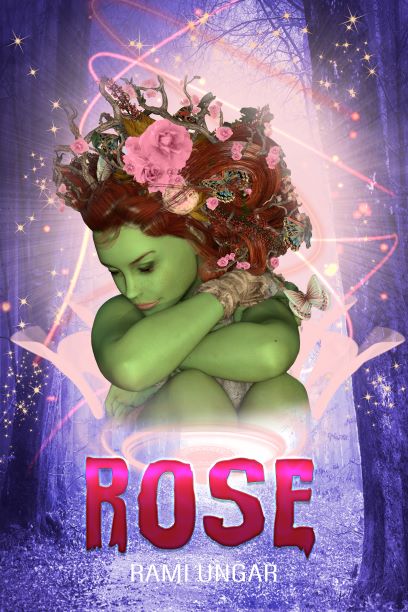
In the meantime, if you would like to check out Rose or The Binge-Watching Cure II, I’ll leave the links below. Rose is my first novel with a publisher, and is a fantasy-horror story following a young woman who turns into a plant creature (and that’s just the start of her problems). The Binge-Watching Cure II is an anthology from Claren Books containing several short stories and novelettes from a variety of authors, each one longer than the last. My own short story, “Car Chasers,” which is like Fast & Furious-style car races with ghosts in the mix, occupies the eight-thousand word spot. Either one would be a great addition to your bookshelf, if I may be so bold.

Until next time, pleasant nightmares!

Rose: Amazon US, Amazon UK, Amazon Canada, Audible

The Binge-Watching Cure II: Paperback, Kindle

Look at this cover! It’s freaking beautiful!

If any of you checked my Facebook page or my Twitter feed after my last post, I hinted that I might have some good news I would be sharing today or tomorrow. Three years ago, I wrote a story called Car Chasers, which I describe as a mash up of Fast & Furious-style races with a ghost story. About a year and a half ago, I announced that the story had been accepted into an anthology. And last night, that anthology, The Binge-Watching Cure II, was released by Claren Books on Amazon!

I’m very excited to let you know this horror anthology has been released. It’s a rather unique anthology, as every successive story is longer than the one preceding it. In fact, during the submission process, we had to submit our stories based on a certain word length and how close we were to fifteen percent of that word count. I was lucky enough to be considered for the eight thousand word spot, and after some deliberation, Car Chasers was selected as the story!

And after having Rose accepted by Castrum Press a few months previously, seeing this story accepted by Claren Books was a really big deal for me. I was still having some anxiety over the amount of editing I needed to do for Rose, so this was a boost to my confidence.

Where was I? Oh right. The Binge-Watching Cure II‘s stories range from 140 characters (just over the original size of a tweet), to twenty-five thousand words. So if you’re looking for something quick to digest, or something long to chew on, you’ll find it here. And there are some great authors here: Amanda Crum, Nick Youncker, Lana Cooper, Robert E. Stahl, and Armand Rosamilia, among many others.

Also this guy named Rami Ungar. Have you heard of him? Neither have I, but I hear he’s a bit of a weirdo. Hopefully the good kind of weirdo, right?

The only version available right now is the ebook, but the paperback will be out soon enough, so keep checking back to the Amazon page if paperback is more your jam. I’ll include the links below. And if you do get the book and read it, please consider leaving a review online where you can. Not just because we love to hear your feedback, but because reviews help more people find the anthology and get them to read it, which keeps the cycle going, as well as encourages Claren Books to put together and release more anthologies like this one.

Also, I’m hoping director James Wan, known for both Furious 7 and the Conjuring movies, will somehow come across the anthology, read Car Chasers, and want to adapt it. I doubt it will happen, but I can dream and encourage, right?

Anyway, thank you to Bill Adler Jr. and Sarah Doebereiner, as well as the rest of the team at Claren Books, for letting me be part of this anthology. And thank you to the other authors whose company I find myself with in The Binge-Watching Cure II. It’s an honor to join you.

And thank you, Followers of Fear. I hope you check out the book, and let me know what you think. And thank you for your continued support. One of the reasons I keep writing is because you keep supporting me, and I’m so grateful for that.

That’s all for now. I’m off to start a new chapter of Toyland, make dinner, bring in Shabbat and the latest night of Hanukkah, and chill out with some TV. Not necessarily in that order. Until next time, Shabbat Shalom and pleasant nightmares.

Link for The Binge-Watching Cure II.

Before I start this post, I just want to let everyone who read that title and got concerned, thinking I was going to talk about something negative like giving up on my dreams or whatnot, that that’s not what this post is about. It’s actually a happy post.

Anyway, as many of you are aware, I’ve been making tremendous progress with the novel I started last month, Toyland. If you are unaware, Toyland is a Gothic horror novel about a boarding school haunted by a ghost obsessed with a children’s book. Yes, I’m writing a story with a premise that bonkers. Bonkers premises tend to work for me (click here for further proof). And as I said, I’ve been making tremendous progress on it. Or as my Grandma told me on the phone last night, “You’re just zipping along with it!”

(If she reads this post, she’s going to plotz over seeing herself mentioned here.)

I’ve noticed that zipping along myself, and I’ve wondered about it. Past novels I’ve worked on, as well as some short stories and novelettes, have taken months at a time to write. Occasionally, they’ve taken years (especially if I find myself stuck and have to take a break from the story). What’s so different about this one? A dark premise and some weird things occurring is not unusual for me, so it’s not the plot. And I’ve done National Novel Writing Month before, so that this novel started out as a project for that probably hasn’t affected much.

If I had to guess, I think it might be that I’m fooling myself by underestimating how long the chapters are going to be. Let me explain:

Although I’ve been writing this novel since January, I’ve been planning and researching it far longer than that. Going back months, or years, if you count when I started learning what constituted Gothic literature. Consequently, I’ve had some scenes in this story in my head for a while, and they always seem very short when I play it in my head.

What’s short in your head doesn’t necessarily translate as short once you put it down on paper. In fact, you can spend about twelve-hundred words or more describing a new setting, especially if it’s fantastical. Add in dialogue, action, exploring the characters’ emotions, etc. and what you’re imagining will be maybe sixteen-hundred words at most turns out to be nearly twice that! And yet, I still think to myself as I write, “Just a few hundred words more. Can’t be more than three hundred. Almost at the end.” Over and over, until the chapter ends, and it’s a lot more words than I expected.

Given that I’ve figured that out, however, there’s a chance that strategy won’t work for me after a while. I’ll know what to expect now and the spell won’t work. On that other hand, these past two months has been illuminating as to how much I can get done when I apply myself, so that may make up for it. At this time, I’m over halfway through the book, and on my way to two-thirds. A couple of years ago, this sort of progress in a few months would be confined to the realms of the imagination.

Now I know what’s in my imagination can exist in the real world.

If you need me, this is a great representation of what I’m up to these days.

In the meantime, I’ll use that knowledge, and keep fooling myself until I can’t anymore, and eventually, finish this book. As well as any story that comes after.

That’s all for now, my Followers of Fear. I’ll hopefully post something again before December 31st, but if I don’t, thank you for everything this fantastic 2019!* Have a fantastic New Year, and I’ll see you next week/month/year/decade.** I’m off to go finish a chapter.

Until next time, pleasant nightmares!

*Fantastic on a personal level, anyway. On a national and global level, while there were signs of improvement (looking at you, Greta Thunberg), this year has been a bit of a dumpster fire.

**Yeah, let that sink in. After Tuesday next week, not only will it be a new month, but a new year and a new decade. Crazy, right?

I heard first heard of Mr. Hamill and his novel after I came across his article on contending with the legacy of HP Lovecraft as a writer. The idea of his book interested me, so I put it on my reading list. Took a few books to get to it and a few weeks to get through it, but I read A Cosmology of Monsters from front to back. And with that out of the way, it is my pleasure and duty to review the book.

A Cosmology of Monsters follows the Turners, a family living in North Texas and running their own haunted house, The Wandering Dark. Told by the youngest member of the family Noah, the story begins with the meeting of his parents in 1968 and follows them as various tragedies befall the family throughout the decades, as well as the threat following the family through the years and generations.

Cosmology is literary horror at its finest.

Told in the style of Middlesex by Jeffrey Eugenides (which I’m told was a major influence on Cosmology and which I recommend as a read on its own) Noah Turner narrates how his family began, and through the decades the many hardships his family endures. It’s an engrossing way to tell the story, because every decision has far-reaching consequences on the Turner family. You also get a deep understanding of each character through this storytelling method, what their motivations and their troubles are, and how those play into the events of this story.

Noah himself is a fantastic narrator. He’s talking from the perspective of a grown-up looking back over fifty years of history, but he does a good job of calling up his childhood feelings of loneliness and isolation, of feeling alienated and not understanding why the people around him do what they do.

I also like how weird it can be sometimes (makes sense, since it’s me). The supernatural aspect of the story is very slight at the beginning and only gains prominence as you move deeper into the novel, and as you do, you find yourself with more questions than answers. Conventional monsters do play a part, so to speak, but there’s a lot more going on behind the scenes and it gets weirder with every layer revealed. It took me a while after I finished the book to really understand what all these revelations meant, and even now as I write this, I’m only half-certain I understand what everything meant.

All that said, there were things that I had issues with. There’s a section in the book where, instead of black letters against a white page, it’s white letters printed on a black page, and for some people, especially for people with certain eye issues, that might make things difficult to read (and why I don’t use my blog’s original theme anymore). And if you’re looking for a more typical horror story, with monsters popping out every five seconds or the supernatural aspect a constant presence in the story, this won’t be your kind of novel.

That being said, A Cosmology of Monsters is a mesmerizing read and one of the best books I’ve read this year. On a scale of 1 to 5, I’m giving it a 4.8. Grab your flashlight, and prepare to walk through a house haunted by the tragedies of the family. You won’t want to leave till you get to the very end.

And then you’ll want to think about both the deeper meaning of the book as well as what it’d be like to create your own haunted house attraction. Or is that just me?

So, I’m sick again. I didn’t want to be sick today, especially because I had some things I wanted to do today during and after work. Now, the only things I can really do is binge-watch anime and write. Thankfully, I didn’t let my lazy side take over too much and finished Chapter Fifteen of Toyland, putting me halfway through the first draft.

So if you’re not aware, Toyland is my latest novel, and started out as my project for National Novel Writing Month. It’s a Gothic novel about a boarding school haunted by a ghost obsessed with a children’s book. Or at least, that’s what it’s supposed to be. As predicted, it’s going from a Gothic horror story into weird territory the farther in I get. Not sure if that’s a good thing or bad at this juncture, but I’m sure if it’s bad, I can fix it in subsequent drafts.

As I was saying, I’m halfway through Toyland. Chapter-wise, anyway: I’m fifteen out of thirty (it was twenty-nine, but I split Chapter Thirteen in two for better narrative flow). So I think I’m still on track to finish the book by the end of January. Maybe a little longer if things get crazy between now and January 31st. Always a possibility when you’re trying to be an adult in today’s insane world.

I’m rambling, aren’t I? Blame it on the sickness.

Anyway, as of the completion of Chapter Fifteen, Toyland is 46,776 words long (for context, the first Harry Potter novel is seventy-seven thousand words or so). So my prediction that this first draft will be eighty-thousand or more words seems to be spot-on so far. I hope by the time it’s over, it’ll be a good first draft. Bonkers, but good too.

But until then, it’s time to call it a night. I’m going to work tomorrow, come heck or high water. Until next time, Followers of Fear, pleasant nightmares!

The audiobook cover for Rose. Available now from Audible and Amazon.

Oh, one last thing before I forget. As you know, the audio book for my previous novel, Rose, was just released Tuesday. It’s the Kafkaesque horror story of a young woman named Rose Taggert who wakes up in a greenhouse with no memory of how she got there or why. Soon after, her life and her body undergoes a strange transformation. One that can’t be undone.

You can check it out by using the links below. Available in e-book, paperback and, of course, audio book.

Rose: Amazon US, Amazon UK, Amazon Canada, Audible

And I thought the news story of today would be the fact that I’m sick. Yes, I’m sick. I even had to leave work early because of it. Don’t worry, I’m drinking tea and taking it easy. And this news definitely improves my mood and health.

So unless I’m delirious (which would go a long way to explaining why there’s a Swedish man named Hampus claiming to be my uncle in my apartment), the Rose audio book just went live on Audible and Amazon a little while ago! I have been so excited for this to happen, and now it’s finally here. I’ve already downloaded it onto my phone and plan to listen to it while I work on my dinner tonight.

Now if you’re unfamiliar with Rose, this is my first novel with a publisher, and follows a young woman named Rose Taggert. Rose awakes in a greenhouse with no memory of how she got there or why she’s there in the first place. She soon discovers her life, and her body, have been irrevocably changed. It’s a dark, Kafkaesque horror story and I’m so excited to listen to the audio book, as well as for all of you to listen to it as well.

Also, great timing on the release. Friday marks the six-month anniversary of the paperback and ebook’s release. One could almost call that synergy.

Oh, and funny story: I found out about the release by accident! I went to Rose‘s Amazon listing while working on another blog post. When I logged on, I found a new listing under “formats.” You guessed it, it was the audio book version. Right away, I filed the first blog post away as a draft to work on later, posted on most of my social media platforms (several times on Facebook) about the good news, and started work on this blog post. I also emailed my publisher, who I might be as surprised as I was when all is said and done.

Anyway, if you want to check out the audio book for Rose, I’ll leave the link below. I’ll also leave the links for the Amazon webpages, so if you’re more interested in the paperback or ebook, you can check those out as well. And if you do check them out, please do let me know what you think once you’re done reading/listening to them. Positive or negative, I love reader feedback, and reviews help me out in the long run.

Also, thanks to Sara Parlier for giving Rose a chilling narration, and to Castrum Press, the company who took a chance on me and published this book in the first place. What you do means a great deal to me, and I can’t thank you enough for what you do.

That’s all for now, my Followers of Fear. I’m off to make phone calls, make dinner, and either write or just chill with Disney+. Depends on what Uncle Hampus and I are in the mood for. Also, is that a bicorn and a chichevache? Dammit, these delusions make it hard to tell what’s my mind and what are actual supernatural occurrences in my life!

Oh well, until next time, pleasant nightmares!

Rose: Amazon US, Amazon UK, Amazon Canada, Audible

Last year’s premiere of Castle Rock on streaming service Hulu garnered lots of attention and love from critics and from viewers, both longtime Constant Readers and folks unfamiliar with King’s work. When word of a second season reached fans’ ears, we got excited. Which Stephen King stories would they draw on? Would the showrunners make every season different, like early American Horror Story? Would the different stories be connected by more than just a common location, like later American Horror Story? Or would it be a continuing story with the same actors and characters, like every other TV series out there?

We sat down and watched ten episodes over the course of eight weeks. And while I can’t vouch for the rest of the fandom, I can say this season far surpassed season one.

Season 2 follows Annie Wilkes–yes, that Annie Wilkes–as she and her teen daughter Joy find themselves stranded in Castle Rock after a horrific car accident. They’ve come at an interesting time, as Castle Rock and Jerusalem’s Lot–yes, that Jerusalem’s Lot–are about to celebrate the latter’s four-hundredth anniversary, and the Lot’s growing Somali population are facing discrimination and threats of violence from the likes of Ace Merrill, nephew of pawnbroker and loan shark Reginald “Pop” Merrill. Annie just wants to have her car repaired and leave town before her past comes for her and Joy. But when someone finds out about who she used to be, events are set in motion that will bring not just Annie, but the whole town to the edge of sanity.

While Season 1 was more influenced by newer, weirder Stephen King, Season 2 was definitely more old-school King: visceral, terrifying, and at times very explosive. Drawing on elements from mainly Misery and Salem’s Lot, the storytelling is mixed with terrifying scares and fun twists (episode 7, am I right?). And even the things you see coming from a mile away (and there are a few) are told in such a way that you don’t mind seeing them coming. And you gotta love all the homages to and Easter eggs referencing King’s works, including a heartfelt tribute to The Body (aka Stand by Me) in episode 3.

Probably the best episode was episode 5, “The Laughing Place,” which gives Annie a new backstory. Honestly, I was a little unsure at first, but as the episode goes on, it just hits you with the weight of the story and the emotion behind it as Annie becomes the person she meets. Sure, Annie is changed from a metaphor for toxic fandom to a painful example of what untreated mental illness can do to a person, but here it works.

“The Laughing Place;” best episode this season.

The actors were also great. Lizzy Caplan’s Annie Wilkes is a wonderful forerunner to the character we meet in Misery, a woman trying to do right by her daughter even as she wrestles with demons that not even medication can fully contain. Tim Robbins (aka Andy Dufresne of The Shawshank Redemption) gives the character of Pop Merrill, in the books a greedy and scheming man, a human side with guilt and a history he’s trying to make amends for. Yusra Warsama is excellent as Dr. Nadia Omar, Pop’s adoptive daughter dealing with her world basically imploding due to what’s going on around her. And Barkhad Abdi and Elsie Fisher as Nadia’s brother Abdi Omar and Annie’s daughter Joy, respectively, give great performances as people trying to deal with their upbringing and at the same time move away from it towards something positive.

If there’s one thing I’m going to ntipick, it’s that I wanted to see more of John “Ace” Merrill. It’s not easy to explain this without spoiling anything, but basically we only get to see one side of the character for a single episode, and then it’s a different side for the next nine. And I kind of wanted to see more of that first side (though the second side is an excellent villain). Did that make sense? I hope it does.

Overall though, Castle Rock season 2 is a scary and tense thrill ride drawing from some of the best of King’s earlier works and then some. On a scale of 1 to 5, I’m giving the season a 4.8. Sit down and buckle up, you’re going places you never imagined going before.

And while no season 3 has been announced, I feel it’s only a matter of time before we get word on that, so let’s start speculating. Which characters will come back? What stories will be drawn on?* And can I please get a commission to write an episode for the show? Only time will tell.

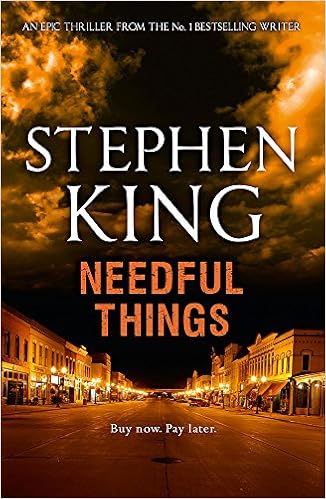
*I’m hoping The Library Policeman, Needful Things and maybe Apt Pupil.

What did you think of Season 2? What do you hope to see in Season 3?