Posts Tagged ‘novel’

A handy graphic for understanding the three act structure, courtesy of Wikipedia.

The other day, I was talking with some other writers about how to write a decent short story (an eternal question among writers, including the ones who’ve gotten them published). And I noticed that, with a lot of my recent short stories, most of them fall into a decent three act structure. And then I said, “I know the existence of the three act structure is dubious, but it’s the truth.”

And, like many odd things, that little exchange has stuck in my head.

So for those of you who don’t know, the theory of the three act structure states that all stories, especially longer ones, can be divided into three separate acts or sections: the setup, the confrontation, and the resolution. The acts may then be divided into smaller scenes or subsections, but they all fit into those categories. Some examples given of stories with the three act structure are Star Wars, Die Hard, and Avengers: Endgame (though I sometimes think everything before the five-year jump is its own separate act or prologue).

While many of us are taught this structure in school, most of our teachers will let us know that not everyone believes in the three act structure, let alone say they use it. Some prefer using a five act structure. Others say storytelling is too complicated and diverse to say a story can be divided into a formulaic structure. And nearly all playwrights will agree that if it can’t be told in one act, tell it in two.

Good example of a story in three acts (supposedly).

That last one might be a joke.

I’m usually of the camp that believes storytelling is too complicated and diverse to boil down into a structure. Look at Stephen King stories. Most of his shorts, like Graveyard Shift, Night Surf or The Boogeyman, are simple one-scene stories with maybe a twist at the end, and I dare you to try to fit books like IT or Salem’s Lot into three acts. Then there are stories like Kill Creek by Scott Thomas or Interview with the Vampire by Anne Rice, which feel like they fit into four acts.

As for my own books, Snake is in multiple sections, much like the books I was reading up to and during the writing process, and I see Rose as in-the-apartment and after-leaving-the-apartment (if you read the book, you know what I mean). I can’t see the stories in The Quiet Game as anything but a progression of events. And I wouldn’t even know where to start with The Pure World Comes or the stories in Hannah.

So, is the three act structure a real thing? Well, yes and no. I feel like it’s more of a framework for people to examine fiction, both others and their own. You don’t have to use it if you feel it doesn’t work for you or if you feel a story has too much happening in it to divide the plot into three separate sections.

But if you do find it helpful, use it to your heart’s content. I’m sure many writers, especially plotters like myself, find the three act structure helpful for planning their stories. And as I said above, many of my recent short stories, including the ones that have been published, fall into three acts. Though I think of them less as acts and more like beats, scenes, settings, or occurrences. And if I’m trying to keep a story within a certain word count, I can see using this structure to my advantage.

So what is the three act structure? It’s a prism to understand some fiction stories through, as well as an actual tool for writing. It’s not perfect, and most stories don’t fit into it that well, but that doesn’t mean the idea isn’t useful. Hell, it might even help you hone your craft and get a few more short stories out there. And that is never a bad thing.

Unless you’re trying to write an award-winning musical. Then you might want to keep it to two or maybe just one act.

That’s all for now, my Followers of Fear. March has just started and it’s already looking a lot better than January and February is (world events notwithstanding). I hope I can update you on exciting developments in the near future. And until next time, pleasant nightmares.

Fairy tales have been on my mind a lot lately. Granted, that’s nothing new. When writing Toyland, I knew fairy tales and children’s stories were going to play a part in the story, since it was about a school haunted by a ghost obsessed with a children’s fairy tale. And yes, I still hope to get that book published.

But recently, I took a class offered by the Horror Writers Association on fairy tales, which got my imagination working. And then I watched a couple of TED talks on YouTube on the subject. And last week, I wrote my own twisted, dark fantasy version of Cinderella in just one sitting while everyone else was watching the Super Bowl. This was at the same time I spent two weeks coming up with an idea for a novel involving fairy tale elements, the idea finally crystallizing on Saturday before going to see Giselle. A ballet, by the way, that could be considered a fairy tale. It certainly has enough fairy tale elements to qualify as one.

All this has made me hyper-aware of just how much fairy tales have permeated our society. Not just as stories or elements of our favorite stories, but in advertising, fashion, music, art, and even our expressions (“Cinderella story,” anyone?). They are freaking everywhere, and used/enjoyed not just by children, but by teens and adults too.

“But wait,” you’re probably asking, “aren’t fairy tales just kid stuff?”

Not exactly. In fact, fairy tales were often for adults as much as children. Early written versions of Little Red Riding Hood were told as parables to warn young ladies about getting into bed with the wrong sort of man, or as metaphors about entering womanhood (especially if cannibalism is kept in the story). In fact, that is still the case in some places: in Ireland, many still believe in fairies and tell stories, or “tales,” about them and what places to avoid. And in parts of Scandinavia and Iceland, beliefs in trolls and elves are still popular. Many countries in Asia, especially in southeast Asia, still believe in many types of spirits (and according to the classical definition of fairies, just about any supernatural entity can be considered a fairy, so it counts), and use stories to warn new generations of the dangers of pissing them off.

This adaptation of “The Tale of the Bamboo Cutter” is a prime example of how fairy tales can be recontextualized for new eras.

But beyond warnings, fairy tales, like many other kind of stories, are reflections of how we look at our world. Hansel and Gretel, for example, was probably told in an age of famine, poverty and witch hunts, given its elements and the lessons imparted in it. Even better, fairy tales can be recontextualized for new ages. Cinderella tales are increasingly told to make the lead less passive and more in control of her own life, and the Studio Ghibli film The Tale of Princess Kaguya, based on the Japanese fairy tale The Story of the Bamboo Cutter, retells the story with the theme of how Kaguya wants none of the finery her foster parents gift her, only to be surrounded by people who love her. This feels relevant in an age with rising consumerism, online image-building, and social isolation.

And that’s the cool thing about fairy tales, too. You can retell them in so many different ways. Hell, you can even come up with new ones. Plenty of writers are creating their own fairy tales, such as Diana Wynne Jones did with Howl’s Moving Castle, Melissa Albert with The Hazel Wood and many more. And many stories today use elements of fairy tales. The inclusion of “The Three Billy Goats Gruff” in Stephen King’s IT isn’t just a fun choice by King, after all: King originally started plotting that story as a modern interpretation of “The Three Billy Goats Gruff.”

Makes you wonder what elements of fairy tales and legends you’re putting into your stories, doesn’t it?

And that’s the thing. Even you can make up your own original fairy tales or retellings. In fact, plenty of writers are, and will as the world changes. I wouldn’t be surprised if we get an updated version of Anansi and the introduction of stories to the world in the wake of so many states attempting to rewrite history or schools attempting to ban books. And I wouldn’t be surprised if this pandemic, or any of the major conflicts we’ve experienced in the past several years, make their way into a new or an old fairy tale. I’ve already come up with a few ideas for some, and might write one or two in the near future.

And I bet, no matter who’s telling the stories, they’ll continue to influence society for years to come. From the “Once upon a time” beginnings to the optional “they all lived happily ever after.”

That’s all for now, my Followers of Fear. I spent most of President’s Day writing, so I’ll take the rest of the night off. I’ll be back soon, as I’m expecting to share some good news very soon. Until then, my Followers of Fear, good night, pleasant nightmares, and don’t try to wake me up with a kiss. I bite.

Also, here are some of the videos I watched while researching fairy tales. Give them a watch. They’re quite edifying:

Transforming our Understanding of Fairy Tales by Anne Dugan

Why We Absolutely Need Fairy Tales by Jason Link

Myths, Folklore & Legends: We Still Need Our Fairy Tales by Heidi Shamsuddin

Alma Katsu. Photo by Evan Michio

Some of you may remember at the start of the pandemic I had the pleasure to interview Alma Katsu, author of the critically acclaimed novels The Hunger and The Deep (you can read that interview here). I loved both novels, which took on the historical events of the Donner Party and the Titanic, respectively, and turned them into supernatural horror stories. It won’t surprise you, then, that I’ve been looking forward to her next historical horror novel for a while now.

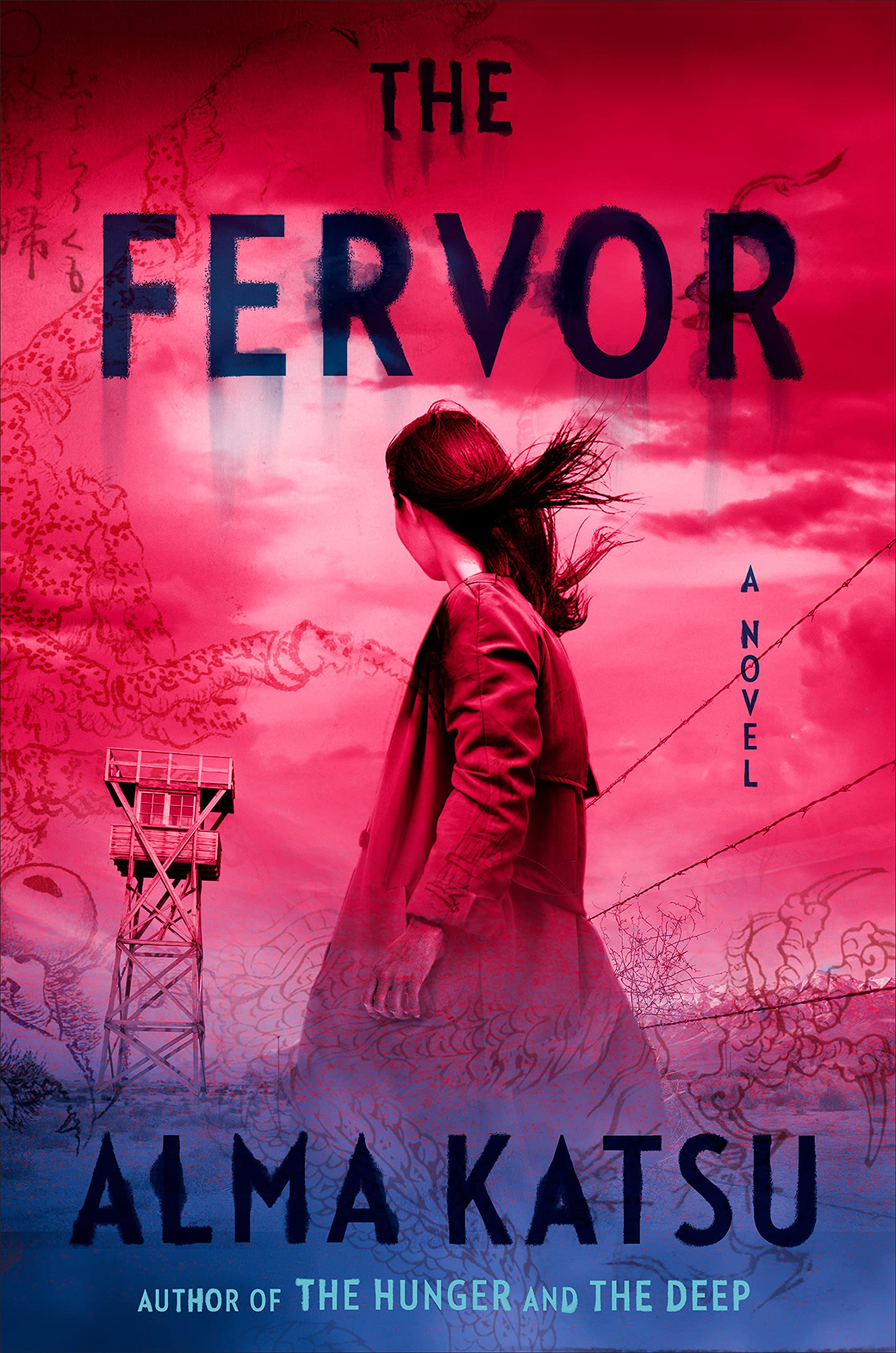
Two pieces of good news: first, Ms. Katsu has a new novel, The Fervor, coming out in late April! The novel takes place during World War II at a Japanese internment camp and involves a strange disease and a stranger monster from Japanese legend. Yeah, you can tell this is right up my alley!

Second pieces of good news: Ms. Katsu has agreed to let me interview her about the book! So without further ado, let’s talk to Alma Katsu and find out why you should be as excited as I am for her new novel.

Rami Ungar: Welcome back to the blog, Ms. Katsu. Please tell us about The Fervor and how it came about.

Alma Katsu: First came the decision to set the next book in WWII. That had to do with trends in publishing, frankly; I’d sat in on the editors’ panel at the Historical Novel Society conference a few years ago, when it was time to come up with a proposal, and their advice was that historical fiction was pretty much dead except for WWII. I’d always thought it would be interesting to write about the internment camps, but then the question was how to turn that into a horror story? Objectively, the horror should be pretty evident: here was a government locking up its own citizens, people who hadn’t committed a crime, because they didn’t trust them. Because the average citizen (with the help of propaganda) believed that Asians were inherently sneakier and untrustworthy.

RU: You’ve talked about your Japanese heritage and how it influenced the story. Can you go into that for us?

AK: This was the first time where the main character of the book has the same ethnicity as me, and it was pretty eye-opening. For one thing, as I was writing I realized that I had a lot of resentments about the way my mother had been treated coming to America after the war, and the way I’d been treated as a minority (to a lesser extent) bottled up inside. Add to that the preconceptions about Asians and Asian women, in particular. This was an opportunity to write the truth, to dispel myths. It was freeing.

RU: I can only imagine! And speaking of Japanese elements, there’s been a surge of stories inspired by Japanese culture, particularly yokai, in the West. Some examples include Nothing but Blackened Teeth by Cassandra Khaw and my own novel Rose. What do you think of that surge, and where do you think it comes from?

The Fervor by Alma Katsu.

AK: I’m afraid I don’t have much to offer here. I know some folks are big into Japanese folktales and such, so I’m not aware of a surge per say. It always seems to be fairly popular thanks to anime! Japanese yokai and yurei are part of the fabric of life for Japanese, and so I’d heard and read stories when I was a kid, and it didn’t seem you could tell a horror story with Japanese characters without incorporating it in some way.

RU: Well, I can attest that anime was definitely an influence on me. Anyway, The Fervor also involves an epidemic in a Japanese internment camp. Did the COVID-19 pandemic influence your decision to include that?

AK: I drew on COVID, yes, the feelings of mass panic and confusion, but The Fervor is about racism. I decided to write it after watching what’s been happening to this country over the past four years or so. I’m not naïve but it’s been bewildering to see racism go mainstream in America. It’s comforting in a way to think it could be a disease, something you could catch, as that at least is understandable. The January 6th attack on the Capitol also influenced the book: The Fervor was an attempt to look at what this country has been going through and compare it to another horrible incident in America’s past, and show that we haven’t changed much.

RU: I’m looking forward to seeing how that plays out in the book. So, what research did you do for the book?

AK: This was different from The Hunger (the Donner Party) and The Deep (the sinking of the Titanic), events that I didn’t know a lot about. I already knew a lot about life in the internment camps, because I’d heard stories from my in-laws, seen documentaries and read articles. I knew what the issues were, I knew how the interned felt and what they had gone through. For the book, it was more a matter of filling in the gaps. I lucked out in that a neighbor’s family had been interned at Minidoka, which is featured in the book, and had a trove of documents from the camp: maps, rosters, newsletters, all kind of non-official documentation that typically gets lost to time. It was a real windfall.

RU: Yeah, primary sources like that are always a boon when writing about history or using it. And speaking of which, you’ve written about the Donner Party, the sinking of the Titanic, and now the Japanese internment camps. Are there any other ages or historical events you would want to write a story about?

AK: After doing three books and having them change a bit each time (going from being fairly close to the history to becoming reinterpretations of events, maybe just shy of alternate histories), I think it’s time to re-evaluate. I’m sure there are plenty of interesting historical events (I’d love to do another Western, for example) but I’m a little burned out on close reads of history right now.

RU: Fair enough. Switching gears a bit, what are you working on nowadays? And when can we expect to see the TV series based on your spy novel, Red Widow?

AK: I just handed in the second in the spy novel series, and though I’m sure it’ll need some work, I’m glad to have that behind me. I’m working on a new project that I can’t talk about at the moment, and hope to be pitching a few TV proposals soon.

Red Widow, the TV series, is chugging along. The pilot script is being polished right now, and we hope to know whether we’ll be shooting the pilot before too long.

RU: Final question: what are you reading these days? And are there any recent reads that you would recommend others check out?

AK: There are so many great books coming out this year that it’s hard to single out just a few. Let’s see… SA Barbes’ debut Dead Silence just came out. It’s space/horror: think Aliens meets Titanic.  It’s a lot of spooky fun. I had the opportunity to read Andy Davidson’s The Hollow Kind, a wonderfully suspenseful, creepy southern Gothic with a dual timeline. It doesn’t come out until October, however. I’m really excited for Catriona Ward’s next novel, Sundial, which I think I liked even better than Needless Street.

RU: Well, thank you for joining us, Ms. Katsu. It was a pleasure to have you again. Please keep us posted on your progress.

If you are interested in The Fervor, you can preorder it now from most retailers. You can also check out Ms. Katsu’s other books, including The Hunger, The Deep and Red Widow. And, of course, you can find Ms. Katsu on her website, Facebook, Twitter and Instagram.

That’s all for now, my Followers of Fear. I look forward to reviewing The Fervor this coming spring. And in the meantime, I’m sure I’ll be back soon with plenty to share with you. Until next time, good night and pleasant nightmares!

I’ve been wanting to post something for the past several days, but I have nothing to really post about. But I’ve been getting antsy and current events are not helping (type “Texas synagogue” into Google and you’ll understand why), so I’m blogging about things going on in my life. If only just to distract myself and to let you all know I’m still alive.

And if you Googled what’s happening in Texas, please pray to the deity of your choice that everything turns out alright.

So, in my personal life, things aren’t too bad. Work was a little crazy during the first week of January (which is pretty much par for the course), but this week things got calmer, so I didn’t feel like tearing my hair out. And all month, I’ve been looking for a new apartment to move into when my lease ends this summer. I’ve got a few possibilities already scouted out and am on the waitlist for, so hopefully I’ll have a better idea on where I’ll be living soon.

On the writing front, things have been crazy! The work for the Kickstarter campaign has taken up quite a bit of my time (more on that in a bit). However, I have found time to write, or at least attempt to write. As I said in a previous post, I’ve been working on a story where I terrorize neo-Nazis, and that’s been going well. Actually, while finishing up the most recent chapter of that, I managed to fix a few problems with the logic of the story and cut out a superfluous character. It’ll still take me some time to get the first draft finished, but I think it won’t be too bad once it is. It’ll be in need of a lot of editing, but it won’t be half-bad.

On another note, the Kickstarter for “That Which Cannot Be Undone,” the horror anthology I’m helping to create, is 77% funded! Yeah, pretty amazing, huh? We think we can reach our full funding by the time the campaign ends in twelve days, but we’re doing everything we can to make sure that happens. In the spirit of that, I’m offering up signed copies of my books Rose, Snake and The Quiet Game for people who pledge to the campaign. So if you want to read some of my works (signed, no less), and help support the career of me and fellow Ohio horror authors, this is a great opportunity to do so. You can use this link to pledge: https://www.kickstarter.com/projects/crackedskullproject1/that-which-cannot-be-undone-an-ohio-horror-anthology

77% and counting. Why not join us?

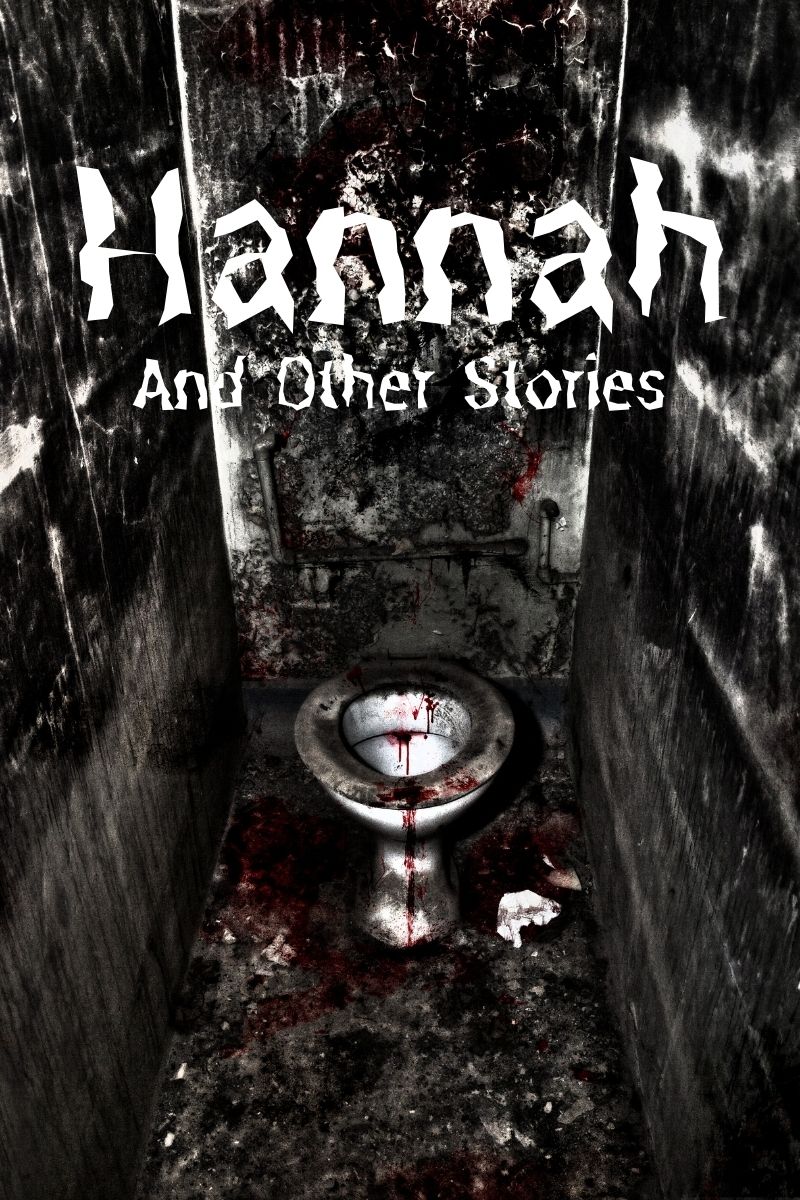
As for the other projects, the paperback and ebook editions of The Pure World Comes is on schedule. I’ll be reaching out to a cover designer I’ve worked with before on the cover soon, and once I have that, I can start uploading/formatting the actual book on a publishing platform. And I’ll be starting work on Hannah and Other Stories soon, as well as following up on some submissions this weekend. With any luck, I’ll be able to post a real update on something soon.

Anything else? Oh yeah: in about two weeks, I’ll be driving over to Marietta, Ohio for the Hidden Marietta Paranormal Expo. It’ll take place on the 29th at the Lafayette Hotel, and I’ll be selling books and doing Tarot readings while there. Hope you can make it!

Well, that’s my update. I’m off to heat up dinner, watch a movie, and then do a late-night writing session. Until next time, good night, pleasant nightmares, and please pray for what’s happening in Texas.

I’m not so sure anymore.

Of course, it seems like gospel that the first sentence of a story is important. It’s your hook, isn’t it? It’s how you get the reader into the story. You should put as much thought into that first line as you would as asking your significant other to marry you!

But I’m not convinced anymore. That may be strange, considering how often I used to (and sometimes still do) the #FirstLineFriday meme on this blog. You know, that thing where I post the first line of a story and hope it gets you into the story? But then again, maybe that’s why I’m unconvinced. I’ve posted first lines so many times, I’ve recognized how little effect that they have on the total story.

And you know, if you look at some famous books, you kind of see that. Harry Potter‘s first line is “Mr. and Mrs. Dursley of number four, Privet Drive, were proud to say they were perfectly normal, thank you very much.” Most Muggle-ish opening you’ve ever read. It doesn’t really hint at what’s to come in the story, and I honestly would have cut it from the final product if I had edited the first book.

And Stephen King’s stories don’t usually have those sorts of openings. The first line of IT goes like this:

“The terror, which would not end for another twenty-eight years–if it ever did end–began, so far as I know or can tell, with a boat made from a sheet of newspaper floating down a gutter swollen with rain.”

It’s a nice opening, but it doesn’t exactly scream…well, going to make you scream. It’s actually kind of mellow. And the opening for Needful Things is even more unassuming: “You’ve been here before.” Kid you not, my first time listening to that book on audio, I had to repeat it a few times because it was totally unexpected and confused me a bit. Only as you keep reading does the opening make sense with this story.

Maybe this is why some books have poems, excerpts from other famous stories, Bible verses, or even song lyrics at the beginning, before the story even starts. You read those little epigraphs (that’s what they’re called, I check) and keep reading to see how it relates to the story you’re taking in.

in any case, I’m starting to think that maybe it’s not the first sentence, or even the first paragraph, that’s responsible for making a story’s opening catchy. It’s maybe the first couple of paragraphs or the first page. When the author sets up the story, the characters, the setting, that you really get pulled into the story.

The opening of the story should be like opening a door to guests. Yes, that’s important, but what’s inside is even more important. Photo by Ron Lach on Pexels.com

That’s certainly the case with my current story, where I set up a nice, rural setting, something kind of idyllic…and then one of my main characters reveals that he’s a neo-Nazi. It’s a stark contrast from the first paragraph that takes the reader off-guard, and hopefully will get them reading further along. I’ll have to finish the story first to see if that’s the case, however.

Anyway, the first sentence is important, but it’s not the most important thing about a story. Rather, it’s just the opening of the door and allowing people to take a quick look before stepping inside. What’s beyond that is what’s truly important. You just have to make sure to open the door and open it well.

But what’s your take, Followers of Fear? Let’s discuss openings and if the first lines of a story really are as important as we make them out to be. I’m curious to hear what you think on the subject. Maybe more of you will agree with me than I imagine.


Happy New Year, my Followers of Fear. I wanted to start this year off with a post that’s reflective on the craft of writing, as I enjoy writing those posts. Anyway, I hope you’re having a good 2022 so far. Mine’s been rough so far, but that tends to be the case with the first full week of January. And at least there’s a lot to look forward to right now: editing and releasing Hannah and Other Stories; putting out the paperback and ebook copies of The Pure World Comes; conventions and expos; maybe a bit of travel; and, of course, some good reading and writing.

Oh, speaking of conventions and expos, I’ll be at the Hidden Marietta Paranormal Expo on the 29th in Marietta, Ohio. If you can, stop by the Lafayette Hotel and maybe I’ll sign your book and read your Tarot.

Also, the crowdfunding campaign for That Which Cannot Be Undone is at 58.5 percent! We’re over halfway funded and we just keep going! And if you would like to help me and my fellow Ohio horror writers put out an amazing anthology of horror stories set in our state and revolving around the theme “that which cannot be undone,” click on the link here: https://www.kickstarter.com/projects/crackedskullproject1/that-which-cannot-be-undone-an-ohio-horror-anthology. There are also some amazing perks to pledging, like candles, Ohio-themed Tarot cards, copies of the book, and even end up in one of the stories! How cool would that be?

Anyway, that’s all for now, my Followers of Fear. I hope to have more stuff to tell you soon. Until next time, good night and pleasant nightmares!

You’re probably reading this title and wondering what’s going on in my life that would make me write a blog post with such a title. Well, I’m not planning on going to an ashram in India or a monastery in Tibet to find enlightenment, if that’s what you’re wondering. So not the right time for it.

No, the reason why is, between my limited time and all that’s going on, I have to refigure where my priorities lie.

For one thing, there’s Cracked Skull Press and That Which Cannot Be Undone. The campaign is in its latter half, so I need to spend a lot more time focusing on making sure that it’s a success. It’ll involve a lot of man hours, networking and other tasks. So I’ll have to set aside more time to working on that and not to writing. I’ll need to if we’re to make the remaining amount of funding in our budget.

Speaking of which, if you would like to help us create a kickass horror anthology, or you’re just curious, you can find more about the anthology, the campaign, and the rewards here: https://www.kickstarter.com/projects/crackedskullproject1/that-which-cannot-be-undone-an-ohio-horror-anthology. We’ve been working hard on making sure we have an awesome anthology with talented horror authors and we can’t wait to share it with you. Thanks in advance for your support. We appreciate it.

If you would like to check out the campaign and help me and my friends put out a great anthology with our stories inside, click the link above.

Even after the campaign is done, I have two books to release this year. I’ll be putting out a paperback and ebook of The Pure World Comes (plus an audio book if fate is kind), my Victorian Gothic horror novel. That probably won’t take too much time, as all I need is provide a good cover and ensure it’s formatted right. However, Hannah and Other Stories will need A LOT of editing done. Those seven stories will each require their fair share of attention, and it wouldn’t surprise me if some, like “The Autopsy Boy and Doctor Sarah” or “What Errour Awoke,” may need significant portions rewritten.

Add in all that, plus one story that’s currently being edited for a different anthology and other stories that might be accepted into other anthologies and magazines, the probability of a third draft of Toyland (or is it the fourth?), conventions and book expos, and a whole lot of other stuff that will or could crop up, and I will have to put a hold on the writing for a while.

It’s a shame. I was really enjoying working on this story where I got to terrorize neo-Nazis. And I had a great idea for a story based around Cinderella I was looking forward to writing. And this will probably push my mummy novel Crawler even further back.

But as things stand, my life won’t handle anymore projects. Still, if any of these stories find a home, it’ll be worth the pause. Because as long as I’m able to keep sharing my twisted, terrifying stories with you all, that’s all that matters.

My works can be found in many great booksellers. Check them out and let me know what you think.

And if you want to help things along, you can always check out my works that are already published and leave reviews online. Those help me immensely by letting me know people are reading my stories and are also letting other people know if my stories are worth their time. You can find my stories on Amazon, Barnes & Noble, and from other great booksellers. Just search Rami Ungar and see what comes up!

Well, that’s all for now, my Followers of Fear. I look forward to updating you with the latest on all the projects I’m part of or will be hopefully be part of soon. Until next time, good night, pleasant nightmares, and Happy New Year.

Oh, and before I forget, I was recently featured again in the Columbus Jewish News and interviewed on the website Bookishly Jewish. And my fellow writers at Cracked Skull Press were on the podcast Necrocasticon recently too. Please check them out if you get the chance. Thanks!

Anne Rice. She may be gone, but she is still definitely with us.

You know, I’ve actually had the opportunity to interact with Anne Rice a few times. Not in person, mind you, but over email and social media.

In high school, I sent her an email after reading her novel Angel Time (she had an email that was known to the public back then). I liked the novel for the most part, but I was upset as a Jew that one of her Jewish characters became a Catholic nun just to be closer to her father. She actually emailed me back, saying that I had a fair point and would try to be more sensitive to such matters. It was a crazy cool moment. A few years later, about a year into writing this blog, I wrote a review of The Wolf Gift (which you can read here), her first werewolf novel, where I compared her work to various kinds of food (I had just eaten lunch). Somehow she caught wind of my review and posted it on her social media. It’s still one of my most viewed posts, and it’s been nine years since then!

I had a few more interactions with her through email and social media up until 2016 or 2017, but I was happy with what I got. And as she kept writing, I hoped I would be able to actually meet her in person someday.

Yesterday, December 11th, 2021, Anne Rice passed away due to complications due to a stroke. She was 80.

Like many, I am heartbroken. I first discovered Anne Rice as a preteen with Interview with the Vampire. As I’m sure many of you can agree, it was a revelation. For me, I hadn’t read any story whose world felt as immersive as the world of Louis and Lestat since reading Harry Potter years earlier. I could almost smell New Orleans, here the sounds of 19th century Paris! The language was so beautiful too! Poetry without being poetry, filling my mind and painting extraordinary images. It made me realize just how powerful language could be, more than any other novel I had read up till then. And finally, I empathized with and grew to truly love the characters. While a lot of their emotional and philosophical turmoil went over my head at that age, I understood that they were going through a lot and felt for them.

This would only increase as I continued to read her works throughout my teens and twenties as I read her new work. Reading her works often felt like meeting old friends, and at the same time, Anne Rice, who put so much of herself in her books, began to feel like a friend and a mentor. Often, her writing would influence mine as much as Stephen King’s did, especially as I’ve gotten older. That impression deepened when I got on social media, where Rice was active with her fan community, whom she affectionately called the People of the Page.*

I may have to read this again very soon. I haven’t read it since I was 11 or 12. I wonder how it will affect me now.

It pains me, and so many others, that we won’t be able to read new stories by her or see her social media posts anymore. That next year’s Ramses the Damned novel, if it releases on time, will be her final novel. That she won’t be able to see the TV adaptations of The Vampire Chronicles or Mayfair Witches trilogy being developed at AMC when they premiere. That one of the greatest horror writers of the 20th century, as well as one of the greatest writers of the 20th century period, is now gone from this world.

Luckily, even though Ms. Rice has left the Savage Garden and is probably now getting all her spiritual, philosophical and cosmological questions answered, her works remain. She has, like many of her characters, achieved a form of immortality, but this one won’t cut her off from the world of humans. Instead, she’ll always be with us, a spiritual force beyond matter and body living in our minds and our souls. So, even though many of us will never have the chance to meet her in person, she will still be able to influence and touch us with her powerful Gothic epics.

Next year, there’s supposed to be a public memorial in New Orleans for her, one year after her family lays her to rest. I don’t know if I’ll be able to go, but if not, I’ll at least be able to raise a glass of wine to her tonight. A sweet red, which I’m sure she would have appreciated. And when those TV shows premiere, I, and probably many others, will raise a glass again and think of her. Anne Rice, the true Queen of the Vampires, and someone who will be with us long after she’s joined the spiritual plane.

What influence did Anne Rice have on you? What were your favorite books by her? Do you have any stories you want to tell about her? Let’s discuss.

*See where I got the idea to name you all the Followers of Fear?

I’ll give 2021 this, it went by fast. A lot faster than 2020 did, thank God! And, despite how the year started (*cough* treasonous rebellion against the US government *cough*), it wasn’t as bad as I thought it would be when I posted back in late 2020.

Okay, real talk. While 2021 wasn’t as difficult as 2020 was, it still had its fair share of troubles. A lot of people still can’t or won’t get vaccinated against COVID-19, leading to the spread and emergence of new variants. Climate change is still an ongoing problem. There’s a big job and housing crisis happening in the country right now. And there’s still a ton of political and social unrest in the US and around the world, among other things.

That being said, 2021 did have some improvements. A lot of people are still alive because of masking and vaccination. In many places, we’re able to eat in restaurants, go to school and work, and even see movies and shows in theaters again (my mom, sister and I are going to the ballet for the first time in nearly two years! We’re so excited). The US didn’t collapse, despite how much we feared it would one way or another back in January. There are new treatments for other diseases alongside COVID-19 being discovered and developed, and new initiatives to protect the environment, combat homelessness, and so much more!

Oh, and we got one hell of a two-part movie adaptation of the Sailor Moon Dream arc back in June. Can’t forget that.

On a personal level, 2021 was mostly very good. I got vaccinated (and boosted as of two weeks). I moved into a bigger apartment. I got to visit some cities I’ve always wanted to visit for my vacation (and learned I’m not a Vegas person in the process). My efforts to save for a home are on track (for the most part; a lot of that savings account went into my vacation). And…what else? Oh yeah. I had my best year of writing and publishing ever!

Very excited about this (and whatever is created as the cover).

Seriously, The Pure World Comes was released and has been getting rave reviews; I published several short stories, novelettes and articles in anthologies and magazines; my collection, Hannah and Other Stories, was accepted for publication; I got to attend a couple of awesome conventions and meet some readers and writers; I wrote and edited so, so much; my friends and I created a small publishing press and are crowdfunding our first anthology (more on that below); and the number of Followers of Fear grew on this blog and my other social media platforms. This has been my most successful year of writing since I first started keeping track!

All that being said, I had my difficult moments this year. Things I didn’t talk about on my blog or other social media. I couldn’t keep my cats due to reasons outside my control and had to return them to the shelter soon after I got them; a driver ran a red light, causing us to get into a crash and forcing me to replace my car (at least the insurance company helped me get a new one); and there were plenty of times I felt frustrated, restless, or lonely because of the isolation we’ve all been going through these past two years. Yeah, all that happened. And it sucked. At least they helped me grow as a person (I think).

So yeah, 2021 was full of good and bad. At least the good outweighed the bad. And that’s making me somewhat hopeful for 2022.

Yeah, there’s still a lot of shit in the world that’s likely going to bring down my opinion of humanity and the world in general. But as I said above, things have gotten better in certain areas and may continue to go that way. And I have a lot of projects on the horizon, like Hannah and the paperback and ebook editions of The Pure World Comes (and maybe an audio book); I’m already signed up for a couple of conventions and expos; I have at least one short story being released next year, and hopefully more on the way; I might be working on an anthology next year (more on that below); and so many ideas I can’t wait to write!

I may even get to work on Crawler, like I planned to.

Speaking of the paperback/ebook for The Pure World Comes, how does this look for cover art.

And who knows what else might happen in 2022? I don’t think I’ll be able to buy a house or get a movie adaptation of my work (though I would love it if either happened), but a lot happened in 2021 that I didn’t expect. Sky’s the limit, and I plan to head there.

Yes, 2021 was difficult in some ways and on many levels, but it was also happy and rewarding, too. And while I know that a lot of problems will continue through to 2022, I’m hopeful for the new year as well. So much more than I was at this time last year.

And I hope that whatever happened in 2021, you’re feeling the same way too.

How did 2021 go for you? How are you feeling about 2022? Anything happen that made you smile or feel helpful? Let’s discuss in the comments below.


On the subject of the small press my friends and I created and our anthology, That Which Cannot Be Undone, the crowdfunding campaign is going quite well. In just six days, we’ve reached 17% of our goal and are working to get the rest. If we make our funding goal, we’ll be able to release a great anthology of horror set in Ohio and written by our fellow Ohio authors. You can learn more about the anthology and the campaign by clicking on the link below.

https://www.kickstarter.com/projects/crackedskullproject1/that-which-cannot-be-undone-an-ohio-horror-anthology

That’s all for now, my Followers of Fear. I’m going to keep the hope alive for the week (and maybe the rest of the year). Until next time, good night, Happy Hanukkah and Krampusnacht (yes, that’s a thing), and pleasant nightmares!

With the year winding down, I thought I would let you know that I’m scheduled for a couple of events in 2022. Not many, but one is next month, so I figured I might put out a notice in early December. Sorry if you consider this spam in your reader or your email inbox.

First, I’ll be attending the Hidden Marietta Paranormal Expo in Marietta, OH on January 29th, 2022. This is a cool convention for those who enjoy the spooky and the dark, in a city that is known to have quite a few haunted locations (I’m thinking of taking a vacation there for my birthday next year). In fact, the expo will be held at the Lafayette Hotel, which is said to be haunted to the gills! You can find more information on Hidden Marietta’s website here.

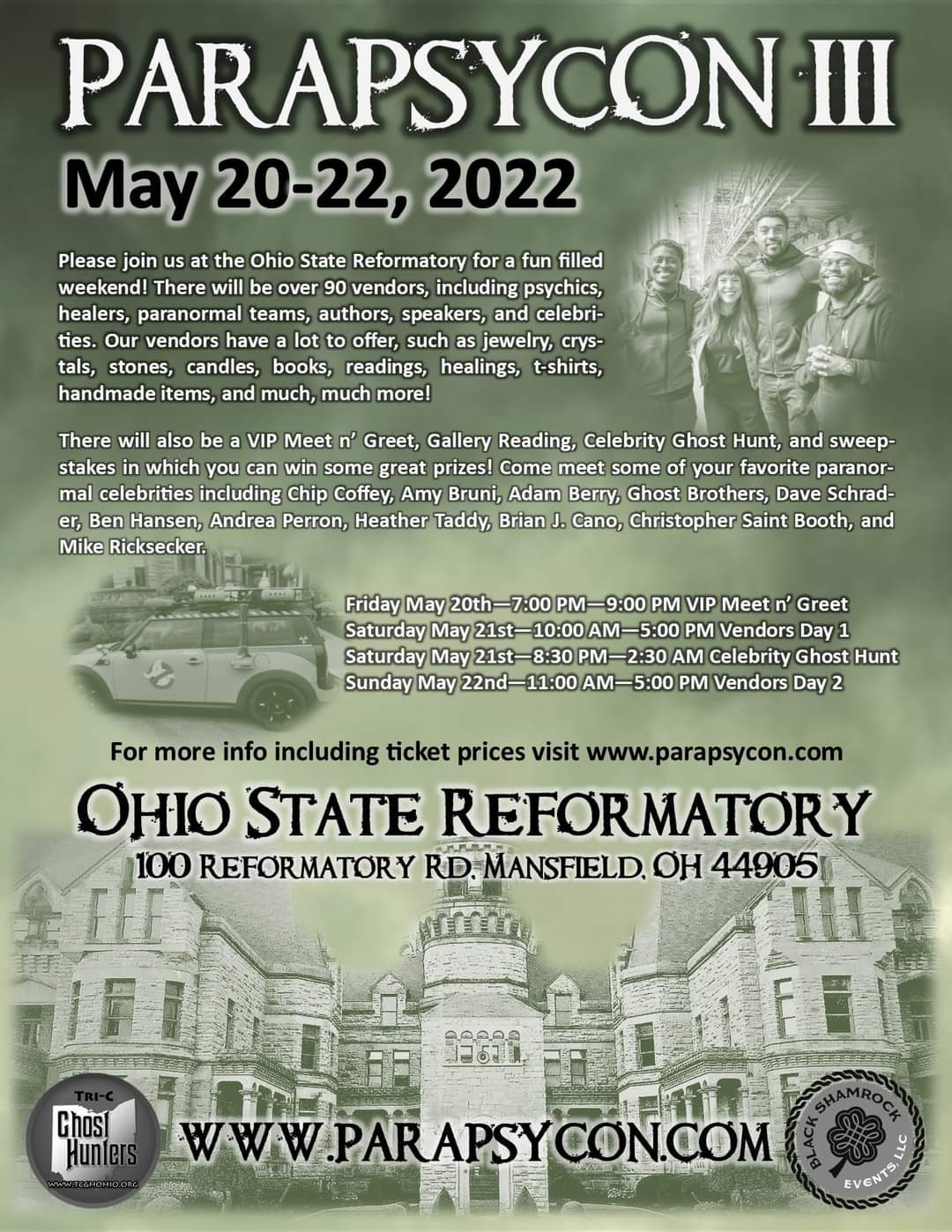
And guess who’s going back to prison (so to speak)? That’s right, I’m going back to the Ohio State Reformatory for ParaPsyCon 2022. This year it’ll be on May 21st – May 22nd, 2022 and again it’ll be at one of the most haunted, if not the most haunted, prisons in America, the Ohio State Reformatory in Mansfield, OH. I had a really good experience last year, and I’ve learned from my fellow vendors, as well as my own mistakes, for ways to ensure that I have an even greater experience as a vendor. You can find out more about ParaPsyCon by checking out the website here.

Anyway, thought I’d mention it in case anyone is able to make it, especially the Hidden Marietta Paranormal Expo. I plan to bug you all less this year about my public appearances so you don’t get sick of me mentioning them. Except for news about new conventions and whatnot, I’ll probably only mention them right before they happen.

Anyway, I hope I’ll get to see you at one of these events and maybe read your Tarot and/or give you a signed copy of one of my books.

(And if you can’t, or if you’re looking for some scary reading for you or for friends and family this holiday season, I’ll include links for my stories below. Yes, I’m doing another book ad, but I only do this occasionally, like how I plan to do event notices.)

That’s all for now, my Followers of Fear. I’ll talk to you again very soon. Until next time, good night, Happy Hanukkah, and pleasant nightmares.

Oh, and if you’re wondering about That Which Cannot Be Done, I’ll update you on that in a future post. Probably the next one. Believe me, I have news. But like I said, trying to limit how much I advertise this sort of stuff.

The Quiet Game: Amazon, Barnes & Noble, iBooksSmashwords, and Kobo.

Snake: Amazon US, Amazon UK, Amazon Canada, Barnes & Noble, iBooksSmashwords, and Kobo

Rose: Amazon US, Amazon UK, Amazon Canada, Audible, B&N

The Jewish Book of Horror: Amazon, B&N

Dark Nature: Amazon

Nightmare Collective Part 2: Amazon

Into the Deep: Amazon

Photo by Pixabay on Pexels.com

Recently on Twitter, another author I’m acquainted with tweeted that she didn’t think she would ever reach the levels of the authors she admired. She then went on to say that while she aspired to “champagne quality” writing, her stories usually ended up being “boxed wine” quality.

First off, what’s wrong with boxed wine? The first sips of wine I liked came from boxes. And price, prestige, method of preparation, or recommendation of experts is no guarantee of quality or tastefulness. Just check out this hilarious video on the subject.

And second, just because you think your work isn’t as good as your heroes or as prestigious as other stories doesn’t mean it’s bad. For starters, you think the writers you aspire to be don’t have their bad days? Robert Heinlein, Isaac Asimov and Frank Herbert probably bemoaned that they would never come up with stories as influential as those of Mary Shelley, HG Wells and Jules Verne. Every professional manga artist, including those who have made the most famous series like Eiichiro Oda, Rumiko Takahashi, and Naoko Takeuchi, have lamented they’ll never be as good as their favorite artists despite all proof to the contrary. And God knows HP Lovecraft, one of the most influential and controversial writers in horror, worried that he would never measure up to the likes of Edgar Allen Poe, Robert Chambers and Arthur Manchen.

(And if I’m being honest, between his prejudices and his hyper-Victorian style of writing, he never did.)

Another thing to keep in mind is that just because another work is considered “prestigious” doesn’t mean it’s good. In fact, the word prestige comes from the Latin word for “illusion.” And that’s what prestige is: an illusion. A bunch of critics or purveyors or publishers came together and agreed that because a work of art has certain qualities or is being sold in a certain place (like a fancy, pretentious art gallery), it’s considered “good” and worthy of being worshipped. But beyond making sure that it’s been edited well, that’s no guarantee of quality.

An example of a bestseller whose quality is questionable.

Neither is being a bestseller, honestly. The way a bestseller is defined is often based on how much a publisher thinks a story will do and how much marketing is done for the book. Most bestseller lists can be gamed for profit, such as happened with Lani Sarem’s YA novel a few years ago. And many bestsellers fade into obscurity after a few years, rather than having staying power. It has nothing to do with quality of the story itself (just look at my review of Nothing But Blackened Teeth, which has attained bestseller status, if you don’t believe me).

You know what is an indicator of quality (beyond editing and not having anything offensive in the content)? An audience’s reaction. Fiction is often an escape and helps audiences heal from our awful reality, or at the very least bring joy and give readers a feeling that their interests are shared by others. So if your work brings people joy, then that’s a great sign of its quality. Doesn’t matter if it involves college professors and literati types scheming and having sex with one another; fighting aliens in another solar system; or having a love affair with a powerful man in a universe where humanity is divided into castes based on supposed wolf pack heirarchy.* Just as long as your audience gets joy from reading it, then it’s quality.

You especially see this in the horror genre. You have your Gothic and ghost stories with flowery language; serial killer thrillers that gush blood and gore; Nazi zombies that bite your face off as they propagate a toxic and deadly ideology; and even stories around killer cows or living poop monsters or other ridiculous ideas. All those are stories in the horror genre, and very few within the genre will judge you for it.

Plenty outside the genre will, though. Horror as a whole is still looked down upon as a genre, even as it proves more profitable and popular every year. But that’s another thing: tastes and what is considered prestigious changes all the time. Shakespeare, opera and even lobster used to be considered low-class. Now they’re fancy and high-falutin. Perhaps in a hundred years, your “boxed wine” fiction will be taught in high school and college classes, working on horror and superhero movies is a highly sought-after privilege, and a restaurant is considered luxury if it serves real bacon. You never know.

All that being said, this might not make you feel any better about your stories. These feelings might come from stress, anxiety, depression, or dating a demon fairy who scares people with a twitch of the face rather than trying to write stories. But if learning all this helps you feel like your work is champagne quality, then mission accomplished. Because no matter what your story is about, how flowery the writing is, or who’s hyping it up or buying it, if your work is enjoyed by someone, that’s what matters most.

Better have an editor check it over first. They catch stuff you’ll never see in a million years before you get to the publishing phase.

You may think your story is a boxed wine, but that doesn’t mean it’s bad or low-class. The exact opposite, in fact.

That’s all for now, my Followers of Fear. I’ll be back Monday for something special (you probably know what already). Until next time, good night, Happy Thanksgiving, and pleasant nightmares!

*This is an actual subgenre of romance, and it is apparently very popular. I won’t judge anyone who likes it, but I will say that wolf packs aren’t actually based around alphas, betas and omegas. Research has shown that wolf packs are really alliances of small, nuclear families and lone wolves adopted into the pack. The more you know.