Posts Tagged ‘storytelling’

The other day, I was scrolling through my Twitter feed and I saw a tweet from a fellow writer in the writing community (or #WritingCommunity). This was the tweet.

Now, if the tweet hasn’t loaded properly into this blog post at the time you’re reading this, it’s from writer Rey Roland using the hashtag @rrowlandwrites and goes like this:

#WritingCommunity do you think that characters have to make mistakes in a story?

I found the question stimulating, so after some back and forth between us, I decided to do a full post on the question (hope you don’t mind, Rey).

So, can and should characters make mistakes? First, let me start with can: yes, characters can make mistakes. In fact, there are plenty of stories where characters make mistakes which become integral to the plot. And yes, characters should on occasion make mistakes, though it depends heavily on the story. A character shouldn’t make a mistake just for the sake of making one when it serves no purpose to the story. Otherwise, the readers will think it’s weird.

Of course, this leads to an even bigger question: is there a benefit to having characters make mistakes? Actually, there are multiple benefits to having a character who makes mistakes.

For one thing, characters who make mistakes are easier to empathize with. Not to say characters incapable of making mistakes can’t be empathized with, but it does make a character more human and easier to identify with for the audience. The possibility of a reader continuing with a story can depend greatly on their connection to the protagonist, so showing them as being like the reader–more human–can be an advantage.
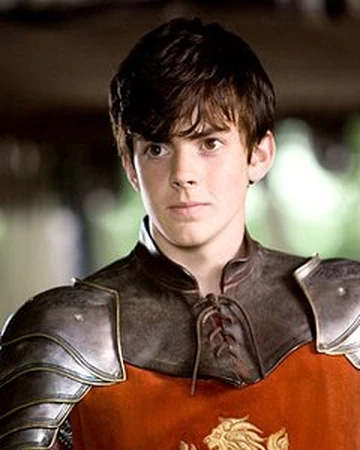
Edmund Pevensie’s mistake was a major driver of the story.

Another reason to have characters make mistakes is that it can help the story along or add to its complexity. Sometimes, it’s even the catalyst of the story. In The Lion, The Witch and The Wardrobe, Edmund makes the mistake of falling under the White Witch’s spell, and betraying his siblings adding both an extra dilemma to an already difficult situation and giving the character a redemption arc during the story. And in the manga Death Note, Light Yagami tries to eliminate suspicion of himself as the murderer Kira by killing the FBI agent following him, as well as the other FBI agents following other suspects. However, this eventually just leads to him becoming a prime suspect again, a problem which lasts the rest of the series.

Of course, it isn’t just protagonists who make major mistakes. Minor characters make mistakes all the time, and they often benefit the plot significantly. In Ania Ahlborn’s novel The Devil Crept In, the protagonist’s mother makes the mistake of not treating her son’s obvious mental issues, which has major consequences before, during and after the story. And in Harry Potter and the Order of the Phoenix, Cho Chang’s best friend Marietta Edgecombe tells Umbridge about Dumbledore’s Army, leading to the organization’s dissolution, Dumbledore’s exile and Umbridge’s assent at Hogwarts, and boils to appear on her face in the shape of the word “SNEAK.”

And villains make mistakes all the time. Often, that’s how their downfall begins. Often, these mistakes are due to the villains’ pride, ignorance, or some other character flaw. Voldemort doesn’t believe anyone will find his Horcruxes; Bane talks too much and doesn’t watch his six; Annie Wilkes is so obsessed with her Misery Chastain novels, she falls for Paul Sheldon’s trick; the White Witch doesn’t read the instructions carefully and misses the deeper magic in the Stone Table; Kaecilius also doesn’t read the instructions and misses what actually happens when you join Dormammu’s dimension; and the Wicked Witch allows water in her castle for some reason, even though she has a serious water allergy (I guess the book version thought Dorothy would never think to use water against her?).

As you can see from the above, not only can and should characters be able to make mistakes, but there are numerous benefits to doing so. Whether to include one or not depends on the author, character(s), and story in question. However, if an opportunity comes up and you think it’ll ultimately benefit the plot, I say do it. Who knows? It could be a major turning point in the story, and the moment readers talk about for years to come.

I hope you found this post edifying, my Followers of Fear. I had fun writing it. And I hope Rey Rowland (whose Twitter page you can find here) enjoys reading this. Thanks for the mental stimulation.

That’s all for now. I’ll check in with you all very soon, I’m sure. So, until next time, stay safe, pleasant nightmares, and DON’T TAKE THAT ACTION! IT’S THE KIND OF MISTAKE THAT’LL LAND YOU IN A HORROR STORY! AND NOT ONE WRITTEN BY ME.
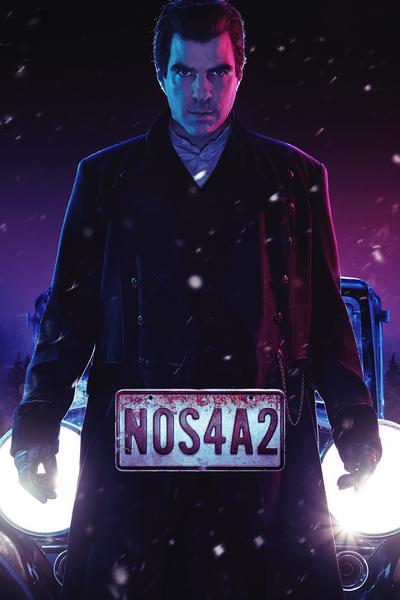
NOS4A2‘s TV series has been a highlight to my week during the pandemic. And given how well season one adapted the first half of the source material (see my review here), I was eager to see how well they adapted the second half, when protagonist Vic McQueen is a mom trying to protect her son Wayne from Charlie Manx.

I’m happy to report that season two is better than season one. Not only that, it’s great stuff.

Eight years after her first clash with the vampiric wraith Charlie Manx, Vic is struggling to be a good mom to her son while also battling her own demons. She hopes that life will improve when it’s reported that Manx is dead, but things are never that simple. Not only is Manx still alive, but he’s out for revenge against Vic. And he’ll use her own son Wayne to achieve that revenge if Vic isn’t fast enough.

What I liked about this season was that, while adapting events from the book, they added in things that contributed to the story. This was a welcome change from the first season, where they added crap like a halfhearted love triangle and Vic partying with rich kids right before a showdown with Manx. Highlights include the episode around the original character the Hourglass, the deteriorating relationship between Manx and his assistant Bing Partridge, and scenes involving Manx’s previously-unrevealed backstory.

I also liked how they fleshed out some of the side characters. Vic’s partner Lou Carmody gets plenty of time to shine and show what sort of person he is, rather than the love interests from the first season, who can be summed up as “rich kid who likes a girl from the other side of the tracks” and “stoner with a heart of gold and a crush on his childhood friend.” Another character who gets fleshed out is Millie, Manx’s daughter and his first victim. In this season, she takes on a central role as she starts to question her world and her father. It’s fascinating to see her discover so much about her father and herself throughout the show.

Add in some scares and tension, as well as some great acting and storytelling, and you get an awesome second season.

I do have some criticisms though. For one thing, while it’s cool to see how Charlie Manx came to be the monster he is, there’s too much emphasis on making him somewhat sympathetic. And you know what? I don’t want to sympathize with Charlie Manx. He’s a monstrous character who uses the kids he “rescues” while at the same time believing his own propaganda. I really don’t want to sympathize with that.

Another issue is that Craig, Wayne’s biological father, makes a few appearances in the latter half of the season, but it feels unfulfilled. We see him a few times, and then he’s kind of forgotten. I would have liked to see him utilized a bit more at the end of the season.

On a scale of 1 to 5, I’m giving NOS4A2 season two a 4.8 out of 5. It’s a freaky, thrilling ride that improves on the first season and makes revisiting this world a pleasure. There’s a possibility that a third season might happen (whatever that might look like), so you might want to grab your seat belt and catch up on the series while there’s still time.

That’s all for now, my Followers of Fear. I’ll be posting another review soon, as I bought advanced tickets to see The New Mutants in theaters. That’s right, I’m going to a movie theater. And should I survive the experience, I’ll hopefully have a new review for you all.

Until then, stay safe and pleasant nightmares!

Folly Beach, the beach Ramsey and I visited, and which is the setting and inspiration for this latest story.

Two stories finished four days apart. Not sure if I’ve ever done that before.

So remember when I mentioned my buddy Ramsey and I visited a beach called Folly Beach in my Impressions of South Carolina post? Well, Ramsey is just barely able to tolerate horror. I know, odd considering he’s one of my best friends ever, but it’s true. Anyway, I decided to take advantage of this and mess with him before it was time to leave by making him think, even if just for a second, that something out of a horror situation was happening to us on that beach at that very moment. And you know what? He bought it, if only for a moment.

Obviously, it was funny, but it was also the basis for this story, Folly Beach. I basically  imagined what might happen if that situation I got Ramsey to believe in really happened, changed some names and added some events to make things more interesting. The result is Folly Beach, a new short story just under thirty-eight hundred words.

Yeah, that is pretty short for me, I know. Still, I didn’t think it would be long to begin with, and happy with the results.

So, what’s next with this story? Well, I’ve already sent it to Ramsey to read and laugh (or scream) over. And I’m looking for beta readers to take a look at it and give me some feedback. My hope is to have a second draft done by the end of September/early October, in time for a particular publication’s submission window to open. I don’t think I’ll get in, given that it’s a hard publication to get into, but when I have something that fits its word count limit and I think would be a good fit, I have to try.

And in the meantime, I’ve already figured out what I’m going to write next (though I’ll probably wait a couple of days before I start on it). Yeah, no matter what, I keep busy.

Well, that’s all for now, my Followers of Fear. I’m sure I’ll have more to say in the coming days. Maybe even as soon as tomorrow (though if I do publish a post tomorrow, I’ll be going to bed soon after! I can’t do these late nights as much as I used to).

Until next time, stay safe and pleasant nightmares!

Cover of the first Hellraiser film.

If you’re not familiar with the Hellraiser series, let me start with a bit of background. Based on the novella The Hellbound Heart by Clive Barker,* the films follow a magical puzzle box which, when solved, open a gateway to a hell dimension inhabited by creatures known as Cenobites. Anyone who comes into contact with the Cenobites is then pulled into their world, where the boundaries between pain and pleasure are explored until they all blend into suffering. All the films in the series follow people who come into contact with the puzzle box, with the fourth film exploring the puzzle box’s creation and history, though only the first four were released theatrically.

I saw the first three films years and years ago, but was recently spurred by a colleague rewatching some of the films to revisit them and finally watch the fourth one. And I have some thoughts on the series.

For one thing, I get the appeal of the series, which first released in the 1980s during the height of the slasher boom. However, unlike other slashers of the time, which focused either on silent killers like Jason or Michael Myers, or funny, over-the-top characters like Freddy Kreuger, the Hellraiser films were outliers. The monsters of those films weren’t silent stalkers or wise-cracking undead. They were more like scientists of sensuality and suffering rather than killers. Death was just sometimes part of their work (at least for the first couple of films). In fact, in the first few films, the lead Cenobite Pinhead, nearly always played by Doug Bradley, is articulate, intelligent, and dispassionate except when speaking of his work.

In addition, the first two films don’t follow a regular slasher structure. Instead, the focus shifts around to various characters and their motivations, making the films feel almost like novels in how their stories are told. And the first two films also have a surreal aspect to them, especially the second one, which adds to the feeling of horror and unreality that the films are going for.

And finally, the films weren’t focused on gory deaths. They focused instead on desire, on what made people do horrible things in exchange for their wants and needs, even if those wants and needs included horrific sadomasochistic experiments. If that sometimes led to death, then so be it.

Pinhead, leader of the Cenobites and the most prominent character in the series.

Given all that, I can see why the films were popular and have stuck around. That being said, I can see how the series fell in quality as early as the third film. While that one was good, it structured its story in the vein of a more traditional, good-vs-evil supernatural slasher. It also eschewed the more weird aspects and added in some campier aspects with some of the new Cenobites. And then the fourth film, while giving a history to the puzzle box and an “ending” for the series, sacrifices quality and scares in the process.

It’s really no wonder the series went to direct-to-video from there on out, or why the subsequent films have tried for a more psychological approach rather than an out-and-out gory supernatural style.**

Despite all that, the first two films, while they have their issues, are still masterpieces and the third film is worth a watch (though I would stop after that). And, like all good slashers, the very concept is powerful enough to make you want to see more. to explore more from the safety of your living room. It’s why the series has endured, and why a reboot and a TV series are both in development (though we may not see anything new for a long, long time).

And if I’m being honest, I wouldn’t mind a reboot. This series has gone through so many ups and downs, a fresh take done with love for the original concept might just be what the series needs. And if one does get made, I hope antagonist Julia would be given a bigger role. She was such a powerful character in the first two films that at one point, it was considered giving her the role of main antagonist over Pinhead, and I think the character’s exploration of her own darkness and sexual desires would go over well with modern audiences.

And if you’re interested in checking out the Hellraiser films after this post, here’s where I’d rate them on a scale of 1 to 5:

Any other Julia fans out there?

  • Hellraiser – 4.3
  • Hellbound: Hellraiser II – 4.5
  • Hellraiser III: Hell on Earth – 3.9
  • Hellraiser: Bloodline – 2.6

But tell me, what are your thoughts on the Hellraiser franchise and my observations? Do you support a remake? And is there anyone else here who thinks Julia is much more terrifying than Pinhead? Let’s discuss.

That’s all for now, my Followers of Fear. I’ll likely have a new review out soon, so keep an eye out for that. And until next time, stay safe and pleasant nightmares.

*Which I really need to get around to reading one of these days.

**Or so I’ve read. I have not seen anything past #4 yet, and I’m not sure I want to.

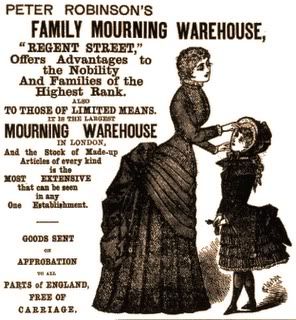
Ad for Black Peter Robinson’s Mourning Warehouse, and the image that inspired this story.

Wow, what a mouthful of a title. And what a story! I have a good feeling about this one.

But I’m getting ahead of myself. Let’s start with the point of this post: just a few minutes ago, I finished a new novelette. Titled “The Ghost of the Mourning Museum,” the story follows a man on vacation in the UK who visits the Museum of British Mourning.* While there, he encounters a little girl who says she’s the daughter of a mourning warehouse owner who died in the 19th century. As it turns out, the museum is haunted by that girl’s ghost, and seeing her is said to herald your death.

So yeah, if you read my post on the cult of Victorian mourning rituals, you can see how that might fit into this story. In fact, quite a few of my interests made their way into this story. Tarot, for instance; I was struggling at a certain point in the outlining stage of what should happen to my protagonist, so I just gave him a Tarot reading. I then pulled out my own deck, and used that to perform the reading for my character. What the cards gave me ended up propelling the story forward in just the right way.

And because I’d been to Britain on a study abroad trip years ago, I got to include a little bit of my experience in the story. Not much, but a little.

So, what’s next for this story? Well, at 10,535 words, publications are going to be very selective with what they’re willing to accept. That being said, I think this story has potential, so I’m going to find a few beta readers to give me feedback. Once I have that feedback, I’ll use it to spruce up this story. And then, once that’s done…who knows? At the very least, I’d like to get it out there and see if anyone else enjoys the story.

For now though, I’m drinking some beer and retiring for the night. Goodnight, my Followers of Fear. I’m sure we’ll catch up at some point this weekend. But until then, stay safe, pleasant nightmares, and…holy crap! WordPress informs me I’m past a hundred thousand views on this blog! Everyone, thank you so much for continuing to read this blog and support my writing career. You can’t imagine what it means to me. I hope you’ll continue to support me as I work on getting more stories out there and reaching my full potential as a writer.

Until then, pleasant nightmares!

I know I said that already. I don’t care.

*For the record, there isn’t a real Museum of British Mourning. I just made it up for the sake of this story. However, if one does come into existence in the future, I hope the museum will give credit where credit is due and make me part of the museum’s operations in some way.

About two years ago, I binge-watched the entire first season of an anthology series called Channel Zero, this one focused on adapting popular creepypastas. The first season, Candle Cove, was terrifying enough to earn a 5 out of 5 review from me (which you can read here).

And then it took me two years to actually get around to watching season two, No End House. But over the past week, I watched it. How did it stack up? Let’s find out.

Based on the story No End House by Brian Russell, this season follows Margot, a young woman still mourning the sudden passing of her father the year before. One weekend, when her friends are home from college, they invite her out to a traveling haunted attraction called No End House, a house so terrifying that it’s said to change lives! They go to check it out, and find out that the house is more than a haunted attraction: it’s another world and a living organism unto itself. And they are its meal.

Like the first season, No End House uses a slow-burn approach to tell its story. Combined with a surrealism rooted in normal suburbia, it makes for a compelling watch that’s hard to look away. The characters are mostly nice enough to root for. My favorite was probably Seth Marlowe, played by Jeff Ward of Agents of SHIELD fame (Deke Squad forever!), who constantly surprised me with the reveals of his character. And John Carroll Lynch, who has played Twisty the Clown and Mr. Jingles in various seasons of American Horror Story, plays his character with plenty of love and pathos.

And there’s quite a bit of horror played around memory, the loss of or perversion of it. It’s a little chilling when you think of how memory is almost a physical, tangible thing used against the characters in this season.

That being said, the season does have its issues. The emphasis on emotional and character-driven storytelling is emphasized at the expense of the horror. There were no moments where I felt like crapping my pants or curling into a ball out of fright. Furthermore, there’s a missed opportunity to lean into the horror of the surrealism, just keeping it weird rather than creepy. All this is at the expense of the horror. Whereas the first season had this constant dread of the strange and unexplained, of the mystery at the center of it and how it affected the characters and the world, there was none of it in this season.

ON the whole, I’m giving Channel Zero: No End House a 3.4 on a scale of 1 to 5. It has some great characters and ideas, as well as some freaky scenes, but it misses numerous opportunities to scare the pants off us. If you’re looking for more story and character driven horror, this might be for you, but it won’t give you the buzz a real scary show will.

Despite how the second season compares to the first, I’ll probably still check out season three at some point. Likely within two years, though.

That’s all for now, my Followers of Fear. I’ve got a busy weekend ahead of me, but I’ll try to check in with something by Monday evening at the latest.

Until next time, stay safe, pleasant nightmares, and if you go to a haunted attraction but you can’t find anyone running the place, signing waivers, or paying/taking money…maybe reconsider stepping inside.

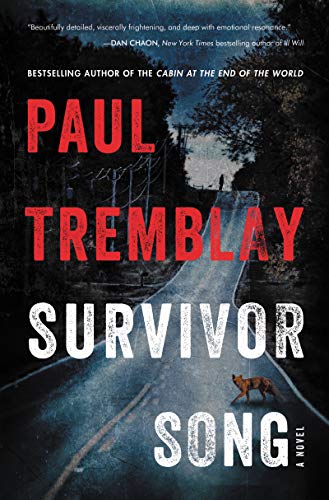
You would think that in the midst of a pandemic, nobody would be interested in pandemic fiction. Paul Tremblay’s new novel Survivor Song, released just last month, is about a pandemic (still trying to figure out if that’s coincidence or if Tremblay knew COVID-19 was on its way and wrote the story in response). And yet I, and many others, picked it up as soon as we could, and devoured it. I got it done in about a week, reading through the last half today. So yes, even in the midst of a pandemic, there’s an appetite for pandemic fiction. And Survivor Song is a welcome addition to the fold.

Survivor Song follows Dr. Ramola Sherman, a pediatrician experiencing a pandemic of her own in her state of Massachusetts. This one is a fast-moving form of rabies, one that affects its host within hours instead of days or weeks. As fear, anger, and conspiracy swirls around the state, Ramola gets a call from her best friend, Natalie, who is eight months pregnant and ready to burst. An infected man killed her husband and bit her. Thus begins a saga to find someplace to get Natalie treated, to save her and her baby. But with rabid humans and animals everywhere and time running out, can Ramola help anyone, let alone her friend and her friend’s baby?

A pandemic story with a slash of zombie thriller (though Dr. Sherman will remind you, none of the infected are zombies), Tremblay’s novel offers a stark, believable story of a disease running rampant through the state and the problems that come up in such a situation. That said, there are plenty of twists and unexpected turns, and they add to the tension of a clock running out of the story. Quite a few times I read something and was like, “Oh no!” or “Well, that’s a complication.” I also loved how Tremblay managed to hit on a lot of what we’re seeing in our current situation, including but not limited to: hospitals fighting an uphill battle; people not obeying health guidelines or employing easy “solutions” that are actually problematic; and crazy, convoluted conspiracy theories.

Also, that ending! Guy knows how to write a tense climax.

At the same time, there’s a deep-running love story here. Not a romance story or romantic love, but love between friends and a mother and child. Through Ramola and Natalie’s interactions, and the messages Natalie leaves to her child, you really come to care for these characters and hope for the best despite the threat of the worst.

If there’s one thing I didn’t care for and would’ve liked to see changed, it’s the ending of the story for Josh and Luis, two teens whom Ramola and Natalie meet while trying to get to the hospital. They were in the story for only a short time, but I really grew to like those goofy nerds and would’ve liked to see more of them in the story, or maybe in a story of their own. And not just because they were Doctor Who fans (Whovians, unite!).

All in all, Survivor Song by Paul Tremblay is a thrilling and emotional read and perfect for these mad times. On a scale of 1 to 5, I’m giving the book a 4.5. Stay inside, grab a bite, and get ready for one roller-coaster of a story. Just hope the bite you grab isn’t something biting your arm off while you’re at it.

And while I still have your attention, guess what happened last night? Stephen King tweeted about this book, and I replied mentioning my progress in it and when I hoped to have it finished. He retweeted it. King retweeted it! And I’ve been fangirling ever since (while at the same time daring to hope this isn’t the last time I end up on his radar). What a world, right?

My friend and fellow blogger whose tastes are way different than mine, Kat Impossible, tagged anyone who was interested in doing this tag. It sounded fun and informative, so I thought I would give it a try. It took me a while to get around to writing my own version and answering the questions–Kat’s post came out right after I got back from my trip, and I had a few posts to write before this one–but it’s finally out.

All credit goes to The Long Voyage for the original version of this tag. You can read it here.

NEVER HAVE I EVER…

…started a novel that I did not finish.

Before age 12 or 13? All the time. I wrote maybe five or six novels (which probably had word counts of short stories or novelettes at most) that didn’t get finished. There was a pirate story, a Frankenstein story, a caveman story, and a few zombie stories. Finally started getting some vampire stories to completion in middle school. I think it was a problem of focus and interest, rather than the story themselves. Then again, I was so young. Youngsters aren’t very good at staying focused on goals without seeing immediate gains from all their hard work.

More recently, I have some short stories and novelettes that I started in the past two years and stopped working on after awhile. Still figuring out why, but I think they may have leaned a little too far from horror and into dark fantasy to keep my interest. It’s sad, but what are you going to do?

…written a story completely by hand.

I did once! And it wasn’t one of those cute, two or three-page school assignments, either. One of my teenage attempts at novel-writing, a vampire novel called Mahiro, was written entirely by hand for its first draft. I had, like, seven notebooks filled with vampire fighting. And subconscious exploration of my sexuality through homage to Anne Rice and the movie Van Helsing, but that only occurred to me after I realized my sexuality.

…changed tenses in the middle of a story.

I think the first couple of attempts at Rose were in the past tense. But on advice from my thesis advisor, I changed to present tense. It worked out in the end.

…not researched anything before starting a story.

Most of my earliest stories started out that way. It wasn’t until maybe high school that I started to do research, and I only got good at it around college, when research became important for passing classes and getting my degree.

…changed a protagonist’s name halfway through a draft.

I don’t think I have, actually. Maybe the surname of a minor character, but never a protagonist’s name, personal or surname.

…written a story in less than a month.

Several times. Especially this past year or so.

…fallen asleep while writing.

Never. When I get tired, I’ll just go to bed.

…corrected someone’s grammar in real life or online.

Too many times to count. It’s a bad habit of mine.

…yelled in all caps at myself in the middle of a novel.

Um…I don’t think so. Is that something people do?

…used “I’m writing” as an excuse.

I think so. I didn’t want to go somewhere with my dad and sisters, even though a friend of mine would’ve been there to play. I just had to write that day. I hope the friend didn’t take it personally!

…killed a character based on someone I know in real life.

More than once. In fact, it’s something I warn people I’ll do if they get on my bad side. In fact, there are two people on there now. I just have to find the right stories to place them in…

Don’t ever mess with me.

…used pop culture references in a story.

Oh, all the time! Game of Thrones was mentioned once or twice in Rose, the 1960s Batman TV show gets a mention in River of Wrath, and I include so many references to some of my favorite anime in Toyland. And that’s just the tip of the iceberg.

…written between 1 AM and 6 AM.

Plenty of times. I’m actually thinking of changing my sleep schedule so I could do it more often (like Franz Kafka did), but I worry about the effects on my health should I need to get back on a normal schedule.

…drank an entire pot of coffee while writing.

I hate coffee, so that’s a no. I’ll usually have tea or, if it’s a weekend, beer or wine.

German wheat beers are my favorite kind of beer.

…written down dreams to use in potential plots.

Yes. One early story from college, Daisy, was inspired by a dream. And I think a couple more have been, but I can’t think of any off the top of my head.

…published an unedited story online/Wattpad/blog.

Oh hell no! I know the importance of editing. It can literally save a story from being thrown into the trash.

…procrastinated on homework because I wanted to write.

I don’t think so. I’m pretty good about getting that stuff done so I have time to write later. Besides, that stuff can creep up on you if you’re not careful.

…typed so long my wrists hurt.

Only if I’m wearing my watch. Which is why I normally type with it off.

…spilled a drink on my laptop while writing.

Not while writing, but once. I aim to never let it happen again.

…forgot to save my work/draft.

Never! How dare you insinuate I have!

…laughed like an evil villain while writing a scene.

Um, yeah! All the time! And sometimes when I’m not writing. It’s me, come on!

…cried while writing a scene.

Not my thing.

…created maps of my fictional worlds.

No, because more often than not, my stories take place in this world. All I need is a Google search and I’m good.

FOLLOWERS OF FEAR, I TAG YOU!!!

If you want to try this, go right ahead. Just make sure to link back to me and to The Long Voyage. And, as always, have fun with it!

That’s all for now, my Followers of Fear. I hope you’re having a good weekend so far. If I got at least twelve hours of sleep, I know I did. If you need me, I’ll be doing what I do best on weekends…whatever that is. Until next time, stay safe and pleasant nightmares!

After the failure that was the Grudge reboot earlier this year (see my review here), I was hopeful after learning a television series based on the original Ju-On movies was going to be released in Japan. And it was being brought to America through Netflix. And as soon as I could, I sat down to watch all six episodes of JU-ON: Origins. After all, it was guaranteed to be better than the Grudge reboot, but would it be legitimately scary?

JU-ON: Origins begins with a paranormal researcher named Odajima appearing on a talk show with an idol who experienced supernatural happenings at her apartment after her boyfriend goes house-hunting for them. At the same time, a troubled high schooler named Kiyomi becomes involved with a mysterious house near her school. This and other events leads to many people’s lives becoming involved with the house, a house whose history is alive and kicking, and in the worst possible way.

While this series bears very little resemblance to the original story of the movies beyond a cursed house and several men questioning if they’re the father of the children they’re raising, it’s definitely a better horror story than the Grudge reboot. And even better, it’s freaking scary.

First off, the show does a great job of setting up a mystery. The characters spend their time running down multiple leads, each one leading to a new aspect of the haunting. And each new aspect seems to add more questions than it answers. But even better, there are a number of terrifying moments. There were quite a few moments, especially in the later episodes, where I was squirming in my seat. Anyone who gets to episode five will shiver every time they think of it.

I also liked how they incorporated famous tragedies from Japan’s recent history into the story. A lot of the major events of the story occur around the same time as the murder of Junko Furuta, the sarin gas attacks, and the Kobe child murders (which, by the way, are terrifying in their own rights). Almost as if to say the house’s evil has some sort of connection to those events.

And if you don’t like subtitles, there’s an English dub on Netflix, and it’s decent. The English dialogue matches very well with the Japanese lip movements, and there are some well-known anime voice actors in the series (I had a lot of fun making jokes about that in the calmer moments of the show). Though I am sad to say, that’s not Nicholas Cage voicing the main character Odajima, but a guy named Brock Powell doing a really good Nicholas Cage impression.

This scene! Oh God, I’m shivering again.

If there’s one thing I didn’t care for, it was that I would’ve liked to see more from the original films incorporated into the story. I’m not asking for a direct based-on-the-movie or Kayako and her son to fully appear on screen, but I would’ve enjoyed more references or incorporation of the original story that’s become so beloved by fans.

And just a trigger warning: this series delves into subjects such as domestic violence and sexual assault. So if that’s a turn-off, maybe don’t watch this one.

For everyone else, however, JU-ON: Origins is a terrifying TV show that will satisfy anyone else bored with more recent entries into the Ju-On and Grudge franchises. On a scale of 1 to 5, I’m giving this show a 4.5. Head on home and settle in to watch it. Just make sure to watch with the lights on.

Also, if you go house hunting and the house has a history, make sure that it hasn’t harmed anyone in at least a decade before deciding it’s your dream home!

Before I start on the main subject of this post, I thought I’d ask a question of you, my Followers of Fear: how are you? You doing well?

Hey, it’s a pandemic and the world seems to get crazier every day. Might as well ask. Let’s talk in the comments below.

Anyway, you see that title? Inspiration, Motivation, Focus, Consistency. They’re more than just words. In fact, I think they’re why I’ve had such a crazy output of stories since November, including two novels.

Inspiration. This isn’t just limited to ideas for stories to write. Yeah, you want to have stories that excite you and that you think will excite others to read as much as it excites you to write them, but you also want inspiration for your drive. Let me explain: since Rose came out more than a year ago, I’ve heard from so many people who’ve enjoyed reading the book. I’ve had the pleasure of signing copies and talking to people about it, and even meeting the narrator of the audio book!

Being able to share my work with people, and knowing that they like it and even want to read more, is a huge inspiration for me. Imagining what someone might say for Rose or another story inspires me to sit in the chair at my desk and pound away at the keyboard on the laptop.

Motivation. If inspiration comes from knowing that people liked Rose and want to read more, then motivation is making sure I can do it again. I’m motivated to prove to the world that I’m not a one-book author (or one book by a publisher and four books published independently). This is another reason why I sit down in front of the computer every evening.

It’s also a good motivator for me to spend more time reading and less time streaming TV or anime, even though that is fun. I’m reading authors who have gotten their stories published—sometimes a few, sometimes many—and I’m thinking to myself, “Why did this story get published? Why does this work? What can I learn from this to improve my own stories?” And I think it works. At the very least, even the rejections come with good feedback more often than not.

Getting to meet Sara Parlier and discuss the book we worked on together was a great inspiration.

Focus. I always set a goal in mind for when I’m working on a story. When it’s writing, I try to get around 500 words down on paper, and everything after that is icing on the cake. For editing, I aim for at least three pages, and again, everything afterwards is icing on the cake. They’re simple goals, but more often than not they work. And at some point, a switch usually flips and I end up getting way more done than just those goals above. So, it works.

Consistency. None of the above three work unless you’re doing them often, though, and I’ve noticed the productive authors are always the ones who are doing them often. I tell people that a time fairy isn’t going to come to grant you time to write or meditate or exercise. You have to carve out the time yourself. It may take away from watching Netflix, but those shows will always be there waiting for you. The goals you’re trying to achieve? They won’t be there unless you make them a priority.

And you don’t have to go crazy in being consistent. A gradual build is good as well. I didn’t start writing most nights out of nowhere, I had to build up that habit over time. And it may take a lot more time than you want to build up the habit. But that’s okay. Trying too much too soon may overwhelm you, so it’s better to take it slow and build up your stamina so you can eventually be as consistent as you want to be.

Inspiration, Motivation, Focus, Consistency. They’re not always easy to find or build, but when you gather them together and use them, you can accomplish amazing things (and not just writing, either). How you go about finding them is up to you. But once you have them, you’ll be amazed at how hard it is to let them go. And just how much they improve your life.


So that’s all for tonight, my Followers of Fear. I’m deep in researching and outlining, so I’ll get back to that. In the meantime, stay safe, ask your doctor if demonic possession is right for you, and until next time, pleasant nightmares!

Oh, and since I mentioned it, I’ll post the links for Rose down below. If you haven’t read it yet and would like to check it out, please do. And if you enjoy what you read, leave a review online and let me know. I love reader feedback, and it helps me out in the long run. Enjoy!

Rose: Amazon US, Amazon UK, Amazon Canada, Audible