Archive for the ‘Reflections’ Category

From left to right: Sailor Mercury, Sailor Mars, Sailor Moon, Sailor Jupiter, and Sailor Venus.

I’ve been wanting to do this a long time, especially after the post about my favorite manga series did unexpectedly well. Just had to have the right timing. And as this weekend is the first of two Sailor Moon movie screenings,* I figured now would be a good time to discuss one of my favorite anime of all time, Sailor Moon. What it is, why it’s great, and what it means to me personally. There’s a chance that very few people are interested in that, but I’ve often been surprised by what gets read the most on this blog, so who knows? Perhaps you’re as interested in why a 25-year-old horror writer holds a debt to Sailor Moon as I am.

So if you’re somehow unaware of what I’m talking about, Sailor Moon is a Japanese media franchise that started off with a manga by Naoko Takeuchi and has since seen several different adaptations, the most enduring and popular of which is the anime that ran from 1992-1997. Stories vary slightly from iteration to iteration,** but the basic structure across all, especially the anime, involves a 14-year-old teenager named Usagi Tsukino who learns from a talking cat that she is a guardian with special powers bestowed upon her by the moon who must gather allies, find a mysterious princess and her magic gem, and stop dark forces from taking over the world. Thus she becomes Sailor Moon (the Sailor part referring to her superhero outfit being based on the sailor-style school uniform), a magical warrior dedicated to love and justice.

And if you’re unfamiliar with the show, just based on that description and the photo above, you might think that this is the silliest premise ever. And I’ll admit, you’re  not wrong. It is kind of a silly show at times, and not without its problems. Most episodes were formulaic monster-of-the-week stories with the characters discovering a scheme by the enemy of the season and destroying a monster. There was also a lot of reused animations, which was typical for a lot of anime from the 90’s (and today, to a degree). And let’s face it, the main character Usagi Tsukino/Sailor Moon isn’t your ordinary protagonist. She starts out as only caring about sleeping, eating, relaxing and finding a cute boyfriend. Fighting evil is the last thing she wants to do!

Oh, and this show was also being made simultaneously the manga. So while the former took cues from the latter, it often had to make drastic changes and that occasionally led to glaring storytelling issues. (*cough* rainbow crystals? *cough*)
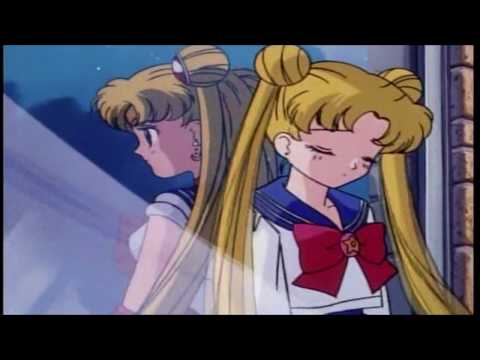
Usagi Tsukino, aka Sailor Moon. Goofy as heck, but a heart and the capacity to grow braver with every episode.

But despite all that, there’s quite a number of things that this anime has going for that. For one thing, the characters: in the 1980s, female characters were in animated shows were either just “the girl” (ex. Smurfette or Arcee) or they all existed to sell toys and didn’t have very distinct personalities from one another (ex. the original My Little Pony). But Sailor Moon was special as each of its female leads had very distinct personalities: Usagi/Sailor Moon is goofy but kindhearted; Ami/Sailor Mercury is smart and bookish; Rei/Sailor Mars is a hotheaded but empathetic psychic; Makoto/Sailor Jupiter is a strong-willed fighter with a passion for baking and gardening; and Minako/Sailor Venus is a fun-loving but ambitious girl and a skilled warrior. Not only that, but throughout the series, the characters would have individual episodes devoted to their growth where they worked on overcoming their flaws and issues. Even Sailor Moon, who always retained her goofiness throughout the series, became a strong leader and fighter who wouldn’t hesitate to fight to protect the world she loves. This ended up creating a mix of role models that people like me growing up could look up to and identify with on a number of levels.

There’s also the fact that this show was hugely empowering for a number of kids back in the day. On the one level, it is highly feminist in its portrayal of its female leads. They are able to fight off their enemies while still retaining their personalities and femininity, and the show doesn’t make a huge deal out of it (like they would if characters regularly shouted “Girl Power!” or something). Even if the male lead of the show often helped out and stepped in during a pinch, it was still the ladies doing the main fighting. That’s really amazing. And on another level, you have regular teenagers saving the world from forces that are cosmic in their power. When you consider the other big superhero shows at the time were shows like Batman or Superman, that’s big. I mean, one’s a billionaire and the other’s an alien. How many kids growing up with those shows were either of those? And then you had Sailor Moon, with ordinary teens, teens we already looked up to, being chosen to be superheros. Do you know how inspirational that could be to kids back then?

And those are just a couple of reasons this show has been so enduring and beloved. It’s also been noted for being very LGBT-progressive at a time when that wasn’t usual; for pumping new life into the magical girl genre of anime that’s still flowing today; for influencing a number of shows, including the American hits Steven Universe and Star vs the Forces of Evil; and so much more. It’s no wonder that the show has endured and continues to find new fans.***

Sailor Moon and Luna Funko Pop dolls. There are good reasons why I bought them, and why I hope to buy more someday.

And as I said, I owe this series a huge debt. Sailor Moon is still one of my favorite anime ever. I identified with many of the characters, and Sailor Moon herself made a big impact on me. She wasn’t hero material at all when she started out, but over the course of the series she truly became a hero. That’s a character arc I still include in my own stories (Zahara Bakur from Reborn City, anyone?). Not to mention this show helped plant the seeds of feminism in my young mind.

And you know what else? I still find reasons to love this show to this day. Just a couple of months ago, this show gave me a pep talk when I was feeling a little disenchanted with writing. It was quite powerful, and it reignited my love for storytelling again. If a show that’s older than me can do that, then I’m glad I still watch it all these years.

To sum up this monster of a blog post, Sailor Moon is just an awesome show, and it isn’t hard to see why it endures to this day. And if you’re at all interested, I highly recommend checking the anime out, or any of the other incarnations out there.  You never know. You may get out of it something special like I did all those years ago.

Are you or have you been a fan of Sailor Moon? What did/do you like about it?

That’s all for now, my Followers of Fear. Thanks for reading this long post of mine. I hope you liked it. Maybe someday I’ll write more posts about anime I love. Would you like that? If so, let me know. And until next time, pleasant nightmares.

*The first two films get screened in theaters this Saturday, and a special and the third movie is next Saturday. Probably won’t surprise you that I have tickets for both.

**And I’m sorry I won’t discuss those here. Perhaps I’ll discuss some of the other adaptations another day.

***Especially with more faithful translations. Back in the 90’s when I found the show, it was heavily edited to make it more geared towards American kids, because that’s what you did with anime in the 90’s. While I still have fond memories of that edited version, I’m glad that nowadays you can get the anime without all those silly edits or American character names. It feels more pure that way, and endears it more to new fans.

Hill House is a great example of Gothic fiction and a Gothic location.

You’ve probably heard someone describe a work of fiction as being “a very Gothic work,” or describing a place they visited as “having a Gothic feel” (which now that I think about it, could be said of The Lizzie Borden Bed & Breakfast). But what actually is “Gothic horror” or “Gothic fiction?” And why does it still appeal to us after more than two-hundred and fifty years?

Surprisingly, Gothic fiction has very little to do with Gothic architecture or with Goth fashion and music (for more on that relationship, check out this brief YouTube video). And while most of the genre do take place in haunted houses, not all haunted house stories are Gothic, or vice versa. As this very helpful Tor.com article points out, “Some genres build the house. Others come along and decorate it. Gothic horror is a very decorative genre.”

So what is Gothic fiction? Well, to be honest, it’s a genre that arose out of another genre that was a response to a popular movement. In the 18th century, the Enlightenment movement emphasized discarding superstition in favor of science and reason. Some artists didn’t care for this philosophy and turned to Romanticism, which emphasized emotion and the self, as well as a veneration of the past, nature, and in some cases the supernatural. Gothic arose out of Romanticism, with artists and authors combining elements of the latter with horror, death and the supernatural, starting with The Castle of Otranto in 1764 by Horace Walpole, and followed by the works of Poe, Mary Shelley, Byron, and many others.

To put it simply, Gothic fiction could be considered the love-child of 18th and 19th century Romance stories and horror stories.

But that’s how Gothic fiction came to be. How do we identify it? Well, the horror novel Kill Creek by Scott Thomas (which I highly recommend), itself a Gothic novel, gives a great run-down of some of the common elements of the genre (I hope Mr. Thomas doesn’t mind me using them):

  • Emanation from a single location. The source of the evil is often a single location, usually a house. A great example of this is The Overlook Hotel from The Shining. It is the book’s main location, and it is the source of the evil in the story.
  • A sense of forbidden history. There’s a dark history associated with the location or something related to it. Again, a great example is The Overlook, which has been the setting for murders, suicides, and all sorts of horrid deaths and events, all of which have been swept under the rug for the sake of the hotel’s reputation, and later gets drudged up by Jack (and the hotel).
  • An atmosphere of decay or ruin. Things are rotting or falling apart, or seems to be anyway. It’s in the very air, almost. And it doesn’t have to be physical; it can be mental too. Just look at Jack’s mental state as The Shining progresses, if you need an example.
  • Corruption of the innocent. This one speaks for itself. The evil wants to destroy good and innocence and replace it with evil. Dracula, a great example of Gothic fiction, has the titular character turning good and innocent people into bloodsucking vampires. This is corruption of the innocent in its best example, and why vampire fiction is often grouped with Gothic fiction (did you expect another Shining reference?).

Dracula is another great example of Gothic literature, even if it’s not confined to a single location.

But those features aren’t universal among Gothic stories. They’re common features, but not there in every one (Dracula doesn’t just kill in one single place, after all). So what else makes a Gothic story? Well, there’s something I’ve noticed about Gothic stories: along with the atmosphere of decay, there’s also a veneration towards the darkness and to beauty. Remember, Gothic fiction rose from Romanticism, which venerates nature, emotion and beauty. So while we’re feeling an atmosphere of terror, there’s also this sense that the author has a respect and love of the darker elements along with the Romantic ones.

Of course, this is just scratching the surface of what constitutes Gothic, and I could go on for days on the subject if you let me. The best summary I can do for this post is to say that Gothic fiction are horror stories with a particular group of tropes, a veneration of darkness and horror, and Romantic appreciation for aesthetic and the fantastic world. And even that feels incomplete.

So what appeals to us about Gothic fiction, and has allowed it to survive and evolve whereas other niche genres like Westerns went out of style in less than sixty years? Well, there’s no easy answer there either. The Tor article says that the rules and expectations of the genre can be learned and make it appealing to readers. I’ve heard some people say good Gothic horror has an atmosphere unlike other genres, and that keeps them coming back. My opinion is that, in addition to those theories, Gothic can evolve because its main tropes are relevant no matter what age we’re in, especially the houses. But on a deeper level than that, most Gothic literature takes the childhood idea of home, a big place we feel safe in, and turns it inside out into a giant house of fear that is still somewhat beautiful and appealing. That is a strange inversion that can be attractive to readers, and may explain why we keep writing and reading Gothic stories over two-hundred and fifty years after Walpole started the genre.

However you define Gothic fiction or whatever its appeal is, there’s no doubt that it is a popular and influential genre that we’ve all experienced at lest once in our lives and remember. And perhaps by understanding it better, we can keep Gothic horror going for many more years to come. And I certainly wouldn’t mind that.

What elements of Gothic fiction did I miss here? What about it appeals to you?

What Gothic stories would you recommend for anyone interested in the genre?

You know, for a little while now, I’ve been pondering something. I’ve heard a lot of people refer to certain stories as “slow burns.” Heck, I even called my friend/colleague Pat Bertram’s book Madame ZeeZee’s Nightmare a slow burn mystery when I reviewed it on Amazon (and I highly recommend you read it, BTW). But what exactly makes a story a “slow burn?” Sadly, searching in Google didn’t pull up a lot of information, and I needed a short break from working on Rose (which is going great, BTW), so I thought I’d share my observations on the matter.

So what is a slow burn story? Well, to put it simply, it’s a story that doesn’t try to rush itself or keep escalating things as the story goes on. Instead, the story takes its time getting to the story’s resolution, using an intriguing set up, good characters and character development, and little bumps in the excitement levels to keep readers invested in the story. A good example of a slow burn would be a romance that, instead of having the characters hook up within the first half of the story and then showing them struggle to stay together, or having the characters finally confess and kiss at the end of the story after a number of travails, the story takes its time establishing these characters, the development of their relationship, and then showing the hook up, all without any big drama or too huge plot twists.

Getting an idea for them yet? And you’re probably familiar with a lot of these stories, even if you don’t know it. Many of these slow burn stories are pretty calm for up to the first two-thirds, with little intervals during that time that ramp up the excitement for a brief period, before they have an explosive final third (not always but often). A good example of this is The Shining, both the book and the movie. Unlike other King stories like It, where things are big and scary from the very beginning, The Shining takes its time building things up. It lays the groundwork, showing us these very real characters and their struggles, the isolation they feel, and the true nature of the Overlook. On that final one, King really takes his time. We get brief glimpses of the truth of the hotel, and each glimpse gets nastier every time, but it’s not until the final third that things really hit a head and things become truly exciting.

Another facet I’ve noticed about slow burns (the ones I’ve come across, anyway) is that there’s a sort of reluctance on the parts of the characters. In The Shining, none of the three main characters want to be in the hotel, but they all have to be so they can survive as a family, and it’s with a certain reluctance that the characters, especially Jack, acknowledge that there’s something seriously wrong with the hotel they can’t handle and that they have to get the hell out of Dodge. Dracula is often described as a slow burn, especially in the novel and in the Nosferatu adaptations, and without a doubt the characters are reluctant to be in the machinations of a centuries-old vampire. And in Pat’s novel Madame ZeeZee, the first-person narrator is very much reluctant at first to look into the strange events that occur at the titular character’s dance studio. It’s only as things progress that she finds herself really looking into things.

So that’s slow burns for you. But how do you write them? If I had to guess, I’d think it would have to do with moderation, specifically moderating the amount of excitement in the story. With most other stories, the norm is to build the excitement until the climax of the story when things get really explosive. But with a slow burn, it’s more like you’re doing a mostly flat Richter scale graph with only slight bumps here and there until the very end when things get super exciting (if you decide to write the story that way, that is). Doing that might take some practice, however, so I would recommend doing that practice and just allowing yourself to get good at them. Don’t get upset if you’re not good at it at first; we all start somewhere, don’t we?

In the meantime, if you’d like to read some good slow burns to get a good idea for them, here are some of the ones I’d recommend: The Shining by Stephen King; See What I Have Done by Sarah Schmidt (see my review of that novel here); HEX by Thomas Olde Heuvelt (see my review of that here); Final Girls by Riley Sager (see my review for that here); and of course Madame ZeeZee’s Nightmare by Pat Bertram, which I reviewed on Amazon. All of them are excellent slow burns, and I can’t recommend them enough. Definitely check them out if you’re curious.

What observations have you made about slow burn stories?

Which slow burns have you read recently? Would you recommend them?

I was hoping I’d be under better health when I talked about this, but unfortunately I’m dealing with a summer cold right now. Forgive me if this post isn’t as eloquent as I wanted it to be, but it had to be written today. Otherwise, I’m not sure I’d write it at all.

So since about December last year, I’ve been dealing with a generalized anxiety disorder (GAD). What this means is that I get anxious about a lot of things in my life, or sometimes I get anxious about nothing at all. I just feel this awful feeling of dread, like something under my skin is itching my nerves and making me afraid of everything. I have my ideas about what stressors, the event or events in my life that set it off, but these days I’m less concerned about stressors and more about triggers, what makes me anxious now that I have this condition. These days, that’s mainly the writing career: how will Rose be received; can I make it successful; will it be laughed and hated to the point that I can’t write ever again, etc. Those may seem like issues every author worries about, but in this case, it’s less of a small worry and more like an overriding wave, taking up all my thoughts and making it difficult to think or breathe because you’re just considering the many things that could go wrong.

That’s my GAD.*

The good news is, I started treating this almost as soon as I realized what I was dealing with. I moved up my appointment with my psychiatrist, and she prescribed me medication. I’ve come up with strategies to take the bite out of my triggers, and I’ve been talking with a counselor to further help me with that.

And I’m not alone. I recently came out to a bunch of people that I have GAD. Not only did I get an amazing amount of support and love, but I heard from all sorts of people who have the same sort of issues or know someone who does. We commiserated on the struggles, and were glad that we weren’t so alone. This is such a common disease,** much more common than even I thought, and it affects people in a variety of different ways. Knowing that there are so many other people out there dealing with the same thing made me feel better. It seems like that the opposite would be true, but it’s not. We may have anxiety, but we find peace in our shared struggle.

With that in mind, I thought I’d share some strategies I’ve been using to fight my anxiety. If you have this issue, you might find these strategies just as helpful as I do. Maybe even more:

  • Recognize your anxiety for what it is. For whatever reason, people often deny that they have an anxiety issue. I think this might be because of the stigma that still surrounds mental illness. However, the sooner you acknowledge you’re having anxiety, the sooner you can start fighting back. I recognized this for what it was early on, and I’m so much better for recognizing it in the first place.
  • Don’t be afraid of medication. I know a lot of us don’t like putting anything more than Tylenol into our systems, but taking medication can help. My first day taking medication for my anxiety, I felt freer and lighter than I had in weeks. My anxiety could not touch me that day! And if one medication doesn’t work for you, there are many others available. You just have to be open and honest with your doctor, and they’ll help you find the prescription that’s right for you.
  • Talk to a counselor. Sometimes it’s just good to have someone to talk to about what you’re worried about. I saw a counselor, and they’ve been helping me find more ways to deal with my anxiety. And honestly, just spending forty minutes in that office and talking to someone really helped me out with my fears and made them harmless again. I’m really glad I decided to talk to someone.
  • Logic your anxieties to death. This is something I started doing the moment I realized I had anxiety. Every time I had a fear come up, I would use logic to render it harmless. I would look at all the ways this anxiety made no sense, and argue these points to myself until I felt better. It really works, and I’ve managed to kill most of my anxieties with this.
  • Keep an anxiety notebook. This is something my counselor recommended to me. He said that by keeping a journal and writing down your anxieties, your brain is somehow able to process them and render them mute. I’ve done something similar when it comes to writer’s block, so I know this variation on the theme can work. I even recently bought a notebook to write in the next time I’m feeling anxious. And although I hate being anxious, I’m looking forward to seeing the results.
  • “Follow your happiness.” This is something I came up with. I have no idea why it works, but telling myself over and over, “Find your happiness,” and playing upbeat music either in my head or on my iPod really blocks out the negative thoughts. I’m really partial to “All Night Long” by Lionel Richie (my theory is that we’re all fans of his, whether we know it or not).
  • Hypnosis, meditation, and ASMR. I know what you’re thinking, but these really do help. I’ve done hypnosis, meditation, and ASMR (see this video for a fuller explanation of what that is) for years, and they’ve always helped to relax me. If you open yourself to them, they may just help you deal with these issues.

While I may never be totally rid of my GAD (for some people, these things come and go), the important thing is that I recognize what it is, and that I’m dealing with it in a healthy manner. And if this post helps others recognize their anxiety and deal with it, I feel like I’ve accomplished something good. Because while this disorder is common and can be debilitating, it can also be treated. And if it can be treated, we can make our days a little brighter.

What strategies do you have for dealing with anxiety or GAD?

*So for those of you keeping score at home, I have autism spectrum disorder, ADHD, acid reflux, partial albinism, allergies, and anxiety. One more with an “A” prominent in the name, and I should receive a set of steak knives or a gift card or something!

I’m also farsighted and have back issues. And I have a cold right now. I’m a hot mess!

**And this is a disease, no different than diabetes or a number of other disorders. It’s just a disease affecting our mental state. Anyone who says we just need to learn to chill out or says we’re just imagining it doesn’t know what they’re talking about. Might as well tell someone with crippling arthritis to just move more and ignore the inflammation.

It’s a question every creator wrestles with from time to time. Writers are no exception. We wonder if anything we write is worth reading by anyone other than our family and close friends (who, most likely, will tell you they loved it because that’s what family and close friends do). We wonder if we’re just wasting our time sitting at the computer or in front of our typewriters or in our notebooks, trying to tell stories that range from the mundane to the fantastical and mundane.

In short, we ask ourselves, “Do my ideas suck?”

This may surprise you (I am Mr. Smiles and Jokes and Weird References to Demons and Monsters, after all), but I ask myself this question a lot. I often wonder if I’ll write anything that more than a few people will read in my lifetime, let alone afterwards. It’s a question I’ve been asking myself a lot more lately as I’m in the midst of rewriting a lot of Rose. Although I tell myself that I came up with these changes myself, and that both I and my publisher think they’ll do a lot to help the story and make it a better read, in the back of my head I’ve got this little voice whispering dissent and telling me that what I’m writing won’t amount to much.

And you know what? Sometimes I’m tempted to believe that voice. I mean, thousands upon thousands of novels are published every year, but very few of them gain the attention we wish them to have. Quite a few even get critically panned. It often seems like the field is too big and too difficult to really make a difference in. So why should we try?

But then there are a couple of things I keep in my mind that can, if not shut up that voice, then at least turn the volume down on it. Both of them, not surprisingly, involve Stephen King. The first has to do with his debut novel, Carrie. Did you know when King first started writing Carrie, he actually threw the first few pages into the trash because he was convinced it was trash and would come to nothing. He only kept at it because his wife fished the pages out of the trash, read over them, and said they were good and that he should keep at it. The novel was later published and as we all know, became a huge hit, inspiring two excellent movies (though I prefer the 2013 version), a meh TV movie, and a musical that I wish would get a proper revival and a North American tour. All from a story that King was ready to throw in the trash.

The second story is another King work, Thinner, which he wrote under his Richard Bachman pen name. If you were to give the story an elevator pitch (see my article on elevator pitches for more on that subject) it would probably be something along the lines of “A man is cursed to become thinner and thinner.” And just from hearing that, you might laugh. That sounds like a comedy involving some prissy housewife who thinks if she doesn’t stay a certain weight, her husband will cheat on her and then she starts magically losing weight. It doesn’t sound like a scary novel.

Thinner by Richard Bachman (aka Stephen King); silly sounding concept, great payoff.

But from what I hear (I haven’t read any of the Richard Bachman books yet, though I know I should), it’s a pretty creepy story, one that inspired a movie (quality of the movie is debatable). All from a very simple idea of what happens when weight loss goes really, really bad. It sounds stupid, but it turns into an effective horror story.

And I could come up with tons of examples of this (did you know HP Lovecraft thought The Call of Cthulhu was only so-so? And now it’s one of his most famous works). But they all boil down to one thing: our ideas don’t always suck. In fact, they may only suck in our minds. To others, they may be great, mind-blowing, or even influential. And sure, not all of our stories will turn out to be great, but the vast majority of them, with enough work and a little bit of luck, can become awesome.

And I’m reminded of that every time someone expresses interest in reading Rose. People hear what it’s about, and they want to know more, or for me to tell them as soon as the book is out. If these people really do end up reading Rose, liking it and even letting people know they like it, then who knows? I might be able to shut up that little voice once in my head, at least for a little while.

So if you’re worried that you’re only writing crap, don’t pay your little voice any attention. Just keep writing and polishing and seeing where your story goes. Who knows? You may end up putting out something really amazing, and you’ll be glad you stuck with it for so long.

I’ve got another article from Self-Published Authors Helping Other Authors for your perusal. This one is “The Elevator Pitch: Telling People About Your Book in One Sentence.” And that’s really what it’s all about: how to get people interested in reading your books with a single sentence. I learned how to use elevator pitches when I was searching for a job, and it’s actually pretty handy in a number of other situations, including book promotion. You’d be surprised how many people have shown an interest in Rose after hearing my elevator pitch for the book.

If you have a chance to check out the article, please do and let me know what you think. And if you like what you read, make sure to read the other articles on the site. Self-Published Authors Helping Other Authors is a great resource for authors looking to write, edit, publish, and market their stories efficiently and economically. I should know, I’m not just a contributor, I’m also a reader.

That’s all for now, my Followers of Fear. And I hope it’s the last post for a while. I’ve got a lot of editing to do, so I’m going to get on that. And as much as I love you guys, I really need to focus on that. Don’t worry though; I’m planning on having a new review out on Saturday at the latest.

Until next time, pleasant nightmares.

For my earlier posts on Cockygate from May 5th and May 28, click here and here, respectively.

I’m just going to skip over all the preliminary stuff and just get to the good news: the Romance Writers Association and the Authors Guild won a court ruling on Friday against Faleena Hopkins, the notorious romance author who put a trademark on the word “cocky” and then sent letters to authors who had books with “cocky” in their titles, threatening legal action if they didn’t take their books off Amazon or change their books’ titles.

Now, if you read my post from last week, you may remember that Hopkins’s lawyer had sent Kevin Kneupper, the novelist and retired lawyer who’s leading the fight against Hopkins, along with author Tara Crescent and publicist Jennifer Watson, a letter with intention to sue them, as well as filing a Temporary Restraining Order (TRO) against the Petition of Cancellation for the trademark. Since then, it’s also come out that Hopkins was asking for another TRO against the publication of a collection of stories called Cocktales: The Cocky Collective, which was named as an obvious protest against her trademark (Jennifer Watson was incorrectly named by Hopkins as the publisher of the book in the papers filed for the TRO).

On Friday June 1st, several things happened:

  1. Kneupper was dismissed as a party to the lawsuit Hopkins’ lawyer filed, meaning he’s free to continue fighting against the trademark.
  2. Hopkins did not get her restraining order, so the petition and all the other legal battles against her can continue.
  3. Finally and most importantly, for the moment books with the word “cocky” in the title can be published, including the Cocktales anthology.

In other words, Hopkins lost, and she lost big. And while there’s another court date in September, and presumably this is when the decision on her trademark will be decided once and for all, it’s still not looking very good for Hopkins. As stated in the article the Authors Guild put on their website:

In ruling against the author Faleena Hopkins, who claimed exclusive rights to “cocky” for romance titles, Judge Alvin Hellerstein of the Southern District of New York, stated that he did not believe that Hopkins was likely to succeed on the merits.

In other words, the judge says that Hopkins’s trademark is on pretty weak legs.

Now, there’s still a lot of work to do. For one thing, while people can still publish their books with the word “cocky” in the title, the final decision won’t be made till September at the earliest. That gives Hopkins, her lawyers, and her supporters (yeah, there are some out there) to come up with legal strategies for the trial and for any potential appeals, both from her side and the other side. And unfortunately, there are a number of copycats out there trying to get trademarks on common words used in titles. It’s a hot mess.

But this is a bright spot in the ongoing saga of #Cockygate. I’ve heard from many authors who have expressed fear over the outcome of this controversy, and what it could mean for them if they couldn’t write because they could incur legal repercussions for using an everyday word in their story’s title. Hopkins’s defeat on Friday gives us all a little bit of hope that we can continue to not only write our stories, but give them almost any title imaginable and not have to worry about getting sued for it.

So with the trial not till September, what can we do now as authors? Well, we can continue to show our support for Kneupper and the legal team fighting Hopkins, as well as the RWA and all of the authors who’ve been affected by Cockygate (remember, if you’ve received a letter from Hopkins, contact carol.ritter@rwa.org for assistance and guidance). This can be something as casual as sympathetic messages online, or buying, reading, and reviewing the books of those involved/affected (a single sale and review can do an author a ton of good, believe me), or even donating your time and skills to the legal battle.*

You can also spread the word on Cockygate and any developments in the scandal. The more people who know what Hopkins is doing, the more we can rally against her or anyone else trying to copy her. The louder our voices, the stronger we are, and the better positioned we are to affect positive change.

And finally, if you’re a writer, continue writing. Don’t let fear get in the way of telling the stories you were born to tell. Like the people behind Cocktales, when we decide to put something out in defiance of bullies, we make a statement that we’re not going to take this sitting down.

That’s all for now, everyone. If there are any other significant developments, I’ll post about them. Until next time, pleasant nightmares.

UPDATE 6/3/18 @ 7:18 PM EST: Erica Unsophisticated Blood Thirsty Wolf Fisher (@monet5280) informed me over Twitter that both Ms. Crescent and Ms. Watson’s lawyers are working on a motion to dismiss, which will be due in on June 22nd. In addition, Ms. Hopkins has to respond to the Petition of Cancellation from Mr. Kneupper no later than June 23rd. So it looks like things will be heating up longer before it starts to get cold again. Here’s hoping the end of June brings more good news like what we saw on Friday.

*Just be careful before you donate to any legal fund for those affected or claiming to be for any legal teams against Hopkins. There are a ton of people out there who have no qualms against taking advantage of those suffering in order to make an easy buck.

Before I give you the news I hope you’re all eager to hear–the latest on my novel Rose, which is to be published by Castrum Press–I want to first share something I was told recently. Now, I’m not sure if this is true and I haven’t been able to find any corroborating evidence, but according to someone I talked to online, in the first draft of Carrie by Stephen King, Carrie actually grew horns and sent bolts of electricity from her eyes at some point in the story. This was later dropped during the revision process of the novel.

Okay first off, I kind of want to see that version of Carrie, not just in book form but in movie form as well (I still maintain that the 2013 film is the superior adaptation, and you know the horns and lightning bolts would’ve looked awesome in that film). Second, it shows that even King’s works, including one of his greatest, require extensive revisions. And that made me feel a whole lot better about the revisions I have to do for my own story.

Now, if you’re unfamiliar with Rose, it’s a novel I’ve been working on since my senior year of college, when I wrote it as my thesis project. It follows a young woman who finds herself turning into a plant creature (and that’s just the start of her problems).

I’ve mentioned before that my publisher asked me to do nix the many flashback sequences in Rose, essentially throwing out one-third of the book, and another third that was dependent on that first third. Although I was understandably more than a little disappointed about that, and it even brought my mood down quite a bit at times, I decided to try and find a new direction for the story that didn’t rely so heavily on flashbacks. Somehow, after a lot of head-scratching and extensive use of a method of brainstorming I’ve been wanting to try for a while (I’ll write an article about it for Self-Published Authors Helping Other Authors soon enough), I managed to find a new direction and plot for Rose that I thought made for a good supernatural thriller.

I sent a new outline for the story to my publisher, and just today they got back to me. I was really worried that they might not like the new direction, but the tone of the email was really enthusiastic. They just asked me to keep in mind some things about chapter length and a few other things, and wished me luck.

I can’t tell you what reading that feedback did for my confidence. The closest I can get to is by saying that it felt like a weight had been lifted off of my shoulders.

And since I’m on vacation for the first third of June (not going anywhere, I’m just having a relaxing stay-cation at home), now is the perfect time for me to get back to work on Rose. I plan on getting through at least the first seven chapters of the novel, and then start on the new material for the novel. All that, along with more than a few blog posts I’ve been wanting/meaning to write for a while, and of course the normal stuff one does while on vacation (sleep, watch TV & movies, read, hang out with family and friends, run errands, have tea and scones with a succubus you’ve been seeing on another plane of reality, etc.), should keep me pleasantly occupied during my vacation.

So as you can see, Rose is still coming along. It may take some time, but I still think we can get the book out before it starts to turn chilly again (though in my state, that can happen even in summer). And I think when I get it done and on the shelves, it’ll surprise more than a few people. Especially those who’ve read earlier versions of the story.

That’s all until morning, my Followers of Fear (got another post I need to work on after I’ve gotten my much-needed sleep). Until then, pleasant nightmares. I’ll see you soon.

My copy of “The Creepypasta Collection,” as edited by MrCreepyPasta

A couple of years ago while I was in Germany, I became acquainted with a growing genre of horror known as creepypasta. Creepypasta, for those of you who are unfamiliar, are horror stories, images, videos, music and games that originate on the Internet and are meant to be spread around as memes. Sort of like viral Internet-born campfire ghost stories (see my original post from 2015 if you’d like a more in-depth explanation).

While I had to end my acquaintance with the genre rather abruptly (job searching and then landing a busy full-time job, as well as trying to write my own stories, doesn’t leave that much time for perusing the Internet for horror stories), I never forgot about this strange world of creators making and sharing these scary stories, sharing characters and creating entire mythologies out of some of them (Slender Man, anyone?). So when I found out there was actually a couple of anthologies of creepypasta available in book format, which meant I could read them on my lunch break, I decided to get a copy and dive in to see back in.

What did I find?

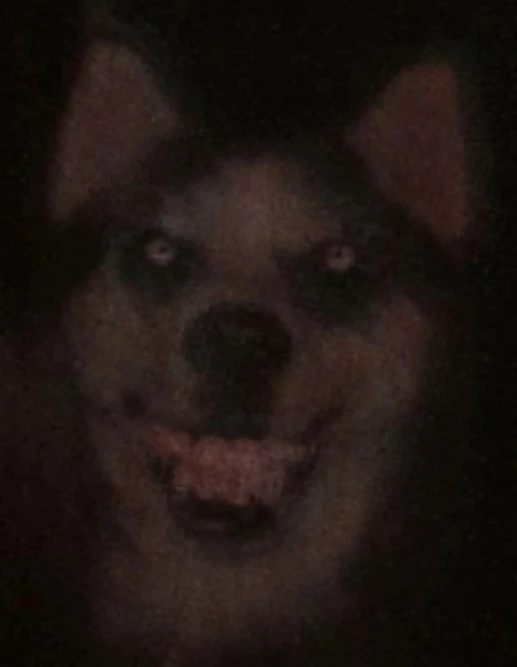
Well, like every anthology I’ve ever read, there were some stories that spoke to me more than others. A few I didn’t find that scary at all, but others definitely filled me with that feeling I get from good horror, and even set my imagination alight at times. There are writers in that anthology who would and have done well writing commercial fiction (in fact, some of the contributors listed in the back of the book have published or self-published stories). My favorites in the collection were “When Dusk Falls on Hadley Township” by TW Grim, which reminded me of a Stephen King short story; “Smile.Montana” by Aaron Shotwell, featuring the infamous creepypasta character Smile Dog; “Bedtime” by Michael Whitehouse, a classic of creepypasta fiction that really got my imagination going; and my top favorite, “She Beneath the Tree” by Michael Marks, a Lovecraftian tale that I loved from start to finish.

So yeah, if you’re curious, you should give the collection a read. 4.5 out of 5. As the cover promises, these are stories you can’t unread. And I’m not sure you’d want to.

But I found more than just stories in this collection. I also noticed some things about the genre, especially the pieces in the anthology, that showed me just how different they were from more “mainstream” horror stories. For one thing, the narration in the stories struck me as being more…realist in nature. Not like Realist fiction, which is set entirely around stories that happen in the real world, but like they really believed that the things they depicted in their stories could actually happen. In a lot of horror fiction, even by the greatest writers out there, you get the sense that, except for maybe stories involving serial killers, the authors don’t really believe that what they’re writing about could happen. But creepypasta writers seem to feel the opposite. I got the sense, even with some of the more supernatural or strange stories, that the authors really believed that what was happening in their stories could happen in the real world, and treated it as such. And this shown through especially with the first-person narrators.

When something like Smile Dog can be treated as if it’s real, you know you’re reading something different.

This is something I really admire in creepypasta, because it just gives these stories another layer and gives them the power to really make you wonder if some of what happens in these creepypastas could happen. Some of my own stories are based on my own beliefs of what could be out there, and I like to think that gives them this quality of strange realism to them. Seeing that quality brought out so well with these stories is a great guide for me personally as a writer, so I’m glad I exposed myself to them.

Another thing about this anthology is that it made me realize something: the creators of creepypasta are not too different from self-published and hybrid authors. The latter try to recreate the quality and success of books published by traditional presses without having to go through all the hoops that come with the traditional method and presses. They’re trying a new way to achieve an old goal. And a major component of this is through the Internet to reach readers and advertise. Basically, to spread the word.

Similarly, creepypasta creators are trying to recreate something as well. When I called creepypasta viral Internet-born campfire ghost stories, that was a really apt description. They’re recreating the feeling of telling scary stories around a campfire, and spread it farther than any campfire could. And their chosen medium, the Internet, is perfect for that. Spoken word can be used on the Internet, but so can the written word, images, video, music and so much more. They use the Internet to advertise terror as well as any self-published/hybrid author can to advertise their books. Is it any wonder that one can so transition easily into the other?

Overall, I’m glad I took this dive back into the world of creepypasta. It opened my eyes to things that I’d never realized before, gave me ideas for stories, and caused my respect for creepypasta creators to grow immensely. And while I may never write true creepypasta, I can see creepypasta-esque stories or ideas infiltrating my future work. Just like creepypasta, you never know until it happens. And by then, it’s likely too late.

That’s all for now, my Followers of Fear. I’d love to talk a bit more on the subject, but a hole in the fabric of reality has appeared in the fabric of my carpet, so that either means something really pleasant, or something really bad. I’m going to go find out.

Until next time, pleasant nightmares!

I was really eager to publish this earlier, but I felt like the #Cockygate issue deserved more attention, so I wrote about that first. That being said, I’m so happy to announce that I’ve finally reached a thousand followers on my blog!

And, oh my God! I have no idea where to begin talking about this. I mean, I’ve been writing this blog for nearly seven years, through school and job-searching and travels and working and ups and downs and so much more. And yesterday, during the tail end of a family thing, I just got a notification. Someone had decided to be my one-thousandth follower, even if they didn’t know it. The feeling of surprise was enough that I didn’t know how to respond (especially considering my family and I were trying to get somewhere while in the midst of a huge crowd). I’m still not sure how to respond.

Well, I guess the best way to respond would be to do the polite thing and say, thank you. Thank you to every one of you who has followed me for these nearly seven years. A big reason why I’ve been able to make it this far, in blogging and writing in general, is because I’ve had the support of so many people, especially the many people who’ve followed my blog over the years and have become this group I love to call the Followers of Fear. You’ve been there for me, encouraged me when I needed it, discussed with me issues ranging from the mechanics of writing to the simple day-to-day life to questions of right and wrong, and so much more. Some of you have even become good friends to me, and a few of you I’ve even had the pleasure of meeting offline. One of my earliest followers/friends even introduced me to my publisher, which I’m so incredibly grateful. And some of you even read my books when they’re published, which means a great deal to me. Hopefully you’ll want to read Rose as well when that comes out.

So thank you to all of you who’ve subscribed to my blog over the years. It means the world to me. And an especially big thank you to Bette A. Stevens, Maine Author, who was the thousandth follower to subscribe. Thank you so much for signing on, Ms. Stevens. I checked out your blog just now, and it is very colorful and lovely. I hope you and everyone else reading my blog enjoy my posts for ages to come.

I wish I had something else for you guys. I don’t really have a contest or anything like that prepared. I’m planning on doing one for Rose when that comes out, but nothing for this particular event. However, I’d instead like to hear from you. There are a thousand from you now, and I only regularly interact with a small fraction of you. So tell me, whether you’re a frequent commenter or just someone who hasn’t had much to say, who are you? How are you? What do you blog about? What do you like about my blog? What’s exciting going on in your life? Please tell me, I’m very curious to know.

Well, that’s all for now, my Followers of Fear. Thanks again for following me, and I hope I continue to give you quality reading material for ages to come. Until next time, pleasant nightmares.