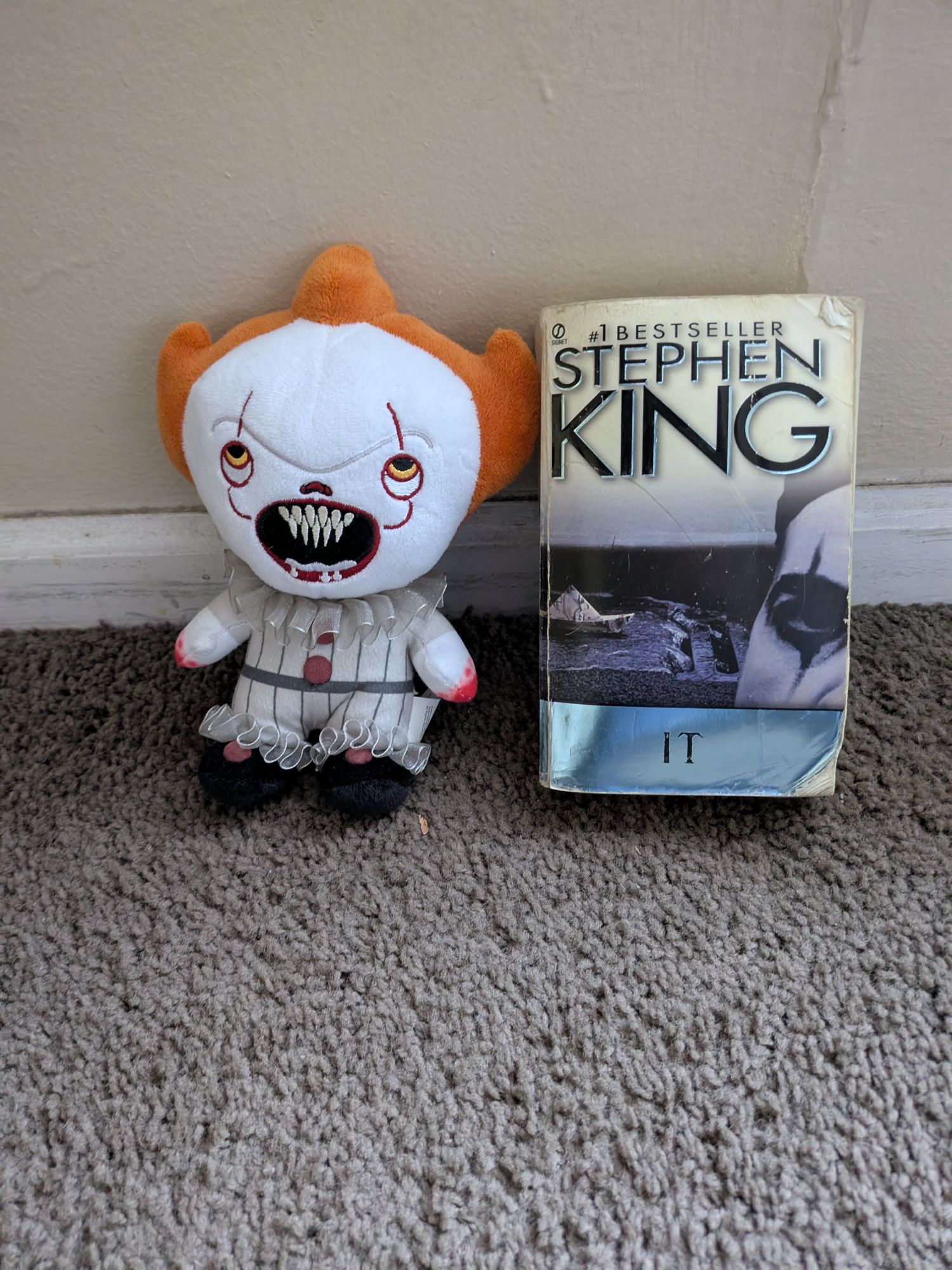
I first read IT by Stephen King when I was eleven or twelve: the same age as the characters in the flashbacks. And while I had been reading The Vampire Chronicles and most of Anne Rice’s books up till that point, I didn’t exactly classify it as horror (Anne Rice herself preferred the term “Gothic saga”). So, for me, IT was my first jump into horror since outgrowing Goosebumps.
And it expanded my world. Not only did the novel terrify me, but it showed me just what great, mature horror storytelling looked like. From the terrifying and insidious nature of Pennywise and It’s many forms, to how the novel took the time to let us get to know characters both major and minor. I was entranced and enthralled, even as I was terrified, diving deep into the book every opportunity I could get and learning as much as I could.
By the time I finished the book that summer, I knew what sort of stories I wanted to write in the future.
Without IT, I would not be the writer I am today. Or the person. I might not even be blogging to you right now, now that I think about it!
I bring this all up because, if you weren’t aware, there’s a TV show airing on HBO Max called Welcome to Derry. Taking place in the same universe as the movies, the show goes into events during the 1962 cycle, which was the cycle before the first movie. And unlike the movies, which focused on a core group of characters first during their early teenage years and then during their adult years, Welcome to Derry focuses on a wide variety of characters, including school kids, military personnel at the local Air Force base, and the nearby Native American population.
It’s very Stranger Things in its character development and methods of storytelling. And since the creators of Stranger Things were heavily influenced by IT, among other things, I guess it’s coming full circle?
Well, it feels full circle to me, because while watching the show, I feel like I’m getting a reintroduction to the horror genre. Just like I did when I was a preteen and dove into King’s book. It feels like I’m getting lessons in how to do creative and powerful scares, storytelling with large casts, and character development every time I sit down to watch the show.
Which, while being told through a visual medium instead of a literary one, I’m grateful for. While I’ve made strides in becoming a horror author, I still feel like I have a long way to go before I can be at the same level as the authors I admire and regularly read. And while I learn something about good storytelling every time I enjoy a good book, show, or movie, I feel I’m getting a Master Class in the subject from this show.
Hell, I think in the short story I wrote most recently, some of what I gleaned from Welcome to Derry made it into the story. I wasn’t originally going to apply what I learned, but it occurred to me while I was writing, and I was like, “Oh. That’s good. That’s very good. Let’s try it.” And while I haven’t heard back from the alpha reader yet (I only sent them the story last night, after all), I feel like adding those elements gave the story an extra bit of excitement and terror.
So, with only four episodes of the show left (I have my doubts they’ll do a second season, though I would likely welcome one), I’m looking forward to seeing what happens next. And to seeing what I can glean for use in my own storytelling.
In the meantime, I’m going to get to work on some of that storytelling. I have stories to edit and send to the beta readers, after all. Wish me luck!
And in the meantime, good night and pleasant nightmares.
Me writing and editing under the influences of good storytelling teachers.
In recent days and across my social media, as well as on my blog, the number of people following me has grown by leaps and bounds. Why is that? I have my theories, but this post isn’t about theories. Instead, it’s to better introduce myself to my new Followers of Fear, as I like to call the people following me and supporting my writing career.
And since I’m a horror writer, obviously I’m doing thirteen items to get to know me better.
So, without further ado, here’s what will hopefully be a fun introduction to yours truly. And who knows? Perhaps some of my long-time Followers of Fear might learn something that’ll surprise them. It’s happened before!
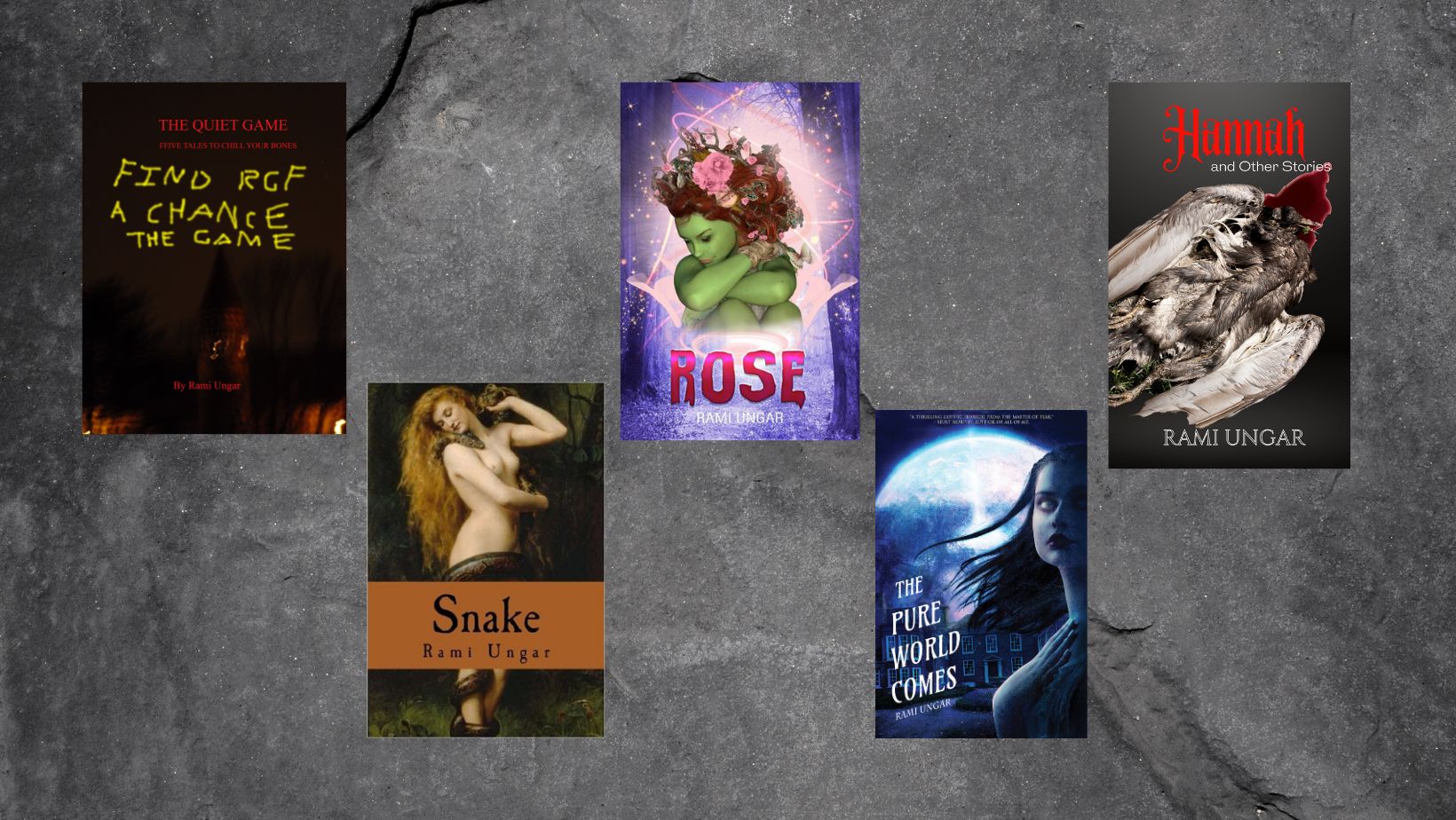
I’m a writer of horror and dark fantasy with five books under my belt. I’ve been writing since I was a kid, and in college, I started self-publishing books. My first book was a collection called The Quiet Game: Five Tales to Chill Your Bones, which came out in 2013. The next year, I published a slasher novel called Snake about a serial killer hunting mobsters in New York City (think John Wick, Taken and Friday the 13th got smashed into a novel). Both did okay, and continue to get readers today.
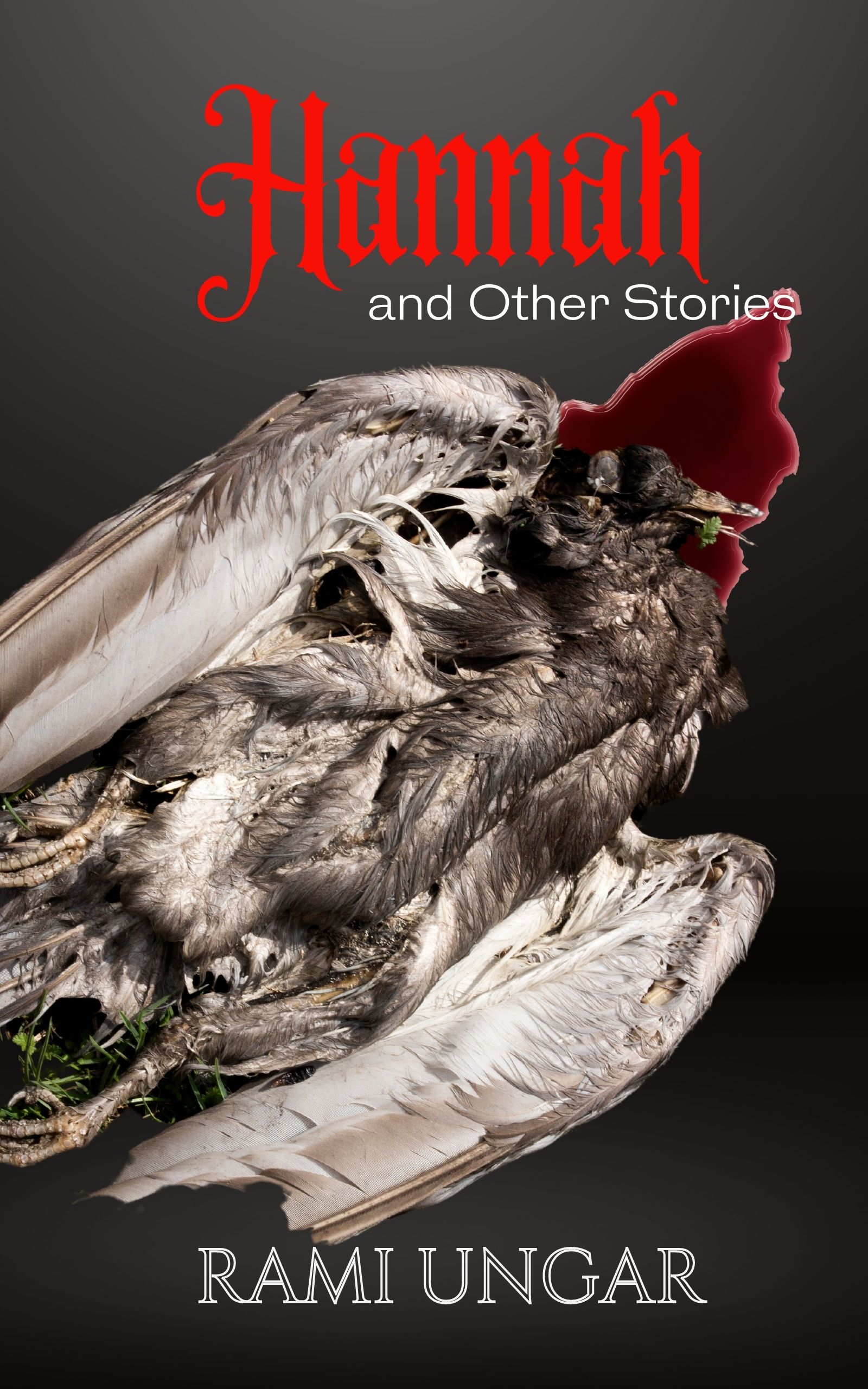
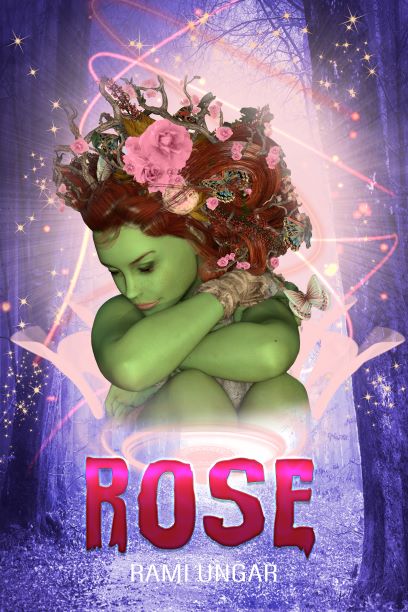
Five years later, I published my first novel with a publisher. Rose was released by Castrum Press in summer 2019, and followed a young woman turned into a plant/human hybrid (and that’s just the start of her problems). I followed Rose in 2021 with The Pure World Comes, a Victorian Gothic horror novel about a maid who goes to work for a mad scientist. And last year, in 2023, I published my second collection, Hannah and Other Stories, which was released by BSC Publishing Group.
That’s all five of my books out now. I’m proud of all of them and all I’ve managed to do with them over the years. And I plan to put out more in the years to come.
All five of my currently available books. I love them and am so proud of them (and their awesome covers).
I’m Jewish, queer, and have disabilities. Growing up, my life has been an interesting ride, to say the least. Not only did I grow up in a fairly religious Jewish household, but both my father and mother are rabbis. I went to a Jewish day school for most of my youth, learning Hebrew and Judaic subjects for half the day and then learning normal stuff the rest of the day. I also went to synagogue nearly every week, and attended Jewish teen and college groups until I graduated.
To this day, I still practice a lot of the religious practices I grew up with and feel a strong connection with my faith and heritage.
I’m also bisexual. I figured that out in college, and came out about half a year after I came to that realization. Probably took me that long to get comfortable with it because, even surrounded by accepting people and LGBT family members, I still worried about being persecuted. However, I did come out and it was all good, which was reassuring. And then some years later, I realized I was also aromantic (if you’re unfamiliar, it means I can’t feel romantic desire or attraction). Which, looking back, felt pretty obvious, considering I didn’t care about having a relationship all my life. But when I realized it, it was still a bit of a revelation.
And finally, I’m on the spectrum. Have been my whole life. I also have ADHD, a form of albinism, an anxiety disorder, and most recently, diabetes. Yeah, that last one was only diagnosed a couple of months ago, and it sucks! To say the least, it was a shock for me and I miss not being able to eat sweets or have a drink as much as I used to. But, on the bright side, I’ve improved my health by leaps and bounds since finding out, and I plan to keep it that way. Too much to do in my life, after all.
And as I’ve gotten older, I’ve made it a goal to increase representation of these three groups, as well as their intersections, in my fiction. So far, I’m meeting that goal, and hope to release some of those stories soon.
My writing influences. My major influence is, without a doubt, Stephen King. I read IT as a preteen and it was a formative moment in my life! That whole summer, I was transported to Derry, Maine and, when I finished that book at summer camp, I knew what kind of books I would write for the rest of my life.
I’m also majorly influenced by the ideas of HP Lovecraft and the subgenre of cosmic horror, as well as Anne Rice and a ton of anime and manga. All those creators and stories have led me to writing some really insane stories, such as Rose, which I mentioned above, or “Fuseli’s Horses,” one of the stories in Hannah, which is about carnivorous horses.
But I’m not complaining. People seem to like my work, after all.
I love going to the movies and to the theater. It’s rare that a month goes by without me going to see a movie. Usually it’s a horror film or a new superhero film, but I sometimes go see comedies, fantasy and sci-fi films, and anime films getting theatrical releases. I just love going to the movies! I didn’t get to go as much as I wanted when I was growing up, so starting in college, I went as often as possible. And I still do.
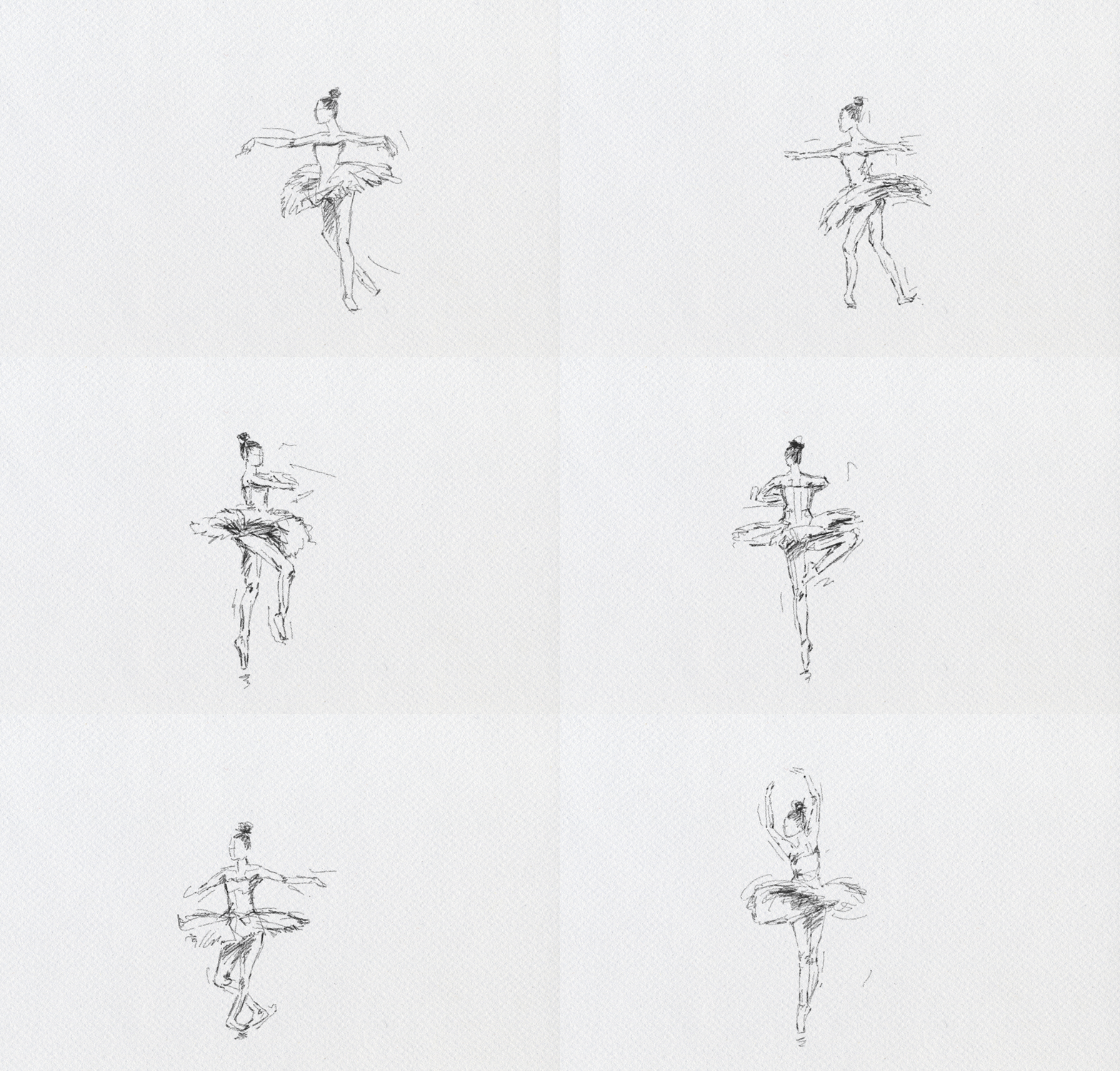
Most people are surprised to learn I like ballet. Then they see how much it appears in my stories.
And now that I have a decent day job, I also go to the ballet and to touring Broadway shows. My interest in ballet started probably in college, and as a working adult, I got really into it. It’s gotten to the point where I’m kind of obsessed and look for ways to insert ballet and dancers into the stories I write! And as for Broadway shows, I think Disney movies as a kid primed me to be a fan of those, though the breadth and depth of musicals out there is far wider than Disney can think up, as it turns out.
Now, I have subscriptions to both the local ballet company and to touring Broadway shows that stop in Columbus. And I have to say, I think I would be just as psyched for one of my stories to be adapted into a ballet or Broadway show as I would be for a movie. Maybe even more.
I have several tattoos. To be precise, I have a chest tattoo of a tiger with a blue Star of David, a full back tattoo of one of my favorite ideas from the horror genre, a wrist tattoo referencing some of my favorite anime, and a Tarot card on my right leg that’s about halfway done. However, while I have my tattoos, I don’t normally share photos of them. That’s partially because I just don’t feel the need to. My tattoos are for me to express myself and to have my body reflect who I am. So, their existence on my body is enough for me.
Still, they’re awesome. And I plan to get more as time and money allows.
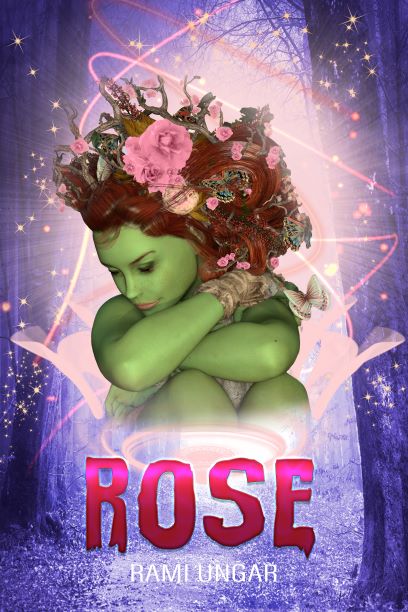
My most popular work is Rose. I’ve been publishing for over a decade now, but none of my work has done as well critically or commercially as Rose. And I think I know why: it’s the unusual story of a woman turned into a plant/human hybrid. Very weird, very Kafkaesque, and very fantasy horror. Add in that it’s a short but twisty read with Japanese folklore and mythology mixed in, and it’s not surprising that that book does so well.
Plus, you gotta love that cover.
Anyway, if you would like to check out Rose, you can check out its page HERE. I hope you like it if you read it.
I go ghost hunting at least once a year. I’ve been lucky to go to several different locations to ghost hunt. From famous places like the Ohio State Reformatory in Mansfield, OH and the Lizzie Borden Bed & Breakfast in Fall River, MA, to lesser known locations such as the Anchorage Mansion in Marietta, OH and the Bellaire House in Bellaire, OH, with the hope to visit and revisit many, many more.
Also, I try my best to get my investigations on YouTube and upload them to YouTube. So, if you would like to check out my ghost hunting videos, you can check out my channel HERE. They’re spooky good!
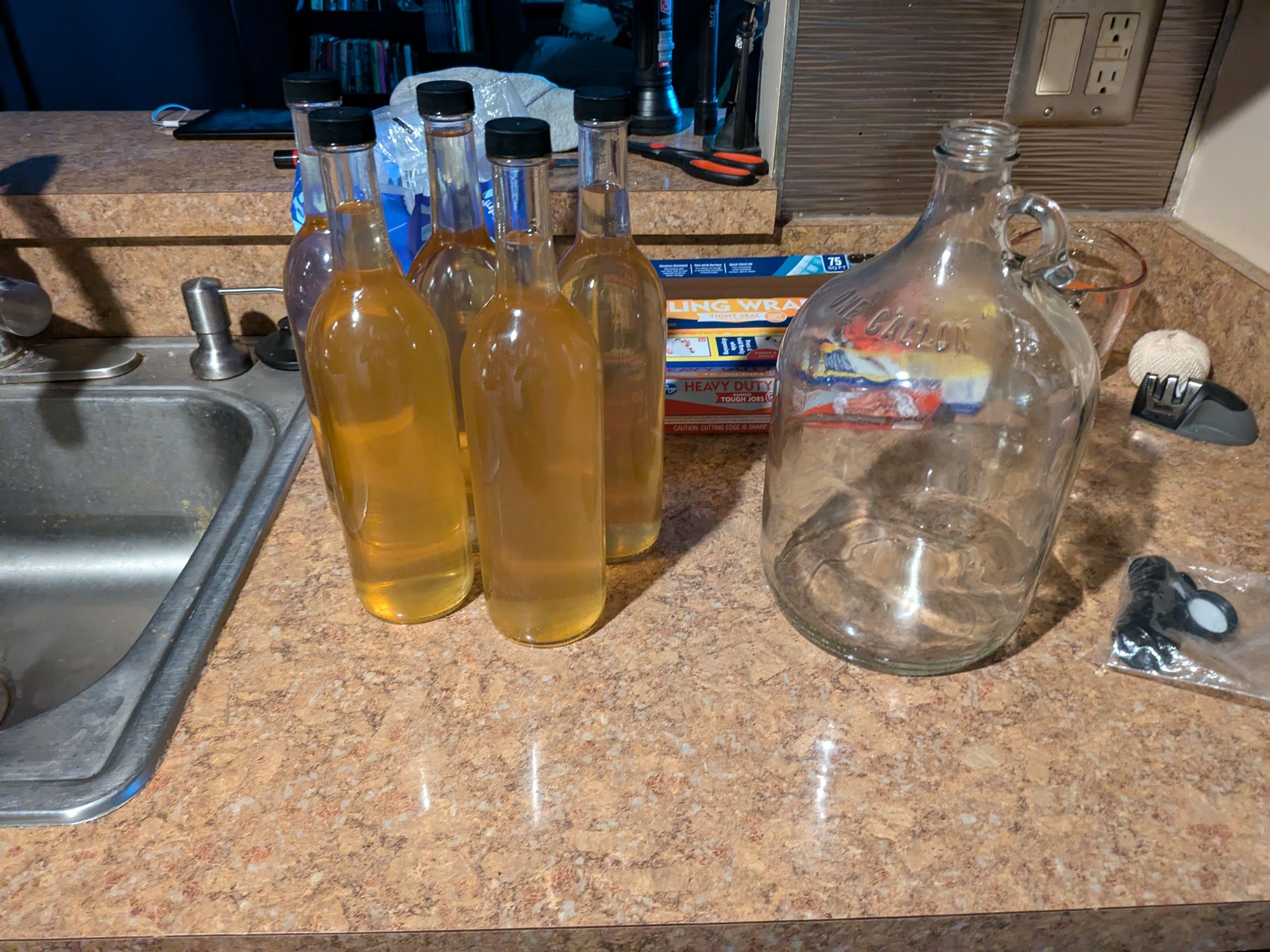
I make my own wine. Most people don’t realize that you can brew your own alcohol at home, but it is, and there are plenty of people of doing it, including me. I’ve made a batch of plum wine, and I just finished and bottled a batch of pumpkin wine (yes, pumpkin wine). And I’ve been making my wines based on colors of the rainbow: plum wine is red, and pumpkin is obviously orange. Yellow will be dandelion wine, green will be mint, blue will obviously blueberries, and indigo/violet will be elderberries. And I can’t wait to try them all!
The pumpkin wine I made, all bottled up. Looks good, doesn’t it?
I bought my first home two years ago. For millennials like me, it’s hard to find an affordable home, let alone a non-fixer upper that you don’t have to share with a bunch of other millennials. However, I was lucky enough to find and buy a small condo for myself two years ago, and I’ve been living in the Haunted Condo, as I call it, ever since.
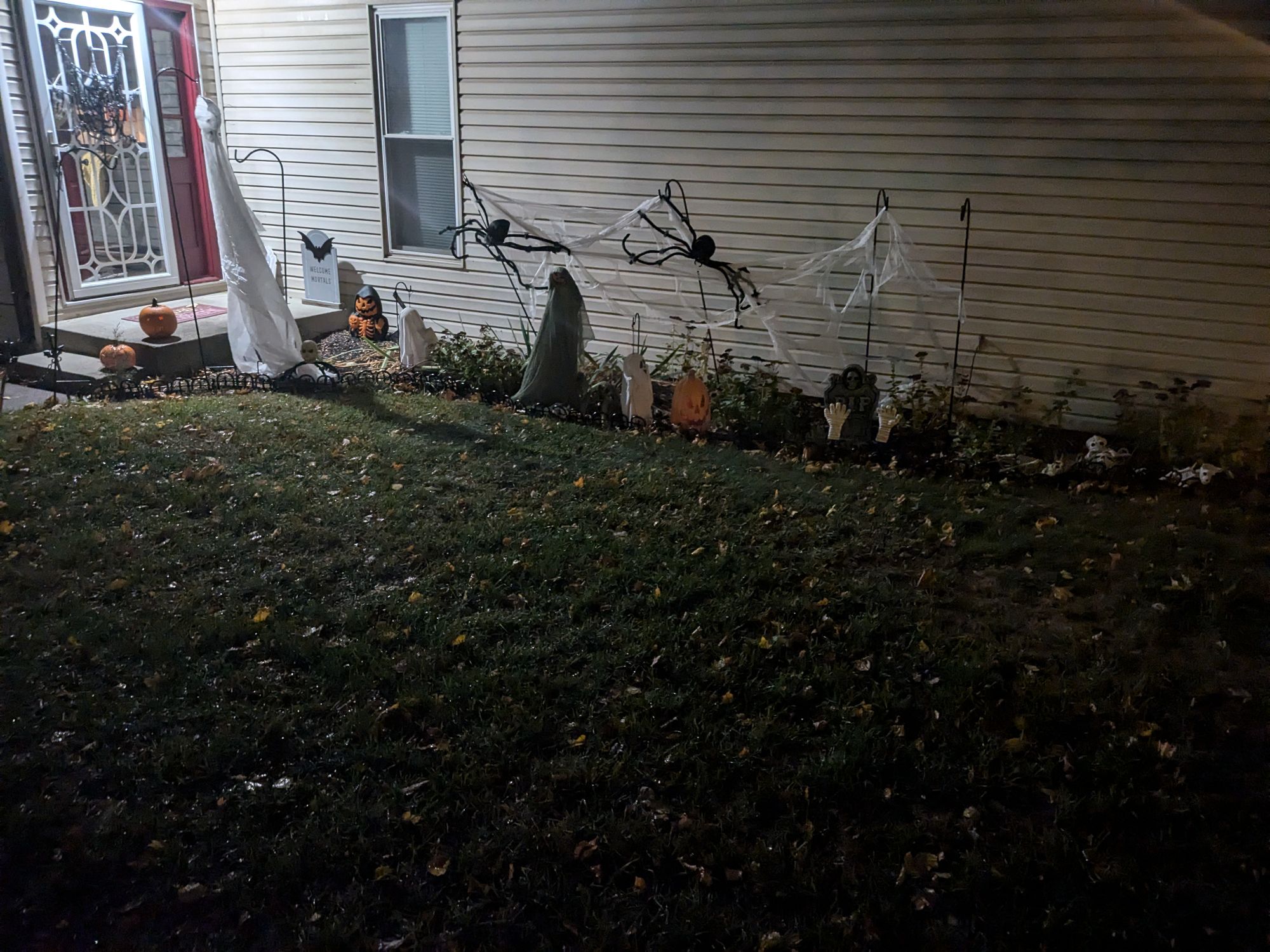
Sadly, it’s not very haunted by anything except me. I don’t know why, I’ve done voodoo rituals and everything else to make the place haunted, but so far, no otherworldly dice. At least I can make one hell of a Halloween display every October and decorate the inside as I like!
My yard is the spookiest in the neighborhood every October.
I’m the chapter coordinator for HWA Ohio. The Horror Writers Association is an international organization that supports horror writers and helps them network and grow. Ohio’s chapter is about six or seven years old, and I’m the guy who runs it! Which was never my intention: some other members organized the chapter, and I volunteered to find a venue. Somehow, I kept arranging locations for us to meet, and that morphed into becoming the chapter coordinator. And after the parent organization set a formal election process for chapter coordinators for all chapters…well, I ran without competition. I guess people think I’m doing a good job or something?
Anyway, HWA Ohio has its own website, which lists our members and puts out news about us. If you would like to check the website out and support us, click HERE.
So proud to have a story from this collection adapted into a radio play.
I recently had my very first story adaptation. Remember my collection Hannah and Other Stories, which I mentioned above? Earlier this year, I became acquainted with a producer for WCBE 90.5, a local NPR station who interviews local creative types. He also runs a yearly Halloween show, where a short story is adapted into a radio play, with the roles played by local high schoolers.
“Hannah,” the lead story in Hannah and Other Stories, was this year’s story. It was my first time having a story adapted, and it was so, so good! The kids did really well in their roles, and it was amazing hearing my story brought to life on the radio.
And if you would like to listen to it, you can! It’s available to stream online, and you can listen to it in full HERE. Let me know what you think if you listen to it. The more people who listen, the better for future shows and future students. Plus, who knows? Maybe another one of my stories will get adapted. It happened once, didn’t it?
I tend to break out in song at any provocation. I kid you not, this is something I did daily in high school, and which I do quite frequently these days. In fact, I’m part of a critique group with some of my fellow Ohio horror writers, and they say it’s not a meeting if I don’t burst out in song at least once!
Too bad I sing badly, but hey, why should I let that stop me?
What I’m working on now. I’m juggling a few projects at the moment. For one, I’m putting together another collection of short stories, and I hope to have more on that in the coming days and weeks. I also recently finished a new novel, The Shape of Evil, which is about a 3D printer from Hell, and I hope to have that ready for pitching to agents and publishers by June next year. Finally, I also have a collection of novellas I plan to work on at some point, and I have a mummy novel I started but put aside for other projects that I plan to get back to.
Plus some short stories to send out to magazines and anthologies here and there. Yeah, I’m a busy guy, aren’t I? But that’s kind of the way I like it.
Anyway, that’s thirteen things you need to know about me. I hope you enjoyed learning about me, because I enjoyed writing it. And if you did, be sure to follow this blog and my other social media to keep up with what I’m doing and when I have new work coming out.
And if you would like to check out any of my other work, I’ll leave a link to my book page down below. You’ll find all my published works and then some there, including free stories. And if you like what you read, I hope you’ll leave a review online so I, as well as other readers, know what you think.
Until next time, my Followers of Fear, good night and pleasant nightmares.
I’ve been saying it all weekend, in person and on my other social media: one of the things I love about writing (among others) is getting to add my interests to the stories I write. And not just interests: I get to play with my favorite tropes, character types/archetypes, locations, and so much more.
And I’m not the only one: Stephen King likes to set his stories mostly in Maine or other parts of New England, have characters who are either writers or psychics (with the latter often being children), and just getting into weird ideas like aliens or extradimensional entities. Anne Rice enjoyed placing her stories throughout history, particularly places that are beautiful in some way or another, and telling stories that delve into our cruel but beautiful world (AKA the Savage Garden) via supernatural but very human creatures. Riley Sager enjoys deconstructing and turning classic horror movie tropes on their heads by making them the entire plots of his books, female leads who have some deep trauma in their pasts that affect their present, and a male romantic interest whom they should have no business getting with. HP Lovecraft–wait, let’s not get into him. We know what he liked, as well as what he hated.
As for me, I’ve got a few. For one thing, I like to include ballet and ballerinas in my stories. Part of that is that I love ballet like some people like football, but there’s also a symbolic reason. As I’ve said before, corruption of the innocent is one of my favorite elements of horror and ballerinas, particularly young ballerinas, are a symbol of innocence to me. With that reason, it’s no wonder I tend to add ballet and ballerinas to my stories when I get the chance. Though given that I write horror, I often put those poor dancers through hell. Just look at Maddy Taggert in Rose and Annie Hummel in “The Dedication of the Hight Priestess.”
Though whether or not that pattern holds with the dancer character in Crawler, I’ll let you guess.
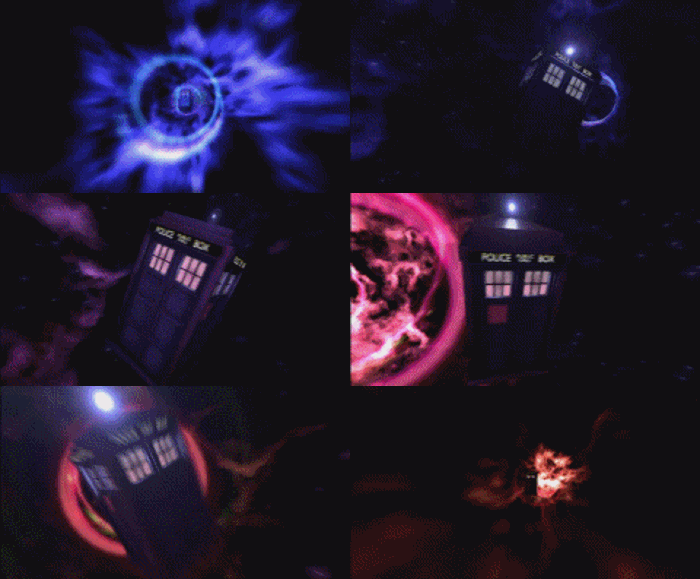
I also enjoy putting my nerdy interests into my stories when I can. For example, in my WIP I’m working on now, I’ve included references to anime, fantasy tropes, and Doctor Who, among other things. In that same story, I also modeled two characters after the original detectives in Law & Order and named them after the actors who played them. And with half the story still left to write, I can probably find more room to add those in. It’s a blast when I do!
Some other things I like adding with my work when I can are:
setting my stories in Ohio
making some of my major characters Jewish like myself
noting the tropes I might be using while the character denies that their life is working like a story.
references to famous movies and books, especially those in the horror genre
my favorite periods in history (such as The Pure World Comes for Victorian England)
and powerful, sometimes godlike entities that often come from realms very much unlike our own
I love it when I get a chance to reference this show in a story.
And these are just the ones that I’m aware of. Some things are more noticeable to authors than others. I’m sure as I write and publish more, others will point out things about my writing that I never noticed before but will find very true.
But yeah, this sort of thing is a perk of writing fiction. They say “write what you know,” but what that actually entails is often quite different than what our writing professors often preach. Instead of basing our stories entirely on our own experiences and reality, we weave what we love into our stories and use it to spice up our stories. To make them the stories we would enjoy reading ourselves. And when you release those stories and find people enjoy them and the elements you add in…well, that makes it all the better, doesn’t it?
What are some elements you enjoy putting into your stories when you can, Followers of Fear? Let’s discuss in the comments below.
That’s all for now, my Followers of Fear. I mentioned this sort of thing to my folks after seeing Nutcracker last night and on social media after the Doctor Who reference was written into the story last night. After all that, it just felt natural to blog about it. Now, if anyone needs me, I’ll be making dinner and then getting back to my WIP. Until next time, good night, pleasant nightmares, and happy second night of Hanukkah!
Hello, Followers of Fear. There are sixty days till Halloween. What have you done to prepare?
Artwork produced by artificial intelligence, or AI art, has become kind of a thing as the technology has advanced. In fact, some months back, there was an app that became a fad for horror writers to generate images and even book covers. And earlier this week, John Oliver featured it on his TV show, Last Week Tonight with John Oliver. Here’s the video, if you’re interested. It’s hysterical.
John Oliver’s wife and children must have such a blast telling people who don’t know who he is what he does for a living. “Oh, my husband/dad? He sexually harasses Adam Driver and marries cabbages on TV once a week.”
Anyway, it got me interested enough to want to play around with AI art, so I made an account with one of the recommended companies, Midjourney, and went to work. The results were not only fascinating, but gave me some thoughts on the nascent AI art industry.
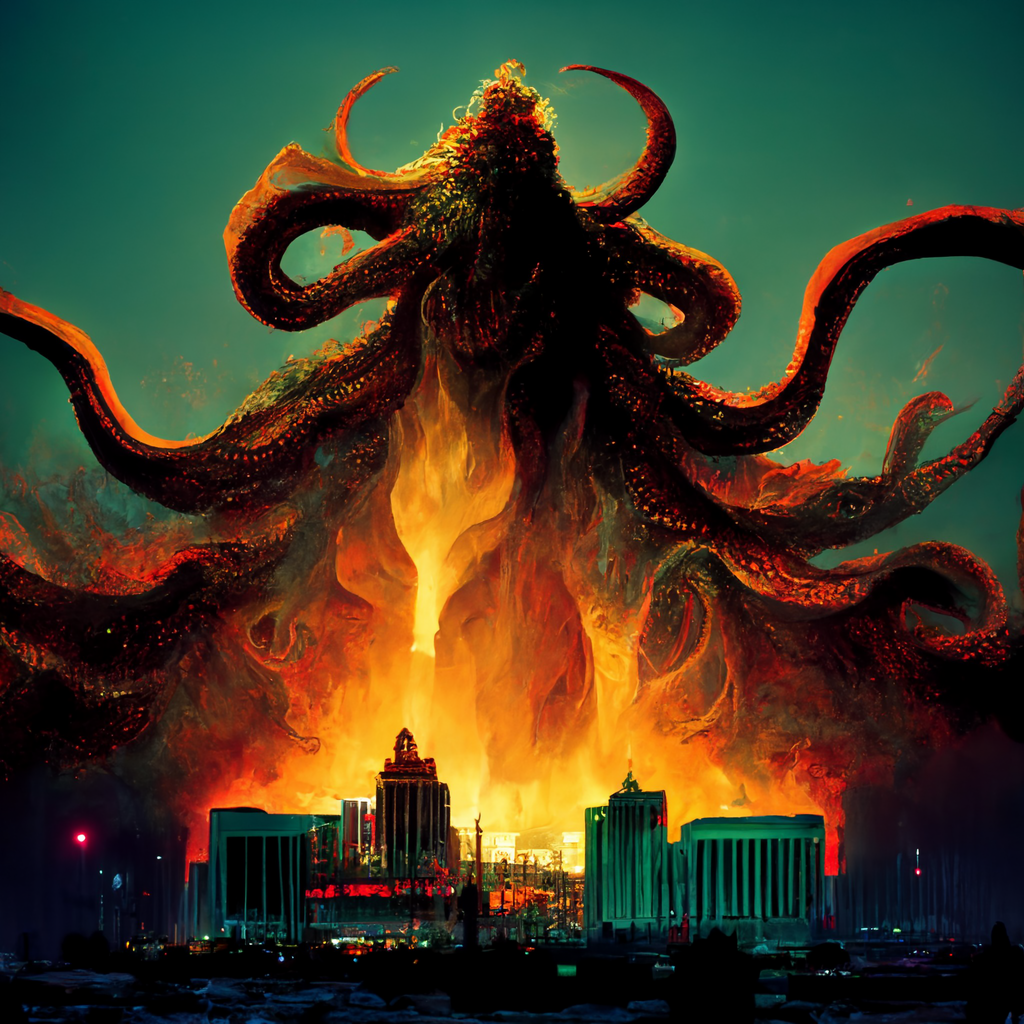
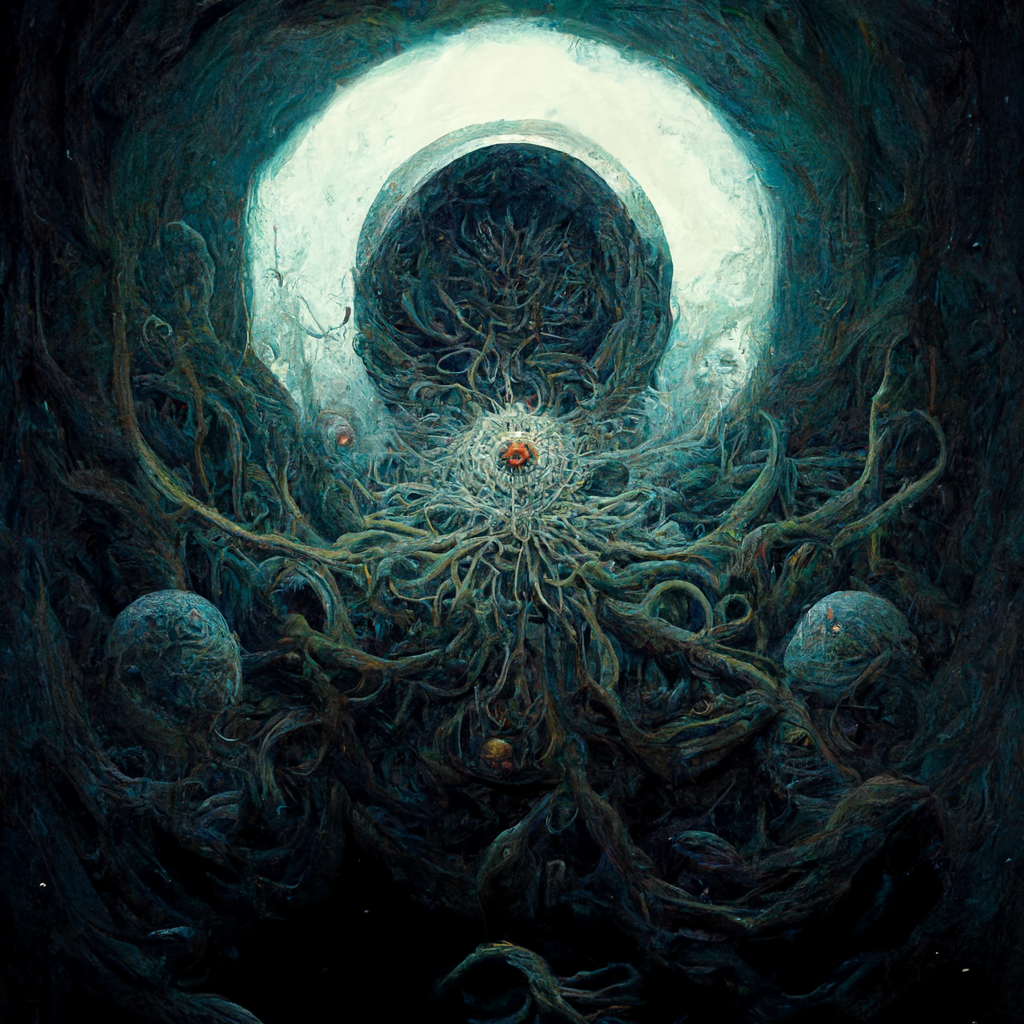
First, here are some of my successes. As it turns out, Midjourney’s AI program does very well with Lovecraftian/cosmic horror entities. For example, here’s Cthulhu destroying Las Vegas because I’m not a big Vegas fan (though under the right circumstances I’d visit again).
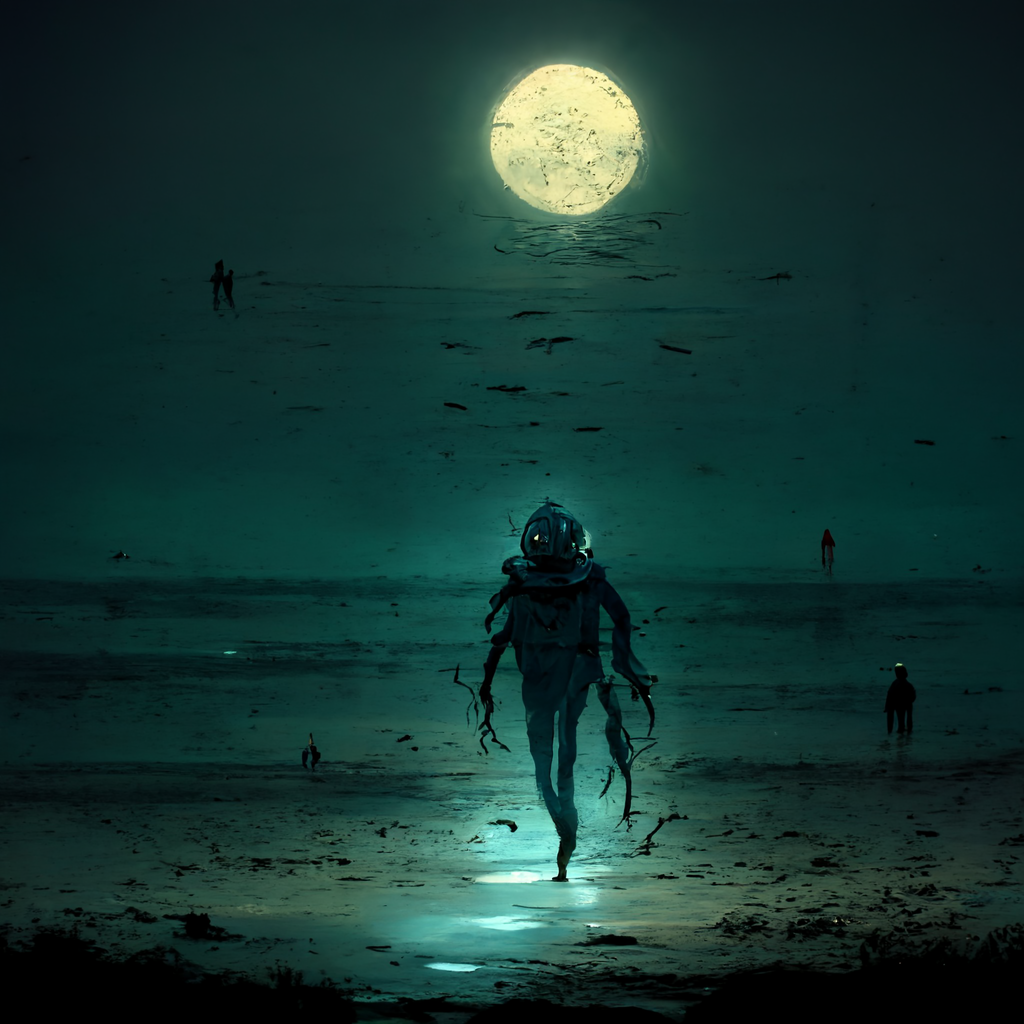
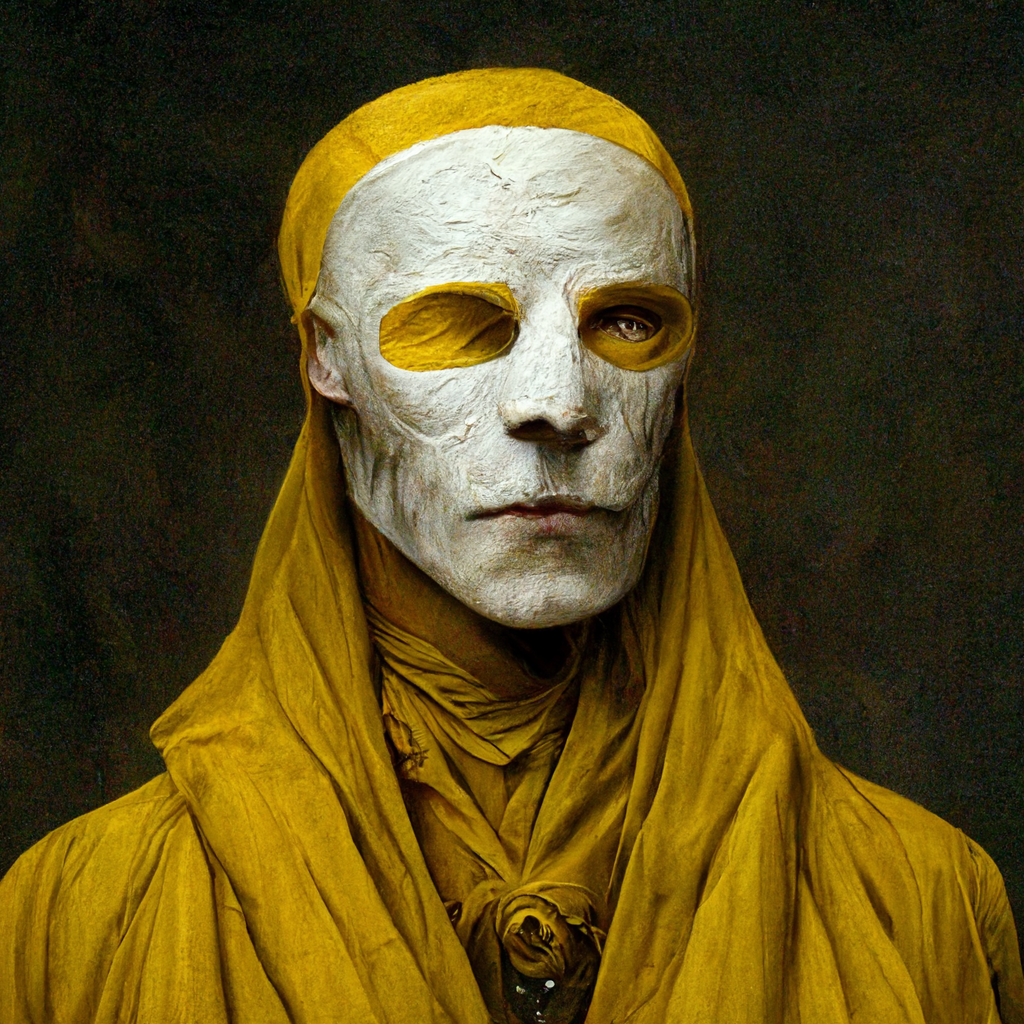
Then, in order, we have Yog-Sothoth, Shub-niggurath, Nyarlathotep, Azathoth, two pictures of the Deep Ones, the Color from Outer Space, and the King in Yellow.
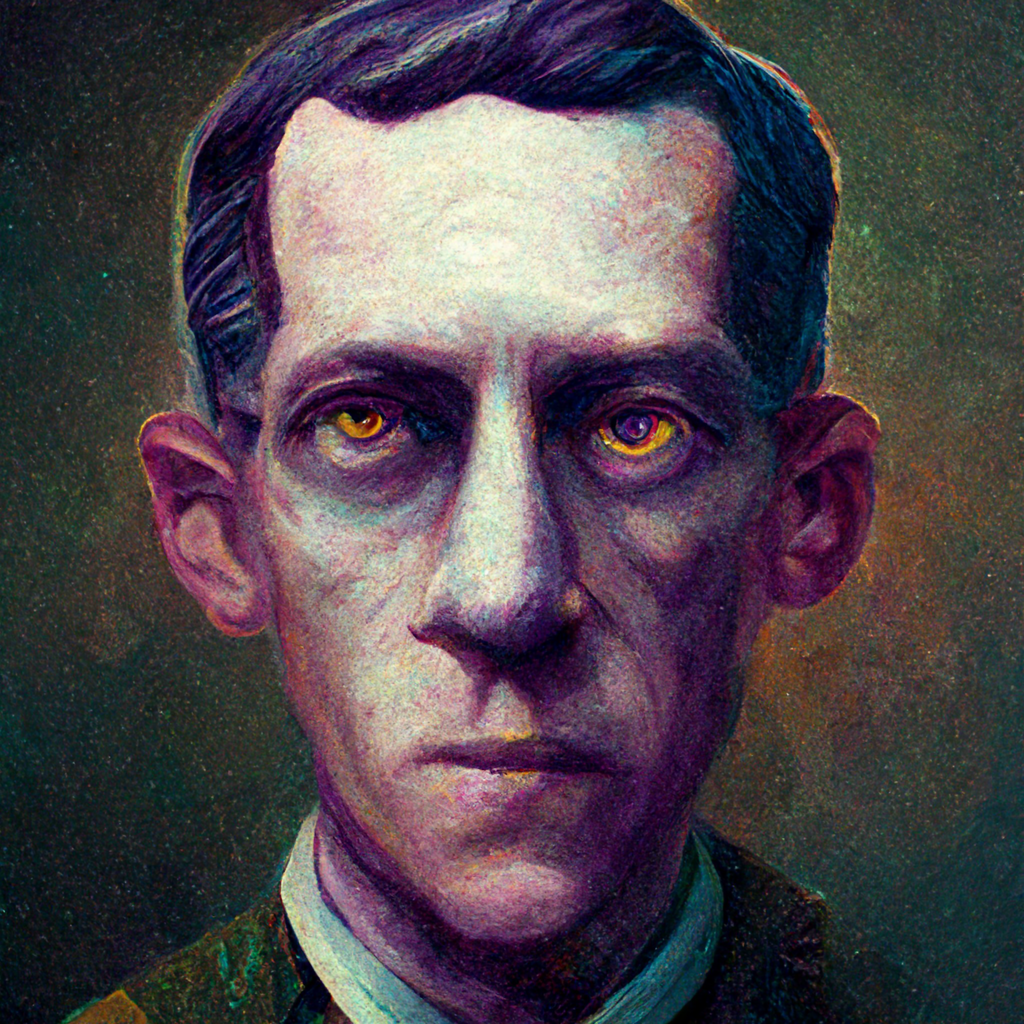
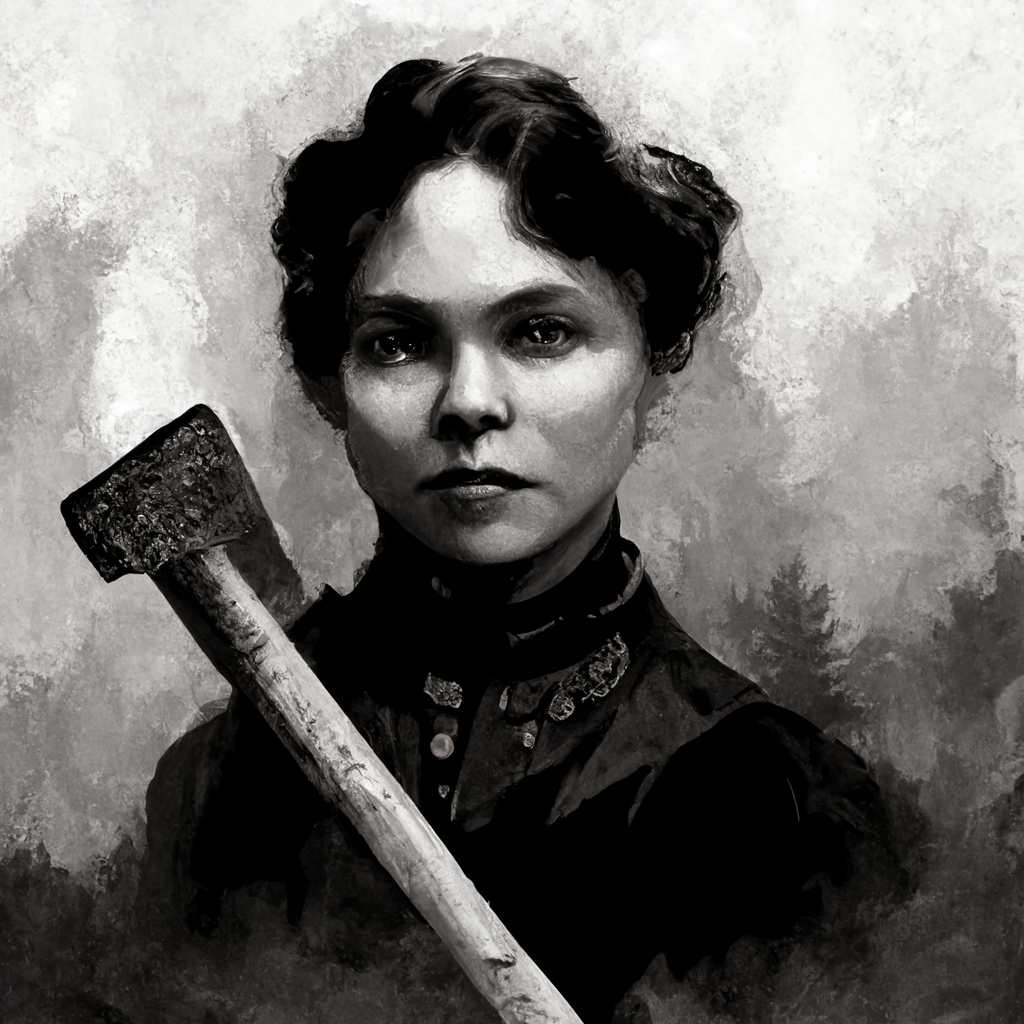
And portraits of famous people tended to go well with the program. Here are Stephen King, Anne Rice, and HP Lovecraft, three of my biggest influences as a writer, as well as one of Lizzie Borden with an axe. Because why not?
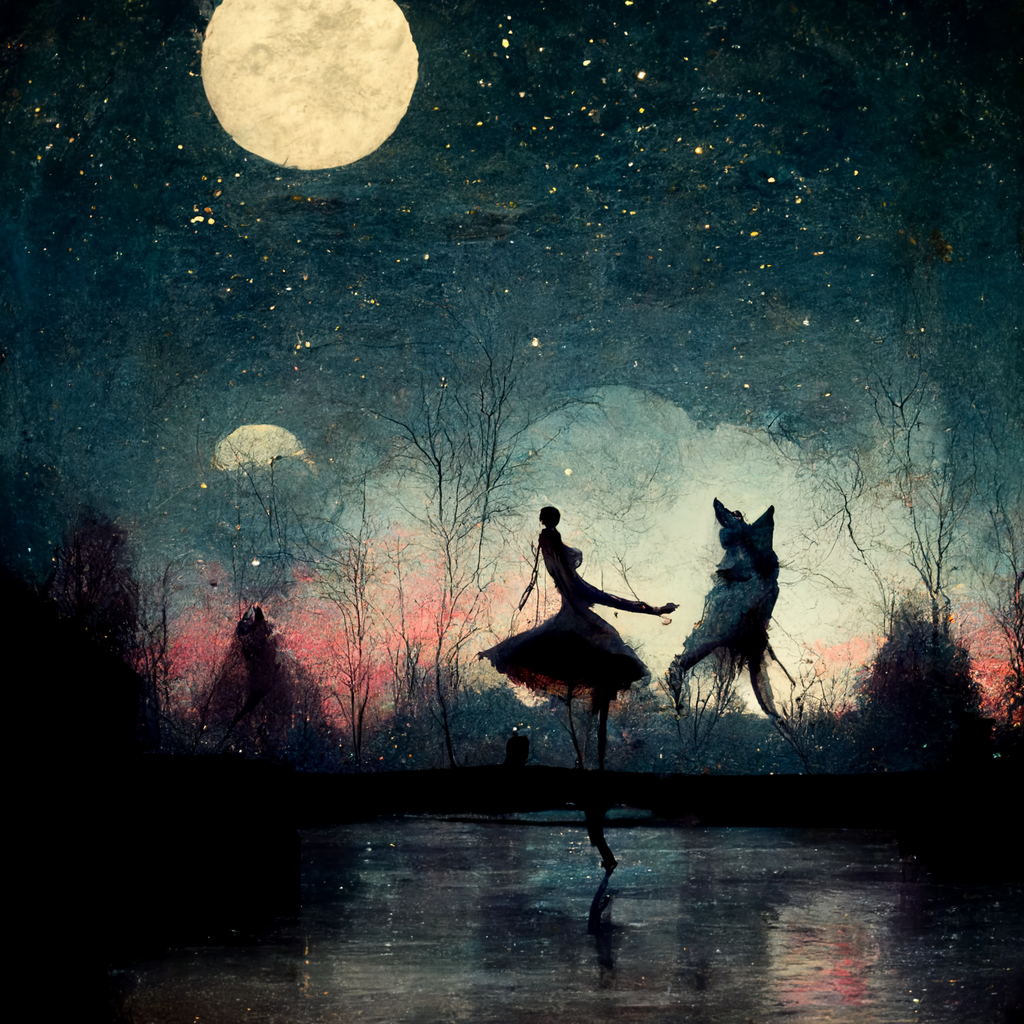
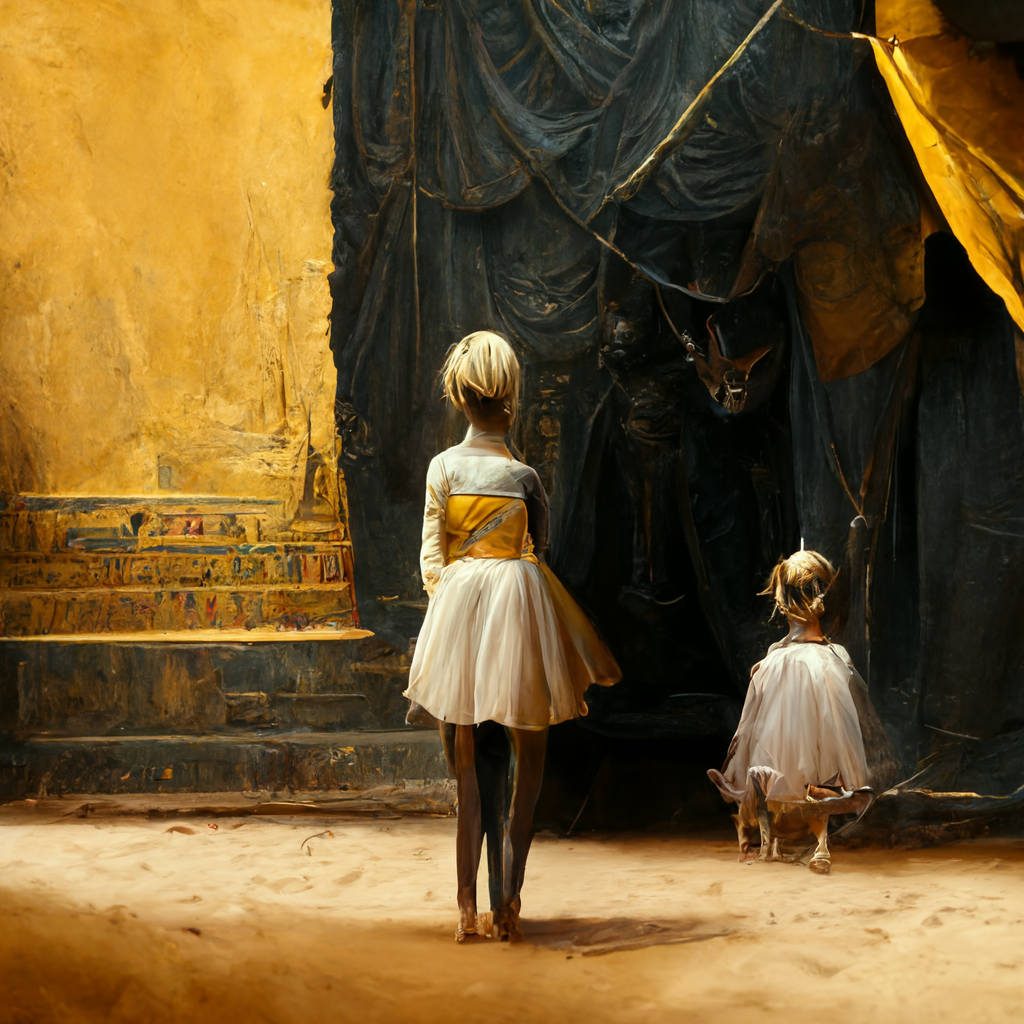
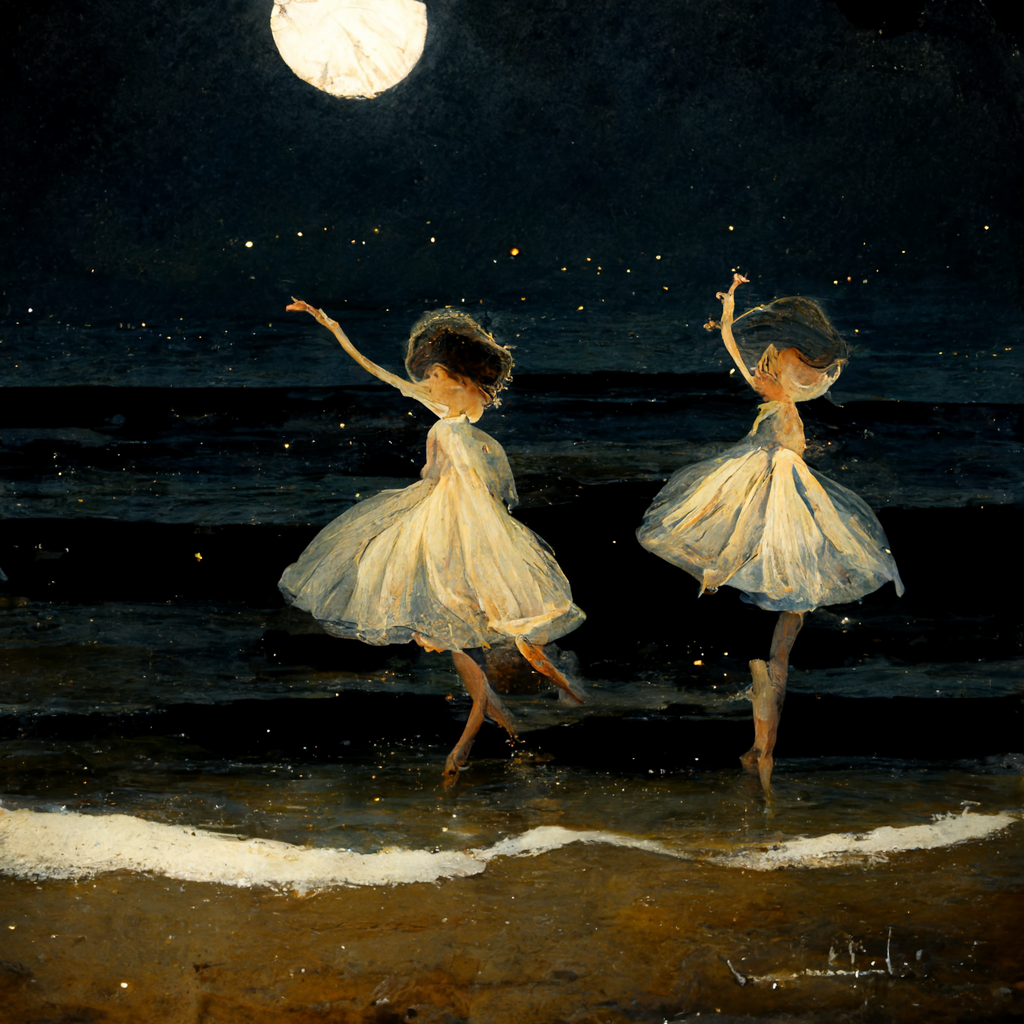
And because I love ballet and try to put dancers in my stories when I can, I made a series of ballet posts, with their titles in the captions.
Dancer and Wolf on the lake
The Little Ballerina Ghost
Dancer in the Egyptian Temple
Dancers on a Moonlit Beach
Little Dancers Running from Lava
Little Dancer and Anubis
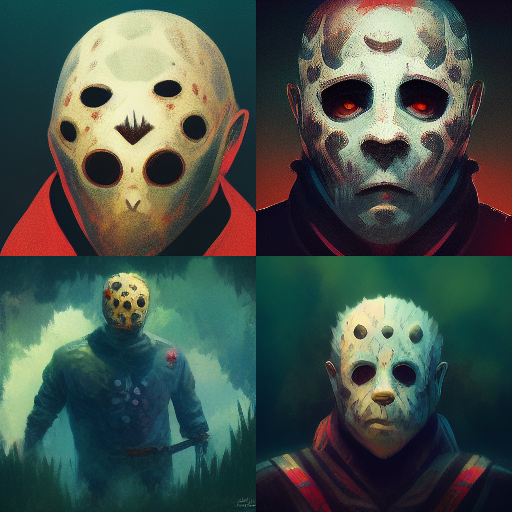
Pretty cool, right? Most of them look really good. However, those were success stories, like I said. Here’s what happened when I tried to create Jason Voorhees from the Friday the 13th films.
Yeah, I know. None of those come close to looking like Jason! He’s arguably more famous than Cthulhu, but these were the results. And then there was my attempt at Freddy Kreuger from A Nightmare on Elm Street. Oy freaking vey!
Yeah, who is that? Not Freddy Kreuger, who is definitely more famous than Cthulhu! Honestly, it looks more like my conception of Leland Gaunt, the antagonist from Needful Things by Stephen King. How could the AI get our favorite subconscious serial killer so wrong?
And those are just a few examples. I went through several failures trying to get anywhere close to a specific idea or image, only to give up when I realized the program just couldn’t create it. I couldn’t even create a decent Sailor Moon or an accurate tiger image, and both those prompts have enough references out there that they should have been easy to create something accurate.
Even some of the successes took a lot of work and experimentation, such as The King in Yellow or Little Dancer and Anubis. I won’t even go into detail about how hard it was to get a good Alice in Wonderland pic that wasn’t too trippy. I mean, I know the source material is plenty weird, but not all art based on it has to be super-surreal!
And while I call some of them successes, they aren’t perfect. You can especially see it in the ballerina series, where features like the head and limbs look odd or bent in ways you wouldn’t see on a normal dancer or a Degas painting. Only the tutus and bodices come out well. The rest of their bodies can be a mixed bag.
It kind of reminds me of that scene in 1986’s The Fly, where Jeff Goldblum puts steak through the teleporter and it comes out tasting weird. He figures out that the computer hasn’t learned how to move organic materials, and is instead creating an interpretation or bad imitation of what it thinks steak is. That’s what we have here: the AI has learned how to mimic and create, but it’s still leagues away from making certain things.
And honestly, I’m glad. Art is art because there’s someone behind it with a vision or a passion. You can program a computer to recreate famous art pieces or original pieces, including Batman comics and scripts or horror screenplays. And the computer might even do a good job at times. But there won’t be any passion or soul behind it. Art is art because we’re putting our love and soul into our creations.
And getting to work with a creator? That’s even more special. Believe me, I’ve done it before, and it’s amazing to see your vision come to life with their help. Especially when working on art pieces like book covers. That truly is something special.
That being said, I can see AI-generated art being used for cheap book covers as the technology improves, and the services of artists becoming more expensive. This could especially apply for small presses or independent publishers who need to lower costs while maximizing profits. The only time publishers may use a real artist is if the author is big enough to warrant it.
Hopefully that doesn’t happen, because it would mean we wouldn’t get to see some really amazing collaborations. So, for the meantime, I’ll stop with the AI art (I’ve scratched that itch and I don’t want to pay a subscription for Midjourney, anyway), and continue supporting the artists who create amazing art. Especially horror art.
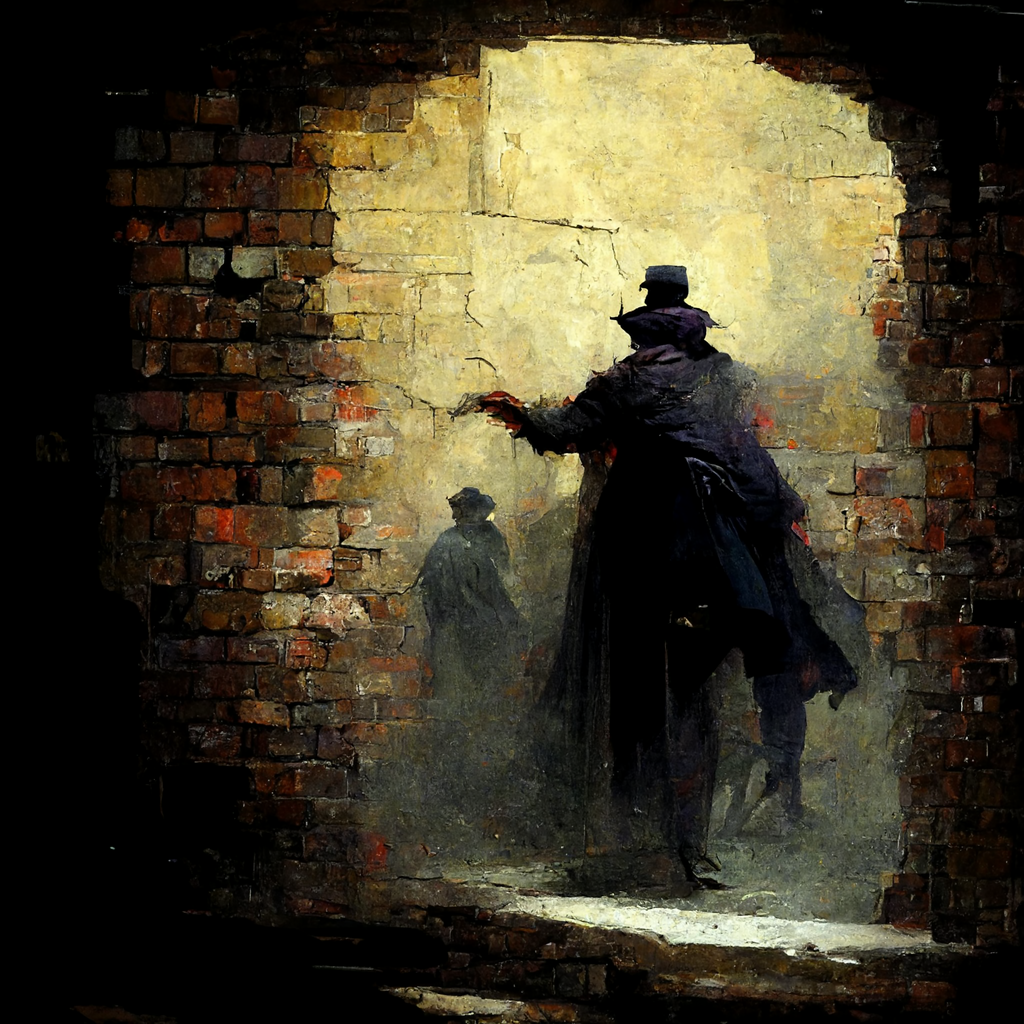
And now, here are some more pieces I created. Except for a few I’m waiting to reveal till the time is right, here are my other successes. You can ask what was going through my mind when I created these in the comments below. Enjoy, and until next time, my Followers of Fear, pleasant nightmares!
I’ve heard this term thrown about a few times since January, first in the new Scream movie and most recently in an analysis of a horror film on YouTube. “Elevated horror.” And the speakers, whether in in the Scream movie or in the YouTube video, made it sound like it’s a recognized subgenre of horror with its own staple of tropes and trappings. Like slasher and its killers and gore, or Gothic with its ancient, diseased settings and corrupting influence.
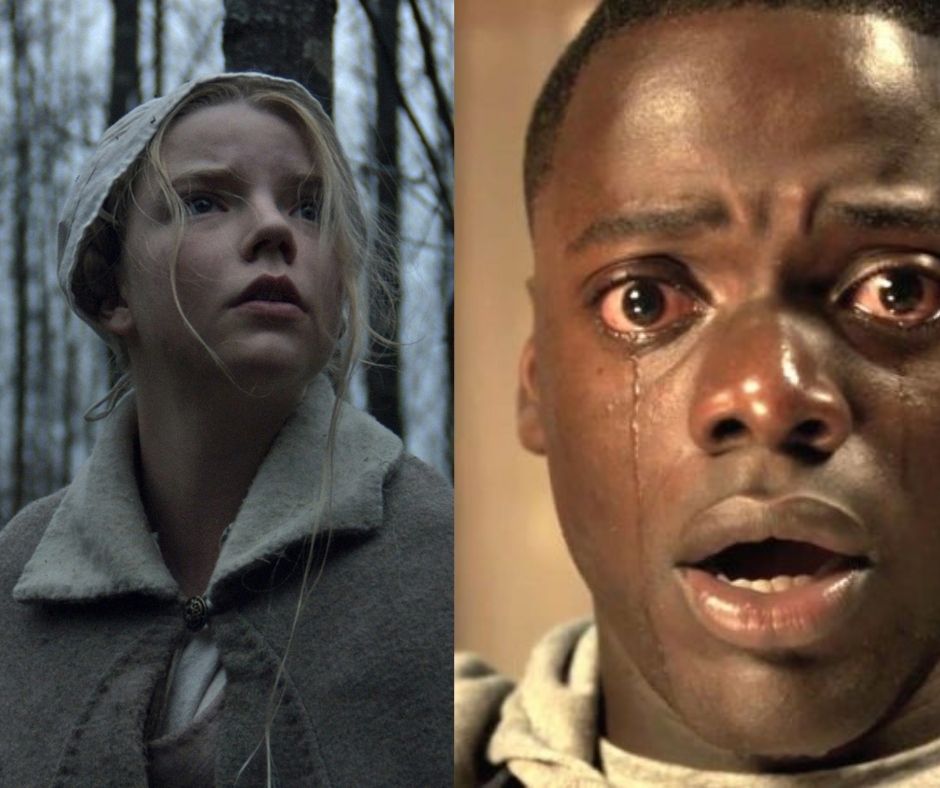
The thing is, it isn’t. Elevated horror isn’t an actual subgenre of horror. I’ve consulted with dozens of writers on this (thank you, Twitter and the Horror Writers Association Facebook group) and it’s not a subgenre. It seems like a subgenre of horror at first glance when you look at works referred to elevated horror. In movies, films referred to as elevated horror include The Witch, Babadook, It Follows and Get Out, among others: they’re horror stories that focus more on probing psychological drama, characters and metaphor than blood and gore or supernatural horrors. Often, there’s a powerful social commentary being presented through the narrative, such as Get Out‘s commentary on race.
In terms of literature, “elevated horror” might have all of these as well as flowery language. It might be almost called “literary horror,” because there’s an emphasis on wording the story nicely and making it just too dark to be called “literary fiction.” Examples include The King in Yellow by Robert Chambers, Interview with the Vampire by Anne Rice, The Deep by Alma Katsu, and A Cosmology of Monsters by Shaun Hamill.
And, most importantly, “elevated horror” can sometimes cross over into other genres, such as thriller, literary, or even comedy.
Can you really say The Witch and Get Out belong in the same subgenre?
Sounds like a subgenre, doesn’t it? But it’s not. The works called elevated horror are all as different from each other as roses are to tulips are to primulas. All flowers, but all different kinds of flowers. Let me explain: The King in Yellow and The Deep are cosmic horror mixed with deep psychological themes, The Witch is some cross between folk, religious and historical horror, and Get Out‘s searing satire makes it borderline horror-comedy. In fact, it was nominated at the Golden Globes under categories for comedies or musicals!
Yet all of them are given the designation of elevated horror. So, if it isn’t a subgenre, what is it?
The conclusion I’ve come to after speaking to numerous other writers is that elevated horror is actually horror films taking place in elevators.
Just kidding, that’s elevator horror, and the only example of that I can think of is 2010’s Devil.
No, “elevated horror” is a marketing term. And like all marketing terms, it’s directed towards a specific audience. Who is this target audience? It’s people who normally wouldn’t check out horror because they fear it’s low class, dangerous, or degenerate. They may want to check out horror or be curious, but the stigma still attached to the genre keeps them from doing so. Either that, or they won’t check it out unless a work is given a specific designation.
Calling something “elevated horror” is basically saying, “This isn’t like other horror stories, where half-naked teens are voyeuristically killed with tons of blood and gore, or where supernatural entities menace children in sewers. No, it has nuance and social commentary! There’s psychology and drama and fleshed out characters! You can be respectable while enjoying this!”
In other words, it’s another way of something is high-brow. “There are no explosions and superheroes here. No aliens or elves. No star-crossed lovers up against the odds. Only real people having real life situations, or real people in situations that are absurd but it’s okay, because it says something important about society.”
I almost wish it was a subgenre. I might have found a home for my ballerina-meets-the-King-in-Yellow story already (still working on that, give it time).
Pinhead may not be from an elevated franchise, but that doesn’t make him or Hellraiser any less awesome.
And the problem with this marketing term is it’s misleading. By calling certain movies or books “elevated horror,” it’s labeling all other horror as “trash,” or at the very least “common.” Either way, the designation puts other horror stories down. And that’s a shame, because there’s such good horror out there. Dark Harvest, Kill Creek and Salem’s Lot aren’t high brow, but they’re great stories that thrill and can leave their readers up late into the night. Same with The Thing or the Hellraiser franchise: they may never win Oscars, but goddamn are they scary, and the latter has led to one of the most memorable characters in the slasher genre.
I’m not trying to put down the term. I’m just saying we should understand what it means, both for works designated as such and those that aren’t. And if it lets you enjoy horror, great. Just make sure to check out works that aren’t “elevated” and whose creators don’t really think or care if their work is called that.
Personally, I can see some of my work being called elevated, but I’ll just say that I was trying to write a fun story and wanted others to enjoy it as well.
That’s all for now, my Followers of Fear. After getting my thoughts on this topic out, I’m off to dream of beasties and ghosts. Until next time, good night and pleasant nightmares.
A handy graphic for understanding the three act structure, courtesy of Wikipedia.
The other day, I was talking with some other writers about how to write a decent short story (an eternal question among writers, including the ones who’ve gotten them published). And I noticed that, with a lot of my recent short stories, most of them fall into a decent three act structure. And then I said, “I know the existence of the three act structure is dubious, but it’s the truth.”
And, like many odd things, that little exchange has stuck in my head.
So for those of you who don’t know, the theory of the three act structure states that all stories, especially longer ones, can be divided into three separate acts or sections: the setup, the confrontation, and the resolution. The acts may then be divided into smaller scenes or subsections, but they all fit into those categories. Some examples given of stories with the three act structure are Star Wars, Die Hard, and Avengers: Endgame (though I sometimes think everything before the five-year jump is its own separate act or prologue).
While many of us are taught this structure in school, most of our teachers will let us know that not everyone believes in the three act structure, let alone say they use it. Some prefer using a five act structure. Others say storytelling is too complicated and diverse to say a story can be divided into a formulaic structure. And nearly all playwrights will agree that if it can’t be told in one act, tell it in two.
Good example of a story in three acts (supposedly).
That last one might be a joke.
I’m usually of the camp that believes storytelling is too complicated and diverse to boil down into a structure. Look at Stephen King stories. Most of his shorts, like Graveyard Shift, Night Surf or The Boogeyman, are simple one-scene stories with maybe a twist at the end, and I dare you to try to fit books like IT or Salem’s Lot into three acts. Then there are stories like Kill Creek by Scott Thomas or Interview with the Vampire by Anne Rice, which feel like they fit into four acts.
As for my own books, Snake is in multiple sections, much like the books I was reading up to and during the writing process, and I see Rose as in-the-apartment and after-leaving-the-apartment (if you read the book, you know what I mean). I can’t see the stories in The Quiet Game as anything but a progression of events. And I wouldn’t even know where to start with The Pure World Comes or the stories in Hannah.
So, is the three act structure a real thing? Well, yes and no. I feel like it’s more of a framework for people to examine fiction, both others and their own. You don’t have to use it if you feel it doesn’t work for you or if you feel a story has too much happening in it to divide the plot into three separate sections.
But if you do find it helpful, use it to your heart’s content. I’m sure many writers, especially plotters like myself, find the three act structure helpful for planning their stories. And as I said above, many of my recent short stories, including the ones that have been published, fall into three acts. Though I think of them less as acts and more like beats, scenes, settings, or occurrences. And if I’m trying to keep a story within a certain word count, I can see using this structure to my advantage.
So what is the three act structure? It’s a prism to understand some fiction stories through, as well as an actual tool for writing. It’s not perfect, and most stories don’t fit into it that well, but that doesn’t mean the idea isn’t useful. Hell, it might even help you hone your craft and get a few more short stories out there. And that is never a bad thing.
Unless you’re trying to write an award-winning musical. Then you might want to keep it to two or maybe just one act.
That’s all for now, my Followers of Fear. March has just started and it’s already looking a lot better than January and February is (world events notwithstanding). I hope I can update you on exciting developments in the near future. And until next time, pleasant nightmares.
Anne Rice. She may be gone, but she is still definitely with us.
You know, I’ve actually had the opportunity to interact with Anne Rice a few times. Not in person, mind you, but over email and social media.
In high school, I sent her an email after reading her novel Angel Time (she had an email that was known to the public back then). I liked the novel for the most part, but I was upset as a Jew that one of her Jewish characters became a Catholic nun just to be closer to her father. She actually emailed me back, saying that I had a fair point and would try to be more sensitive to such matters. It was a crazy cool moment. A few years later, about a year into writing this blog, I wrote a review of The Wolf Gift (which you can read here), her first werewolf novel, where I compared her work to various kinds of food (I had just eaten lunch). Somehow she caught wind of my review and posted it on her social media. It’s still one of my most viewed posts, and it’s been nine years since then!
I had a few more interactions with her through email and social media up until 2016 or 2017, but I was happy with what I got. And as she kept writing, I hoped I would be able to actually meet her in person someday.
Yesterday, December 11th, 2021, Anne Rice passed away due to complications due to a stroke. She was 80.
Like many, I am heartbroken. I first discovered Anne Rice as a preteen with Interview with the Vampire. As I’m sure many of you can agree, it was a revelation. For me, I hadn’t read any story whose world felt as immersive as the world of Louis and Lestat since reading Harry Potter years earlier. I could almost smell New Orleans, here the sounds of 19th century Paris! The language was so beautiful too! Poetry without being poetry, filling my mind and painting extraordinary images. It made me realize just how powerful language could be, more than any other novel I had read up till then. And finally, I empathized with and grew to truly love the characters. While a lot of their emotional and philosophical turmoil went over my head at that age, I understood that they were going through a lot and felt for them.
This would only increase as I continued to read her works throughout my teens and twenties as I read her new work. Reading her works often felt like meeting old friends, and at the same time, Anne Rice, who put so much of herself in her books, began to feel like a friend and a mentor. Often, her writing would influence mine as much as Stephen King’s did, especially as I’ve gotten older. That impression deepened when I got on social media, where Rice was active with her fan community, whom she affectionately called the People of the Page.*
I may have to read this again very soon. I haven’t read it since I was 11 or 12. I wonder how it will affect me now.
It pains me, and so many others, that we won’t be able to read new stories by her or see her social media posts anymore. That next year’s Ramses the Damned novel, if it releases on time, will be her final novel. That she won’t be able to see the TV adaptations of The Vampire Chronicles or Mayfair Witches trilogy being developed at AMC when they premiere. That one of the greatest horror writers of the 20th century, as well as one of the greatest writers of the 20th century period, is now gone from this world.
Luckily, even though Ms. Rice has left the Savage Garden and is probably now getting all her spiritual, philosophical and cosmological questions answered, her works remain. She has, like many of her characters, achieved a form of immortality, but this one won’t cut her off from the world of humans. Instead, she’ll always be with us, a spiritual force beyond matter and body living in our minds and our souls. So, even though many of us will never have the chance to meet her in person, she will still be able to influence and touch us with her powerful Gothic epics.
Next year, there’s supposed to be a public memorial in New Orleans for her, one year after her family lays her to rest. I don’t know if I’ll be able to go, but if not, I’ll at least be able to raise a glass of wine to her tonight. A sweet red, which I’m sure she would have appreciated. And when those TV shows premiere, I, and probably many others, will raise a glass again and think of her. Anne Rice, the true Queen of the Vampires, and someone who will be with us long after she’s joined the spiritual plane.
What influence did Anne Rice have on you? What were your favorite books by her? Do you have any stories you want to tell about her? Let’s discuss.
*See where I got the idea to name you all the Followers of Fear?
My friend and fellow blogger whose tastes are way different than mine, Kat Impossible, tagged anyone who was interested in doing this tag. It sounded fun and informative, so I thought I would give it a try. It took me a while to get around to writing my own version and answering the questions–Kat’s post came out right after I got back from my trip, and I had a few posts to write before this one–but it’s finally out.
All credit goes to The Long Voyage for the original version of this tag. You can read it here.
NEVER HAVE I EVER…
…started a novel that I did not finish.
Before age 12 or 13? All the time. I wrote maybe five or six novels (which probably had word counts of short stories or novelettes at most) that didn’t get finished. There was a pirate story, a Frankenstein story, a caveman story, and a few zombie stories. Finally started getting some vampire stories to completion in middle school. I think it was a problem of focus and interest, rather than the story themselves. Then again, I was so young. Youngsters aren’t very good at staying focused on goals without seeing immediate gains from all their hard work.
More recently, I have some short stories and novelettes that I started in the past two years and stopped working on after awhile. Still figuring out why, but I think they may have leaned a little too far from horror and into dark fantasy to keep my interest. It’s sad, but what are you going to do?
…written a story completely by hand.
I did once! And it wasn’t one of those cute, two or three-page school assignments, either. One of my teenage attempts at novel-writing, a vampire novel called Mahiro, was written entirely by hand for its first draft. I had, like, seven notebooks filled with vampire fighting. And subconscious exploration of my sexuality through homage to Anne Rice and the movie Van Helsing, but that only occurred to me after I realized my sexuality.
…changed tenses in the middle of a story.
I think the first couple of attempts at Rose were in the past tense. But on advice from my thesis advisor, I changed to present tense. It worked out in the end.
…not researched anything before starting a story.
Most of my earliest stories started out that way. It wasn’t until maybe high school that I started to do research, and I only got good at it around college, when research became important for passing classes and getting my degree.
…changed a protagonist’s name halfway through a draft.
I don’t think I have, actually. Maybe the surname of a minor character, but never a protagonist’s name, personal or surname.
…written a story in less than a month.
Several times. Especially this past year or so.
…fallen asleep while writing.
Never. When I get tired, I’ll just go to bed.
…corrected someone’s grammar in real life or online.
Too many times to count. It’s a bad habit of mine.
…yelled in all caps at myself in the middle of a novel.
Um…I don’t think so. Is that something people do?
…used “I’m writing” as an excuse.
I think so. I didn’t want to go somewhere with my dad and sisters, even though a friend of mine would’ve been there to play. I just had to write that day. I hope the friend didn’t take it personally!
…killed a character based on someone I know in real life.
More than once. In fact, it’s something I warn people I’ll do if they get on my bad side. In fact, there are two people on there now. I just have to find the right stories to place them in…
Don’t ever mess with me.
…used pop culture references in a story.
Oh, all the time! Game of Thrones was mentioned once or twice in Rose, the 1960s Batman TV show gets a mention in River of Wrath, and I include so many references to some of my favorite anime in Toyland. And that’s just the tip of the iceberg.
…written between 1 AM and 6 AM.
Plenty of times. I’m actually thinking of changing my sleep schedule so I could do it more often (like Franz Kafka did), but I worry about the effects on my health should I need to get back on a normal schedule.
…drank an entire pot of coffee while writing.
I hate coffee, so that’s a no. I’ll usually have tea or, if it’s a weekend, beer or wine.
German wheat beers are my favorite kind of beer.
…written down dreams to use in potential plots.
Yes. One early story from college, Daisy, was inspired by a dream. And I think a couple more have been, but I can’t think of any off the top of my head.
…published an unedited story online/Wattpad/blog.
Oh hell no! I know the importance of editing. It can literally save a story from being thrown into the trash.
…procrastinated on homework because I wanted to write.
I don’t think so. I’m pretty good about getting that stuff done so I have time to write later. Besides, that stuff can creep up on you if you’re not careful.
…typed so long my wrists hurt.
Only if I’m wearing my watch. Which is why I normally type with it off.
…spilled a drink on my laptop while writing.
Not while writing, but once. I aim to never let it happen again.
…forgot to save my work/draft.
Never! How dare you insinuate I have!
…laughed like an evil villain while writing a scene.
Um, yeah! All the time! And sometimes when I’m not writing. It’s me, come on!
…cried while writing a scene.
Not my thing.
…created maps of my fictional worlds.
No, because more often than not, my stories take place in this world. All I need is a Google search and I’m good.
FOLLOWERS OF FEAR, I TAG YOU!!!
If you want to try this, go right ahead. Just make sure to link back to me and to The Long Voyage. And, as always, have fun with it!
That’s all for now, my Followers of Fear. I hope you’re having a good weekend so far. If I got at least twelve hours of sleep, I know I did. If you need me, I’ll be doing what I do best on weekends…whatever that is. Until next time, stay safe and pleasant nightmares!
The Witcher books by Andrezj Sapkowski are a prime example of dark fantasy.
You’ve probably heard the term “dark fantasy” thrown around to describe different kinds of stories, and the simple definition given when asked what constitutes dark fantasy is “fantasy but darker or grimmer.” And yet, that doesn’t seem to fully encompass the subgenre or quell debate on what dark fantasy is. I’ve heard people say all horror that has to do with the supernatural as a kind of dark fantasy, or that the line between the two is very thin. Even authors who are known as dark fantasy writers have trouble pinning down a definition.
So while I’m no expert myself, I thought I would ask, “What is dark fantasy?” Especially since depending on the definition, my stories could fall into this genre on occasion.
And in the course of my research, I did come across some things. While an exact definition isn’t agreed upon, there are some things that fans and writers can agree upon. For example, both TV Tropes.org and Fantasy Book Fanatic.com agree that dark fantasy is fantasy (no duh), but unlike high fantasy or swords-and-sorcery fantasy, there is a much grimmer, more ominous tone to the stories. While in other subgenres of fantasy, gods can be clearly defined as good or evil or maybe just neutral, gods can be very evil or at best cruelly ambivalent to humans. If they show up in the story at all, that is.
Likewise, magic is a neutral force at best, unlike magic in Harry Potter or the Force in Star Wars (which is a fantasy element in science fiction). Magic may even be the source of corruption that creates the villains in the stories, and could be considered a necessary evil or even the source of evil itself, needing to be rid from the world. As for heroes, there are a distinct lack of heroes in the world, and at best you get anti-heroes or mercenaries. Anyone who could be defined as a “hero” may be filling the role reluctantly. They’re doing this not for some noble goal like saving the world or defeating an evil warlord, but for revenge, their own goals, for profit or because they haven’t been given a choice in the matter and are really bitter about that.
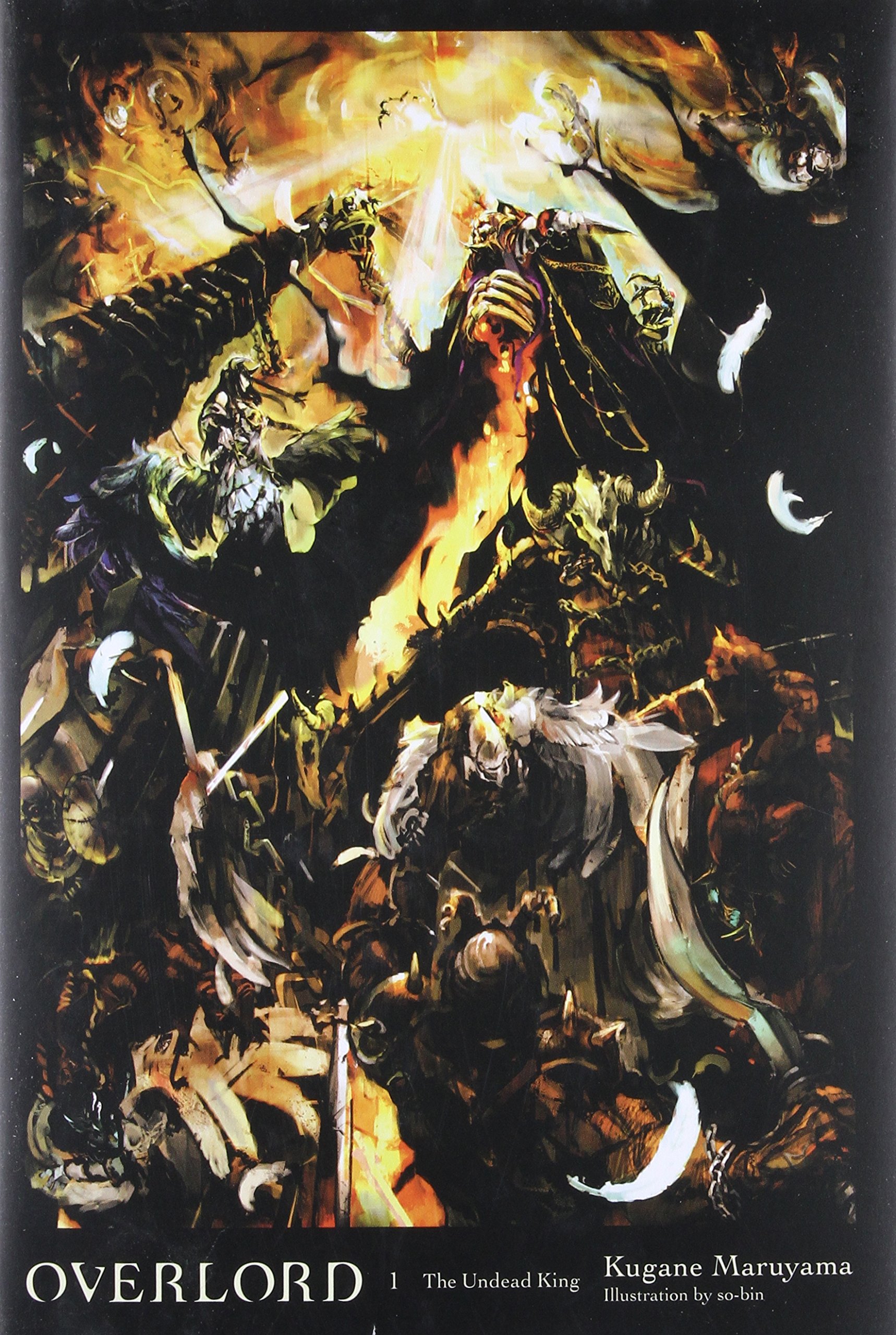
Based on these definitions, the Overlord novels by Kugane Maruyama and their adaptations (which I recommend) count as dark fantasy as well as isekai fantasy.
And finally, there’s a good chance evil can win. Bad politicians can stay in power while good ones may lose their heads. The Demon King can take over the continent and establish an empire. The witch may kill the princess and release the plague upon the land before getting slaughtered by the princess’s lover. Things may just go to shit.
Yeah, bleak. And under these parameters, series like The Witcher novels or some of my favorite isekai fantasy series from Japan, such as Overlord, The Rising of the Shield Hero, or Arifureta,* count as dark fantasy.
But given those parameters, doesn’t that make supernatural horror dark fantasy after all? Not necessarily. While some might prefer to use the term “dark fantasy” for their stories to avoid horror’s negative connotations in society, and the two genres do overlap, there are key differences. Namely, dark fantasy focuses on the monster and fantasy elements while horror uses the monster and fantasy elements.
Look at my own novel Rose, for example. The protagonist Rose Taggert is transformed into a plant/human hybrid by a magical book given to mortals by a nature god. Sounds very fantasy-esque. And if Rose was a dark fantasy story, it would follow Rose Taggert’s attempts to live a life and understand her place in the world now that she’s changed, as well as to understand this new magic dimension in the world around her. But it doesn’t. Instead, the magic is a means by which to place Rose in the power of the antagonist, Paris Kuyper. It’s a means to create the terror of not knowing how dangerous Paris is, nor knowing what he’ll do to her if she doesn’t respond to his desires as he wants her to. That’s why Rose is a fantasy-horror novel rather than a dark fantasy novel.
Similarly, Anne Rice’s Vampire Chronicles can be considered dark fantasy because they use the state of vampirism to explore psychological and philosophical truths and beliefs among the characters. If they were full-on horror, the vampires would be the means to terrify the readers. You know, like Salem’s Lot (which I need to reread, with a new adaptation on the way and all).
While some might categorize “Rose” as dark fantasy, how those fantasy elements are used distinguishes it as a horror novel.
And while we’re distinguishing between genres and subgenres, let’s talk about the difference between dark fantasy and grimdark. Grimdark is another subgenre of fantasy, characterized by apocalyptic, dystopian or hellish settings and a very bleak atmosphere, but still containing all those fantasy elements. So, what makes it different from dark fantasy, when both can contain those settings and atmosphere? According to Fantasy Book Fanatic.com, the difference is in hope:
“The concept of hope seems to be the primary differentiating factor between dark fantasy and grimdark. Hope is still able to be an integral theme in dark fantasy narratives. In contrast, the central theme of grimdark almost never entertains the possibility of hope. The central theme revolves around cynicism instead. This differentiation is vague at best, which is why many of the works of dark fantasy and grimdark are so easily confused.”
So what is dark fantasy? Well, by this definition, it is fantasy with darker or horror overtones. However, it distinguishes itself from horror by using the fantasy elements as a means to tell the story, rather than as a means to terrify the reader. Think vampires as tortured souls rather than vampires as supernatural man-eating monsters. And, unlike grimdark, there is still an element of hope in the story. Things may go to shit, but people are still allowed to hope.
My name is Rami Ungar, thank you for coming to my TED talk.
*Which, unlike the other two I just mentioned, will not appear on any of my anime recommendations lists. The anime did the original novels a poor service, which is a shame, because I devoured the first four books in a week, they’re that good. Check them out if you’re interested.
That’s all for now, my Followers of Fear. If you’re interested, I’m still taking orders for signed copies of Rose. Send an email to ramiungar@ramiungarthewriter.com for details. Or you can check it out on Amazon and Audible. And if you do check the book out, let me know what you think. In the meantime, I’ll be neck deep in Victorian England again, but I hope to put out another post very soon.
February is Women in Horror Month. Since women writers are a big influence on my writing–JK Rowling got me into storytelling in the first place, and Anne Rice helped pave the way for me to write darker fiction–I thought I’d recommend some stories for those who want to help support the month. You’ll see some familiar names here, but also some you may not be familiar with. Either way, I hope you’ll consider giving them a read.
Tiny Teeth by Sarah Hans. This is actually a short story by a friend and colleague of mine, but it is a scary one. Imagine a world where a virus turns children into dangerous, gnawing animals, and one woman’s experience in that world. You can find it on Pseudopod.org, a website where scary short stories are read by narrators and released as a podcast. Give it a listen. Guarantee you, it’ll be 45 minutes not wasted. Here’s the link.
Garden of Eldritch Delights by Lucy A. Snyder. This is also by a friend and colleague of mine, but it’s also a great collection of scary stories. The majority of them feature cosmic horror themes and entities, which I love, as well as intriguing characters and plots. A couple of the stories also incorporate sci-fi and fantasy themes, and feature a diverse cast, which is something I love to see. If you pick up Garden of Eldritch Delights, you will find it worth your time. Here’s the Amazon link.
The Amaranthine Books by Joleene Naylor. You’ve probably seen Joleene’s name around this blog before, but did you know she’s written an entire book series? She has, a vampire series called the Amaranthine books, and they all come highly rated. Even better, some of the books are free or under a dollar under the Kindle edition, so why not take the opportunity to read them? You can find all the Amaranthine books, and then some, on Joleene’s Amazon page.
In a Dark, Dark Wood and The Death of Mrs. Westaway by Ruth Ware. Technically, these are mysteries, but they have horror themes about them, so I’ll count them here. In a Dark, Dark Wood follows a mystery writer invited out to a bachelorette party by a friend she hasn’t seen in years, unaware of the forces conspiring against her. The Death of Mrs. Westaway stars a Tarot reader on hard times who finds out she’s received an inheritance from a grandmother she didn’t know she had, and what that inheritance entails for her. Both are terrifying and keep you on the edge of your seat with suspense. You can check out both further on the author’s Amazon page (and I need to check out more of her work).
Kept me on the edge of my seat the whole audio book.
Within These Walls and The Shuddering by Ania Ahlborn. No joke, Ania Ahlborn is one of the scariest writers I’ve ever had the pleasure to read, and I really need to read more of her work, as should you. Within These Walls follows a true crime writer as he and his daughter stay in the home of a Manson-like cult leader, and what happens while they’re there (I actually reviewed it a few years ago). The Shuddering follows a group of young adults as they go skiing at a mountain resort, only to discover the area has come under siege from a rather hungry enemy. Either one will leave you shaking in your boots! Here’s the Amazon page if you want it.
The Haunting of Hill House by Shirley Jackson. Come on, you know I had to include this. Even if I’m not a fan of this book, it’s undeniable that Jackson’s most well-known novel, and one of the most influential horror stories of the 20th century. Following a group of paranormal researchers as they explore the titular house and the effect the house has on them, this book is still a well-known classic in the genre, and some consider it required reading for fans and authors. It’s so well known, I won’t include any links for it (surprise!).
Interview with the Vampire by Anne Rice. Again, can you blame me? Whatever you think of the many sequels, it’s undeniable that Anne Rice’s debut novel has remained a classic for a reason. A journalist interviews a 200-year-old vampire named Louis, who recounts his creation in French New Orleans and his travels around the world looking for meaning and for more of his kind. It’s a haunting tale, the horror coming more from Louis’s psychological journey and despair rather than from the supernatural. As I said earlier, this novel also paved the way for my eventual turn to horror, so I can’t recommend it enough (and I’ll have to reread it someday). Again, no need for links. It’s that well-known.
What recommendations do you have for Women in Horror Month? Are you reading anything for it? Are you familiar with any of these books? What was your opinion of them?
That’s all for now, my Followers of Fear. I hope you find something good to read based on this list. I’ll be listening to The Accursed by Joyce Carol Oates this month on audio book, so maybe I’ll add it to a future list someday. I better get started soon!



















 Rami Ungar The Writer