Posts Tagged ‘Gothic horror’

As many of you know, last year I had a novel, The Pure World Comes, published on an app called Readict. The novel, a Gothic horror novel set in Victorian England, follows a young maid who goes to work at the estate of a mad scientist.

One year later, I’m excited to let you know that The Pure World Comes will be released in paperback and ebook on May 10th, 2022! Just 17 days from the time I’m writing!

I can’t wait to hear what you all think of the book now that it’s coming out in formats that are more accessible to readers. Those who read it on the app said it was really good. One or two people even said that one scene made the toilet scary! Now that’s an accomplishment!

By the way, I read that scene at an event back in October. It was so awkward and hilarious and I actually got compliments on portraying going to the bathroom from a woman’s point-of-view. Now that’s an even bigger accomplishment, if you ask me!

Anyway, let’s talk about The Pure World Comes. First, here’s the new cover.

You like? This cover was created by the artists at Rooster Republic Press, who also did the cover art for my short story Agoraphobia. They do some amazing work, and it shows in this latest cover by them. Not only did they bring the Hunting Lodge, the main setting of the story, to life with such brilliant art, but they also included sacred geometry in the illustration of the moon, which works well with the themes and plot of this novel.

Plus, it reminds me of some really amazing art covers I’ve seen, like the Charlie Bone books I read as a kid, with hints of that one cover for We Have Always Lived in the Castle by Shirley Jackson. Those are really eye-catching covers, so I hope that applies to this one.

As to how to get a copy, you can preorder from a variety of sites, especially Barnes & Noble and other sites. Not Amazon just yet. I’m using a different printing service than KDP Amazon, so Amazon’s being annoying by not allowing you to preorder through them. You have to wait till May 10th to get through them (unless they take their time approving them. Which I totally expect them to do). But all the other sites? Yeah, already available for preorder.

Anyway, I hope you decide to check out the book. I’m really proud of The Pure World Comes and I can’t wait to see what you all make of it. Do you think it’s scary? Do you like the characters? Did I research the Victorian period well? And if you read the book, I hope you let me know what you think. Positive or negative, I love reader feedback. It helps me improve as a writer and gives readers an idea of whether or not the book is for them.

And if enough people read and like the book, it might lead to an audio book. I would be very proud if that happened.

That’s all for now, my Followers of Fear. I’m off to make sure the world knows about this new story. You can check it out by clicking on the links below. Until next time, good night and pleasant nightmares!

Barnes & Noble

Apple Books

Kobo

Photo by Pedro Figueras on Pexels.com

I’ve heard this term thrown about a few times since January, first in the new Scream movie and most recently in an analysis of a horror film on YouTube. “Elevated horror.” And the speakers, whether in in the Scream movie or in the YouTube video, made it sound like it’s a recognized subgenre of horror with its own staple of tropes and trappings. Like slasher and its killers and gore, or Gothic with its ancient, diseased settings and corrupting influence.

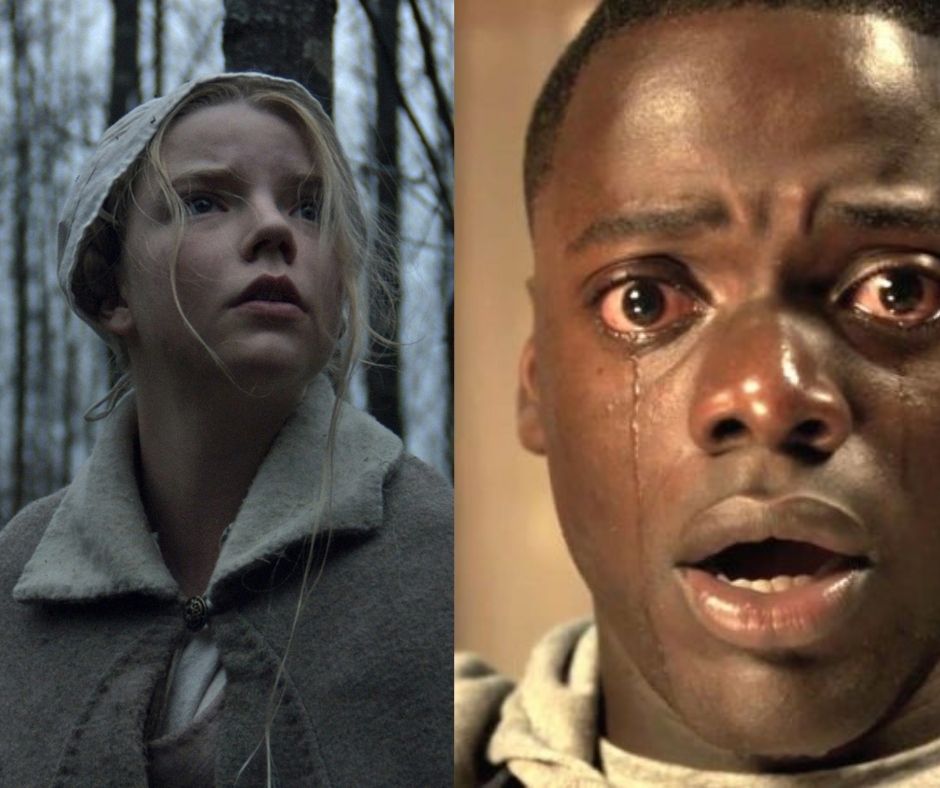
The thing is, it isn’t. Elevated horror isn’t an actual subgenre of horror. I’ve consulted with dozens of writers on this (thank you, Twitter and the Horror Writers Association Facebook group) and it’s not a subgenre. It seems like a subgenre of horror at first glance when you look at works referred to elevated horror. In movies, films referred to as elevated horror include The Witch, Babadook, It Follows and Get Out, among others: they’re horror stories that focus more on probing psychological drama, characters and metaphor than blood and gore or supernatural horrors. Often, there’s a powerful social commentary being presented through the narrative, such as Get Out‘s commentary on race.

In terms of literature, “elevated horror” might have all of these as well as flowery language. It might be almost called “literary horror,” because there’s an emphasis on wording the story nicely and making it just too dark to be called “literary fiction.” Examples include The King in Yellow by Robert Chambers, Interview with the Vampire by Anne Rice, The Deep by Alma Katsu, and A Cosmology of Monsters by Shaun Hamill.

And, most importantly, “elevated horror” can sometimes cross over into other genres, such as thriller, literary, or even comedy.

Can you really say The Witch and Get Out belong in the same subgenre?

Sounds like a subgenre, doesn’t it? But it’s not. The works called elevated horror are all as different from each other as roses are to tulips are to primulas. All flowers, but all different kinds of flowers. Let me explain: The King in Yellow and The Deep are cosmic horror mixed with deep psychological themes, The Witch is some cross between folk, religious and historical horror, and Get Out‘s searing satire makes it borderline horror-comedy. In fact, it was nominated at the Golden Globes under categories for comedies or musicals!

Yet all of them are given the designation of elevated horror. So, if it isn’t a subgenre, what is it?

The conclusion I’ve come to after speaking to numerous other writers is that elevated horror is actually horror films taking place in elevators.

Just kidding, that’s elevator horror, and the only example of that I can think of is 2010’s Devil.

No, “elevated horror” is a marketing term. And like all marketing terms, it’s directed towards a specific audience. Who is this target audience? It’s people who normally wouldn’t check out horror because they fear it’s low class, dangerous, or degenerate. They may want to check out horror or be curious, but the stigma still attached to the genre keeps them from doing so. Either that, or they won’t check it out unless a work is given a specific designation.

Calling something “elevated horror” is basically saying, “This isn’t like other horror stories, where half-naked teens are voyeuristically killed with tons of blood and gore, or where supernatural entities menace children in sewers. No, it has nuance and social commentary! There’s psychology and drama and fleshed out characters! You can be respectable while enjoying this!”

In other words, it’s another way of something is high-brow. “There are no explosions and superheroes here. No aliens or elves. No star-crossed lovers up against the odds. Only real people having real life situations, or real people in situations that are absurd but it’s okay, because it says something important about society.”

I almost wish it was a subgenre. I might have found a home for my ballerina-meets-the-King-in-Yellow story already (still working on that, give it time).

Pinhead may not be from an elevated franchise, but that doesn’t make him or Hellraiser any less awesome.

And the problem with this marketing term is it’s misleading. By calling certain movies or books “elevated horror,” it’s labeling all other horror as “trash,” or at the very least “common.” Either way, the designation puts other horror stories down. And that’s a shame, because there’s such good horror out there. Dark Harvest, Kill Creek and Salem’s Lot aren’t high brow, but they’re great stories that thrill and can leave their readers up late into the night. Same with The Thing or the Hellraiser franchise: they may never win Oscars, but goddamn are they scary, and the latter has led to one of the most memorable characters in the slasher genre.

I’m not trying to put down the term. I’m just saying we should understand what it means, both for works designated as such and those that aren’t. And if it lets you enjoy horror, great. Just make sure to check out works that aren’t “elevated” and whose creators don’t really think or care if their work is called that.

Personally, I can see some of my work being called elevated, but I’ll just say that I was trying to write a fun story and wanted others to enjoy it as well.

That’s all for now, my Followers of Fear. After getting my thoughts on this topic out, I’m off to dream of beasties and ghosts. Until next time, good night and pleasant nightmares.

So, I was hoping to have some big news on at least one project by now, but…well, you know what they say. Man plans, God laughs. Or maybe it’s Rami plans, the entities foolish enough to be my enemies get in my way. I don’t know.

Anyway, I thought I would just do an update on the many projects I’m working on, as I don’t know when I’ll have any big news on any one of them. And at the very least, it’ll let you know where I’m at with things and with life in general.

Hannah and Other Stories

As many of you know, I have a collection of seven original short stories being released by BSC Publishing Group. And as I mentioned in my post on mental health during the publishing process, BSC is sending stories one at a time with editing notes so I don’t feel overwhelmed with the amount of work I have. Understandable, considering that at least two of those stories are actually novellas.

Anyway, right now I’m just waiting on the next story with edits, which will hopefully come soon. Once it does, I’ll start work on it immediately so I can get back to waiting for the next story again. I’ll keep you posted.

The Pure World Comes

My Victorian Gothic horror novel and love letter to Victorian England, The Pure World Comes follows Shirley Dobbins, a maid living in Victorian England who goes to work for a mad scientist after the deaths of her employers. It was published last year on an app, but now it’s going to be published as an ebook and paperback so that more people can access and read it. At the moment, I’m just waiting on the new cover. Once I have that, I’ll be able to start on the process that will eventually end in putting it online, selecting a release date, and making it available for preorder. Hopefully we can start on all that by the end of the month.

As for an audio version…well, that will depend on a few things, including how well the book does in paperback and ebook. If it does happen, I’ll be over the moon. If it doesn’t, it’s sad but hey, sometimes those are the breaks.

That Which Cannot Be Undone

As many of you know, some of my fellow Ohio horror authors and I formed a small press with the goal of releasing an anthology of Ohio-based horror stories, That Which Cannot Be Undone. At the time of writing this, we have most of the stories from the contributors and the editor is going over them with a fine-toothed comb. My friends and I are also regularly meeting and making sure we stay on time for our October release while also producing one hell of an anthology. We can’t wait for you to read what we’ve created.

Other Novels

Crawler: I know some of you were really excited when I said I was going to write a mummy novel. Those same people were saddened when I put plans to write that on hold due to Hannah being accepted and wanting to focus more on that. That being said, I think I might be able to start working on it later this year. Still a lot of things up in the air, but if nothing else gets in the way, I could start on it before autumn. If I do, I’ll let you know.

Toyland: Still plan to get this bizarre Gothic ghost story published. I’ll probably give it another round of editing before I submit it anywhere, though. It’s a complex story with lots of moving parts, so I want to make sure everything holds up before I let anyone else read it.

River of Wrath: unfortunately, I think I need to put this in the proverbial trunk. I’m saddened, since I still like this story and I had a hell of a time writing it (and for those of you who know what it’s about, pun totally intended). But I’ve had a lot of time to think regarding this novel as I’ve sent it from place to place to place, and I’ve come to realize that, as much as I love the novel, it does not reflect my best work and I don’t think, even if I made changes, it would be that much better. Hell, it might not even be the original novel I set out to write when all is said and done. (Again, pun totally intended.)

So, it hurts, but in the trunk it goes. At least the lessons it gave me will always be with me. And I now know more about Dante’s Inferno than I ever thought possible. Never a bad thing.

Shorter Works

Over the past several months, I’ve been writing a bunch of shorter works. Right now, I’m up to one novella, four novelettes, and three short stories. And yesterday, I started what will probably be a second novella. I like to think they’re all spectacular, though some of them definitely need more work. Anyway, once I’m done with this current project, I’ll spend time polishing them and trying to find homes for these stories before I do anything else that’s new (and that includes Crawler). Hope you get to read them soon!

Anything Else?

Well, there is, but not anything worth writing a paragraph about. At least, not yet. Hopefully I can tell you all about some of the things developing in my life in the near future.

Anyway, that’s all for now. I’m going to bed. In the meantime, thanks for your continued support of my writing career (and for even reading my books every now and then). Until next time, good night and pleasant nightmares.

You’re probably reading this title and wondering what’s going on in my life that would make me write a blog post with such a title. Well, I’m not planning on going to an ashram in India or a monastery in Tibet to find enlightenment, if that’s what you’re wondering. So not the right time for it.

No, the reason why is, between my limited time and all that’s going on, I have to refigure where my priorities lie.

For one thing, there’s Cracked Skull Press and That Which Cannot Be Undone. The campaign is in its latter half, so I need to spend a lot more time focusing on making sure that it’s a success. It’ll involve a lot of man hours, networking and other tasks. So I’ll have to set aside more time to working on that and not to writing. I’ll need to if we’re to make the remaining amount of funding in our budget.

Speaking of which, if you would like to help us create a kickass horror anthology, or you’re just curious, you can find more about the anthology, the campaign, and the rewards here: https://www.kickstarter.com/projects/crackedskullproject1/that-which-cannot-be-undone-an-ohio-horror-anthology. We’ve been working hard on making sure we have an awesome anthology with talented horror authors and we can’t wait to share it with you. Thanks in advance for your support. We appreciate it.

If you would like to check out the campaign and help me and my friends put out a great anthology with our stories inside, click the link above.

Even after the campaign is done, I have two books to release this year. I’ll be putting out a paperback and ebook of The Pure World Comes (plus an audio book if fate is kind), my Victorian Gothic horror novel. That probably won’t take too much time, as all I need is provide a good cover and ensure it’s formatted right. However, Hannah and Other Stories will need A LOT of editing done. Those seven stories will each require their fair share of attention, and it wouldn’t surprise me if some, like “The Autopsy Boy and Doctor Sarah” or “What Errour Awoke,” may need significant portions rewritten.

Add in all that, plus one story that’s currently being edited for a different anthology and other stories that might be accepted into other anthologies and magazines, the probability of a third draft of Toyland (or is it the fourth?), conventions and book expos, and a whole lot of other stuff that will or could crop up, and I will have to put a hold on the writing for a while.

It’s a shame. I was really enjoying working on this story where I got to terrorize neo-Nazis. And I had a great idea for a story based around Cinderella I was looking forward to writing. And this will probably push my mummy novel Crawler even further back.

But as things stand, my life won’t handle anymore projects. Still, if any of these stories find a home, it’ll be worth the pause. Because as long as I’m able to keep sharing my twisted, terrifying stories with you all, that’s all that matters.

My works can be found in many great booksellers. Check them out and let me know what you think.

And if you want to help things along, you can always check out my works that are already published and leave reviews online. Those help me immensely by letting me know people are reading my stories and are also letting other people know if my stories are worth their time. You can find my stories on Amazon, Barnes & Noble, and from other great booksellers. Just search Rami Ungar and see what comes up!

Well, that’s all for now, my Followers of Fear. I look forward to updating you with the latest on all the projects I’m part of or will be hopefully be part of soon. Until next time, good night, pleasant nightmares, and Happy New Year.

Oh, and before I forget, I was recently featured again in the Columbus Jewish News and interviewed on the website Bookishly Jewish. And my fellow writers at Cracked Skull Press were on the podcast Necrocasticon recently too. Please check them out if you get the chance. Thanks!

Anne Rice. She may be gone, but she is still definitely with us.

You know, I’ve actually had the opportunity to interact with Anne Rice a few times. Not in person, mind you, but over email and social media.

In high school, I sent her an email after reading her novel Angel Time (she had an email that was known to the public back then). I liked the novel for the most part, but I was upset as a Jew that one of her Jewish characters became a Catholic nun just to be closer to her father. She actually emailed me back, saying that I had a fair point and would try to be more sensitive to such matters. It was a crazy cool moment. A few years later, about a year into writing this blog, I wrote a review of The Wolf Gift (which you can read here), her first werewolf novel, where I compared her work to various kinds of food (I had just eaten lunch). Somehow she caught wind of my review and posted it on her social media. It’s still one of my most viewed posts, and it’s been nine years since then!

I had a few more interactions with her through email and social media up until 2016 or 2017, but I was happy with what I got. And as she kept writing, I hoped I would be able to actually meet her in person someday.

Yesterday, December 11th, 2021, Anne Rice passed away due to complications due to a stroke. She was 80.

Like many, I am heartbroken. I first discovered Anne Rice as a preteen with Interview with the Vampire. As I’m sure many of you can agree, it was a revelation. For me, I hadn’t read any story whose world felt as immersive as the world of Louis and Lestat since reading Harry Potter years earlier. I could almost smell New Orleans, here the sounds of 19th century Paris! The language was so beautiful too! Poetry without being poetry, filling my mind and painting extraordinary images. It made me realize just how powerful language could be, more than any other novel I had read up till then. And finally, I empathized with and grew to truly love the characters. While a lot of their emotional and philosophical turmoil went over my head at that age, I understood that they were going through a lot and felt for them.

This would only increase as I continued to read her works throughout my teens and twenties as I read her new work. Reading her works often felt like meeting old friends, and at the same time, Anne Rice, who put so much of herself in her books, began to feel like a friend and a mentor. Often, her writing would influence mine as much as Stephen King’s did, especially as I’ve gotten older. That impression deepened when I got on social media, where Rice was active with her fan community, whom she affectionately called the People of the Page.*

I may have to read this again very soon. I haven’t read it since I was 11 or 12. I wonder how it will affect me now.

It pains me, and so many others, that we won’t be able to read new stories by her or see her social media posts anymore. That next year’s Ramses the Damned novel, if it releases on time, will be her final novel. That she won’t be able to see the TV adaptations of The Vampire Chronicles or Mayfair Witches trilogy being developed at AMC when they premiere. That one of the greatest horror writers of the 20th century, as well as one of the greatest writers of the 20th century period, is now gone from this world.

Luckily, even though Ms. Rice has left the Savage Garden and is probably now getting all her spiritual, philosophical and cosmological questions answered, her works remain. She has, like many of her characters, achieved a form of immortality, but this one won’t cut her off from the world of humans. Instead, she’ll always be with us, a spiritual force beyond matter and body living in our minds and our souls. So, even though many of us will never have the chance to meet her in person, she will still be able to influence and touch us with her powerful Gothic epics.

Next year, there’s supposed to be a public memorial in New Orleans for her, one year after her family lays her to rest. I don’t know if I’ll be able to go, but if not, I’ll at least be able to raise a glass of wine to her tonight. A sweet red, which I’m sure she would have appreciated. And when those TV shows premiere, I, and probably many others, will raise a glass again and think of her. Anne Rice, the true Queen of the Vampires, and someone who will be with us long after she’s joined the spiritual plane.

What influence did Anne Rice have on you? What were your favorite books by her? Do you have any stories you want to tell about her? Let’s discuss.

*See where I got the idea to name you all the Followers of Fear?

Photo by Pixabay on Pexels.com

Recently on Twitter, another author I’m acquainted with tweeted that she didn’t think she would ever reach the levels of the authors she admired. She then went on to say that while she aspired to “champagne quality” writing, her stories usually ended up being “boxed wine” quality.

First off, what’s wrong with boxed wine? The first sips of wine I liked came from boxes. And price, prestige, method of preparation, or recommendation of experts is no guarantee of quality or tastefulness. Just check out this hilarious video on the subject.

And second, just because you think your work isn’t as good as your heroes or as prestigious as other stories doesn’t mean it’s bad. For starters, you think the writers you aspire to be don’t have their bad days? Robert Heinlein, Isaac Asimov and Frank Herbert probably bemoaned that they would never come up with stories as influential as those of Mary Shelley, HG Wells and Jules Verne. Every professional manga artist, including those who have made the most famous series like Eiichiro Oda, Rumiko Takahashi, and Naoko Takeuchi, have lamented they’ll never be as good as their favorite artists despite all proof to the contrary. And God knows HP Lovecraft, one of the most influential and controversial writers in horror, worried that he would never measure up to the likes of Edgar Allen Poe, Robert Chambers and Arthur Manchen.

(And if I’m being honest, between his prejudices and his hyper-Victorian style of writing, he never did.)

Another thing to keep in mind is that just because another work is considered “prestigious” doesn’t mean it’s good. In fact, the word prestige comes from the Latin word for “illusion.” And that’s what prestige is: an illusion. A bunch of critics or purveyors or publishers came together and agreed that because a work of art has certain qualities or is being sold in a certain place (like a fancy, pretentious art gallery), it’s considered “good” and worthy of being worshipped. But beyond making sure that it’s been edited well, that’s no guarantee of quality.

An example of a bestseller whose quality is questionable.

Neither is being a bestseller, honestly. The way a bestseller is defined is often based on how much a publisher thinks a story will do and how much marketing is done for the book. Most bestseller lists can be gamed for profit, such as happened with Lani Sarem’s YA novel a few years ago. And many bestsellers fade into obscurity after a few years, rather than having staying power. It has nothing to do with quality of the story itself (just look at my review of Nothing But Blackened Teeth, which has attained bestseller status, if you don’t believe me).

You know what is an indicator of quality (beyond editing and not having anything offensive in the content)? An audience’s reaction. Fiction is often an escape and helps audiences heal from our awful reality, or at the very least bring joy and give readers a feeling that their interests are shared by others. So if your work brings people joy, then that’s a great sign of its quality. Doesn’t matter if it involves college professors and literati types scheming and having sex with one another; fighting aliens in another solar system; or having a love affair with a powerful man in a universe where humanity is divided into castes based on supposed wolf pack heirarchy.* Just as long as your audience gets joy from reading it, then it’s quality.

You especially see this in the horror genre. You have your Gothic and ghost stories with flowery language; serial killer thrillers that gush blood and gore; Nazi zombies that bite your face off as they propagate a toxic and deadly ideology; and even stories around killer cows or living poop monsters or other ridiculous ideas. All those are stories in the horror genre, and very few within the genre will judge you for it.

Plenty outside the genre will, though. Horror as a whole is still looked down upon as a genre, even as it proves more profitable and popular every year. But that’s another thing: tastes and what is considered prestigious changes all the time. Shakespeare, opera and even lobster used to be considered low-class. Now they’re fancy and high-falutin. Perhaps in a hundred years, your “boxed wine” fiction will be taught in high school and college classes, working on horror and superhero movies is a highly sought-after privilege, and a restaurant is considered luxury if it serves real bacon. You never know.

All that being said, this might not make you feel any better about your stories. These feelings might come from stress, anxiety, depression, or dating a demon fairy who scares people with a twitch of the face rather than trying to write stories. But if learning all this helps you feel like your work is champagne quality, then mission accomplished. Because no matter what your story is about, how flowery the writing is, or who’s hyping it up or buying it, if your work is enjoyed by someone, that’s what matters most.

Better have an editor check it over first. They catch stuff you’ll never see in a million years before you get to the publishing phase.

You may think your story is a boxed wine, but that doesn’t mean it’s bad or low-class. The exact opposite, in fact.

That’s all for now, my Followers of Fear. I’ll be back Monday for something special (you probably know what already). Until next time, good night, Happy Thanksgiving, and pleasant nightmares!

*This is an actual subgenre of romance, and it is apparently very popular. I won’t judge anyone who likes it, but I will say that wolf packs aren’t actually based around alphas, betas and omegas. Research has shown that wolf packs are really alliances of small, nuclear families and lone wolves adopted into the pack. The more you know.

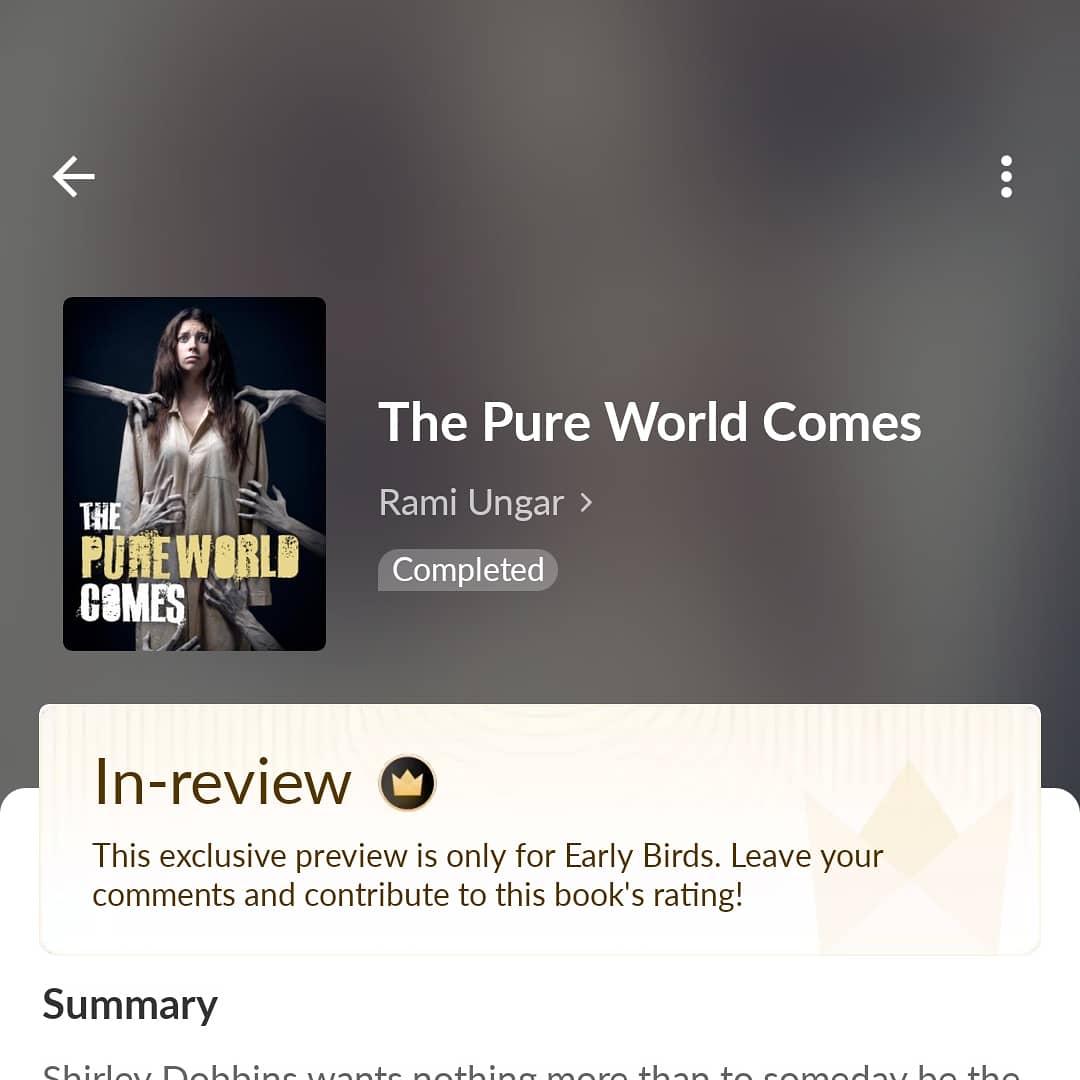
Last month, you might have heard about a novel of mine, The Pure World Comes, being accepted for publication. To be specific, the story was accepted at VitalTek Inc, the owner of the Readict literature app. Here’s the blurb I wrote up for the novel:

Shirley Dobbins wants nothing more than to live a quiet life and become a head housekeeper at a prestigious house. So when she is invited to come work for the mysterious baronet Sir Joseph Hunting at his estate, she thinks it is the chance of a lifetime. However, from the moment she arrives things are not what they seem. As she becomes wrapped up in more of the baronet’s radical science, she realizes something dark and otherworldly is loose within the estate. And if left unchecked, it’ll claim the lives of all she holds dear.

Not a bad summary for a Gothic horror novel set during the Victorian era, is it?

What appears on my phone when I pulled up The Pure World Comes today.

Anyway, I’ve a nice surprise for you. As of this morning, The Pure World Comes has been released on Readict’s app! That’s right, it’s out!

Honestly, it feels a little unreal. Things happened so quickly.

Regardless, I’m excited that the book is out and I can’t wait for you all to read it. You can get the Readict app from your app store of choice (I think I use Google on my phone). Please make sure to check it out. And if you do read it, please let me know what you think. Positive or negative, I love reader feedback, and it helps me out in the long run.

As for whether or not it’ll end up on ebook or paperback, I’ll keep that to myself for now. But I never say never.

Of course, I still have plenty of stories in paperback and ebook if you’re interested. I’ll leave links below in case you want to see. I wonder, will you check out my collection of short stories? Or my serial killer thriller? Or the fantasy-horror story of a young woman turned into a plant creature? Whatever you choose, I hope you enjoy it.

That’s all for now, my Followers of Fear. I have a busy evening ahead of me with this story out. Until next time, good night, happy reading, and pleasant nightmares!

The Quiet Game: Amazon, Barnes & Noble, iBooksSmashwords, and Kobo.

Rose: Amazon US, Amazon UK, Amazon Canada, Audible

Snake: Amazon US, Amazon UK, Amazon Canada, Barnes & Noble, iBooksSmashwords, and Kobo

Agoraphobia: Amazon US, Amazon UK, Amazon Canada

Mother of the King: Amazon US, Amazon UK, Amazon Canada

Well, this was a great day. I got out of work early (long story, don’t ask), which allowed me to finish the third draft of The Pure World Comes around 5:30 PM. And that was great, because by coincidence I was going to meet some friends who had also had their vaccinations for dinner and drinks. So I had the opportunity to turn a good night out with friends into a celebration.

Of course, then I had to wait till I was good to drive before coming home. And then I had to take a shower and check my email and whatnot. Hence why I’m writing this so damn late. Sorry about that. But hey, sometimes that’s life.

So, if you’re not aware, The Pure World Comes is a Victorian Gothic novel I wrote last year revolving around a maid who goes to work for a man who could be charitably called a mad scientist. I did a second draft a few months ago and sent them off to some beta readers for feedback. After getting their feedback and finishing the latest draft of River of Wrath, I started on the third draft. And after only a week or so, the third draft is completed!

Now, this story has always been a lot of fun for me to work on. I’m a huge fan of the Victorian era of British history (see my reasons here), and this novel was a love letter to that era. But this draft was especially fun because I got to read my beta readers’ comments while I worked. They really enjoyed the story and had a lot of good suggestions to improve the story. It’s great hearing what people think of your story (which is why it’s so important to leave reviews after reading an author’s story, by the by). But getting such positive feedback while the story’s still being refined was especially nice and made me hopeful for the story’s future.

Speaking of which, what is the future of this story? Well, it’s late, so I’m not going to do anything further with it tonight. However, tomorrow I’m going to try to submit it. As I said when I finished River of Wrath, I usually start shopping novels after the third draft. And based on the feedback I got on the second draft and the improvements I’ve made, I think this draft has a good chance of finding a home pretty quickly.

As for my next writing project…tough to say. I’ve been mulling a few ideas for short stories, especially ones I could write for specific anthologies. On the other hand, I recently had an idea for another story set in Victorian England, and I at least want to develop it a bit more. Problem is, that story has a good chance of becoming a longer project, maybe another novel if I’m not careful (and I’m not always too careful about word length). So, I might have to mull it a few days.

Whatever I choose, so long as I’m having fun with it, it’ll be okay.

Well, that’s all for now. I’m heading to bed so I’m not a wreck at work tomorrow. Until next time, good night, pleasant nightmares, and please consider getting vaccinated if you’re able to. It’ll protect your health, the health of others, and maybe allow us to move out of this insanity of a pandemic sooner.

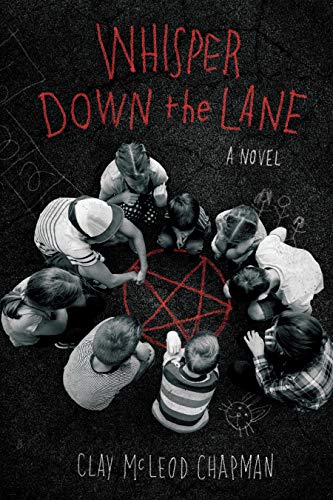
As many of you know, I recently read and reviewed Whisper Down the Lane by Clay McLeod Chapman (read my review here). And now, I’m very happy to let you know that I recently was able to connect with Mr. Chapman and pick his brain a bit. So you know what happens next, Followers of Fear: it’s a brand new author interview!

So, without further ado, let me introduce Clay McLeod Chapman!

Rami Ungar: Clay, welcome to the show. It’s good to have you. Please tell us about yourself and a bit about what you do.

Clay McLeod Chapman: First off, just to say it, thanks for having me out… I really appreciate you inviting me to answer some questions and chat about Whisper Down the Lane.

So. My name’s Clay. I was born at the base of the Blue Ridge Mountains in Roanoke, Virginia, and eventually raised in Richmond. I lived in Virginia for pretty much all my childhood, with a year in North Carolina, before moving up to New York. That’s been home for over twenty years now.

As far as my work is concerned, I’ve been pretty damn fortunate to live a humble existence writing and telling stories in a few different mediums… I get to write fiction, both short stories and novels for readers both young and old, while also writing for comics, film and television, theater and podcasting. It’s been a master-of-none kind of life.

RU: Tell us about Whisper Down the Lane. What is it about, how did you come up with it, and what was it like writing it?

CMC: Whisper Down the Lane is a story told in two different time-lines—one set in 1983 and the other in 2013—and how the moral mania of the Satanic Panic period of the 80s continues to echo out into our contemporary culture. The basic premise is: Sean, five years old, tells a little white lie to his mother. That lie ripples out and effects his family, his friends and classmates at school, the teachers and the administration, on to the community at large and then consuming the rest of the country…

Now, imagine thirty years later, meeting a man named Richard. He’s a newly-married teacher with a stepson. Life is good, until one day, the lies that Sean told decades ago somehow seem to manifest themselves within Richard’s life. The stories Sean made up as a boy are becoming true for Richard.

The past is never quite through with us, I guess you could say, no matter how hard you try to run away.

The idea for Whisper Down the Lane came about when I had a dinnertime conversation with my mother about a particular moment that I remembered from my childhood… that she insisted wasn’t true. It was unnerving to me because the two of us couldn’t reach a consensus point on this specific event that I would’ve sworn was true, but she was pretty emphatic was not. If she was right and this memory wasn’t real, what else about my childhood was I wrong about? What else could I have made up in my imagination? This led me to think a lot about false memory syndrome or repressed memory therapy, which was one of the foundational aspects to the Satanic Panic period… planting the seed for Whisper.

Writing the novel was pretty terrifying, to be honest. I’m not an author who comes to the table with a lot of confidence, and this project in particular always threatened to get away from me. I had very little self-esteem while writing it, essentially working in a constant state of panic… which I think, to a certain extent, actually aided in the paranoia that runs rampant throughout the narrative. Not that I personally recommend writing anything under those conditions.

RU: The story is heavily influenced by the Satanic Panic and the McMartin preschool trials of the 1980s. Do you have any memories of those events and did they have any influence on the book?

CMC: As a child of the 80s, essentially living in a Spielbergian lens flare, I do remember the vaguest hints of Satanic Panic. I definitely didn’t know about the McMartin preschool, but I was certainly entrenched in stranger danger and the vocabulary of the devil… As children, my friends and I were told to always watch out for the white van with no windows that prowled our neighborhood. I vividly remember seeing with my own eyes a spray-painted pentagram on the walls of our neighborhood swimming pool. It was a wild time to be a kid, because our parents essentially let us loose after school to Schwinn throughout the neighborhood with zero supervision… It was amazing we didn’t break our necks or get run over. And yet, there were these warnings from our parents about some ethereal threat: Men we didn’t know who would lure us into their cars with promises of candy or long-haired teens smoking cigarettes and spray-painting pentagrams while listening to heavy metal music. Our parents made boogeymen out the things they were scared of, in order to frighten us into complicity, but I think in an odd way it just made these potential risks feel all the more mythic. This all rooted the writing the novel in a pretty personal place… I got to write about what scared me as a kid. Ozzy Osbourne or the razor blade in the chocolate bar. 

RU: I found the characters and the paranoia that spread among those characters to be very believable. How did you accomplish making these characters and their terror feel so real?

CMC: Well… whew. Thanks for saying that. It’s a huge relief to hear. I’m a big fan of Poe and the unreliable narrator, so for Richard in particular, I wanted to map out the mental trajectory of a narrator losing his mind. You have to start with a sturdy foundation before you can really chisel away at the bedrock below a character like that… so I found myself really having to exercise restraint before going batshit. This book needed to be a slow burn. Lay down the mental/emotional landscape first, then destroy it.

For Sean, which was a more difficult section to write, everything had to be filtered through the perspective of a five-year-old and somehow still feel believable. Writing through a child’s eyes, I feel, can be the kiss of death for a lot of books because the prose itself seems to talk down to the reader, as if they were a child themselves. It’s a tough balance to get the innocence and naiveté to ring true, while also keeping a toe-hold of a narrative that extends beyond the purview of a child… Third person certainly helps.

But here’s the truth: For both Richard and Sean, I’m just writing about things that scare me. I was—to an extent—that kid growing up, so I simply chose to write from a perspective of what frightened me as a boy. Now I’m a dad who’s utterly petrified of sending my sons into this dangerous, terrifying world… so I get to write about that newfound fear of mine. When the horror is personal, when the horror comes home, I think it simply rings true in a way it wouldn’t otherwise.

RU: What was research for the novel like? Did you learn anything that you didn’t already know that surprised you?

CMC: This book was a complete joy to research. I say ‘joy’ and I don’t mean to sound glib. I find the whole period utterly fascinating. I got to read so many amazing books on the subject… I’d be remiss if I didn’t mention my most favorite: We Believe the Children by Richard Beck. It’s an absolute must for anyone who’s curious about the Satanic Panic period.

RU: You also have experience in the comics and film industries, among others. Can we maybe look forward to a graphic novel or movie adaptation of Whisper?

CMC: Well… I’d be lying if I didn’t say I would happily sell my soul to the devil for a film (or television) adaptation.

RU: Wouldn’t we all. Now, I know you had a novel accepted by the same publisher as Whisper. Can you tell us anything about that book?

CMC: I can’t say much about the next book quite yet… It’s a ghost story, though, which I’m really excited about. I wanted to write a haunted house story and essentially spent most of my quarantine imbibing as much gothic literature as I could. We’ll see how much of it seeps into the next book, but I’ve got high hopes.

RU: Finally, data to back up my claim that people would be reading/producing a lot of Gothic and haunted house stories during this pandemic (see my initial prediction here).

Anyway, when you’re not writing, what are you doing with your time?

CMC: Those damn kids, man… I’m telling you. Raising children during these uncertain times. I’m just keeping their lung tissue as clean as humanly possible.

RU: For which I wish you the best of luck. I have enough trouble with my own lungs and people not wearing masks around me. Now, what advice would you give other writers, regardless of background or experience?

CMC: It’s an old saw, but it’s honestly the best advice—the only advice—anyone should ever give or follow: You got to put in the time. You got to write. I’ve written so much junk, and I still do… But I have to get it out of my system. I need to exercise the muscle of my imagination in order to exorcise these stories. If I don’t write them out, they just get clogged in my head. Are they all worth reading? Absolutely not. But they won’t be haunting me any longer. I’m free.

RU: I hear that. Final question: if you were stuck on a desert island for a while and could bring only three books with you for entertainment, which ones would you bring?

CMC: Geek Love by Katherine Dunn. Vice by Ai (or The Collected Poems of Ai). The Tin Drum by Gunther Grass.

Thanks so much for chatting with me! This was a total blast… Looking forward to chatting some more!

RU: Thank you for stopping by. Please let us know when your next book comes out and we’ll get you back on the show!

If you enjoyed this interview, you can check out Clay McLeod Chapman on his website, as well as Twitter, Instagram and Facebook. Make sure to also check out Whisper Down the Lane (after reading my review, of course). And if you’re an author with something coming out soon and would like to be interviewed, consider sending me an email at ramiungar@ramiungarthewriter.com. If I’m able, we’ll make some magic happen.

That’s all for now, my Followers of Fear. I’m going to take a walk before I get to work on dinner and watch a movie. Until next time, happy reading, stay safe and pleasant nightmares!

I think I’ve been hearing buzz about this novel since it was released last year. However, I only just got around to reading it recently (or more accurately, listening to it on audio book). I had somehow managed to stay spoiler-free despite the buzz, and knew nothing beyond the fact it was a Gothic novel set in 1950s Mexico. And knowing nothing, I was going in expecting something amazing.

Mexican Gothic follows Noemi Taboada, a young high-society woman living in Mexico City in 1950. That is, until a mysterious letter from her cousin Catalina arrives at the family home. Concerned, Noemi is sent out to check on her cousin, who has been living in the countryside since her marriage to a mysterious Englishman named Virgil Doyle at his family’s estate, High Place. When she arrives, she’s not surprised to find things are not what they appear. However, the biggest surprises are yet to come. And if Noemi’s not careful, she’ll find these surprises may keep her from leaving High Place. Forever.

I can see why this novel was nominated for a Bram Stoker award, it’s excellent!

For one thing, the language this book is written in is just beautiful, like a Victorian novel without being too stuffy or overly wordy and dramatic. From the opening chapters, I felt like I was listening to the sort of writing I aspire to write (maybe someday I will). And Moreno-Garcia uses this brilliant language to not only bring the novel to life in your mind, but to bring out this strong sense of atmosphere and dread. I could almost see High Place and feel the horror that Noemi felt.

Speaking of which, I loved Noemi. She’s a very spunky young woman who refuses to compromise or let anyone tell her what to do just because she’s a woman. I loved watching her go up against the stodgy, stuffy Doyles with their rigid ways and gloomy lives, as well as how she refused to submit.

In addition, Mexican Gothic‘s story has a unique twist on the concept of a haunted house. I won’t go into details, because it’s more fun for you to read it yourself. Let me just say, it’s different than anything I’ve read and you’ll probably find it pretty clever on a number of levels.

I can’t think of any real downsides to this story. If I did, it would be nitpicking on my part. I will warn some readers that there are some things in the novel that might be triggering to them. One of the characters turns out to be…skeevy, to put it mildly. Just warning you.

In any case, Mexican Gothic by Silvia Moreno-Garcia is a wonderful addition to the Gothic horror genre. On a scale of 1 to 5, I’m giving it a 4.7. Wonderfully written, ingenious and spooky. Pick up a copy and find out for yourself why people are raving about this book. Preferably before they decide the Bram Stoker winners in May.

That’s all for now, my Followers of Fear. Until next time, happy reading and pleasant nightmares!