Posts Tagged ‘living and life’

So the other night on Twitter, I see Richard Chizmar (you know, that author/publisher I interviewed a while back?) tweet about this movie, The House of the Devil, saying he had to stop watching it thirty minutes in and could only finish it by the light of day. Obviously, I’m intrigued, so I went and reserved a copy from the library. And I finished it in one sitting after dark, so I think I can brag about that? Wait, I live in an apartment with noises, and part of the reason Mr. Chizmar couldn’t finish it was because he was watching the film in a dark, quiet house. Obviously, there’s a difference.

Anyway, on with the review!

Set in the 1980s and “based on true events,” The House of the Devil follows Samantha, a college student struggling to make ends meet. In desperation, she answers a babysitting ad she finds on campus and takes it. However, things get weird when she gets to the house. And once she’s alone with her charge, she learns that there’s more afoot than meets the eye.

Ladies and gentlemen, I may have a new favorite horror film!

So first off, this really does feel like a horror film from the late 70s/early 80s. In addition to the normal signs of a 1980s-set story (teased hair, Walkmans, and music from the best era for music ever, etc.), the movie was filmed with 16mm film, giving it that slightly filtered quality we know and feel so nostalgic about. Add in some yellow credits and some pauses during opening credits, and I could almost believe this film was made over thirty years ago rather than just eleven years ago.

I also love how this film builds tension. I know I use the term “slow burn” quite a bit, but it fits here. Director Ti West takes his time laying the groundwork and establishing our main character Samantha (wonderfully played by Jocelin Donahue, who embodies natural 80s beauty as much as Natalia Dyer in Stranger Things). Once we get to the house, things switch to showing Samantha’s increasing unease and paranoia. The camera work in these scenes is great, showing the heroine exploring the house multiple times, as if she’s not sure she’s really alone, while at the same time the camera films things in a voyeuristic way, like we’re the ones stalking Samantha, allowing us to share in her unease.

And that final third! Whoo-boy, things go zero-to-sixty real quick, and it is scary and thrilling to watch. I also like seeing how Samantha strikes a great balance between terrified final girl and willing to fight back. Usually in these films it’s either they’re screaming their heads off or they’re angry vengeance personified, so it’s a nice change to see a compromise.

As far as problems go, this film might be a bit too slow and quiet at times for some viewers. If you prefer your horror film have faster paces or not so many quiet points where characters just talk, this may not be the film for you. Also, there are some flashing imagery at the beginning of the final third that might trigger people with photosensitivity. It’s not as bad as IT: Chapter Two was, but it’s still something to keep in mind.

All in all, The House of the Devil is a wonderful homage to the slasher and suspense-horror films of the 70s and 80s. On a scale of 1 to 5, I’m giving it a 4.8. Settle into the couch, order a pizza and prepare for one of the best horror films you haven’t heard of. You won’t regret it.

Unless you have nightmares. In which case you may regret it.

Okay, not actually in 3D, this is a blog, after all. However, I need to give these posts a snappy title if I’m going to keep recommending them, so here we go. Anyway, I’ve got some new anime I’d like to recommend to you, so let’s get to it.

And if you would like to read my previous two recommendation posts, here’s Post Number One and Post Number Two.

Astra: Lost in Space
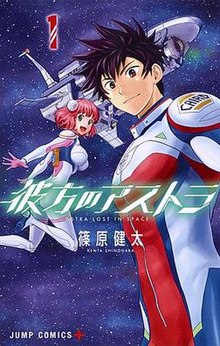
Set in the far future, when humanity has started exploring other planets, a bunch of teenagers and one ten-year-old are sent on a survival retreat to an uninhabited planet. Unfortunately, their camping trip goes awry when a portal appears out of nowhere and sends them millions of light years across the galaxy, into the vast reaches of space. Luckily though, they find a spaceship that they can navigate back home. Along the way, they explore strange planets, grow as people and as a family, and try to find out how they ended up transported across space in the first place.

So yeah, this is kind of like Lost in Space, but animated and with teenagers. Hell, the show’s in the title! The balance between humor, mystery, and storytelling is a little off at times, but the characters are lovable and the mystery elements to the story are compelling. If you’re looking for sci-fi with characters you want to hug and a bit of suspense to boot, this might be up your alley.


Serial Experiments Lain

After one of her classmates commits suicide, fourteen-year-old Lain Iwakura finds out said classmate has since been sending messages to others in her class over the Wired, a super-advanced version of the Internet that uses virtual reality. She starts exploring the Wired, and finds herself going down the rabbit hole as she deals with secret societies, and an entity claiming to be the God of the Wired. But the greatest mystery of all may be Lain herself…

Released in 1998, Serial Experiments Lain has become something of a cult phenomenon in the anime community, noted for its uncanny predictions of how the Internet would develop in the next twenty years or so and exploration of Internet culture, as well as the nature of consciousness, God, and so much more. It’s a story more focused on philosophical/psychological exploration rather than traditional storytelling, so its slow pace might turn off some viewers. But if you stick with it, you may find yourself having your mind blown by this hard-to-define series.


Fruits Basket (2019)
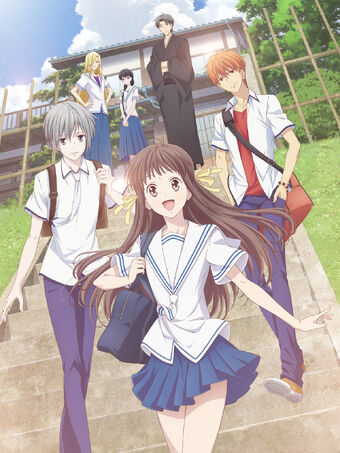
Technically speaking, there are two adaptations of this award-winning manga, one from 2001 and one from last year. However, the more recent version has gorgeous animation, adheres more closely to the original manga, and plans to tell the whole story.

Fruits Basket follows Tohru Honda, a cheerful girl who finds herself homeless after her mother’s death. She ends up moving in with the Sohmas, a large and influential family whose members Tohru is classmates with. However, she finds something crazy out about her new home: certain members of the Sohma family can turn into animals of the Chinese zodiac when hugged by a member of the opposite sex or under great stress. Thus Tohru’s life becomes more wonderful and stranger than she ever dreamed.

So while the premise sounds whimsical enough, and there are plenty of sweet and funny moments, this series can get really dark. A lot of the characters have suffered from their ability to transform into animals, and there’s a lot of exploration of social isolation, anxiety and depression, self-loathing and self-fulfilling prophecies, broken homes and gang violence, and more. How the show balances all that so well with humor and lighter moments, I have no idea, but there you go.

Anyway, this is a great series to make you laugh and cry, with a literal menagerie of characters for you to fall in love with. The second season is due out next month, so I hope you’ll check it out in the meantime.

Overlord

This one’s become my new favorite anime, and I’ve watched it five or six times since I first watched it back in September. Yeah, you read that right. And I’m about to tell you why.

A gamer’s favorite virtual reality game is about to shut down forever. Having met all his friends and received his best memories in that game, he decides to stay in the game until the servers shut down. However, when the game shuts down, he finds himself transported to a world where magic and monsters exists. As his video game avatar. Which so happens to be a powerful undead skeleton and commander of an entire monstrous army, the great Ainz Ooal Gown. Wanting to understand his new world and find out how he got there, Ainz embraces his new form and sets out on a conquest of this strange new world.

Considered one of the best isekai stories out there,* Overlord has a lot to offer. Not only is it the sort of story where you get to root for a super-powerful villain, but the ensemble cast are a lot of fun and the story manages to keep you interested by flipping point of views and coming up with new scenarios to challenge the main character Ainz, who’s basically an office drone who’s suddenly found himself in the position of a god-king and is basically just trying to fake it till he makes it. And let’s face it, it’s just awesome to see an overpowered character as an antihero sometimes (check out this clip if you don’t believe me).

Ascendance of a Bookworm
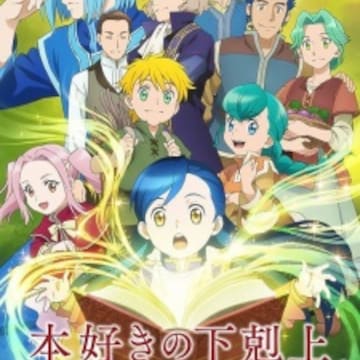
A young woman gets her dream job of becoming a librarian and getting to read books all day. But then she dies and gets reincarnated into a fantasy universe. Cool, right? Wrong. First off, she’s now a sickly little girl named Myne, and can’t walk down a set of stairs without getting a fever. Second, she lives in a world where books are expensive and are usually the property of the nobility, which she is not. Despite all that, Myne is determined to get books one way or another, and she won’t let small things like illiteracy or a frail body get in her way!

As far as isekai anime go, this is a bit of an outlier. Normally, isekai protagonists have some great advantage and go out to do amazing things. However, Myne’s only advantages are her own brains and experience, and it’s a story about an ordinary girl (sort of) trying to live an ordinary life with her friends and new family, not anything like saving the world or conquering nations. Add in a mellow pace and beloved characters, and you find yourself falling in love with these characters. If you want a fantasy story not focused on anything major like politics or war and lovable characters just trying to eke out a normal life, this might be the anime for you.

My Bride is a Mermaid

Nagasumi Michishio nearly drowns, but is saved by a mermaid. But now, by mermaid law, he has to marry the mermaid, a girl his own age named Sun Seto. Whose overprotective father is the head of a merfolk yakuza family. And he’s not ready for his little girl to go off and marry, let alone marry a weak human. Hijinks ensue.

This beloved romantic comedy is sure to make anyone laugh. It brings together a whole bunch of kooky characters with a zany concept, and makes the most of it. For a while, it was my favorite anime in high school, and there’s a reason it’s endured for over ten years since it aired. If you want a zany comedy with endearing characters and the ability to surprise you at least once or twice an episode, this may be the anime for you.


Welcome to Demon School, Iruma-kun!
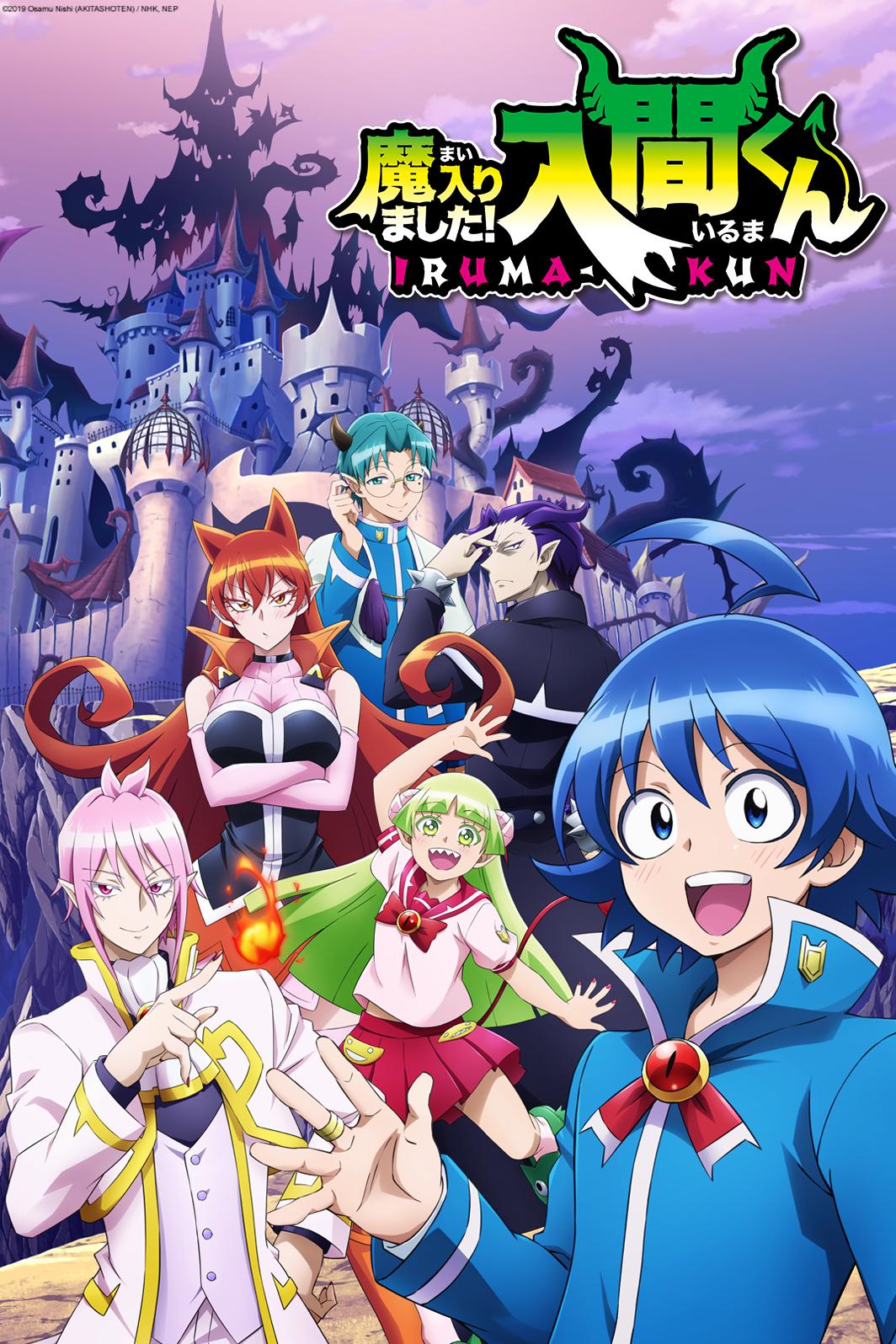
Iruma Suzuki is a 14-year-old pushover who’s been forced to work since he was a small child in order to get by. One day, his scumbag parents sell his soul to a demon. The demon, Sullivan, takes Iruma to the nether realms…and adopts him as his grandson! He then enrolls in the elite demon school, Babyls, where if he’s discovered to be human, he’ll be eaten. Hijinks ensue.

This is one of my new favorite anime. It oozes year-round Halloween spirit in every frame of animation, with eyeballs and skulls and spider webs (oh my!) everywhere. Not only that, but these characters are lovable and quirky in their own way, from sweet and pure but easily swayed Iruma, to the beloved and adoring Asmodeus Alice, and the hilarious Clara Valac (think me, but a demoness with twice as much energy and randomness as me). Watching them grow and become friends in a strange world is a lot of fun, as well as hella funny. If you want a series full of demons, Halloween, and utter hilarity and fun, I can’t recommend this one enough.

Toilet-Bound Hanako-kun
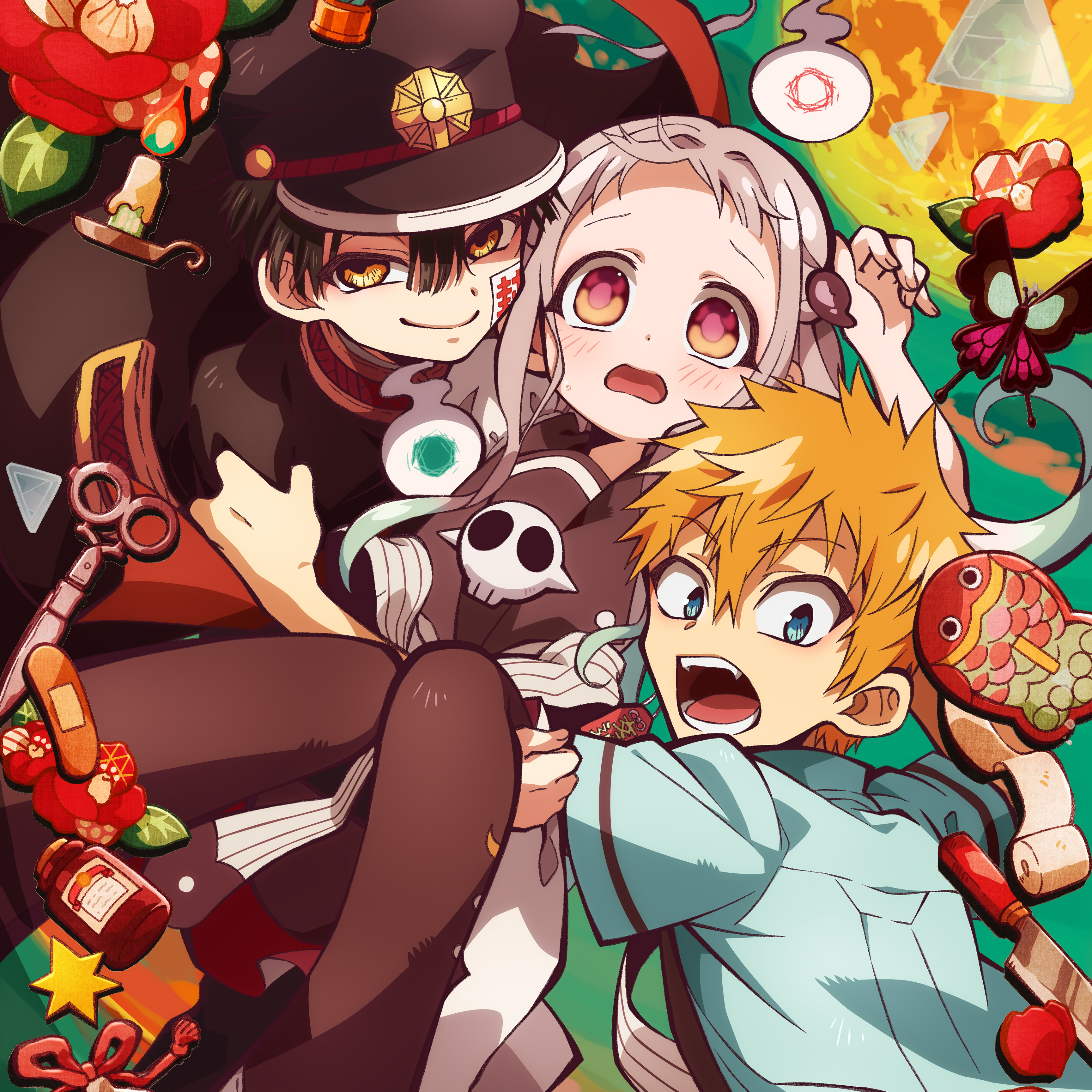
A high schooler goes into a bathroom to summon the spirit Hanako-san,** who is supposed to grant a wish to anyone who summons them. Instead of a little girl in a red dress, she gets a devilish boy in an old boy’s uniform, Hanako-kun. He’ll grant her wish…but in exchange, she’ll have to be his assistant in keeping her school’s spirits in line. Hijinks ensue.

With a unique animation style like a webcomic and a great balance of silly humor and intrigue, Toilet-Bound Hanako-kun is one of the breakout hits of Winter 2020. If you’d like a series with funny characters, stellar animation and a bit of supernatural fun, you might enjoy this one. New episodes are airing right now, so why not go ahead and check it out?

Which anime whets your appetite? Have you seen any of these? What did you think? Let’s discuss.

That’s all for now, Followers of Fear. I hope to have another post or two out this week. Also, wanted to let you know I’m writing like crazy these days. I should have an announcement of a new first draft before too long.

Until next time, pleasant nightmares!

*If you don’t remember from my first anime recommendation post, isekai is a subgenre of fantasy anime in which a normal person is transported to a magical world resembling fantasy worlds out of novels and video games, and may have features from the latter. The transported average Joe often ends up becoming some sort of hero or adventurer, going on quests and fighting monsters or exploring unknown regions. It’s a popular genre of anime right now, to the point that half the new series that came out last year seemed to be isekai anime. Thankfully, I can point out some of the good ones.

**Yes, the same spirit from Japanese folklore that inspired my short story “Hannah.”

I know the moment I press “Publish” on this post, WordPress is going to notify me that I’ve published three posts in three days, and to “keep it up!” I won’t. I can’t blog that much! What would I blog about? My chiropractor’s appointment? The weather?

Okay, onto the subject of this post. If you didn’t know, I have a small YouTube channel. And I mean small: in the eight years I’ve been uploading videos, I’ve only uploaded twenty-seven videos, most of those in the past couple of years. Obviously, I don’t have a lot of traffic on my channel.

But I try to at least update the channel when I have something to update it with. And last night, I filmed a short video letting my YouTube channel followers know that I’d finished Toyland. I also let them know what I was planning to do with the novel in the near future and my immediate writing plans.

And I waxed eloquent about my love of Brothers Drake mead. Again, not sponsored, I just love their stuff and like to celebrate big milestones with mead.

Anyway, I thought I’d post the video here on my blog to further spread the word. If you have fifteen minutes to do so, please watch it below. And if you like it, maybe leave a like and a comment. Hell, subscribe if you’re feeling crazy. Like I said, I don’t upload that much, but when I do, I think it might be entertaining and informative for people. I’ll include the link for that below, as well as links for Rose and The Binge-Watching Cure II (if you watched the video, you know why).

That’s all for now, my Followers of Fear. Until next time, pleasant nightmares!

My YouTube Channel

Rose: Amazon US, Amazon UK, Amazon Canada, Audible

The Binge-Watching Cure II: Paperback, Ebook

Call the press! Pour the honey wine! Sacrifice your neighbor to the eldritch deity of your choosing! The first draft of Toyland is done! To be specific, I finished it early this morning at around four in the morning. I started working on the last two-and-a-half chapters around ten o’clock last night, after I wrote my review of The Lodge, and just didn’t stop.

And now that I’ve gotten some sleep, I’m blogging about it, because that’s what you do!

Now, for those of you who are unfamiliar, Toyland is a Gothic horror novel I started writing back in November for National Novel Writing Month. The story takes place at a boarding school in southern Ohio, and follows students being menaced by a ghost obsessed with a children’s book. Yes, that’s the plot. I can assure you, it’s just as bonkers as that pitch sounds. I hoped to have it done by the end of January, but I’m glad I was able to finish it by the end of February, which is still a whole new record for me in terms of writing a novel (I think Rose had the last one at around six or seven months).

And how is the first draft?

Well, it’s a first draft, which means it’s crap.

Okay, that might be harsh. It not crap, it just needs a lot of work. First drafts are nicknamed “rough drafts” for a reason, after all. I’m going to have to do a whole lot of editing to get this book out to people. And I may need to have someone take a look at it just to make sure it can survive out in the world as a full novel. I did that with Rose, after all, and Rose is doing very well now, with an audio book and some awesome new reviews.

So how long is Toyland, anyway? I knew it would be longer than fifty-thousand words (the minimum word count for “succeeding” at NaNoWriMo), but I haven’t done a count recently. Give me a moment to do some math…holy crap! In terms of pages (with twelve-point, Times New Roman font, double-spaced on regular MS Word paper), Toyland is three hundred and sixty pages long and 97,186 words! For context, the first Harry Potter novel is around seventy-seven thousand words.

This isn’t the longest story I’ve ever written (that honor goes to my thriller Snake), but still pretty freaking long.

So what’s next? Well, obviously I’m going to party a bit (pizza and locally made mead tonight!). But in terms of Toyland, I’m going to let it be for a while. I always believe a story needs to lie and sleep for a while before editing, so I can look at it with fresh eyes. After a second draft, I may start looking for a publisher. Hopefully, it won’t take five years like it did with Rose to get it published.

I wanted to post this graphic one last time.

In the meantime, I’ll try to take a little vacation from writing anything except blog posts (though if the writing bug gets me, that’s that). After that, I’ll try my hand at those ten short(er) stories I mentioned in a previous post. Two of those stories, by the way, take place in Victorian England and one of which I hope to put into that short story collection I’m putting together. I’m looking forward to them. I may also work on an essay which has been cooking in the back of my mind. We’ll see what happens.

For now though, I’m off to relax. Thanks for supporting me during this writing process, my Followers of Fear. I hope you’ll check out Toyland when it comes out and maybe let me know what you think of it. For now though, how about checking out my novel Rose? It’s a Kafkaesque horror story about a young woman turning into a plant creature (and that’s just the start of her problems). If Toyland sounds up your alley, you’ll probably enjoy Rose. I’ll post the links below.

Until next time, pleasant nightmares!

Rose: Amazon US, Amazon UK, Amazon Canada, Audible

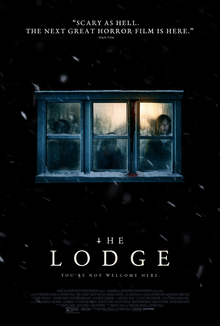
I’ve heard a lot of good things about The Lodge, including that it was a new classic in the genre (or something like that. I may be paraphrasing). With the last couple of horror films I’ve seen since my last film review being average or below and not worthy of a blog post (*cough* Fantasy Island *cough*), I had high expectations. At the very least, I hoped it was worth the cost of parking at the nearest theater it was playing at.

The Lodge follows Aiden and Mia, a pair of siblings living with their father following the sudden death of their mother. On their trip to their family cabin for Christmas, their dad’s girlfriend Grace comes along to get to know the kids better. The kids are less than thrilled, partly because Grace is the lone survivor of a suicide cult headed by her father. However, when the kid’s dad has to go back into the city for work and has to leave Grace with the kids for a few days, several days of madness ensue. One that will push Grace to the brink, and maybe take the kids with her.

Oh my God, this film is terrifying!

The Lodge takes storytelling and suspense hand-in-hand and creates an atmosphere where everything feels up in the air. If horror is fear of the unknown and loss of control, then this film succeeds. I saw hints of twists that were to come early in the film, only to quickly forget them even when I see them again because the film convinced me nothing was certain. Add in creepy imagery, strange happenings, and jump scares that are few and out of left field for their utmost effectiveness, and you’ve got one hell of a horror movie.

The four central characters also do an excellent job in their roles. Aiden is played from Jaeden Martell, who played Bill Denbrough in the IT movies, so he’s used to horror films, and puts it to use here. His sister is played by Lia McHugh, who also have a history in horror, so they bring the experience. But more than that, they know how to play siblings brought close by tragedy, to the point that I forgot they were actors.* Riley Keough also is excellent, showing the stress of the situation on a woman already psychologically and emotionally vulnerable so well. It’s honestly a delight to watch.

I can’t think of anything bad about the film. Doing so would be nitpicking. I will let you know that if you prefer horror films be filled with CGI and lots of jump scares (the opposite of me), this film may be a bit too intense for you. Trust me, most of the theater were freaking out in our seats. Even when nothing was happening on screen (or seemed to be happening, anyway).

On a scale of 1 to 5, I’m giving The Lodge a 4.8 out of 5. Nerve-wracking, twisty and twisted, you’ll be freaking out from the first jump scare to the haunting ending. Grab a blanket and someone to watch it with, and get ready to squeeze their arms tightly. Believe me, it’s that scary.

*And maybe wondered their relationship was incestuous. Hey, it’s an R-rated horror film, boundaries are hazy at best if it helps the story along.

You ever read a book that came out well before you were born, or a book that came out a few years ago but set well before you were born, and throughout the book a character or even the author expresses viewpoints that, if expressed today, would not go over well? The sort of views that would make you go, “Anyone who says that today would only be applauded by the lowest dregs of society. The rest would villify them.”

It’s an unfortunate part of the writing process, but sometimes writers will have to write stories where those sorts of views are expressed, even if not their own. I’ve had to do it several times over the course of my writing career, usually from the POV of a neo-Nazi or a white supremacist. It’s necessary, but it’s always a trial to do it. God help me if I ever have to read something like that out loud.

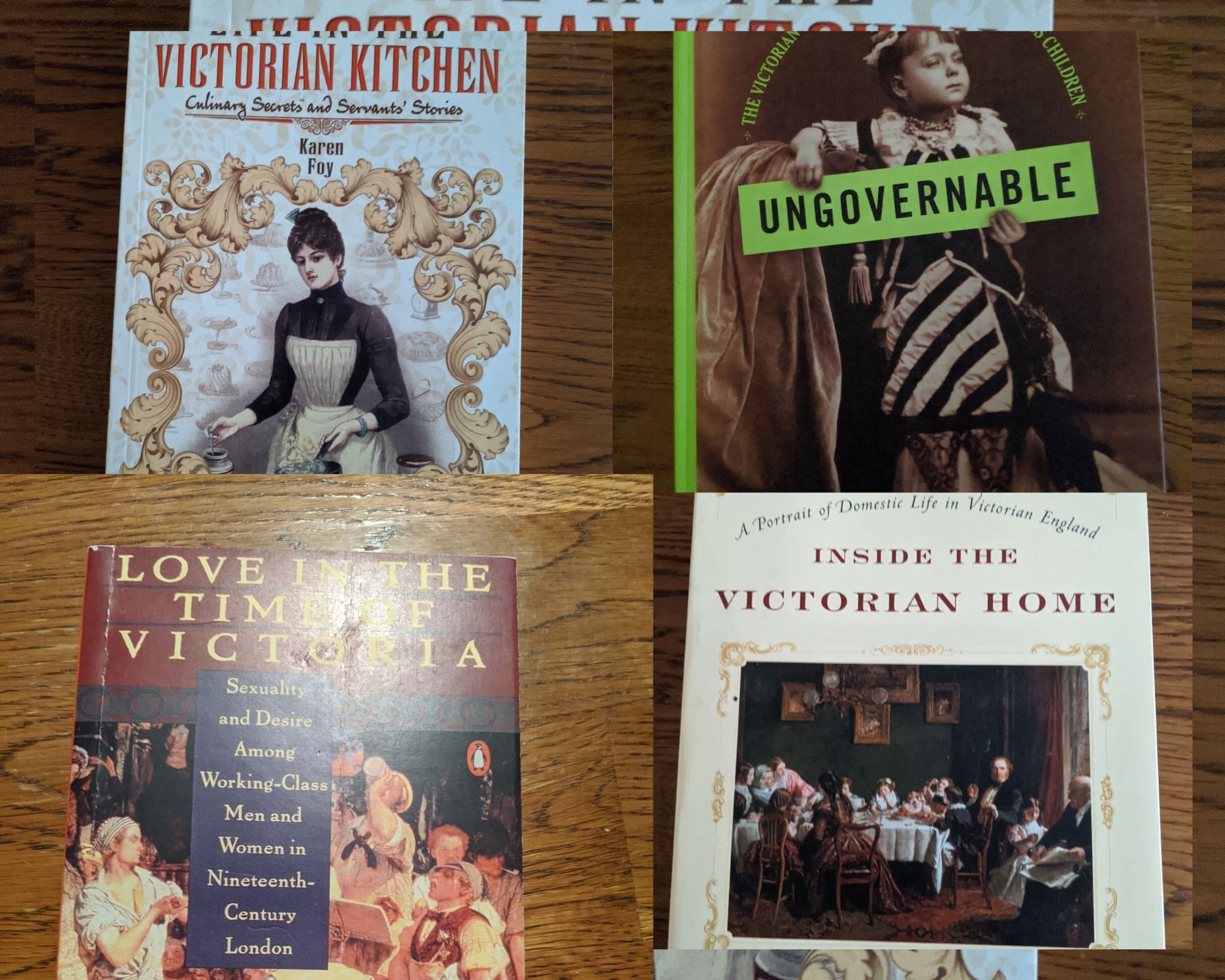
I bring this up because as I said in a previous post, I’m busy doing research for a story to go into the short story collection I’ve been putting together. That story is set in Victorian England, an age that, as many of you know, I’m a big fan of. You guessed it, I bought a bunch of new books to better understand that age. And this week, while I was reading one book and seeing information I’d previously learned in another volume repeated here, I realized that, to a certain extent, I will be putting these attitudes of the age into the story.

Including the ones I find reprehensible.

There are generally four ways writers include these sorts of ideas and beliefs into their stories. An author may include a character who’s already very forward-thinking or contrarian, taking on viewpoints which their peers will not get or abhor, but the audience will sympathize with and allow them to pity the characters who don’t think like that (think Wonder Woman’s attitudes regarding WWI-era norms and gender roles in her movie). Other times, characters may start with one attitude and then evolve to a different one over the course of the story as part of a character arc (Villetta Nu’s arc in the anime Code Geass: Lelouch of the Rebellion towards non-Britannians). There are characters whose whole point in existing are to present a contrasting view, usually as something for a protagonist to work off of or a driver of the plot (think Big Jim Rennie in Stephen King’s Under the Dome).

And then there are times when the author says, “Screw it, there’s no way around this,” and just portrays those attitudes as authentically as possible. I have a feeling with this story, I’m going to have to go with this route.

The books I’m using as research. I think they’ll be quite helpful in creating the level of detail I’m looking for.

I still haven’t worked out the details of this story, other than the time period and certain elements/characters. I don’t know how much of the Victorians’ beliefs and attitudes will make it into the story, or which ones for that matter.* Still, they’ll be there throughout the story for the sake of authenticity. It’ll be weird writing them into a story when they may go against everything I stand for. But for the characters, they’ll be the norm, and as true as the fact that the sun rises in the east and sets in the west.

The cognitive dissonance will be a mind-fuck.

But if the dedication to authenticity helps make the story good, then I won’t have any complaints. That’s what’s important in the end, isn’t it? Even if I have to write in a discussion on how chloroform subverts God’s commands on childbirth.**

What are your thoughts on including attitudes and beliefs that you don’t agree with in your story? Any fun reminiscences on the subject?

*Did you know that it was considered dangerous to give children fruit while they were young? It was believed the sweet taste would excite them and lead to delinquent behaviors. Also, while germ theory was starting to enter public consciousness, it was a slow process. In 1865, the Female Medical Society published statements asking doctors to take more steps to decrease death in women by childbirth. The medical journal The Lancet responded by calling their suggestions for cleanliness “erroneous,” and asserted that these deaths were caused by women leading immoral lives, which could mean anything from engaging in prostitution, feeling sexual desire, or enjoying pickles too much.

**Yeah, that was a debate in the 19th century. Did chloroform, when used in childbirth, prevent women from feeling the pain God ordained for women? What an age!

You know, I feel like I should’ve written a post like this a while ago. Like, at least a month ago. Oh well, better late than never. I’ve been thinking for a while of what I want to do in terms of writing for 2020. Which is unusual, because while I’m a huge plotter for my stories, I don’t usually plan out goals for an entire year. But I feel like, with a book published and a short story included in an anthology last year, I feel like I should try some new strategies to keep the momentum going. So without further ado, let’s talk my writing goals of 2020.

Finish Toyland

Of course, this was on here. Luckily, I’m already on my way there: as of a few days ago, I’m only six chapters away from finishing Toyland, the Gothic horror novel I’ve been working on since November. Depending on how things play out this year, I’ll probably edit it at some point. After that, perhaps I’ll find a publisher for it. Fingers crossed it goes well (and that a novel approaching ninety thousand words doesn’t intimidate anyone).

Complete the short story collection

Before November and NaNoWriMo, I was putting together a collection of short stories. As of now, there are twelve stories in the as-yet unnamed collection. Being a horror writer though, I want thirteen stories. Good thing I’m already making strides on that goal: I’ve been doing a lot of research for a story I want to write after Toyland‘s done. I think it’ll be somewhere between the length of a novelette and a novella, or ten thousand to sixty thousand words. Hopefully writing it goes well, once I hammer out the plot details.

After that, I’ll hopefully be able to find a publisher who can help me get the stories in tip-top shape. Or maybe I’ll self-publish again. We’ll see how things develop.

Write at least ten short(er) stories

Including the last story for the collection, I want to write at minimum ten stories shorter than a novel. Preferably, they’ll all be short stories, but I know that a few of them will be novelette or novella length (depends on the story, obviously). I would also like to edit most of them within a year, and get at least three or four published in some form or another. Getting a short story in The Binge-Watching Cure II last year was an amazing experience, so I want to see if I can do it again.

And of course, it’s always a good idea to polish your short fiction-writing skills.

Maybe start a new novel

I’ve known for a while what novel I’d like to write after Toyland. However, I think I’ll wait a good while until I write it. Novels are a huge commitment of time and energy, so I want to make sure I’m ready before I try my hand at a new one (and maybe get one or two others edited and/or published).

Grow my audience

I’ve been lucky to grow an audience over 8.5 years of blogging, Facebooking, tweeting, Instagramming, and occasional YouTube videos. But I’m always hoping to grow my audience just a bit more. And while I don’t have any particular numbers I want to reach, I want to draw more people in and maybe get them hooked on my particular brand of weirdness. Especially my fiction.


Well, those are my writing goals. Here’s to them going well in the 11.5 months we have left of 2020. I hope you’ll continue to support me during that time, and maybe even read/review my published work if you can.

Until next time, Followers of Fear, pleasant nightmares and WHO LET THE MONSTER KNOWN AS THE DEAD MAN’S STRUGGLE INTO MY BUILDING?! Now I have to either kill it or seal it away. Either way, the cleanup’s going to be exhausting.

What are your writing goals for 2020? Have you made any progress with them so far?

February is Women in Horror Month. Since women writers are a big influence on my writing–JK Rowling got me into storytelling in the first place, and Anne Rice helped pave the way for me to write darker fiction–I thought I’d recommend some stories for those who want to help support the month. You’ll see some familiar names here, but also some you may not be familiar with. Either way, I hope you’ll consider giving them a read.

Tiny Teeth by Sarah Hans. This is actually a short story by a friend and colleague of mine, but it is a scary one. Imagine a world where a virus turns children into dangerous, gnawing animals, and one woman’s experience in that world. You can find it on Pseudopod.org, a website where scary short stories are read by narrators and released as a podcast. Give it a listen. Guarantee you, it’ll be 45 minutes not wasted. Here’s the link.

Garden of Eldritch Delights by Lucy A. Snyder. This is also by a friend and colleague of mine, but it’s also a great collection of scary stories. The majority of them feature cosmic horror themes and entities, which I love, as well as intriguing characters and plots. A couple of the stories also incorporate sci-fi and fantasy themes, and feature a diverse cast, which is something I love to see. If you pick up Garden of Eldritch Delights, you will find it worth your time. Here’s the Amazon link.

The Amaranthine Books by Joleene Naylor. You’ve probably seen Joleene’s name around this blog before, but did you know she’s written an entire book series? She has, a vampire series called the Amaranthine books, and they all come highly rated. Even better, some of the books are free or under a dollar under the Kindle edition, so why not take the opportunity to read them? You can find all the Amaranthine books, and then some, on Joleene’s Amazon page.

In a Dark, Dark Wood and The Death of Mrs. Westaway by Ruth Ware. Technically, these are mysteries, but they have horror themes about them, so I’ll count them here. In a Dark, Dark Wood follows a mystery writer invited out to a bachelorette party by a friend she hasn’t seen in years, unaware of the forces conspiring against her. The Death of Mrs. Westaway stars a Tarot reader on hard times who finds out she’s received an inheritance from a grandmother she didn’t know she had, and what that inheritance entails for her. Both are terrifying and keep you on the edge of your seat with suspense. You can check out both further on the author’s Amazon page (and I need to check out more of her work).

Kept me on the edge of my seat the whole audio book.

Within These Walls and The Shuddering by Ania Ahlborn. No joke, Ania Ahlborn is one of the scariest writers I’ve ever had the pleasure to read, and I really need to read more of her work, as should you. Within These Walls follows a true crime writer as he and his daughter stay in the home of a Manson-like cult leader, and what happens while they’re there (I actually reviewed it a few years ago). The Shuddering follows a group of young adults as they go skiing at a mountain resort, only to discover the area has come under siege from a rather hungry enemy. Either one will leave you shaking in your boots! Here’s the Amazon page if you want it.

The Haunting of Hill House by Shirley Jackson. Come on, you know I had to include this. Even if I’m not a fan of this book, it’s undeniable that Jackson’s most well-known novel, and one of the most influential horror stories of the 20th century. Following a group of paranormal researchers as they explore the titular house and the effect the house has on them, this book is still a well-known classic in the genre, and some consider it required reading for fans and authors. It’s so well known, I won’t include any links for it (surprise!).

Interview with the Vampire by Anne Rice. Again, can you blame me? Whatever you think of the many sequels, it’s undeniable that Anne Rice’s debut novel has remained a classic for a reason. A journalist interviews a 200-year-old vampire named Louis, who recounts his creation in French New Orleans and his travels around the world looking for meaning and for more of his kind. It’s a haunting tale, the horror coming more from Louis’s psychological journey and despair rather than from the supernatural. As I said earlier, this novel also paved the way for my eventual turn to horror, so I can’t recommend it enough (and I’ll have to reread it someday). Again, no need for links. It’s that well-known.


What recommendations do you have for Women in Horror Month? Are you reading anything for it? Are you familiar with any of these books? What was your opinion of them?

That’s all for now, my Followers of Fear. I hope you find something good to read based on this list. I’ll be listening to The Accursed by Joyce Carol Oates this month on audio book, so maybe I’ll add it to a future list someday. I better get started soon!

Until next time, pleasant nightmares!

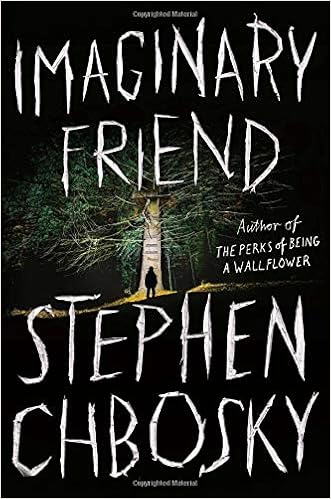
Over the past couple of months, people in the horror-themed Facebook groups I belong to have been raving about this particular book. I looked it up and it sounded up my alley, so when I had an Audible credit, I downloaded the audio book. But before I started it, I found out the book was written by the same guy who wrote the novel The Perks of Being a Wallflower, as well as wrote/directed its movie adaptation. Really? Isn’t that a sweet, YA rom-com? How do you jump from that to horror? (looks up what that book is really about.) Oh. That’s pretty dark. Yeah, I can see how the dude transitioned to horror.

Imaginary Friend follows Kate Reese and her son Christopher as they leave Kate’s abusive boyfriend and move to a small town in Pennsylvania. However, soon after they move there, Christopher disappears in the woods near his school. He reappears a week later, unable to remember what happened to him, except being led out of the woods and back to civilization by someone called “The Nice Man.” While Kate is happy to have her son back, and things start to improve after he returns, Christopher has changed. He’s smarter now, unable to sleep, and suffers from headaches a lot. And he’s in contact with the Nice Man, an invisible being who instructs him to build a treehouse in the woods he disappeared in, and to do it before Christmas. If he doesn’t, something bad will happen. To the town, to his mother, and to him.

This one was hard to put down. I normally only listen to audio books while at work, but the story was so intriguing and out there that I listened to it while checking email and cooking dinner. Imaginary Friend feels a lot like Stephen King novels like It or Needful Things, these huge stories based around weird concepts that are both scary and hard to put down. I mean, you got a kid who goes missing in the woods, and then when he comes back, has to build a treehouse to save the world from the Apocalypse. And that’s just what I feel I can tell you without spoiling too much.

I also have to give Chbosky credit: I had a hard time predicting what was going to happen as we got further into the story. Every little piece of the puzzle had the potential to surprise me, and quite a few did. During the “darkest hour” of the book, when things are at their most pessimistic, you felt the misery and the tension as the situation deteriorated. And that climax! Woo-boy, that was epic. Like, the final battle of an Avengers movie epic.

Not only that, but the characters are very well-developed. Also like some of King’s books, especially earlier ones, just about every character is well-developed. I felt like I’d known some of these characters my whole life, from Kate and Christopher Reese to the two or three old ladies suddenly regaining their faculties after years of dementia.

I do have one major gripe about the book: as the story goes further on, the novel takes on an…evangelistic air. It’s not like the Left Behind books, where it’s trying to get people to become born-again, but the story leans more in that direction than in the direction of The Stand or Supernatural. I don’t think the goal is to convert me: rather, I think Chbosky is using his Catholic upbringing to give the story a particular authenticity and philosophy other non-evangelistic Ultimate-Good-versus-Ultimate-Evil stories don’t have. There are some interesting ideas on the nature of guilt, our relationship to God, and how to find different kinds of salvation presented in the story.

Still, there were times when I was like, “Dude, scale it back a bit. I’m starting to get how people feel when I start ranking villains in horror, and they’re not horror fans.” That’s happened before, and it’s gotten awkward.

On the whole though, Imaginary Friend by Stephen Chbosky is an engrossing horror novel that’s weird in the best of ways and full of terror and twists. On a scale of 1 to 5, I’ll give it a 4.4. Pick it up and see for yourself. You’ll never look at treehouses and deer the same way again, but you’ll have a hell of a ride thanks to it.

Fiction writers tell two types of lies. There are the more obvious ones, our stories, those big stories of a thousand words or more that readers (hopefully) come just because we wrote them to entertain them. And then there are the smaller lies that usually go unnoticed. The ones where we gloss over or totally ignore reality so our stories can continue in peace. Not big things, like the existence of shapeshifting clowns or the ability to turn a human woman into a plant creature with a magic book. I’m talking about the small stuff. Things so small, people usually don’t question them or their viability.

A common example: you ever see an action film and someone with a machine gun lets off hundreds of bullets at their enemies without pause? Maybe they’ll switch guns at some point, but each of those guns still seem to have millions of bullets inside their cartridges and can go shooting for several minutes at a time.

The reality is a lot more boring: a machine gun may shoot off bullets for stretches of four seconds at a time, after which you probably will have to reload the gun. Not to mention that if your machine gun actually did go for shooting sprees for the entire length of a fight scene, the barrel would probably explode into flames.

Another famous example are silencers. Don’t want your gun to be heard by nosy civilians? A silencer will turn that gunshot into a mouse fart! Not really. In reality, a gunshot is not easy to quiet. Even the best silencer will only turn a gun into a loud crack, which you can still hear from quite a distance.

And you know those scenes in cop and comedy movies where a cop gets tasered in the chest and then their body and limbs shake like mad? Okay, stun guns only work about sixty percent of the time at best, and you never want to aim for someone’s chest, because while they’re considered “less lethal” than guns, they can still cause some heart trouble if aimed at the chest. Most cops aim for someone’s back, and then if they’re lucky, the electric shock will paralyze the target. By lucky, I mean the lines hit home and most of the electricity penetrates further than the skin.

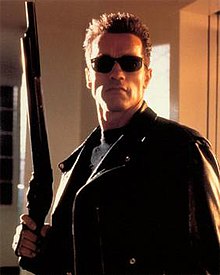
Action movies are huge offenders at this stuff. Still love most of the Terminator and Die Hard films, though.

And these are just a small list. Cop movies involving shoot outs and explosions rarely feature the staggering amount of paperwork those shoot outs and explosions require officers to fill out. Medical dramas going for crazy or risky procedures? Not without talking to the insurance company or finding a safer method first. Bulletproof vests? They don’t stop bullets, just catch them, and it’s still going to hurt like hell. Not to mention getting shot by a machine gun, even if you wear a vest, is probably going to leave you dead (sorry, Back to the Future fans).

I actually used one of these last night in the latest chapter of my novel-in-progress Toyland (for obvious reasons, I won’t spoil which one).* I had to do some quick research to make sure one of the above was being written right. And then when I realized there was no way to do that authentically, I was like, “Screw it. Who’s going to know? Even if they do, they’ll either forget or suspend their disbelief.” And then I wrote it how people would imagine the scene.

Why do writers do this? Simply because they can get away with it. The details are small, and even those in the know will usually just let it slide for the sake of enjoyment of the story. Rarely does it actually bug someone to the point they put the book down/stop the movie. Usually when they’re glossing over giant details do people in the know stop enjoying the story (happened to me with Criminal Minds after I found out what FBI profilers actually do on a daily basis).

So forget the little lies, and ignore the minor deviations from reality. You’ll enjoy the story more. Or you’ll stop watching Criminal Minds and move onto other shows. Either way, other people will still enjoy the story you’re telling.

Authors, what little lies in your stories have you told lately? Any you laugh about now?

*Speaking of which, Toyland‘s coming along well. I split some upcoming chapters in two for pacing, which means more chapters to write, but I’m still making progress. I may have to push the deadline back again, this time to the end of February, but it’s still going well. Also, the novel is over eighty-thousand words right now (for context, Harry Potter and the Sorcerer’s Stone is around seventy-seven thousand words). I have the feeling by the time I finish this book, it’s going to be close to one hundred thousand words. Not a whopper, but quite the literary feat.