Posts Tagged ‘writing’

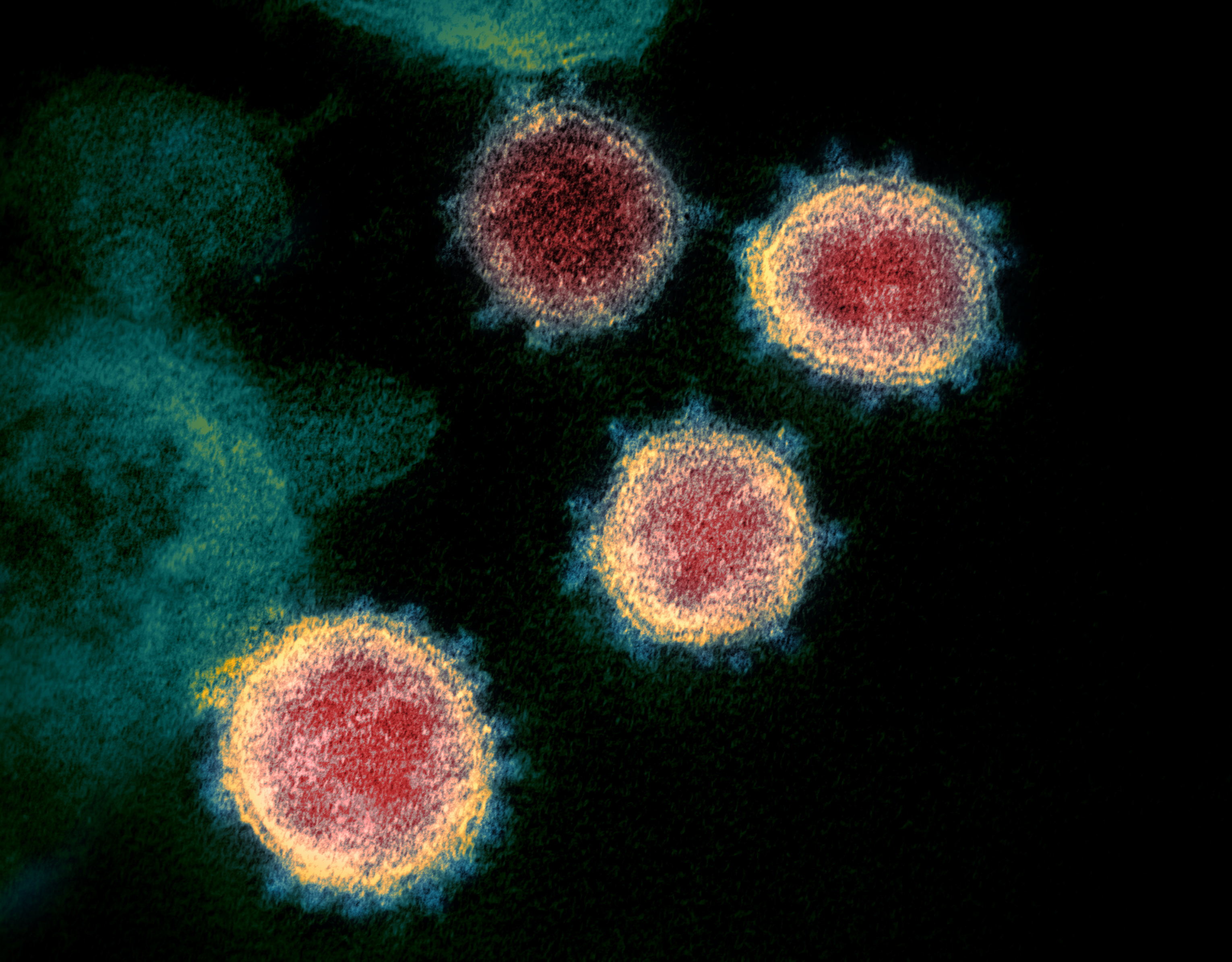
2020 has gotten off to a rocky start, to put it mildly. Threat of war with Iran, fires in Australia, and now the coronavirus, or COVID-19, has gone from an abstract threat we nervously made jokes about to a terrifying pandemic. It’s caused a lot of anxiety and terrified reactions, with people rushing to the store to grab supplies, turning to every supposed cure or preventive measure out there, and being afraid to go outside their homes.

And I know, the last thing you want to see is me talking about the virus. But you have to understand: I’m doing this for me. As many of you know, I have an anxiety disorder. And as much as I keep an upbeat attitude, wonder what everyone needs that much toilet paper for, and what we’re going to get for April (I’m hoping Cthulhu rises up from the Pacific), I have been feeling anxious over this virus. So anxious, in fact, that last night, instead of editing a short story like I’d meant to, I ended up binge-watching an entire series of anime till two in the morning. Escapism!

So what’s a guy to do? Well, in my case, I have to exorcise myself. Not literally, that’s a Friday night thing. No, I need to get my feelings out on COVID-19. Because I conquer what scares me, and in this case, this is how I do it.

Strap in, kids. This might be a long one.

My thoughts

What are my thoughts on this pandemic? Well, it’s almost Lovecraftian in how it’s inserted itself into our lives. First it’s this abstract and undefinable threat that we can’t imagine touching our lives. We even laugh at it. But pretty quickly, it becomes this thing that could not only affect us, but kill us. And our own species–loved ones, coworkers, the passerby on the street–are how it extends its invisible tentacles into the world.

The only thing to do is isolate ourselves, but that’s scary in and of itself. Even our most curmudgeonly need human contact of some sort. Can we survive without that human contact? And then there’s the economic toll, as people who rely on their jobs find themselves out of work or unable to make ends meet, relying on their dwindling savings to get by. It’ll be worse in more expensive cities to live in.
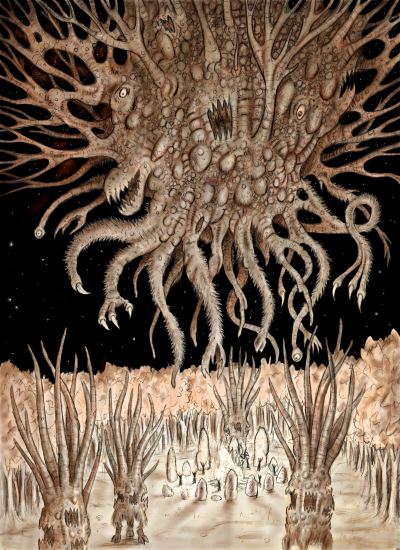
This pandemic can be likened to a Lovecraftian entity. And it’s just as ugly.

And depending on where you live, your leaders may be doing a great job at fending off the horror, or an inept one.

This may be the closest we get to actually experiencing a Great Old One invading our reality. And God, is it terrifying.

Good thing I have my collection of HP Lovecraft stories, plus four or five cosmic horror films on DVD and Blu-Ray in my collection. They’ll make great therapy. I should also see the movie Contagion again. It practically predicted this entire pandemic, so it’s worth another watch.

Anyway, there is a silver lining (and no, not the silver solution that con artist preacher is selling! That’s more likely to lead to heavy metal poisoning, the prick). Unlike Cthulhu or Nyarlathotep, there is a way to fight against this monster. As hard as it is, social distancing can limit infection and prevent further cases. So does extensive handwashing (no duh!) and other hygiene practices. And to avoid fake cures, keep this in mind: make sure to check with reputable sources like the CDC or National Institute of Allergy and Infectious Diseases. And if you don’t trust bureaucrats, remember this rule: if it sounds miraculous or too good to be true, IT PROBABLY IS TOO GOOD TO BE TRUE!!!! Any fix to a medical problem always required hard work to achieve. Even aspirin took forty years to get from the labs to the pharmacy. Don’t go for the quick “cure” just because it seems Heaven-sent.

This virus is going to change things, and possibly have lasting effects on society. I hope that it teaches people to at least be more considerate of others. Because right now, that’s what we need to do in order to make it out of this pandemic with a minimal death toll.

Speaking of considerate…

Support your authors if possible

As I said, this pandemic is effecting a lot of people’s jobs and livelihoods. This includes authors. They rely on bookstores, conventions and in-person events to sell their books and support themselves. Those places are either closing down or cancelling, which is huge slash in revenue. I’m extremely lucky, even if I don’t write full-time: my job allows me to make a good living and put away savings. Other writers aren’t so lucky. This virus is going to bite into them pretty deeply.

Care about authors? Consider supporting their work during these difficult times, if you’re able.

Now, I’m aware not everyone can do this, and I completely understand and sympathize. However, if you are in a position to help your fellow writers, please do so. Buy copies of their books in your favorite format, tell people about their work in reviews or tweets or whatever. Especially if you enjoy their work. It might be small gestures, but for the writers you’ll be helping, it’ll mean the moon and stars.

And it will give us time to come up with some decent stories involving COVID-19. I’ve already had one or two.

Final thoughts

Thanks for reading this post. I needed to get this off my chest. And I think, once I’ve taken care of myself a bit, I’ll be able to get back to writing and scaring people like I normally do. As for the rest of you, remember that everyone else is in the same boat as you. They’re as scared as you, but they can also be as brave as you. And if you’re a Follower of Fear, you’re likely very brave.

This too shall pass. And we’ll make it pass faster by keeping each other safe.

That’s all for now, my Followers of Fear. I’m off to set up and test my at-home workstation. Until next time, good night, pleasant nightmares, and REMEMBER, SWALLOWING OR GARGLING BLEACH IS GOING TO KILL YOU! Why would you think it would help you? It’s corrosive!
On Sunday, I posted about finishing my first short story of 2020, a science-horror story called “Primordial Nuclear Soup” (what a title, right?). I mentioned in that post I wanted to find a beta reader to take a look at the story before I edited it and tried to send it anywhere. Thankfully, I found someone very quickly who turned out to be the right sort of reader for this story. They gave me some excellent feedback on ways the story could be improved, but there’s one point that I wanted to focus on.

With “Primordial Nuclear Soup,” I was going for an ambiguous ending to the story. You know, the kind where things are left kind of open, leading to readers wondering what happened after “The End”? Yeah, apparently I confused my beta reader with that. They actually asked me if I’d cut it off early.

Now, this may have been because I simply forgot to put the words “The End” at the end of the story. But it got me thinking: when is an ambiguous ending good for a story, and when does it actually get in the way of telling the story?

As usual, when faced with a writing quandary that I can’t reason out on my own, I go to Facebook groups for writers. I got a variety of opinions on the subject, some of which felt more on the mark than others, but one response in particular resonated with me. The writer in question said that ambiguous endings work best with ambiguous stories.

What do I mean by ambiguous stories? Well, these are stories where so much is up in the air, that an ending where things are up in the air makes sense. A story with an unreliable narrator fits this description, or a story like The Haunting of Hill House, where we’re not sure if the house is really haunted and we feel the psychological strain on the characters. By the end of the latter, we’re still not sure whether the house is haunted, so an ending that still leaves us questioning what the hell just happened fits nicely.

Of course, some more “definitive” stories may benefit from an ambiguous ending, especially if it ramps up the tension. “All That You Love Will Be Carried Away,” a Stephen King short story about a traveling salesman contemplating suicide, has an ambiguous ending dependent on whether the protagonist sees a light from a farmhouse through a snowstorm.* It’s a great way to top off a story revolving around a troubled man wondering whether or not he should kill himself or live to write a book about his encounters on his travels.

As for my own story…well, it’s science horror. And science/science fiction tends to deal with exactness. Even though the Xenomorph from the pinnacle of science horror, Alien, has an unclear origin,** everything else in that film is clear as crystal. So perhaps I need to give my own story a clearer ending.

Well, we’ll see. I’ll give the story an edit before I start that essay (yes, I’m going to write it) and see what I can do with it. Hopefully, I’ll make something a magazine won’t want to throw in the trash after the first page.

A dramatic shot of “Rose” I couldn’t help but take.

Oh, and while I have your attention still, did you know today is the two-year anniversary of when I announced Rose was accepted for publication? Yeah, it happened on this day in 2017, and a lot’s happened since then. A year of edits and rewrites, the release and all the marketing, the audio book, and so much more. More and more, people have been telling me they’ve enjoyed the story, and hearing that is the most gratifying feeling ever. Makes me want to keep writing.

If you haven’t read the Kafkaesque story of a young woman turning into a plant creature (and that’s just the start of her problems), and you’d like to check it out, I’ll include the links below. And if you do read it, please let me know what you think. I love feedback, and reviews help me out in the long run.

That’s all for now, Followers of Fear. Until next time, pleasant nightmares!

Rose: Amazon US, Amazon UK, Amazon Canada, Audible

*It’s been 19 years since it first came out, so I’m not sorry I didn’t include a spoiler warning.

**I like to pretend Prometheus and Alien: Covenant never happened. They take all the mystery out of the franchise.

Well, this has been a busy day today. Met with the Ohio chapter of the HWA for a very productive meeting, ran some important errands for stuff happening at work and in the Jewish calendar, watched a movie with dinner, and…oh yeah, got the first short story of 2020 out of my way. It looks like I’m making good progress on those writing goals.

“Primordial Nuclear Soup” is a science-horror story about a team of scientists and their military escort who go into a nuclear power facility two years after a meltdown, and what they encounter there. It was inspired by a YouTube video I watched going into some of the science about the Chernobyl disaster, and was further influenced by a certain Stephen King story and a certain Godzilla movie (neither of which I can reveal without giving too many hints about the story). It’s about sixty-five hundred words long, so it’s not super long. And as it’s partially science-fiction, there will hopefully be plenty of magazines or anthologies that would consider publishing it.

I had a lot of fun writing this short story, but it was also challenging. I thought I knew which way it was going to go, but the story ended up going in different directions than I expected. I was actually pantsing for the last half or so, but it ended up working out in the end. Maybe that’ll give it a bit more surprise for any readers.

For now though, I’m going to see if I can’t get someone take a look at this story before I edit and submit it anywhere. I want it to be in top shape, after all.

As for what’s next, I’m going to do some research into essay writing for that essay I mentioned wanting to write. If I feel up to the task, I’ll write that essay. If not, I’ll move onto my next story. After all, I have nine short(er) stories I mean to work on, and I’ve already figured out which one I’ll be tackling next. Should be good to get it out, considering how long it’s been knocking around this twisted head of mine.

Well, it’s late, and I’ve got work in the morning. Goodnight, my Followers of Fear, and pleasant nightmares!

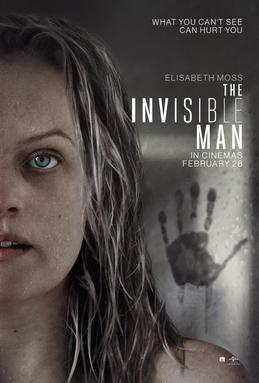
I’ve confirmed that this film, while co-produced and distributed by Universal, isn’t part of the Dark Universe. Yeah, it has a Universal Classics Monster, but it’s safe to say Universal’s attempt at a cinematic universe around its monsters is deader than Frankenstein’s body parts pre-assembly. I can also confirm that this book barely resembles the book it’s based on, but you probably knew that already. All that being said, let’s begin the review.

The Invisible Man follows Cecilia Kass, who leaves her abusive ex-boyfriend Adrian Griffin. Not too long afterwards, Adrian kills himself and leaves Cecilia with a generous amount from his trust. However, weird things start happening around our heroine. First it’s small things: a portfolio goes missing, a meal catches fire, a floorboard creaks. But then things get crazy. Soon Cecilia figures out Adrian is back from the dead, and has found a way to turn himself invisible. And he’s determined to make Cecilia’s life a living hell.

Best thing about this movie is its lead actress, Kate Moss. She plays the psychologically damaged woman in survival mode so well, it’s scary in and of itself.

As for the rest of the movie, I will give it this. There’s a tension in it. The jump scares pair very well with the anxiety of not knowing what’s in the empty spaces around the characters. I think everyone in the theater were on edge during scenes when Moss was walking around, looking for her stalker.

And thank God, most of the effects are practical rather than CGI. In fact, CGI is used only when absolutely necessary, and I’m always happy when a movie goes that route rather than packing in as much CGI as possible. I mean, oy vey!

Still, this film wasn’t perfect. There were quite a few predictable parts that I saw coming a mile away, as well as a few plot holes that I couldn’t help but notice. Those factors kind of brought the film’s score down for me.

Speaking of which, I’m giving 2020’s The Invisible Man a 3.1 out of 5. If you want to go see it in theaters, go right ahead. Just be aware, you’re not getting anything that’s going to stick with you once you leave the theater. Hopefully, the sequel they’re making is better. Yes, they’re already planning a sequel. The Invisible Woman. Elizabeth Banks is set to star, direct and produce. Given her roster, I’ll give it a chance.

That’s all for now, my Followers of Fear. I’m going to figure out what to do with the rest of the evening. Probably either write, read, or scare my neighbors silly. We’ll see what I come up with.

Until next time, pleasant nightmares!

I know the moment I press “Publish” on this post, WordPress is going to notify me that I’ve published three posts in three days, and to “keep it up!” I won’t. I can’t blog that much! What would I blog about? My chiropractor’s appointment? The weather?

Okay, onto the subject of this post. If you didn’t know, I have a small YouTube channel. And I mean small: in the eight years I’ve been uploading videos, I’ve only uploaded twenty-seven videos, most of those in the past couple of years. Obviously, I don’t have a lot of traffic on my channel.

But I try to at least update the channel when I have something to update it with. And last night, I filmed a short video letting my YouTube channel followers know that I’d finished Toyland. I also let them know what I was planning to do with the novel in the near future and my immediate writing plans.

And I waxed eloquent about my love of Brothers Drake mead. Again, not sponsored, I just love their stuff and like to celebrate big milestones with mead.

Anyway, I thought I’d post the video here on my blog to further spread the word. If you have fifteen minutes to do so, please watch it below. And if you like it, maybe leave a like and a comment. Hell, subscribe if you’re feeling crazy. Like I said, I don’t upload that much, but when I do, I think it might be entertaining and informative for people. I’ll include the link for that below, as well as links for Rose and The Binge-Watching Cure II (if you watched the video, you know why).

That’s all for now, my Followers of Fear. Until next time, pleasant nightmares!

My YouTube Channel

Rose: Amazon US, Amazon UK, Amazon Canada, Audible

The Binge-Watching Cure II: Paperback, Ebook

Call the press! Pour the honey wine! Sacrifice your neighbor to the eldritch deity of your choosing! The first draft of Toyland is done! To be specific, I finished it early this morning at around four in the morning. I started working on the last two-and-a-half chapters around ten o’clock last night, after I wrote my review of The Lodge, and just didn’t stop.

And now that I’ve gotten some sleep, I’m blogging about it, because that’s what you do!

Now, for those of you who are unfamiliar, Toyland is a Gothic horror novel I started writing back in November for National Novel Writing Month. The story takes place at a boarding school in southern Ohio, and follows students being menaced by a ghost obsessed with a children’s book. Yes, that’s the plot. I can assure you, it’s just as bonkers as that pitch sounds. I hoped to have it done by the end of January, but I’m glad I was able to finish it by the end of February, which is still a whole new record for me in terms of writing a novel (I think Rose had the last one at around six or seven months).

And how is the first draft?

Well, it’s a first draft, which means it’s crap.

Okay, that might be harsh. It not crap, it just needs a lot of work. First drafts are nicknamed “rough drafts” for a reason, after all. I’m going to have to do a whole lot of editing to get this book out to people. And I may need to have someone take a look at it just to make sure it can survive out in the world as a full novel. I did that with Rose, after all, and Rose is doing very well now, with an audio book and some awesome new reviews.

So how long is Toyland, anyway? I knew it would be longer than fifty-thousand words (the minimum word count for “succeeding” at NaNoWriMo), but I haven’t done a count recently. Give me a moment to do some math…holy crap! In terms of pages (with twelve-point, Times New Roman font, double-spaced on regular MS Word paper), Toyland is three hundred and sixty pages long and 97,186 words! For context, the first Harry Potter novel is around seventy-seven thousand words.

This isn’t the longest story I’ve ever written (that honor goes to my thriller Snake), but still pretty freaking long.

So what’s next? Well, obviously I’m going to party a bit (pizza and locally made mead tonight!). But in terms of Toyland, I’m going to let it be for a while. I always believe a story needs to lie and sleep for a while before editing, so I can look at it with fresh eyes. After a second draft, I may start looking for a publisher. Hopefully, it won’t take five years like it did with Rose to get it published.

I wanted to post this graphic one last time.

In the meantime, I’ll try to take a little vacation from writing anything except blog posts (though if the writing bug gets me, that’s that). After that, I’ll try my hand at those ten short(er) stories I mentioned in a previous post. Two of those stories, by the way, take place in Victorian England and one of which I hope to put into that short story collection I’m putting together. I’m looking forward to them. I may also work on an essay which has been cooking in the back of my mind. We’ll see what happens.

For now though, I’m off to relax. Thanks for supporting me during this writing process, my Followers of Fear. I hope you’ll check out Toyland when it comes out and maybe let me know what you think of it. For now though, how about checking out my novel Rose? It’s a Kafkaesque horror story about a young woman turning into a plant creature (and that’s just the start of her problems). If Toyland sounds up your alley, you’ll probably enjoy Rose. I’ll post the links below.

Until next time, pleasant nightmares!

Rose: Amazon US, Amazon UK, Amazon Canada, Audible

You ever read a book that came out well before you were born, or a book that came out a few years ago but set well before you were born, and throughout the book a character or even the author expresses viewpoints that, if expressed today, would not go over well? The sort of views that would make you go, “Anyone who says that today would only be applauded by the lowest dregs of society. The rest would villify them.”

It’s an unfortunate part of the writing process, but sometimes writers will have to write stories where those sorts of views are expressed, even if not their own. I’ve had to do it several times over the course of my writing career, usually from the POV of a neo-Nazi or a white supremacist. It’s necessary, but it’s always a trial to do it. God help me if I ever have to read something like that out loud.

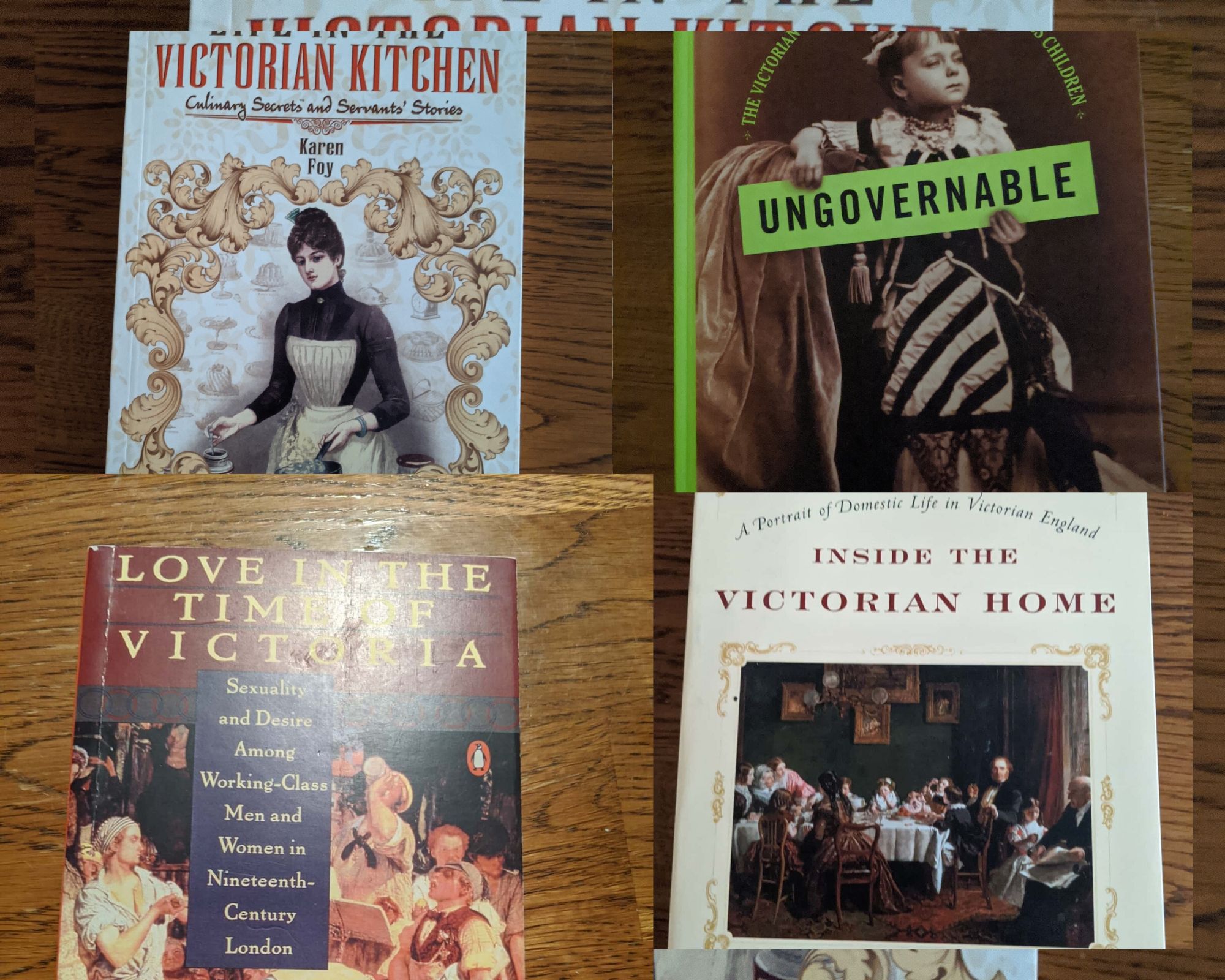
I bring this up because as I said in a previous post, I’m busy doing research for a story to go into the short story collection I’ve been putting together. That story is set in Victorian England, an age that, as many of you know, I’m a big fan of. You guessed it, I bought a bunch of new books to better understand that age. And this week, while I was reading one book and seeing information I’d previously learned in another volume repeated here, I realized that, to a certain extent, I will be putting these attitudes of the age into the story.

Including the ones I find reprehensible.

There are generally four ways writers include these sorts of ideas and beliefs into their stories. An author may include a character who’s already very forward-thinking or contrarian, taking on viewpoints which their peers will not get or abhor, but the audience will sympathize with and allow them to pity the characters who don’t think like that (think Wonder Woman’s attitudes regarding WWI-era norms and gender roles in her movie). Other times, characters may start with one attitude and then evolve to a different one over the course of the story as part of a character arc (Villetta Nu’s arc in the anime Code Geass: Lelouch of the Rebellion towards non-Britannians). There are characters whose whole point in existing are to present a contrasting view, usually as something for a protagonist to work off of or a driver of the plot (think Big Jim Rennie in Stephen King’s Under the Dome).

And then there are times when the author says, “Screw it, there’s no way around this,” and just portrays those attitudes as authentically as possible. I have a feeling with this story, I’m going to have to go with this route.

The books I’m using as research. I think they’ll be quite helpful in creating the level of detail I’m looking for.

I still haven’t worked out the details of this story, other than the time period and certain elements/characters. I don’t know how much of the Victorians’ beliefs and attitudes will make it into the story, or which ones for that matter.* Still, they’ll be there throughout the story for the sake of authenticity. It’ll be weird writing them into a story when they may go against everything I stand for. But for the characters, they’ll be the norm, and as true as the fact that the sun rises in the east and sets in the west.

The cognitive dissonance will be a mind-fuck.

But if the dedication to authenticity helps make the story good, then I won’t have any complaints. That’s what’s important in the end, isn’t it? Even if I have to write in a discussion on how chloroform subverts God’s commands on childbirth.**

What are your thoughts on including attitudes and beliefs that you don’t agree with in your story? Any fun reminiscences on the subject?

*Did you know that it was considered dangerous to give children fruit while they were young? It was believed the sweet taste would excite them and lead to delinquent behaviors. Also, while germ theory was starting to enter public consciousness, it was a slow process. In 1865, the Female Medical Society published statements asking doctors to take more steps to decrease death in women by childbirth. The medical journal The Lancet responded by calling their suggestions for cleanliness “erroneous,” and asserted that these deaths were caused by women leading immoral lives, which could mean anything from engaging in prostitution, feeling sexual desire, or enjoying pickles too much.

**Yeah, that was a debate in the 19th century. Did chloroform, when used in childbirth, prevent women from feeling the pain God ordained for women? What an age!

You know, I feel like I should’ve written a post like this a while ago. Like, at least a month ago. Oh well, better late than never. I’ve been thinking for a while of what I want to do in terms of writing for 2020. Which is unusual, because while I’m a huge plotter for my stories, I don’t usually plan out goals for an entire year. But I feel like, with a book published and a short story included in an anthology last year, I feel like I should try some new strategies to keep the momentum going. So without further ado, let’s talk my writing goals of 2020.

Finish Toyland

Of course, this was on here. Luckily, I’m already on my way there: as of a few days ago, I’m only six chapters away from finishing Toyland, the Gothic horror novel I’ve been working on since November. Depending on how things play out this year, I’ll probably edit it at some point. After that, perhaps I’ll find a publisher for it. Fingers crossed it goes well (and that a novel approaching ninety thousand words doesn’t intimidate anyone).

Complete the short story collection

Before November and NaNoWriMo, I was putting together a collection of short stories. As of now, there are twelve stories in the as-yet unnamed collection. Being a horror writer though, I want thirteen stories. Good thing I’m already making strides on that goal: I’ve been doing a lot of research for a story I want to write after Toyland‘s done. I think it’ll be somewhere between the length of a novelette and a novella, or ten thousand to sixty thousand words. Hopefully writing it goes well, once I hammer out the plot details.

After that, I’ll hopefully be able to find a publisher who can help me get the stories in tip-top shape. Or maybe I’ll self-publish again. We’ll see how things develop.

Write at least ten short(er) stories

Including the last story for the collection, I want to write at minimum ten stories shorter than a novel. Preferably, they’ll all be short stories, but I know that a few of them will be novelette or novella length (depends on the story, obviously). I would also like to edit most of them within a year, and get at least three or four published in some form or another. Getting a short story in The Binge-Watching Cure II last year was an amazing experience, so I want to see if I can do it again.

And of course, it’s always a good idea to polish your short fiction-writing skills.

Maybe start a new novel

I’ve known for a while what novel I’d like to write after Toyland. However, I think I’ll wait a good while until I write it. Novels are a huge commitment of time and energy, so I want to make sure I’m ready before I try my hand at a new one (and maybe get one or two others edited and/or published).

Grow my audience

I’ve been lucky to grow an audience over 8.5 years of blogging, Facebooking, tweeting, Instagramming, and occasional YouTube videos. But I’m always hoping to grow my audience just a bit more. And while I don’t have any particular numbers I want to reach, I want to draw more people in and maybe get them hooked on my particular brand of weirdness. Especially my fiction.


Well, those are my writing goals. Here’s to them going well in the 11.5 months we have left of 2020. I hope you’ll continue to support me during that time, and maybe even read/review my published work if you can.

Until next time, Followers of Fear, pleasant nightmares and WHO LET THE MONSTER KNOWN AS THE DEAD MAN’S STRUGGLE INTO MY BUILDING?! Now I have to either kill it or seal it away. Either way, the cleanup’s going to be exhausting.

What are your writing goals for 2020? Have you made any progress with them so far?

February is Women in Horror Month. Since women writers are a big influence on my writing–JK Rowling got me into storytelling in the first place, and Anne Rice helped pave the way for me to write darker fiction–I thought I’d recommend some stories for those who want to help support the month. You’ll see some familiar names here, but also some you may not be familiar with. Either way, I hope you’ll consider giving them a read.

Tiny Teeth by Sarah Hans. This is actually a short story by a friend and colleague of mine, but it is a scary one. Imagine a world where a virus turns children into dangerous, gnawing animals, and one woman’s experience in that world. You can find it on Pseudopod.org, a website where scary short stories are read by narrators and released as a podcast. Give it a listen. Guarantee you, it’ll be 45 minutes not wasted. Here’s the link.

Garden of Eldritch Delights by Lucy A. Snyder. This is also by a friend and colleague of mine, but it’s also a great collection of scary stories. The majority of them feature cosmic horror themes and entities, which I love, as well as intriguing characters and plots. A couple of the stories also incorporate sci-fi and fantasy themes, and feature a diverse cast, which is something I love to see. If you pick up Garden of Eldritch Delights, you will find it worth your time. Here’s the Amazon link.

The Amaranthine Books by Joleene Naylor. You’ve probably seen Joleene’s name around this blog before, but did you know she’s written an entire book series? She has, a vampire series called the Amaranthine books, and they all come highly rated. Even better, some of the books are free or under a dollar under the Kindle edition, so why not take the opportunity to read them? You can find all the Amaranthine books, and then some, on Joleene’s Amazon page.

In a Dark, Dark Wood and The Death of Mrs. Westaway by Ruth Ware. Technically, these are mysteries, but they have horror themes about them, so I’ll count them here. In a Dark, Dark Wood follows a mystery writer invited out to a bachelorette party by a friend she hasn’t seen in years, unaware of the forces conspiring against her. The Death of Mrs. Westaway stars a Tarot reader on hard times who finds out she’s received an inheritance from a grandmother she didn’t know she had, and what that inheritance entails for her. Both are terrifying and keep you on the edge of your seat with suspense. You can check out both further on the author’s Amazon page (and I need to check out more of her work).

Kept me on the edge of my seat the whole audio book.

Within These Walls and The Shuddering by Ania Ahlborn. No joke, Ania Ahlborn is one of the scariest writers I’ve ever had the pleasure to read, and I really need to read more of her work, as should you. Within These Walls follows a true crime writer as he and his daughter stay in the home of a Manson-like cult leader, and what happens while they’re there (I actually reviewed it a few years ago). The Shuddering follows a group of young adults as they go skiing at a mountain resort, only to discover the area has come under siege from a rather hungry enemy. Either one will leave you shaking in your boots! Here’s the Amazon page if you want it.

The Haunting of Hill House by Shirley Jackson. Come on, you know I had to include this. Even if I’m not a fan of this book, it’s undeniable that Jackson’s most well-known novel, and one of the most influential horror stories of the 20th century. Following a group of paranormal researchers as they explore the titular house and the effect the house has on them, this book is still a well-known classic in the genre, and some consider it required reading for fans and authors. It’s so well known, I won’t include any links for it (surprise!).

Interview with the Vampire by Anne Rice. Again, can you blame me? Whatever you think of the many sequels, it’s undeniable that Anne Rice’s debut novel has remained a classic for a reason. A journalist interviews a 200-year-old vampire named Louis, who recounts his creation in French New Orleans and his travels around the world looking for meaning and for more of his kind. It’s a haunting tale, the horror coming more from Louis’s psychological journey and despair rather than from the supernatural. As I said earlier, this novel also paved the way for my eventual turn to horror, so I can’t recommend it enough (and I’ll have to reread it someday). Again, no need for links. It’s that well-known.


What recommendations do you have for Women in Horror Month? Are you reading anything for it? Are you familiar with any of these books? What was your opinion of them?

That’s all for now, my Followers of Fear. I hope you find something good to read based on this list. I’ll be listening to The Accursed by Joyce Carol Oates this month on audio book, so maybe I’ll add it to a future list someday. I better get started soon!

Until next time, pleasant nightmares!

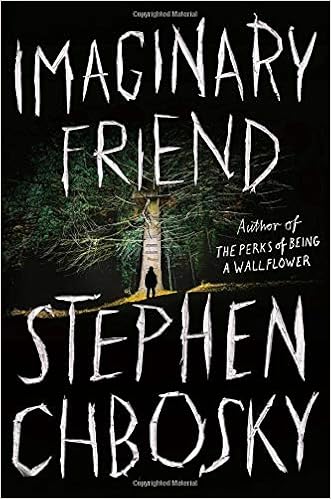
Over the past couple of months, people in the horror-themed Facebook groups I belong to have been raving about this particular book. I looked it up and it sounded up my alley, so when I had an Audible credit, I downloaded the audio book. But before I started it, I found out the book was written by the same guy who wrote the novel The Perks of Being a Wallflower, as well as wrote/directed its movie adaptation. Really? Isn’t that a sweet, YA rom-com? How do you jump from that to horror? (looks up what that book is really about.) Oh. That’s pretty dark. Yeah, I can see how the dude transitioned to horror.

Imaginary Friend follows Kate Reese and her son Christopher as they leave Kate’s abusive boyfriend and move to a small town in Pennsylvania. However, soon after they move there, Christopher disappears in the woods near his school. He reappears a week later, unable to remember what happened to him, except being led out of the woods and back to civilization by someone called “The Nice Man.” While Kate is happy to have her son back, and things start to improve after he returns, Christopher has changed. He’s smarter now, unable to sleep, and suffers from headaches a lot. And he’s in contact with the Nice Man, an invisible being who instructs him to build a treehouse in the woods he disappeared in, and to do it before Christmas. If he doesn’t, something bad will happen. To the town, to his mother, and to him.

This one was hard to put down. I normally only listen to audio books while at work, but the story was so intriguing and out there that I listened to it while checking email and cooking dinner. Imaginary Friend feels a lot like Stephen King novels like It or Needful Things, these huge stories based around weird concepts that are both scary and hard to put down. I mean, you got a kid who goes missing in the woods, and then when he comes back, has to build a treehouse to save the world from the Apocalypse. And that’s just what I feel I can tell you without spoiling too much.

I also have to give Chbosky credit: I had a hard time predicting what was going to happen as we got further into the story. Every little piece of the puzzle had the potential to surprise me, and quite a few did. During the “darkest hour” of the book, when things are at their most pessimistic, you felt the misery and the tension as the situation deteriorated. And that climax! Woo-boy, that was epic. Like, the final battle of an Avengers movie epic.

Not only that, but the characters are very well-developed. Also like some of King’s books, especially earlier ones, just about every character is well-developed. I felt like I’d known some of these characters my whole life, from Kate and Christopher Reese to the two or three old ladies suddenly regaining their faculties after years of dementia.

I do have one major gripe about the book: as the story goes further on, the novel takes on an…evangelistic air. It’s not like the Left Behind books, where it’s trying to get people to become born-again, but the story leans more in that direction than in the direction of The Stand or Supernatural. I don’t think the goal is to convert me: rather, I think Chbosky is using his Catholic upbringing to give the story a particular authenticity and philosophy other non-evangelistic Ultimate-Good-versus-Ultimate-Evil stories don’t have. There are some interesting ideas on the nature of guilt, our relationship to God, and how to find different kinds of salvation presented in the story.

Still, there were times when I was like, “Dude, scale it back a bit. I’m starting to get how people feel when I start ranking villains in horror, and they’re not horror fans.” That’s happened before, and it’s gotten awkward.

On the whole though, Imaginary Friend by Stephen Chbosky is an engrossing horror novel that’s weird in the best of ways and full of terror and twists. On a scale of 1 to 5, I’ll give it a 4.4. Pick it up and see for yourself. You’ll never look at treehouses and deer the same way again, but you’ll have a hell of a ride thanks to it.