The detective arrives at the crime scene and finds the body is nearly identical to another murder. A soldier is walking through a swamp, when they are warned by their sergeant that mines are buried underfoot. The bride leaves her groom at the altar, looking to find herself after years of being told what she should do with her life. The singer comes across Robert Johnson’s guitar, thought to be long lost, and finds there’s more than just history attached to it.
All of these could be the beginning of a story that starts in media res.
Latin for “in the middle of things,” a story that begins in media res is one that starts midway through the plot, rather than at the beginning. And believe it or not, a lot of stories start like this. Hell, you’re probably familiar with most of them. The Star Wars movies arguably all start in media res, as they all start when a conflict is well underway. The novel Gone Girl begins with the protagonist’s wife being discovered missing. Wicked, from novel to musical to movie adaptation (love those last two) always start with the Wicked Witch being a well known figure and with several events implied as having happened and being common knowledge.
That last example brings up something important: how do these stories start in the middle when there’s who knows how much backstory we’ve missed? Often, this is accomplished through dialogue, flashbacks, and exposition. Flashbacks are especially popular, with the majority of Wicked being flashbacks, and the Deadpool films using flashbacks to explain why the film starts off with Wade Wilson getting into some insane shit.
And in horror, in media res is also quite popular. From the classics like Dracula, Frankenstein and Jekyll & Hyde to modern entries like Firestarter and Nightmare on Elm Street. Many of my own stories also start this way: Rose begins with Rose Taggert waking up in a greenhouse with no memory of how she got there or of the past two years, “Queen Alice” begins with my main character Joshua Blumfield already giving his report on the urban legend, and “The Dedication of the High Priestess” begins with Annie Hummel going to a gallery after already serving as a model for three paintings.
Why do horror authors, as well as authors in other genres, begin their stories this way? Well, one thing is the immediate hook. Take Nightmare on Elm Street: it starts with Freddy crafting his claws and then chasing after a teenage girl, only to wake up right on time. We’re immediately left wondering what happened and why, and that keeps our interest.
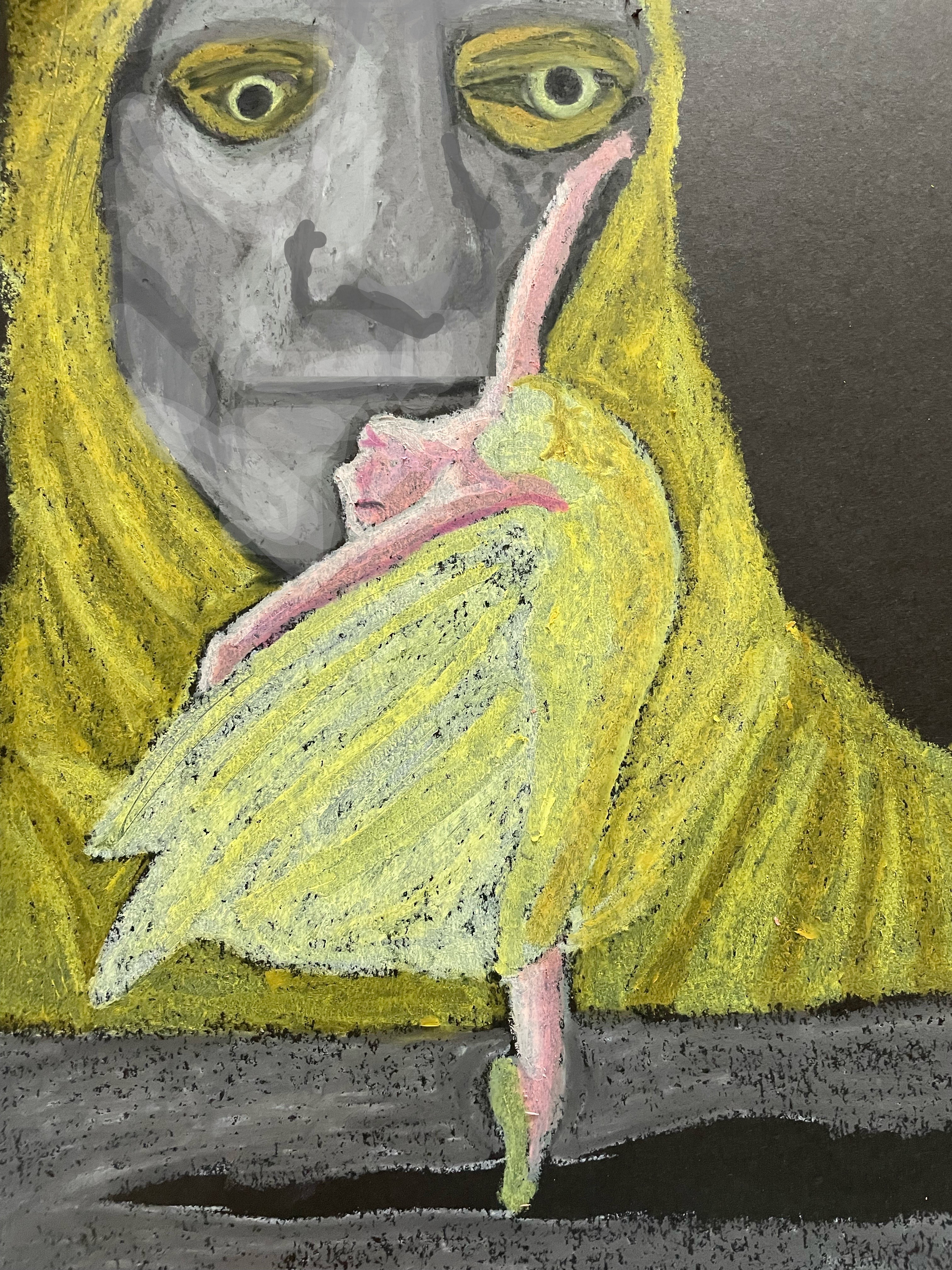
This oil painting by friend and colleague Iseult Murphy is based on “The Dedication of the High Priestess.” The story is an excellent example of a story starting in media res.
It also makes for great suspense. Take Nightmare again: we’ve already witnessed what Freddy’s capable of in the first scene, and so we wonder what else he can do. Would that have happened if we started with Freddy’s first murders and then getting killed by the parents? That opening violence builds up our expectations and keeps us enthralled.
Finally, you manage to get through a lot of exposition writing this way. Take Gone Girl, for example. Gillian Flynn could have started the story with Nick and Amy meeting, getting married, and the fracturing of their relationship before Amy’s disappearance, but would that have been as fun? It’s more interesting and suspenseful to read about the disappearance and then see how their relationship developed.
Another great example would be my story “The Dedication of the High Priestess” (spoilers for a story that came out in 2022). As I said, that story starts with my protagonist Annie already having modeled for a famous artist. She then goes through the gallery, which then causes her to be caught up in the King in Yellow’s plot to come to Earth. I could have started with Annie taking ballet classes, being scouted for the painter’s new series, doing the modeling gigs, and then going to the gallery, but that would have taken a lot of time and pages, and a lot of effort to keep readers interested. Starting with the gallery showing, using dialogue and exposition to explain how we got to this start, and then getting straight to the horror was very effective.
So, there’s a lot of reasons to use in media res to start a story, no matter the genre. It won’t work with all stories (looking at you The Hogfather, Die Hard, and Kill Creek), but if it works with your story, and you can do all the backstory parts without any issue, I see no reason not to use it. After all, I use it all the time. And look at me now!
Thanks for reading, my Followers of Fear. I’m about to start a new story, and it starts so in media res, some readers might need to read the start again. I thought about starting it from earlier in the events of the story, what I would normally reserve for flashbacks or exposition, but it felt like it would take too long and take up too much of a word count. Thinking about it and weighing my options made me want to write this blog post.
And now, if you need me, I’ll be busy writing what may be the most Halloween-y story I’ve written to date. Until next time, good night and pleasant nightmares!
As many of you know, Kill Creek by Scott Thomas has become one of my favorite novels, if not my favorite (you can read my review from 2018 here). So, when I heard Thomas was releasing a collection of four novellas, I had to get my hands on it. And while it took me longer than I wanted to get through it (I picked it up in September and only just finished it), I’m glad I got to read it.
Taking place in a fictional version of Kansas that’s part of the same universe as Kill Creek (and possibly his other novel Violet, I’m not sure), each novella follows a native who gets pulled into horrors beyond their control. Three of these stories connect to the very land and the entities, natural or supernatural or preternatural, that inhabit and make up Kansas, all of these stories deal with dark histories and hidden truths, and each story connects in some way to the authors who were the stars of Kill Creek,* enhancing the reading experience.
The first novella, The Door in the Field, follows a young construction worker with anger issues who joins his boss for a drink after an incident, and ends up spending a night in terror. This story does move a bit slow at times, but it’s a thrilling tale full of blood, violence, and cosmic horror that pays off well at the end with the reveals and the main character’s growth. My one major criticism is that the novella is kind of a story within a story, and the framing device doesn’t really add much to the story. It doesn’t take anything away, but it doesn’t add much, either.
The second novella, Wear Your Secret Like a Stone, follows a troubled young woman who, after her pick of book for the Halloween display at her job is taken down by a customer complaint, goes on a mission to get her favorite book back. Only along the way, she learns some frightening local history which is more alive than she thought. I think this might have been my favorite novella of the bunch. It’s atmospheric, the protagonist is likeable, and the ending is a dark fantasy twist that will bring you chills.
The third novella, The Boy in the Woods, is about a young boy who, on the last night at camp, finds himself in the middle of a slasher story with a rage zombie twist. It’s a wild ride of a story with a sympathetic protagonist and a the way the slasher/rage zombie aspect are approached gives both tropes new life that I wasn’t expecting. If Wear Your Secret was my favorite, then The Boy in the Woods is a close second.
The final novella, One Half of a Child’s Face, is about a mother who is able to see into her ex’s apartment building al a Rear Window. There, she frets about not having her daughter living with her full-time and gets a vicarious thrill at watching the residents live their lives…until a strange painting in an empty apartment seems to throw an evil influence over the building’s residents. Of the four novellas, I would consider this the weakest. It takes a long time to build to anything and there are quite a few plot threads left hanging at the end. However, the last fifty pages are so were hard to put down and I enjoyed reading them.
All in all, Midwestern Gothic by Scott Thomas is a worthwhile collection of novellas. On a scale of 1 to 5, I would rate it a 3.9. Pick up a copy, settle down in your favorite chair, and prepare to be transported to a different sort of Kansas.
*If you haven’t read Kill Creek, don’t worry. You can still read the collection just fine. Kind of like how you can watch The Big Bang Theory and still laugh at all the jokes while not necessarily getting every sci-fi or comic book reference the characters make. Still, I highly recommend Kill Creek, so if you’re curious, read that one, too.
So, I’m reading Every Woman Knows This: A Horror Collection by Laurel Hightower, a collection of horror short stories I won in a Twitter giveaway. Not very fast, because I get through print books so much more slowly these days than I used to, but I’m making my way through it. And I am in awe that some of these short stories appear to be shorter than five thousand words. Hell, some of the earlier stories in the collection appear less than four thousand.
And I’m sitting there, reading the stories, and I’m like, “How does she do that and make them still so damn good?”
I actually posted that question on my personal Facebook and my Twitter feed. Laurel responded to the Facebook post (we’re friends there), thanking me for posting about the book and being glad that I’m enjoying it. Did not share her secrets with me, though.
I wish she had, because I would love to be able to write stories that short and still be effective. After all, I grew up on Harry Potter and the Bartimaeus Trilogy, followed by books like Interview with the Vampire and IT. The shortest of those books is seventy-seven thousand words. By the time I started regularly reading and writing short stories, my brain was already primed for sprawling plots with deep twists, multiple layers of themes and secrets, and complex character relationships that are explored through multiple pages, chapters and books.
Taking all that out and trying to tell an entire story in less than seventy-five hundred words (what the Horror Writer Association says is the maximum word count for a short story) was a huge switch for me. And honestly, I’ve had varying success. Occasionally, I manage to get a story less than seventy-five hundred words, and sometimes those stories get published, but more often short for me is a novelette between 7,500 and 17,500 words. Not as long as a novel, not by far, but allows me more room to work with those plot elements I like.
Still, I do try to come up with and write those shorter stories, what Stephen King calls “a quick kiss in the dark from a stranger.”* Yeah, it’s difficult to do, but most publications are looking for stories of that range, and I want to get my work into them. And, I like the challenge. It’s another hill for me to climb on my journey as an author. And, occasionally, something I write in this vein is really good.
That being said, if it looks like a short story is destined to be a novelette, or even a novella or novel, I will let it be the length it’s going to be. No sense trying to maim a good story so it can fit somewhere, right?
But I still try. And I’ve gleaned some things in my attempts, like instead of big plots or huge happenings, you focus on small instances or events that may happen to one or two people. Rather than the big moments, like the destruction of It in the sewers of Derry or the fallout of four writers visiting a haunted house on Kansas during Halloween for a publicity stunt (Kill Creek by Scott Thomas, if you don’t know), I should focus on maybe a ghost at the Ohio State Reformatory trying to get information on what happened after he died, or a young man dealing with something evil that’s appeared intermittently in his life. Those might manage to become the kisses given in the dark by a stranger.
Actually, one of those was a kiss in the dark, and some of you may remember it. It’s “Is Anyone There,” which was published last year in That Which Cannot Be Undone, and got mentioned in several reviews as a highlight of the anthology. So maybe I might be closer to my goals than I think.
Just don’t kiss me in the dark. I’m more likely to punch you for that than enjoy it or put it into a story.
What are your tips for writing short stories, Followers of Fear? Do you struggle with keeping them under 7,000 or 5,000 words? Let’s discuss.
Also, be sure to check out Every Woman Knows This by Laurel Hightower. So far, it’s a great collection, and I hope I’ve learned some things by the time I’m done.
*Which, by the way, is a weird idea, isn’t it? You walk down an alley or into a room and it’s really dark and suddenly someone plants one on your mouth before disappearing? Actually, the scenario with the room is the plot of an Anton Chekhov short story, and the character who gets the kiss does have an impression left on him. So, I guess it’s a good metaphor.
I’ve heard this term thrown about a few times since January, first in the new Scream movie and most recently in an analysis of a horror film on YouTube. “Elevated horror.” And the speakers, whether in in the Scream movie or in the YouTube video, made it sound like it’s a recognized subgenre of horror with its own staple of tropes and trappings. Like slasher and its killers and gore, or Gothic with its ancient, diseased settings and corrupting influence.
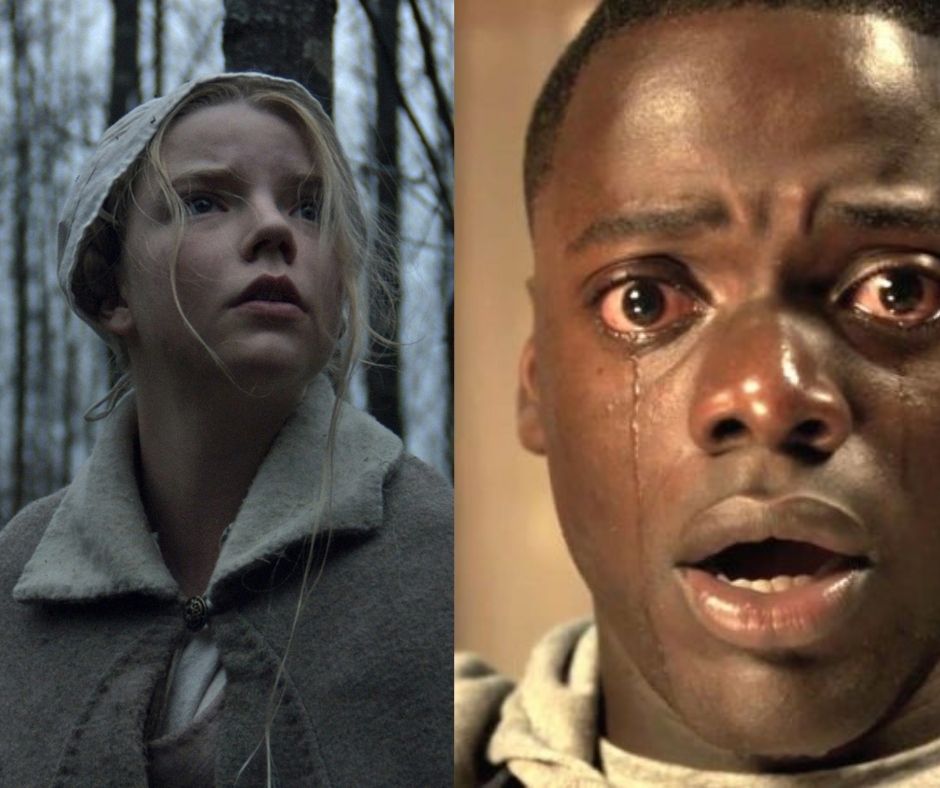
The thing is, it isn’t. Elevated horror isn’t an actual subgenre of horror. I’ve consulted with dozens of writers on this (thank you, Twitter and the Horror Writers Association Facebook group) and it’s not a subgenre. It seems like a subgenre of horror at first glance when you look at works referred to elevated horror. In movies, films referred to as elevated horror include The Witch, Babadook, It Follows and Get Out, among others: they’re horror stories that focus more on probing psychological drama, characters and metaphor than blood and gore or supernatural horrors. Often, there’s a powerful social commentary being presented through the narrative, such as Get Out‘s commentary on race.
In terms of literature, “elevated horror” might have all of these as well as flowery language. It might be almost called “literary horror,” because there’s an emphasis on wording the story nicely and making it just too dark to be called “literary fiction.” Examples include The King in Yellow by Robert Chambers, Interview with the Vampire by Anne Rice, The Deep by Alma Katsu, and A Cosmology of Monsters by Shaun Hamill.
And, most importantly, “elevated horror” can sometimes cross over into other genres, such as thriller, literary, or even comedy.
Can you really say The Witch and Get Out belong in the same subgenre?
Sounds like a subgenre, doesn’t it? But it’s not. The works called elevated horror are all as different from each other as roses are to tulips are to primulas. All flowers, but all different kinds of flowers. Let me explain: The King in Yellow and The Deep are cosmic horror mixed with deep psychological themes, The Witch is some cross between folk, religious and historical horror, and Get Out‘s searing satire makes it borderline horror-comedy. In fact, it was nominated at the Golden Globes under categories for comedies or musicals!
Yet all of them are given the designation of elevated horror. So, if it isn’t a subgenre, what is it?
The conclusion I’ve come to after speaking to numerous other writers is that elevated horror is actually horror films taking place in elevators.
Just kidding, that’s elevator horror, and the only example of that I can think of is 2010’s Devil.
No, “elevated horror” is a marketing term. And like all marketing terms, it’s directed towards a specific audience. Who is this target audience? It’s people who normally wouldn’t check out horror because they fear it’s low class, dangerous, or degenerate. They may want to check out horror or be curious, but the stigma still attached to the genre keeps them from doing so. Either that, or they won’t check it out unless a work is given a specific designation.
Calling something “elevated horror” is basically saying, “This isn’t like other horror stories, where half-naked teens are voyeuristically killed with tons of blood and gore, or where supernatural entities menace children in sewers. No, it has nuance and social commentary! There’s psychology and drama and fleshed out characters! You can be respectable while enjoying this!”
In other words, it’s another way of something is high-brow. “There are no explosions and superheroes here. No aliens or elves. No star-crossed lovers up against the odds. Only real people having real life situations, or real people in situations that are absurd but it’s okay, because it says something important about society.”
I almost wish it was a subgenre. I might have found a home for my ballerina-meets-the-King-in-Yellow story already (still working on that, give it time).
Pinhead may not be from an elevated franchise, but that doesn’t make him or Hellraiser any less awesome.
And the problem with this marketing term is it’s misleading. By calling certain movies or books “elevated horror,” it’s labeling all other horror as “trash,” or at the very least “common.” Either way, the designation puts other horror stories down. And that’s a shame, because there’s such good horror out there. Dark Harvest, Kill Creek and Salem’s Lot aren’t high brow, but they’re great stories that thrill and can leave their readers up late into the night. Same with The Thing or the Hellraiser franchise: they may never win Oscars, but goddamn are they scary, and the latter has led to one of the most memorable characters in the slasher genre.
I’m not trying to put down the term. I’m just saying we should understand what it means, both for works designated as such and those that aren’t. And if it lets you enjoy horror, great. Just make sure to check out works that aren’t “elevated” and whose creators don’t really think or care if their work is called that.
Personally, I can see some of my work being called elevated, but I’ll just say that I was trying to write a fun story and wanted others to enjoy it as well.
That’s all for now, my Followers of Fear. After getting my thoughts on this topic out, I’m off to dream of beasties and ghosts. Until next time, good night and pleasant nightmares.
A handy graphic for understanding the three act structure, courtesy of Wikipedia.
The other day, I was talking with some other writers about how to write a decent short story (an eternal question among writers, including the ones who’ve gotten them published). And I noticed that, with a lot of my recent short stories, most of them fall into a decent three act structure. And then I said, “I know the existence of the three act structure is dubious, but it’s the truth.”
And, like many odd things, that little exchange has stuck in my head.
So for those of you who don’t know, the theory of the three act structure states that all stories, especially longer ones, can be divided into three separate acts or sections: the setup, the confrontation, and the resolution. The acts may then be divided into smaller scenes or subsections, but they all fit into those categories. Some examples given of stories with the three act structure are Star Wars, Die Hard, and Avengers: Endgame (though I sometimes think everything before the five-year jump is its own separate act or prologue).
While many of us are taught this structure in school, most of our teachers will let us know that not everyone believes in the three act structure, let alone say they use it. Some prefer using a five act structure. Others say storytelling is too complicated and diverse to say a story can be divided into a formulaic structure. And nearly all playwrights will agree that if it can’t be told in one act, tell it in two.
Good example of a story in three acts (supposedly).
That last one might be a joke.
I’m usually of the camp that believes storytelling is too complicated and diverse to boil down into a structure. Look at Stephen King stories. Most of his shorts, like Graveyard Shift, Night Surf or The Boogeyman, are simple one-scene stories with maybe a twist at the end, and I dare you to try to fit books like IT or Salem’s Lot into three acts. Then there are stories like Kill Creek by Scott Thomas or Interview with the Vampire by Anne Rice, which feel like they fit into four acts.
As for my own books, Snake is in multiple sections, much like the books I was reading up to and during the writing process, and I see Rose as in-the-apartment and after-leaving-the-apartment (if you read the book, you know what I mean). I can’t see the stories in The Quiet Game as anything but a progression of events. And I wouldn’t even know where to start with The Pure World Comes or the stories in Hannah.
So, is the three act structure a real thing? Well, yes and no. I feel like it’s more of a framework for people to examine fiction, both others and their own. You don’t have to use it if you feel it doesn’t work for you or if you feel a story has too much happening in it to divide the plot into three separate sections.
But if you do find it helpful, use it to your heart’s content. I’m sure many writers, especially plotters like myself, find the three act structure helpful for planning their stories. And as I said above, many of my recent short stories, including the ones that have been published, fall into three acts. Though I think of them less as acts and more like beats, scenes, settings, or occurrences. And if I’m trying to keep a story within a certain word count, I can see using this structure to my advantage.
So what is the three act structure? It’s a prism to understand some fiction stories through, as well as an actual tool for writing. It’s not perfect, and most stories don’t fit into it that well, but that doesn’t mean the idea isn’t useful. Hell, it might even help you hone your craft and get a few more short stories out there. And that is never a bad thing.
Unless you’re trying to write an award-winning musical. Then you might want to keep it to two or maybe just one act.
That’s all for now, my Followers of Fear. March has just started and it’s already looking a lot better than January and February is (world events notwithstanding). I hope I can update you on exciting developments in the near future. And until next time, pleasant nightmares.
I would like to thank my friend Kat Impossible for tagging me for this (especially since I was in the mood to blog something other than an “Agoraphobia” update, just didn’t know what). Go check out her answers on her blog.
Now, I don’t know how much I’ve talked about my alcohol preferences on this blog (though I’m sure it’s come up once or twice). But while I do like beer, I also enjoy wine every now and then (in fact, Brothers Drake honey wine, better known as mead, is what I use to celebrate finishing novels or getting them published). I’m especially fond of sweet wines, like Moscato, Japanese plum wine, or the abovementioned mead. That’s why I’m kind of excited to do this tag, even if it involves wines I don’t normally drink. So, without further ado, let’s begin.
BOX WINE–a book that people will judge you for liking but you like it anyway!
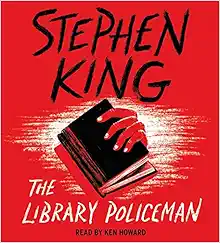
I can think of only one book that could possibly fit this category, and believe it or not, it’s a Stephen King novella! The Library Policeman, which you can find in his collection Four Past Midnight. The story involves a real estate agent who runs afoul of a creature masquerading as a librarian and which intends to use the agent for its own nefarious purposes. While it’s good and extremely unnerving, there’s a pretty graphic scene in the story that’s essential to the story, and it’s one of the first things people think of when they think of the novella.
It’s also why people might judge you if you say you like the story, or if you want to see an adaptation of The Library Policeman. Which, honestly, given the subject matter, would be a hard sell. Still, if you either approached the problematic scene in the right way or rewrote it in a way that preserves the impact…anyway, that’s my choice. Don’t judge me too harshly now!
ORGANIC WINE–a book that doesn’t have any added crap in it and is just written perfectly.
I was going to put one novel here, but I’m saving it for later, so I’ll put this one here. The Girl Next Door by Jack Ketchum.*shiver!* That book is famous for how traumatizing it is. And considering that the events it’s based on aren’t too different from what’s in the book, that somehow makes it even more terrifying. But that kind of lends itself to winning this category, as none of what’s depicted in the novel is technically gratuitous or unnecessary. It’s just a reflection of real events.
Not only that, but if Ketchum wasn’t such a talented writer, he couldn’t write the novel the way it is and make it so terrifying. In another person’s hands, they may have added all sorts of melodrama or other unnecessary elements. But in his hands, and with his willingness to push boundaries, it’s a masterpiece!
That being said, anyone going in for the first time should prepare for a ton of anxiety and maybe some nausea. You’ve been warned.
Accurate representation of many first-time readers of The Girl Next Door.
GLUEHWEIN–a spicy, wintry read.
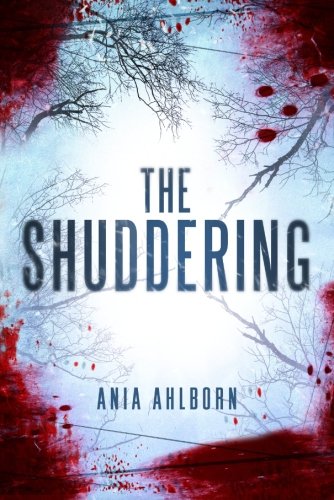
Never heard of that wine. Also, what do you mean “spicy?” Like, sex scenes? Whatever, I’m going with The Shuddering by Ania Ahlborn. It takes place in winter, in ski country, and there are a lot of romantic subplots in the story, so I think that works. Plus, it’s scary. For those unfamiliar, it’s kind of a cross between a creature feature and a good, old-fashioned splatterpunk slasher story. I enjoyed it immensely. Why haven’t they made a movie out of it yet? Keep the monsters in the shadows but keep the focus on the survival instinct and it’ll be great!
SAUVIGNON BLANC–a really sharp and aggressive read that you couldn’t put down!
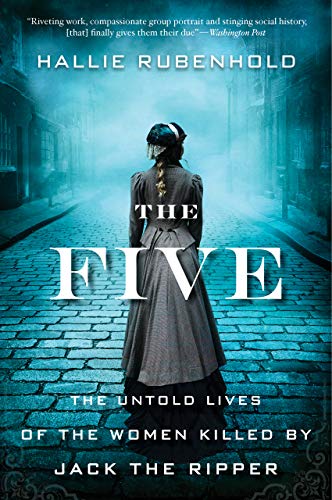
I actually had to look back through my reviews to find a book that works for this one. In the end, I found one that fits “sharp and aggressive,” and that’s The Five by Hallie Rubenhold. This book takes a look at the Canonical Five, the five confirmed victims of the serial killer known as Jack the Ripper, and uses historical records and an understanding of Victorian social mores and beliefs to reexamine their lives. Doing so, the author Ms. Rubenhold strips away every belief we’ve had on the victims, and therefore the Ripper, till we’re forced to look at the case in an entirely new light.
This book was an eye-opener for me, and I found the author’s argument highly convincing. In fact, I even referred back to The Five while writing The Pure World Comes, where the Ripper is an important aspect of the story. And if you read the book, you’ll understand why I place The Five in this category.
PINOT NOIR–a book you didn’t expect much from but ended up getting blown away.
It’s easier to pick a movie than to pick a book for this one. Still, if I go back far enough, there’s one book that I can think of. The Amulet of Samarkand, the first book in The Bartimaeus Trilogy by Jonathan Stroud. I was a huge Potterhead when I was younger, so my mom suggested it to me while we were shopping in a Barnes & Noble one day. At first, I was dismissive, but eventually I was convinced to try it out. And then I read it.
Hoo-boy. The lead characters are awesome and easy to relate to, Bartimaeus himself is hysterical, and the world building was quite an eye opener after reading nothing but Harry Potter for ages. Add in some political intrigue, a plot with twists and turns, and excellent writing, and I was hooked. I was really sad when the series ended, because it was just so good (there was a prequel, but without certain characters, it just wasn’t the same).
Still mad that they haven’t made a movie franchise or TV series off of these books. Supposedly, a movie adaptation is in the works, but until I see some actual progress, I’m not getting too excited.
CHARDONNAY–a good summer read that was super zesty.
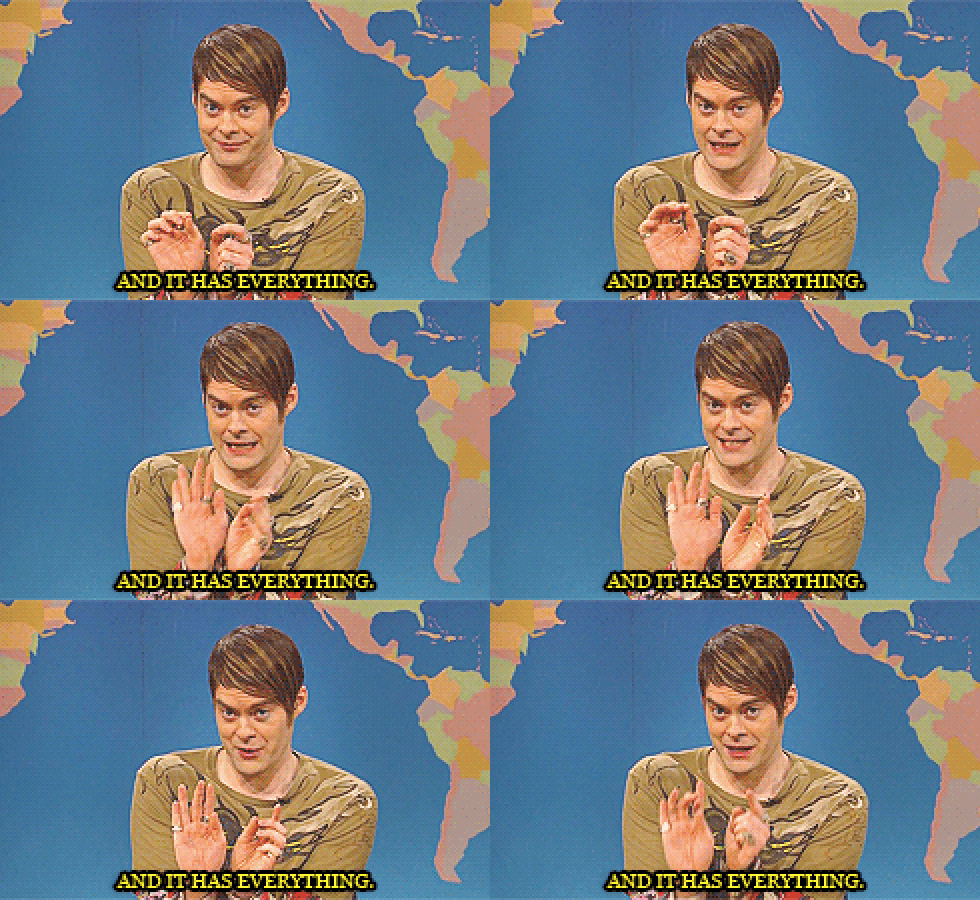
What does that even mean, super zesty? Does the story have to have melted cheese with a sharp taste on it or something?
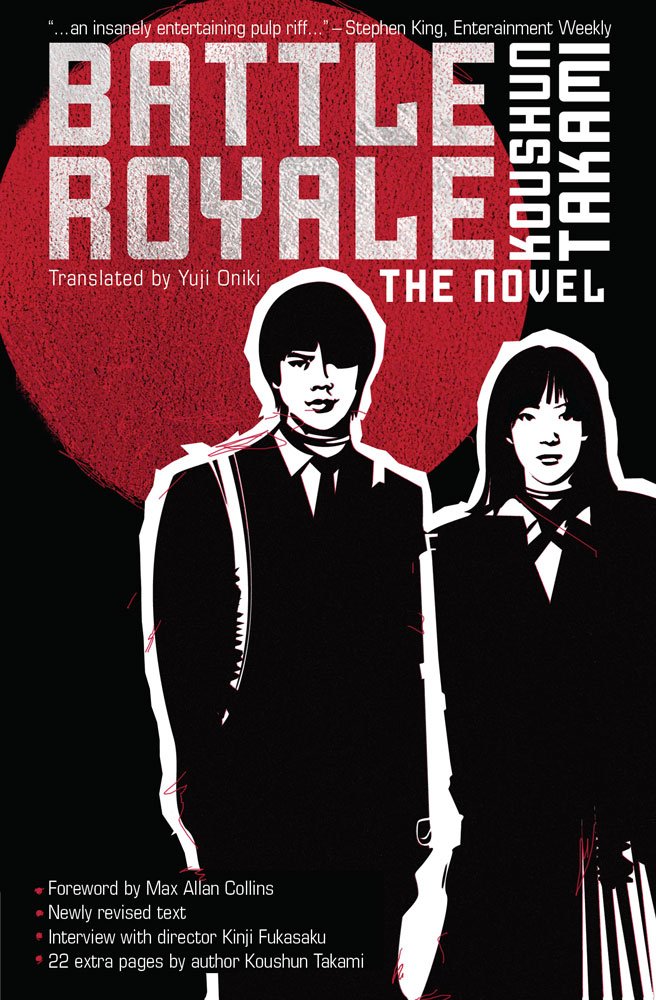
Oh well, I’m going with Battle Royale by Koushun Takami. I mainly associate it with summer reading, and while not covered in cheese, it’s an exciting thrill ride that really engrosses you as you get into the story. So, I guess that makes it super zesty. In any case, this book was the first book in the battle royale genre (which is why it gets away with using the name) and does it better than anything since, especially Hunger Games.
ROSE–a book that has a little bit of everything in it.
Why, that’s easy. It’s my novel Rose! Just kidding. I’m not that kind of guy.
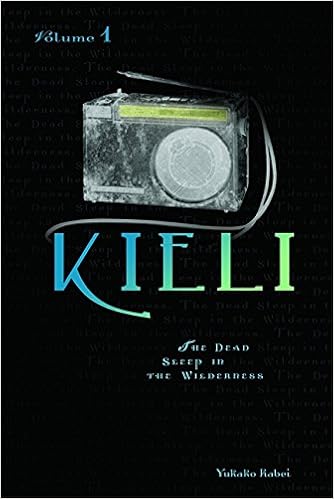
No, I’m going with the Kieli novels by Yukako Kabei. The series follows an orphan girl who can see ghosts and other spiritual beings. Who befriends/falls in love with an undead soldier with an attitude problem. They travel the world together, which has a dystopian, steampunk aesthetic. Most of the planet is also ruled by a tyrannical church. And the planet is an exoplanet that was colonized by spacefaring humans centuries prior to the book’s storyline. And on this planet, they deal with monsters, ghosts, dangerous church figures, criminals, and so much more. All the while trying to wrestle with their feelings for each other.
See, it has a little of everything in it! And I’m honestly sad not more people have read the books, even among fans of Japanese light novels (novels with the occasional illustration thrown in). If, however, the above description sounds interesting to you, I suggest reading it. I loved it in my teens and early college years, and I’m sure you would too.
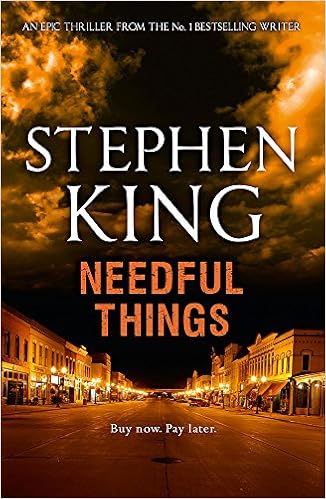
By “full-bodied,” do you mean doorstopper thick? If so, I’m going with Needful Things by Stephen King. Not only does it have one of King’s best antagonists, but it makes fun of and delves deeply into human materialism and greed. How much will you go to keep something you desperately want? To own something, or to be right, or to get answers and/or revenge? While a lot of what occurs in the book seems silly, it also feels like some of this stuff could really happen.
I especially love the audio book, which King narrates himself. He has a much better speaking voice than I do, and he gives each of the characters a distinctive voice. You have to listen to it to believe it.
Also, it’s a damn shame that the only adaptation of this book was a movie, and a really bad one at that. I think a comic book adaptation would work very well. Not only could the artists actually depict some of the darker, weirder, or smuttier stuff without constraint like in a movie, it would just be fun to read and see how they depict some scenes or situations (*cough* two middle-aged ladies who think they’re having sexual affairs with Elvis Presley *cough*).
MERLOT–a smooth, easy read with a soft finish.
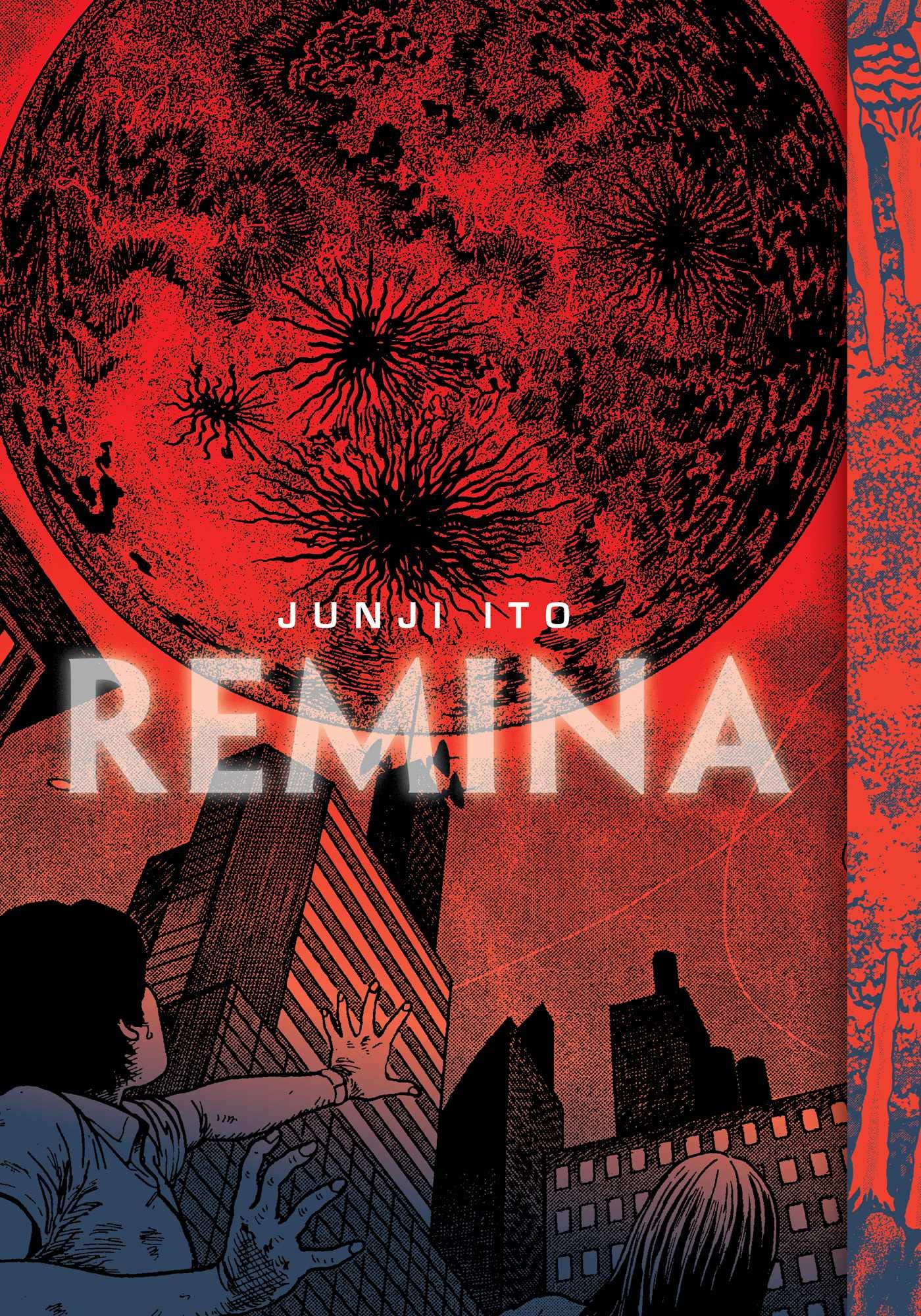
Ooh, tough choice. I guess I’ll go with Remina by Junji Ito. For those unaware, it’s a manga about a mysterious planet that appears in the night sky and is named after its discoverer’s daughter. As the planet starts approaching Earth, however, other planets start to disappear, leading to trouble for both its discoverer, and young Remina as well.
I love this book. It’s a great story that you can finish in just one sitting, but it has quite the impact that leaves you satisfied. The last few pages especially leave you with this strong feeling that there is no other way the author could have finished the manga without sacrificing the quality. Yeah, some elements are a little hard to believe, but who cares? It’s still an excellent science-horror story that shows how humans react in the face of annihilation, and how attributing blame to the wrong person can ruin lives.
Still waiting for a movie based on this. The fact that nobody has yet bewilders me. Get on that, Hollywood!
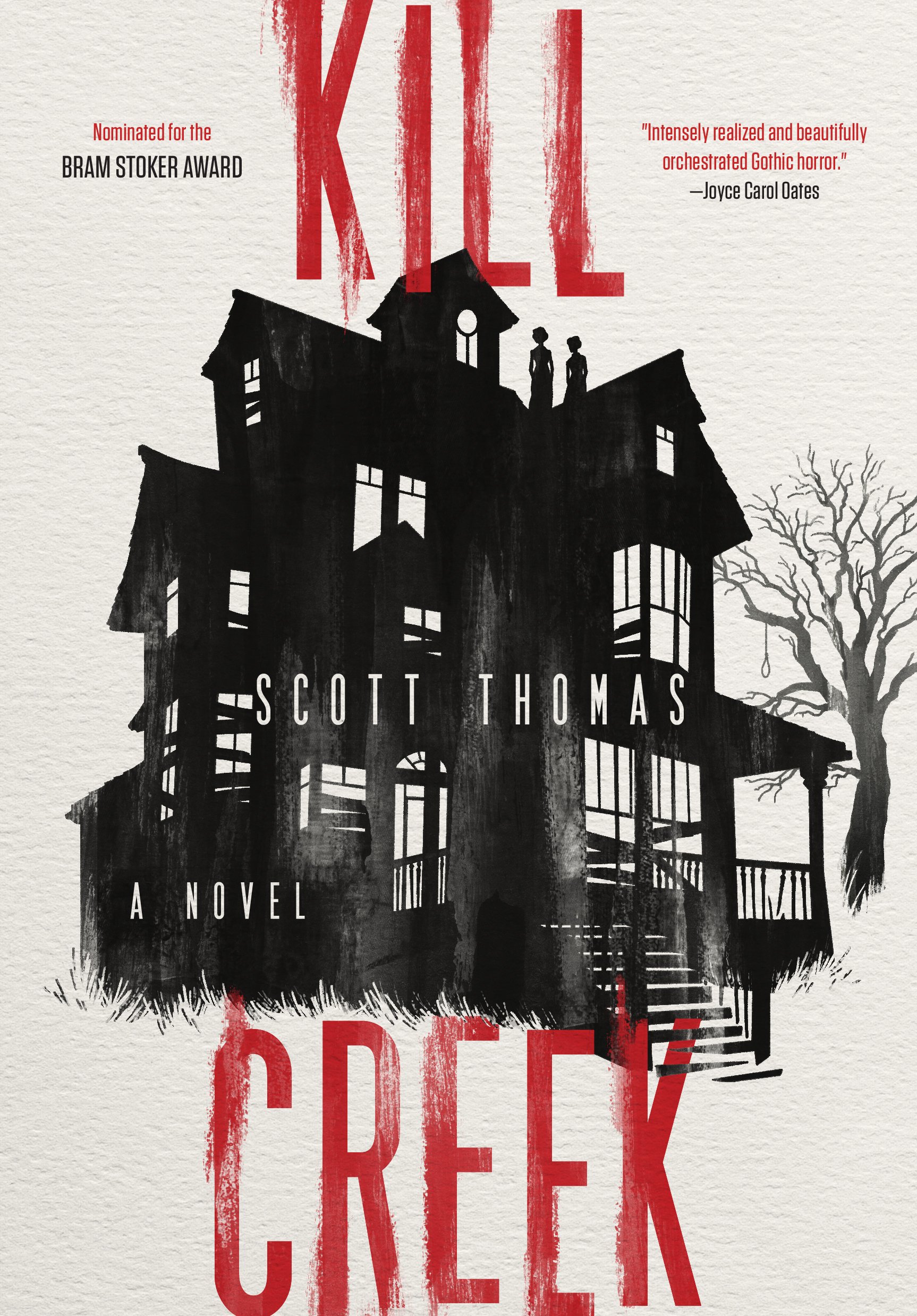
That’s an easy one, it’s Kill Creek by Scott Thomas. Still my favorite novel these days. Four famous horror writers go to a reputedly haunted house for a publicity event, but end up awakening something powerful and dark. Something that takes control of their lives and twists them for its own use. And if they’re not careful, they will die because of it.
This novel was a revelation for me. It basically lists the qualities of Gothic novels in the early chapters and then uses those qualities to great effect. Plus, the characters all feel like real people and you really come to love them, especially the four writers (TC Moore, you are the bomb!).Hell, it’s so good I bought my own copy after listening to the audio book fifty thousand times, and I sent a copy to a friend who did me a big favor recently as a thank you.
If you’re a horror fan but haven’t read this one yet, at the very least put it on your TBR list. Trust me, you won’t regret it.
Those are picks. What did you think? Have you read any of them? Are there any you want to read? What would you pick? Let’s discuss in the comments below.
And if you like this tag and think you’d like to try it, THEN CONSIDER YOURSELF TAGGED!!! I hope you enjoy doing the tag and maybe you’ll link back to me so I can see your answers.
That’s all for now, my Followers of Fear. I hope to be back for another post very soon. Until next time, I’m off to enjoy a beer (I’m saving the wine for Passover, because that’s really the only alcohol you can drink during that holiday) and do a late-night writing session. Pleasant nightmares and watch out for “Agoraphobia” coming out in just over nine days (links below!).
It’s been a while since I’ve done any sort of tag, so I saw this on my friend Kat Impossible’s blog and I was like, “Sounds like fun.” And while I’m not sure I believe in “perfection,” I tried to come up with stories that come close to that in my personal opinion. Most of these titles are from the horror genre, but I do add some from other genres and even a few other mediums (I can be a rule breaker when I want to be). With that in mind, let us begin the Perfect Book Tag.
THE PERFECT GENRE
(pick a book that perfectly represents the genre)
I had a hard time choosing on this, between what could be considered a quintessential horror novel, and what could be the most terrifying novel (AKA the “perfect” horror novel). In the end, I wanted to include the quintessential novel elsewhere, and I hate repeating myself, so I decided on the most terrifying novel I’ve ever read, The Girl Next Door by Jack Ketchum. Honestly, this novel’s show of brutality, the ease in which regular people can be persuaded to commit acts of evil and the graphic descriptions of torture and cruelty were enough to make me put the book down at times just so I could process what I was reading and get control of my dread. If you want perfect horror, this might be close enough.
Just don’t blame me if this gives you an upset stomach or nightmares. Trust me, it’s a tough one to get through.
THE PERFECT SETTING
(pick a book that takes place in a perfect place)
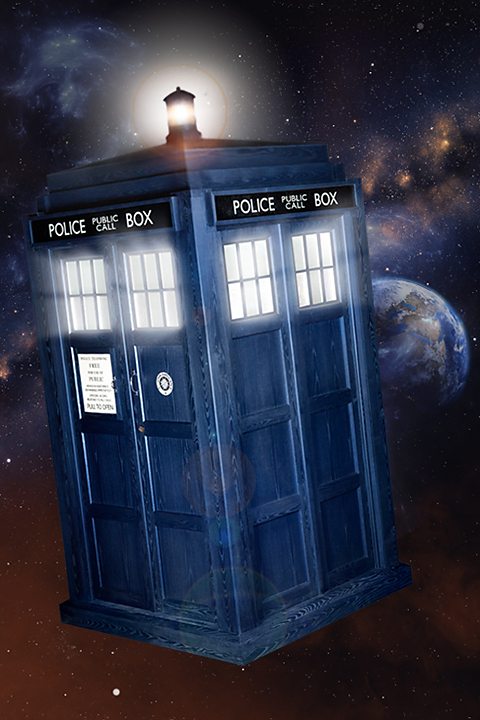
Again, I’m not sure if there’s anything considered “perfect” in entertainment, let alone a perfect setting. However, as far as I’m concerned, this might come damn close. The Doctor Who universe has every sort of setting imaginable. From futuristic cityscapes, to the distant past, and even our own modern times, you can find aliens, historical personages, gods and demons, magic (sort of) and science, friends and enemies, and even new universes or pocket universes! It’s an endlessly adaptable setting, and that’s why it’s my choice for perfect setting.
Also, I know it’s a TV show and the books are expanded universe and semi-canonical at best, but like I said, I like to break the rules.
THE PERFECT MAIN CHARACTER
(pick the perfect main character)
For this one, I didn’t pick perfect as in “they’re the best at everything and never have to improve. The story is just a way for the reader to fawn over how amazing the characters are.” Those are known as Mary Sues and Gary Sues, and most writers learn to stop creating them when trying to write compelling stories. Instead, I picked examples of characters I like to work with the most: women/girls who don’t start out as protagonist material, but as time goes on they grow into their heroine roles. Sailor Moon and Buffy are two great examples of those characters, as well as the reason I love that character type.
Neither Buffy Summers nor Sailor Moon started out as heroes who were thrilled with their roles. They just wanted to be normal girls, not burdened down with these destinies to save humanity from evil. But over time, as they get stronger and build their support networks, they become stronger, able to defy evil and inspire everyone around them and everyone watching them, regardless of age or gender. It’s part of the reason why these characters have endured over thirty years after their debuts, and part of the reason why I am who I am today.
THE PERFECT BEST FRIEND
(loyal and supportive, pick a character that you think is the best friend ever)
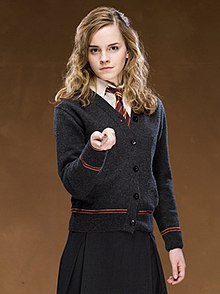
This one was easy. She’s smart, kind, brave, and is willing to point out when you’re wrong or doing something stupid. And she’s willing to stand up for the oppressed when no one else will, including many of the oppressed. She can be a bit stubborn, and at times she loses sight of reality when it comes to studies or other things she deems important. But honestly, Hermione Granger would make a great best bud.
THE PERFECT LOVE INTEREST
(pick a character you think would be an amazing romantic partner)
Let me level with you all. I may be bisexual, but I’m aromantic, so I don’t really feel romantic attraction to anyone. Sexual, definitely, but I have trouble imagining myself wanting to be tied to someone like a partner or lover. And since I don’t feel like telling the world about a character I may find sexy, I’ll just leave this one blank. Sorry if you really wanted to know what my type was or wanted to set me up with someone you know. You can’t change someone’s nature that easily.
THE PERFECT VILLAIN
(pick a character with the most sinister mind)
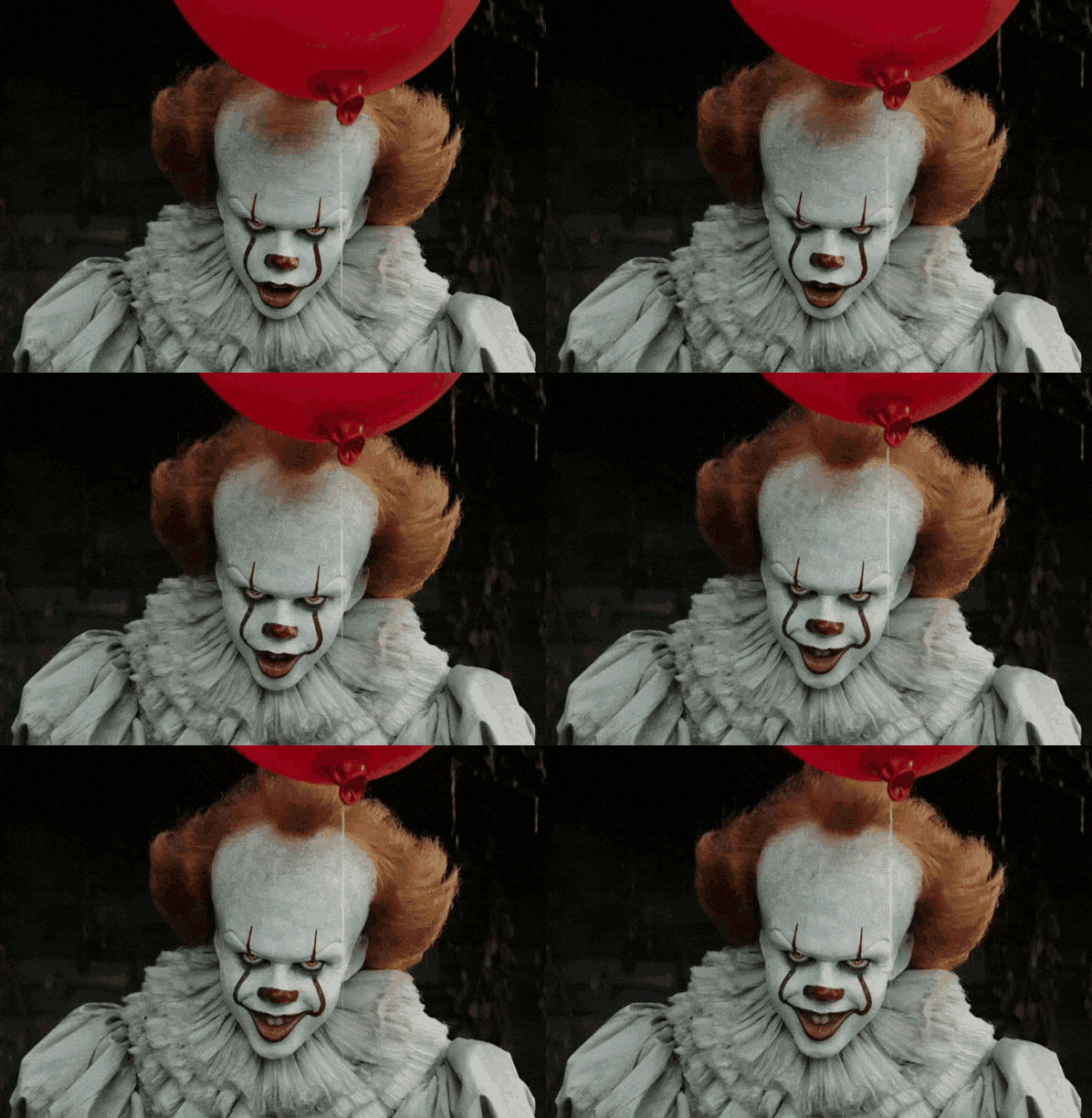
Remember that quintessential horror novel I mentioned as a contender for Perfect Genre? Yeah, IT was the runner-up. But in terms of villains, Pennywise is the ultimate, hence why he’s here. Honestly, he’s a perfect mix of both the human villain and the supernatural. He understands human fears and motivations, is a master manipulator and knows just how to get under our skin and either terrify us into a stupor or make us his pawn. At the same time, he’s this giant cosmic entity from beyond the universe, a thing we can only grasp as orange lights known as The Deadlights. His motivations aren’t born from hatred or greed or any human desire, but from the need to feed and eventually the need to procreate. It’s just another show of his Otherworldly nature.
And let’s face it, he’s devious! It takes a special sort of evil to enjoy being an evil clown 24/7, and Pennywise does it better than the Joker. Yeah, you read that right. What are you going to do about it?
THE PERFECT FAMILY
(pick the perfect bookish family)
Well, they’re not from any books, at least not originally, but the Addams Family would be my perfect fictional family. You can guess why.
THE PERFECT ANIMAL OR PET
(pick a pet or fantastic animal you need to see on a book)
Although I’m against the breeding of white tigers (they’re a genetic abnormality and breeding them leaves the tigers with all sorts of genetic problems), White Blaze from the anime Ronin Warriors is a creature I always wanted. He’s a tiger and deadly towards his enemies, but he’s smart, kind and good with people. You could honestly have him babysit your kids, he’s that good. And in a fight against evil, you couldn’t ask for a better animal partner.
In fact, White Blaze might be part of the reason why tigers are my favorite animal. And it’s not hard to see why.
THE PERFECT PLOT TWIST
(pick a book with the best plot twist)
I won’t say what it was. But it left me reeling. Took me half the next chapter to realize the author was serious and wasn’t pulling my leg. Still the hardest a twist in a novel has ever hit me.
THE PERFECT TROPE
(pick that trope you would add to your own book without thinking)
Let’s face it, I love a cosmic horror twist. The idea of an entity that defies human conception, to the point it can drive us mad, excites me as a horror writer to no end.
THE PERFECT COVER
(pick a cover you would want on your own book)
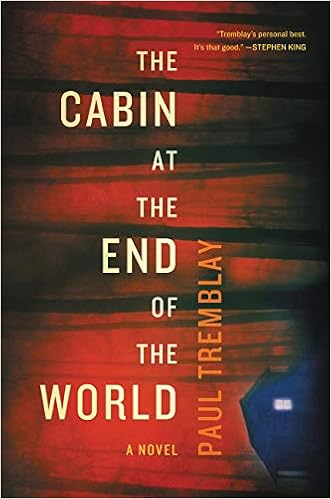
I want a cover similar to this on one of my books someday. Either that, or something that disturbs just to look at it.
THE PERFECT ENDING
(pick a book that has the perfect ending)
My favorite endings in horror have the horror continuing on long after the heroes appear to have won. So if I have to pick one that’s a good example, I think I’ll go with Needful Things by Stephen King. Great book with an enigmatic and terrifying antagonist. If you haven’t read it yet and you have a stomach for horror, you might want to change that sooner rather than later.
I TAG THEE:
Priscilla Bettis
Iseult Murphy
Joleene Naylor
Ruth Ann Nordin
Matt Williams
YOU!!! (If you want to)
That’s all for now, my Followers of Fear. Tomorrow, I finally start that essay, and then I start on a new short story. But in the meantime, what did you think of my choices? Any of them resonate with you? Let’s talk in the comments.
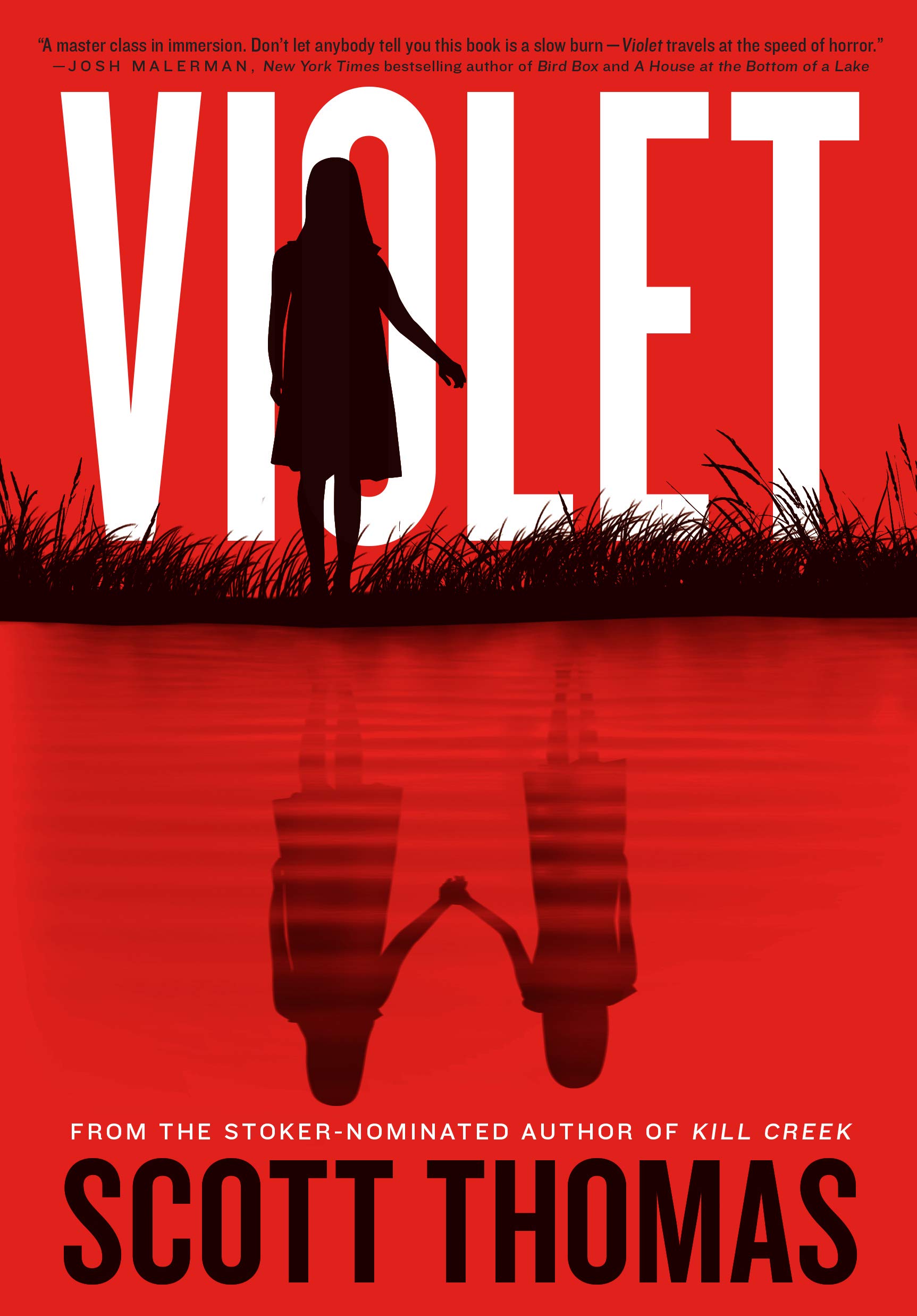
Thomas’s previous work, Kill Creek, is an excellent piece of modern Gothic fiction and is currently my favorite novel (read my review here). When I heard Mr. Thomas had another book, Violet, on its way out, I immediately requested my library buy copies, and then got on the reserve list. Due to my crazy life, it took me two check-outs to finish the book, but I finally did so this evening. And now, it is my solemn duty and great pleasure to do a review. Let’s get to it.
Violet follows Kris Barlow, a veterinarian and mother of a young girl. After the death of Kris’s husband scars her daughter Sadie, she decides to pack the family up and retreat to her childhood lake house in the heartland of Kansas in an effort to heal. The same lake house, by the way, where Kris’s own mother died years ago. However, in-between the home improvement projects on the long-neglected home and Kris’s own fears, something in that house awakens. And it has a special interest in Kris and Sadie, one stemming all the way back to Kris’s buried childhood.
While I didn’t react as enthusiastically to Violet as I did to Kill Creek, I did find it a great slow-burn horror story.
Thomas does a great job job taking his time so we can get to know our main character Kris. By the time I was halfway through the book, she felt like a real person to me. Especially in terms of her anxieties; while what she’s worried about is different from my own anxieties, the emotion behind them felt like my own anxiety when its ugly head rears. That’s not easy to do.
You also get to know the town of Pacington, kind of like you get to know the town of Derry in IT. The atmosphere and melancholy of the town, as well as its citizens, all of it becomes very real to the reader.
All this with the same sort of storytelling Thomas displayed with Kill Creek, allowing the story with its secrets and intrigue and twists to fully take form over the course of 400-plus pages. For about two hundred pages, I was sure I knew what the big reveal was. Turns out, I was very wrong, and I was so glad for it.
That being said, there was one aspect of the novel I didn’t care for. While the slow-burn aspect worked for the most part, allowing for the reader to become embroiled in the town, in Kris’s life, and in the strange events occurring, at times it did drag a bit. I found myself thinking at times, “Come on! Something extremely creepy, please happen!” That may just be my quirk, though. Anyone who’s read my work may have noticed I like to get to the horror and the strange going-ons sooner rather than later. So maybe it was just a little too slow at times for me and me alone.
All in all, Violet is a great follow-up to Kill Creek that takes its time and helps immerse you in the story. On a scale of 1 to 5, I give the novel an even 4. Check it out and settle in. You’re in for a ride.
Hello, Followers of Fear! It’s been an entire week since I last posted. Did you miss me?
As many of you know, this year I’m participating in National Novel Writing Month, or NaNoWriMo, this year. For those of you who are unaware, the goal of NaNoWriMo is to write a fifty thousand word novel in thirty days, or about 1,667 words a day. There’s no prize for actually making the goal (and it’s doubtful the resulting novel will be any good, as it’s a first draft), but it’s a good way to see what you’re capable of and push yourself. At least, that’s how I look at it.
So this year’s project is called Toyland, and as you may remember, it’s a Gothic horror novel about a boarding school terrorized by a ghost obsessed with a children’s book. This is my first Gothic horror story, as well as my second time participating in NaNoWriMo. How’s it going so far? Well, as of last night, I’m a little over eleven-thousand words in over three-and-a-half chapters. Over a fifth of the way there!
That’s my update. See you later.
Just kidding. I have more I want to discuss.
I have to say, it was a good idea to take some time off from the office to work on this novel. I’ve had a lot more time to write, which means I was able to get through three chapters in just under a week. It might’ve taken a month to get the same amount of progress if I didn’t take time off work and just wrote in the evenings. If I do NaNoWriMo again next year, I may take time off again to get a good head start.
As for writing in the Gothic sub-genre, that’s been a learning experience. As I mentioned in my post on Gothic horror (click here to read the full article), the genre has a very particular set of tropes that sets it apart from other genres of horror. However, there is more to the genre than I had room to include in that article. For example, you have to devote a lot of space to describing your main location. After all, Gothic horror is very place-centric. Hill House, The Overlook Hotel, the house at Kill Creek, your mother’s house (yes, I went there, and in more ways than one). All those locations are described in detail. Lots of detail. Gothic tries to make you aware of the place the story is in at all times, especially the darker aspects of it.
In that vein, I’ve spent a good chunk of Chapter Two just describing Auckland Academy, the main setting of the book. And I’ll be further emphasizing the location as the book goes on, as well as in subsequent drafts.
Of course, I’m still early in the novel. Including the chapter I”m in now, I have twenty-six more to go, and plenty more to learn about Gothic literature. I’ll let you know how things go when we reach November 14th. Hopefully I’ll have made plenty more progress by then. Even if I have to go back to work on Tuesday.
Well, that’s all for now. I’ve got some errands to take care of, so I’m going to get on that. I promise though, you won’t have to wait a week before I post again. Until next time, my Followers of Fear, pleasant nightmares!
Are you participating in NaNoWriMo? How’s it going for you?
This past week at work, I’ve been taking a class on giving an effective presentation, with and without PowerPoint. As part of that class, we were to give a seven to ten minute presentation on any subject of our choosing. You can guess what I did mine about. That’s right, I did mine on horror. Specifically, on what makes for a good horror story.
Don’t you just love it when life hands you opportunities tailor-made for you?
And while working on my presentation, I realized that I could record it and maybe post it on YouTube. After all, I don’t get many opportunities off the blog to expound on what makes for good horror, and wouldn’t I want to make sure as many people as possible were able to see it? So I gave one of my classmates my phone right before I began, and he started recording. The result is below. The video does cut out before the presentation is finished, but you get the gist of it.
If you’re wondering what my example of a bad horror story was, it was 2016’s The Boy, which I hate. I would’ve used the Friday the 13th remake, but I thought doing an original film would drive the point across better. Afterwards, while the lights were out, I went to the next slide, which was all black, and gave a quote from Kill Creek, the Gothic novel I mentioned in the video (and which I really do recommend):
If I were to lead you into a dark room, and someone were to leap out and shout, “Boo,” you’d be startled for maybe a moment. If, however, I were to lead you to that dark room and tell you that someone died in that room, that their spirit haunts it, and that they sometimes reach out and touch people, and then I left you locked in that room, for hours on end, in the dark…that is horror.
That’s about as exact a quote I can give when I only have my memory of the audio book and no hard copy to look up the quote prior to the presentation.
I finished by thanking everyone for coming to my TED talk (apparently that’s something people say when trying to be academic nowadays, so I thought I’d use it), and wished the all pleasant nightmares before asking if anyone had any questions (someone asked me what my favorite horror movie is. I couldn’t think of one). And after the presentation, I got some really great feedback from my classmates. One or two even told me they’d never thought of horror like that before, and it was really eye-opening.
To which I bowed and said, “My job here is done.”
When I got home, I immediately went to upload the video onto YouTube. Took about an hour, as it was nearly two gigs worth of data, but it’s up there, and it’s not half-bad. So if you do get a chance, I’d really appreciate you checking it out and letting me know what you think. Was my argument convincing? Were there counter-points you’d like to make? And will I get sued by any companies for using their images, specifically Warner Bros. for using footage from the trailer for The Nun? Let’s discuss!
That’s all for now, my Followers of Fear. I’ll be going to see Glass this weekend, so you should hear from me again then. Until next time, thanks for reading/watching and pleasant nightmares!












/https://public-media.si-cdn.com/filer/80/b1/80b1f1b1-ba15-43d4-af07-237ced3ae2bf/gettyimages-463629668.jpg)


 Rami Ungar The Writer